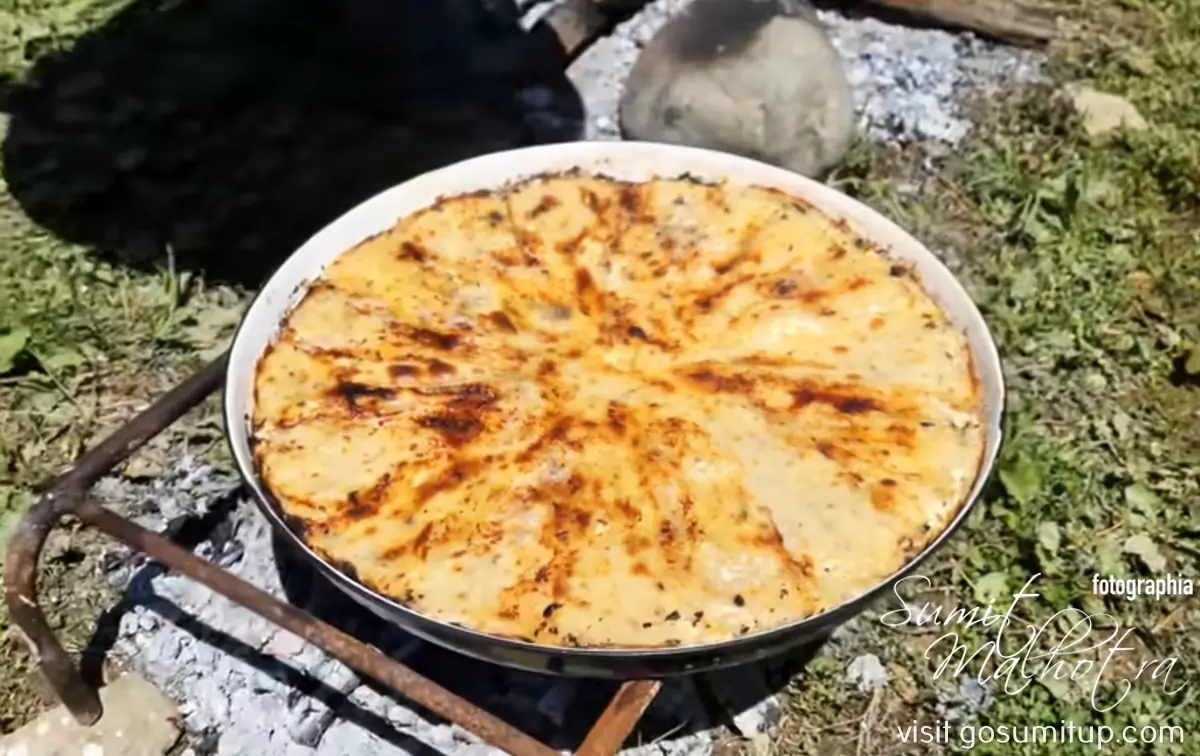
Read about the Albanian Flija History to understand What is Flija, the Illyrian Sun ritual food and Traditional Albanian Sac Cooking from the Balkan Highland Cuisine
High in the Accursed Mountains of Northern Albania and across the rolling highlands of Kosovo, a distinct, smoky aroma wafts from stone houses long before the sun reaches its zenith.
It is the scent of wood fires, clarified butter, and slow-cooking batter and perhaps ancient pagan food traditions Albania.
To the uninitiated, the process looks like an exercise in madness: a cook sitting for hours on a low stool, meticulously pouring thin lines of batter onto a massive metal tray, only to cover it with a lid of hot coals and repeat the process dozens of times.
This is the creation of Flija, a part of the history of Albanian Kaymak dishes.
In Albanian culture, Flija is not just a dish; it is an endurance test, a social event, and a mathematical masterpiece.
However, a deep-seated myth surrounds its origins—the idea that Flija is a 2,400-year-old “Sun Ritual” preserved from the pagan Illyrian tribes, designed to be cooked for an entire day under the open sky to honor the solar deity.
But as we peel back the layers of this “sun-cake,” we find a story that balances ancient celestial worship with the brutal practicalities of mountain survival.
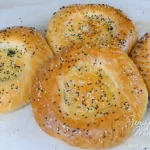
Naan-e-Uzbeki
The Mathematical Myth: Ray-Tracing in the Dinaric Alps
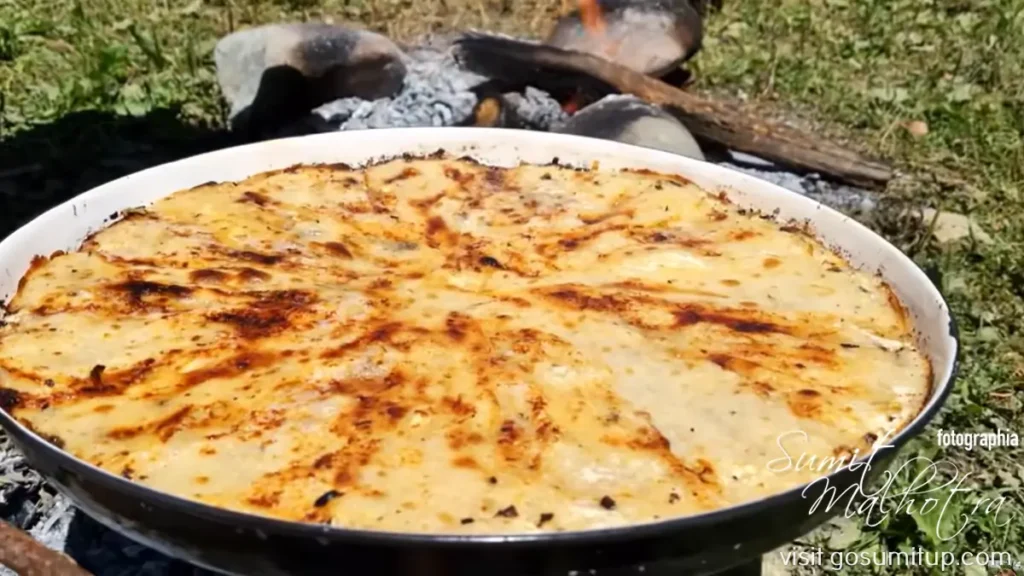
When you look at the top of a traditional Flija, you see a starburst or sun-ray pattern.
The most striking feature of Flija is its appearance. Unlike a standard layered crepe or the Ottoman-style Byrek, Flija is not solid.
When you look at the top of a traditional Flija, you see a starburst or sun-ray pattern.
The myth suggests that this pattern is purely symbolic—a literal “food offering” to the sun. However, the reality is rooted in a brilliant piece of nomadic engineering.
The Physics of the Sac & How to Cook Flija with a Saç? :
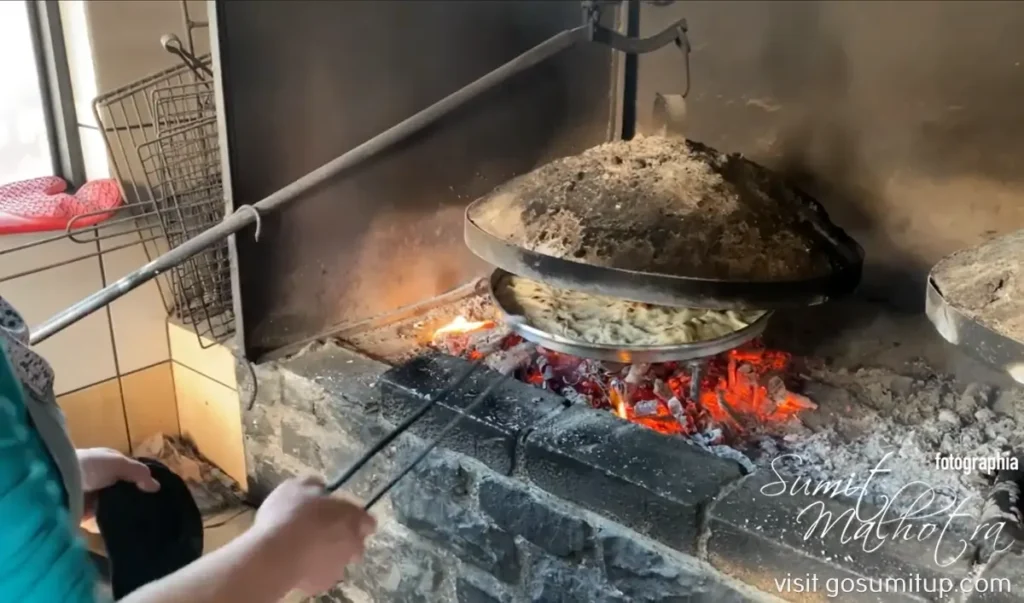
Traditional Flija is cooked using a Sac (or Saç)—a heavy, bell-shaped iron lid. To cook Flija, the Sac is heated in a separate fire until it is glowing red.
The cook then pours the batter onto a tepsia (large tray) in radiating lines, leaving triangular gaps between the “rays.”
If the cook were to pour a solid sheet of batter, the top-down heat of the Sac would cause the centre to steam and turn soggy while the edges would burn.
By pouring in a ray pattern, the cook allows steam to escape through the gaps. In the next layer, the gaps are filled, and the previous rays are covered.
So, is Flija a sun ritual?
This “alternating ray” system ensures that every millimetre of the pastry is crispy, thin, and infused with the smoky flavour of the coals.
The “Sun Ritual” in fact, an ancient method of convection management.
So, what is the difference between Flija and Byrek?
Flija and Byrek are both traditional Albanian/Balkan dishes, but they differ fundamentally in preparation and texture.
Flija is a labour-intensive, pancake-style layered dish cooked over an open fire, while Byrek is a flaky, filled pie made with pre-made phyllo pastry.
Flija features crepes separated by yoghurt cream, whereas Byrek uses fillings like meat/cheese inside dough sheets.
Making of Naan-e-Uzbeki
The Illyrian Connection: Sol Invictus on a Plate
The ancestors of modern Albanians, were known to be practitioners of solar cults.
While the physics are practical, the cultural persistence of the shape cannot be ignored.
The Illyrians, the ancestors of modern Albanians, were known to be practitioners of solar cults.
Throughout the Balkans, archaeological finds—from belt buckles to burial mounds—are adorned with the “Illyrian Sun,” a circle with radiating lines identical to the Flija pattern.
When the Roman Empire and, later, the Ottoman Empire swept through the Balkans, they brought their own culinary traditions: leavened breads, phyllo pastries, and complex, syrupy desserts.
Yet, the mountain tribes of Albania held fast to Flija, making it a part of the traditional Kosovo food myths.
Because Flija requires an open fire and a Sac—tools that are difficult to use in a cramped urban kitchen—the dish became a symbol of Highland Resistance.
By continuing to cook Flija in the sun-pattern, the Albanians were effectively preserving a pre-Christian, pre-Islamic culinary architecture.
It is one of the few dishes in Europe that allows us to taste the Bronze Age.
Naan-e-Uzbeki in the Tandoor
The Myth of the 24-Hour Cook
Each layer takes approximately 5 to 8 minutes to "blast" under the hot Sac.
In many villages, you will hear that “true” Flija takes 24 hours to prepare. This is a slight exaggeration that masks a social truth.
A standard Flija involves between 20 and 50 layers. Each layer takes approximately 5 to 8 minutes to “blast” under the hot Sac.
When you factor in the time to prep the wood fire, clarify the Kaymak (a creamy dairy spread), and take the mandatory coffee breaks with neighbours, a single Flija easily consumes 6 to 8 hours of active labour.
The Social Glue:
The “24-hour” myth exists because Flija is never meant to be cooked alone. It is communal labour.
While one person manages the heavy iron Sac, another prepares the batter (a simple mix of flour, water, and salt), and others sit nearby to gossip and share news.
The myth of the “day-long ritual” is a way of saying that the dish is so important that it justifies stopping all other work to focus on community and family.
The "Sac" as a Royal Dowry
A common culinary myth suggests that an Albanian bride’s worth was measured by the "translucency" of her Flija layers.
In the traditional Kanun (Albanian customary law), the Sac was often the most prized possession in a rural household.
A common culinary myth suggests that an Albanian bride’s worth was measured by the “translucency” of her Flija layers.
While this sounds like a patriarchal myth, it reflects the high level of thermal mastery required to survive in the mountains.
If you could manage a Sac—balancing the heat of the coals so the batter didn’t stick or burn—you demonstrated that you could manage a hearth in a climate where fire was the difference between life and death.
A "Sumit Up" Culinary Insight
The legend of Iskandar and the ovens of the North.
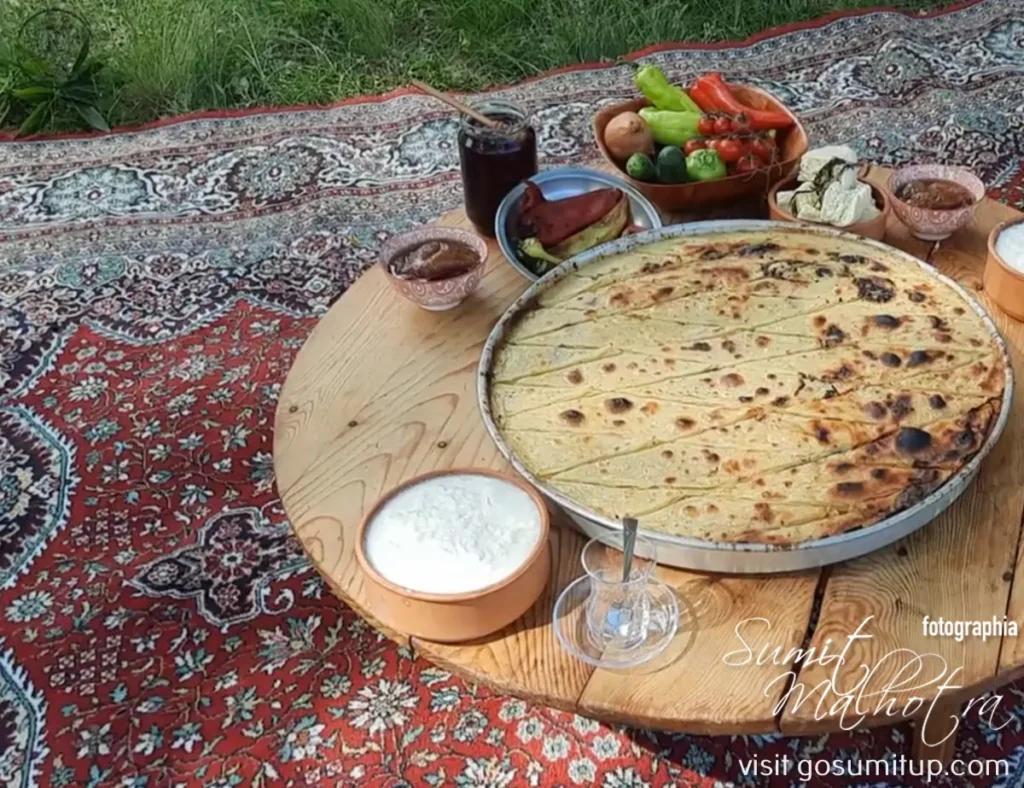
When you sit down to a plate of Flija, usually served with honey, cheese, or pickled vegetables (Turshi), you aren’t just eating a pancake.
You are eating a topological map of history. Each layer represents a few minutes of fire, a few words of gossip, and a few centuries of tradition.
It is a reminder that the most “complex” foods often come from the simplest ingredients—provided you have the patience to wait for the sun to rise in your pan.
Fresh Naan-e-Uzbeki
If you are a traveller and or just love to drive, you may find below a list of items that will fortify & thus enrich your travel experience.
I use many of these myself for my trips. They are modestly priced and quite important to keep handy.
- Travel Adapter – https://amzn.to/3A04EJp
- Action Camera – https://amzn.to/4eCSMfF
- Camera Mounts & Accessories – https://amzn.to/4eG4je2
- Dashcam – https://amzn.to/3U2j4Qc
- Neck Rest – https://amzn.to/3Y6ZP98
- Tyre Inflator – https://amzn.to/3U8HpDP
- Storage – https://amzn.to/3XVQFMI
- Car Laptop Charger – https://amzn.to/3XXMVdA
- Vacuum Cleaner Cordless – https://amzn.to/3Yo1hWd
- Air Mattress – https://amzn.to/4015Bvu
- Jack Ratchet Wrench – https://amzn.to/3YkxddO
- Cleaning Cloth Microfibre – https://amzn.to/3NIOFmt
- Rechargeable Solar LED Torch – https://amzn.to/3Yj4h5Y
- Electronics Accessories Organiser – https://amzn.to/3A04XUz
- Pocket Travel Data Transfer Tool – https://amzn.to/3zMTxnc
- Smart Tracker for Keys – https://amzn.to/3BTuIq0
- Camping Cookware Kit – https://amzn.to/3BIy0N3
- Sleeping Bag – https://amzn.to/3U7v2rP
GoSumItUp is a personal blog written and edited personally by me. All opinions expressed are my own, which are honest and have not been influenced by any means.
My reviews are dependent on the visits at the time, and revisits will be reviewed again as they may have a different experience or the same.
I am not a food critic nor do I consider myself as one; this platform allows me to write and review my own personal dining experiences, whether good or bad, delicious or not, all of which are honest and truthful opinions.
Suppose you disagree or agree with me at any point, or do not receive the same experiences as I have. In that case, I do not hold any responsibility as everyone will have their own experiences that they will encounter themselves.
I pay for all meals. However, if any meals or products have been sponsored or compensated or if I was a guest, it will be clearly disclosed at the end of each review.
All images on this blog are my own unless stated otherwise. If you wish to use any of my photography for any purposes, please do not use it without any written permission and give credit and/or link back to the website.
If you would like to send a product or any sponsors/endorsements, it may or may not be published and reviewed on the website.
If you wish to send any products or invitations for any media, press or collaborations, etc., consider if it is something related to the content of the website, and if you see fit, please visit the Contact page for contact details.
Thank You.
Thank you for visiting GoSumItUp! I hope you enjoy the reviews & recipes found at www.gosumitup.com.
This page consists of disclaimers regarding the recipe, its outcome, nutrition, and food handling safety decisions.
The recipes have been cooked and compiled by me for general information only and should not be used to diagnose or treat any medical condition/s.
This information is not intended to diagnose, treat, cure, or prevent any disease as well.
GoSumItUp.com has used all reasonable care in compiling the information but offers no warranty as to its accuracy or its use in any possible form.
Consult a doctor or other health care professional for diagnosis and treatment of any medical condition/s. For more details please refer to our disclosure policy.
If you like this article, you can let us know in the comments below or on social media using #gosumitup and tag @gosumitup on Facebook.
I am always happy to read your feedback, and if you liked the dish or if you made the dish. :)
Better still, take a picture and post it on Instagram and tag it as #gosumitup
Connect directly – You can also connect with me directly on my Instagram, Facebook or Pinterest.
And, keep visiting us for more of such awesomeness. Bookmark gosumitup.com into your web browser now or simply subscribe to our browser notifications.
