Wiener Schnitzel – Read and learn the Science of Authentic Wiener Schnitzel, The Viennese Soufflé Effect Cooking Technique, Traditional Austrian Breading Method, How to Fry Schnitzel in Clarified Butter, Radetzky Wiener Schnitzel Food History Myth, Why does schnitzel breading puff up, Perfect temperature for frying veal cutlet, Best meat pounder for authentic schnitzel, Difference between Milanese and Wiener Schnitzel, Austrian imperial kitchen cooking secrets
In the landscape of international gastronomy, few dishes are as deceptively simple—yet technically unforgiving—as the authentic Austrian Wiener Schnitzel.
To the casual observer, it is merely a thin sheet of breaded, fried meat. It is a staple of rustic taverns and grand Viennese hotels alike.
However, within the high-volume environment of a commercial kitchen, or under the critical gaze of a seasoned food scientist, the Wiener Schnitzel reveals itself as a complex study in fluid dynamics, structural protein alteration, and high-heat phase-change thermodynamics.
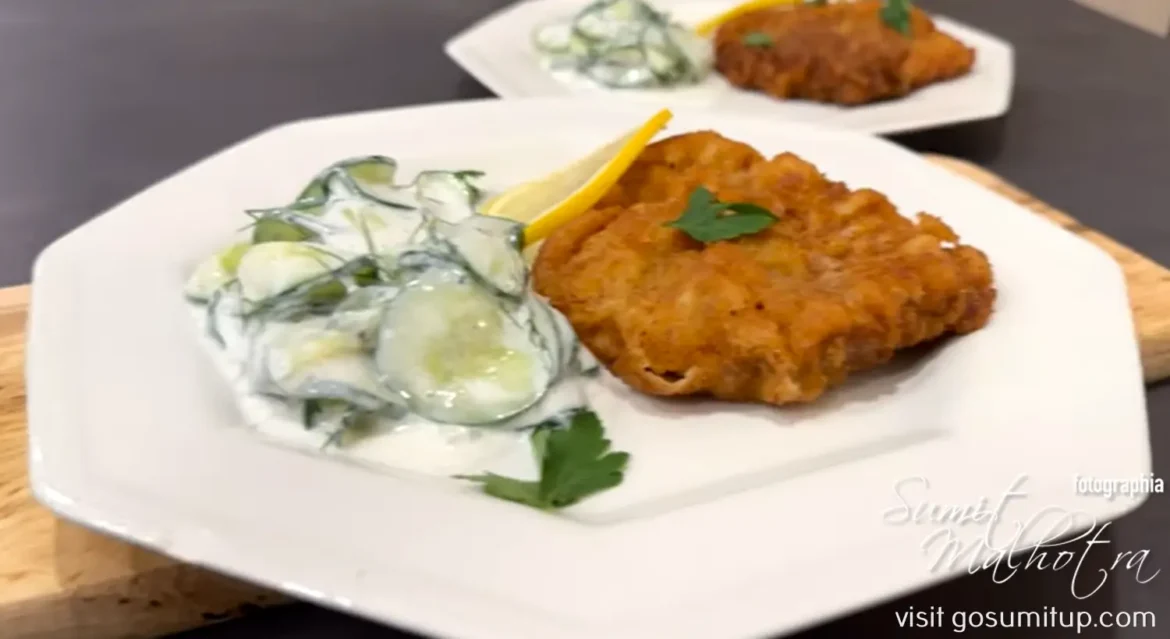
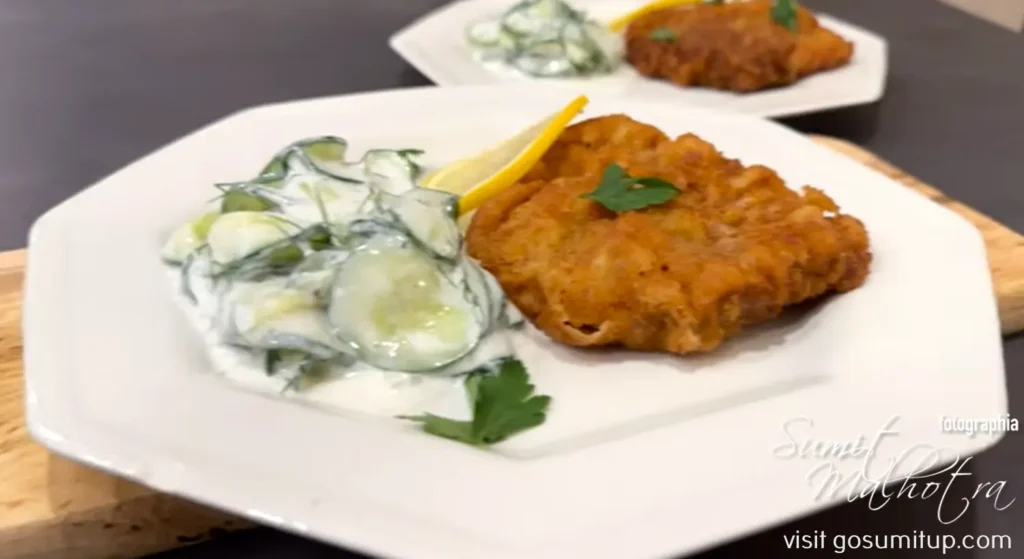
Wiener Schnitzel with Salad
The enduring myth surrounding this dish is a tale of romanticised military cultural theft.
Popular culinary history claims that in 1857, the revered Austrian Field Marshal Joseph Radetzky von Radetz introduced the dish to the imperial court of Vienna after returning from his campaigns in Italy, having been completely enchanted by the Lombardian Cotoletta alla Milanese.
While this narrative of imperial cross-pollination makes for a compelling story, historical archives tell a far more calculated truth.
References to breaded, deep-fried cutlets appear in traditional Austrian cookbooks decades before Radetzky ever set foot in Milan.
The true historical and scientific breakthrough of the Viennese version was not its geographic origin, but its radical engineering departure from Italian cooking techniques through the absolute mastery of the “Soufflé Effect.”
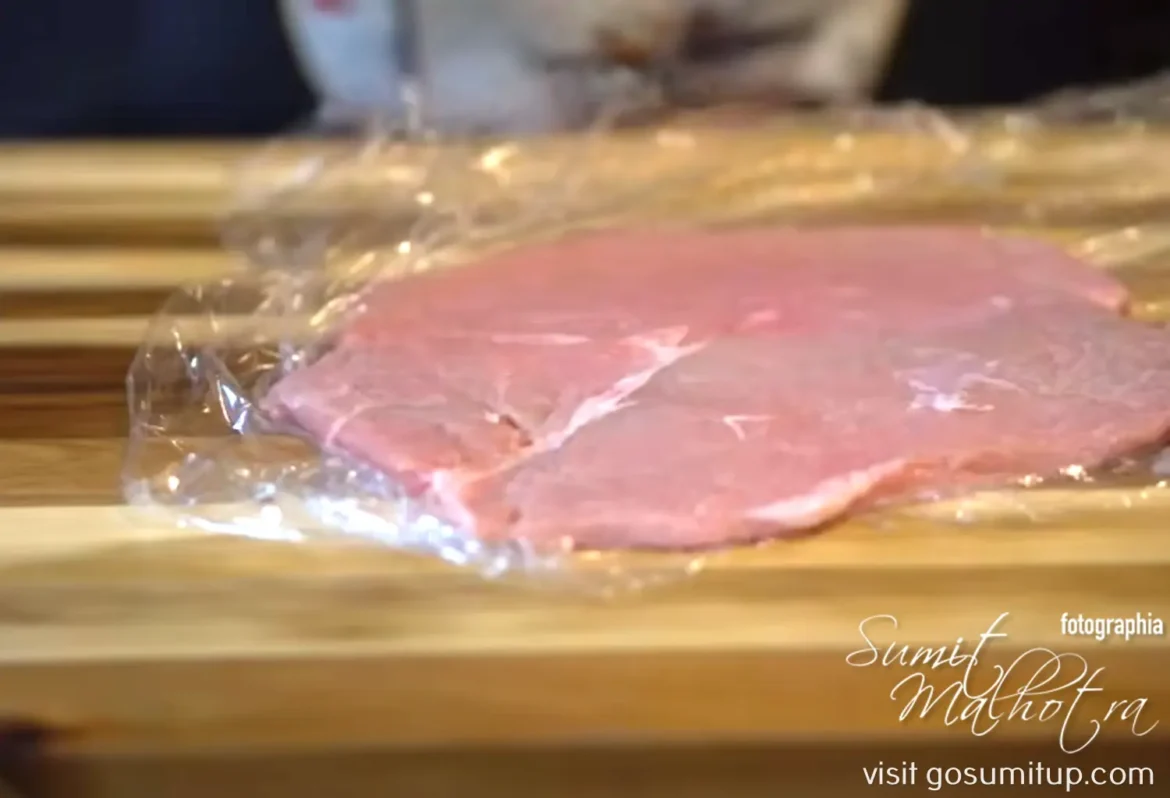
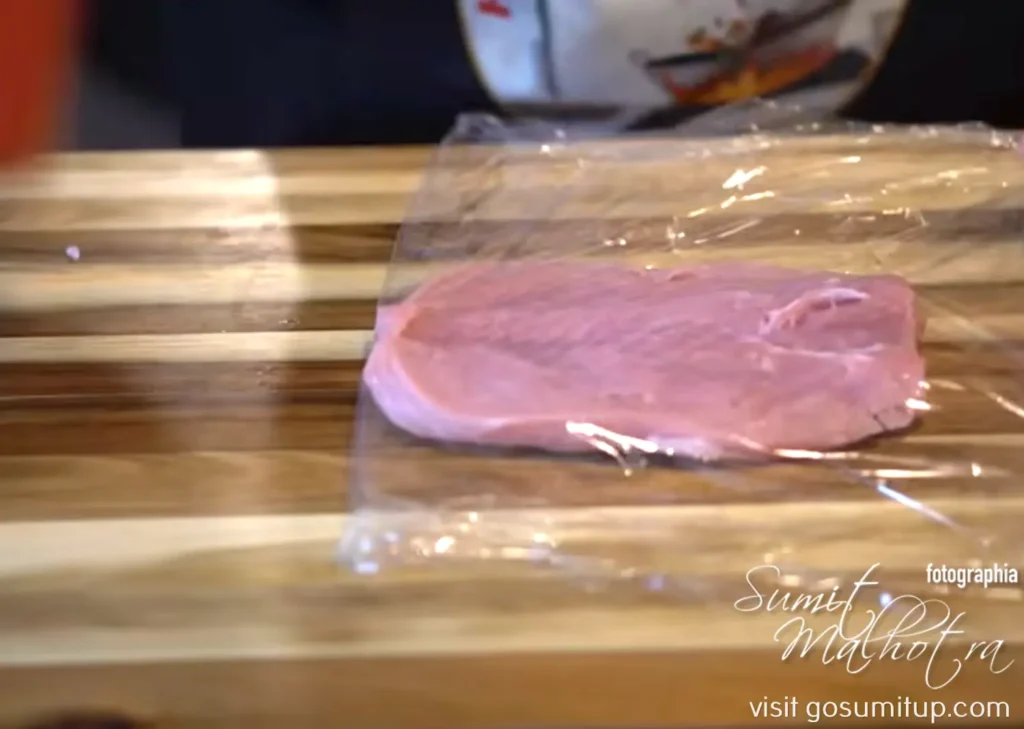
Veal Butterfly in a Plastic Warp - Flattening for Wiener Schnitzel
The Anatomy of the Cutlet: Mechanical Tenderisation and Mass Optimisation
Why a true Wiener Schnitzel behaves like a delicate pastry rather than a heavy piece of fried meat?
To understand why a true Wiener Schnitzel behaves like a delicate pastry rather than a heavy piece of fried meat, one must analyse the raw substrate: milk-fed veal.
Specifically, the premium cuts from the leg include the Kaiserteil (topside) and the Nuss (nut).
Veal leg muscles are naturally lean and densely packed with parallel muscle fibres bound together by a web of structural connective tissue known as collagen.
If a chef drops an un-prepped slice of this muscle directly into hot fat, the thermal shock will cause the collagen to contract violently, warping the meat, squeezing out its cellular water, and creating a tough, unpalatable texture.
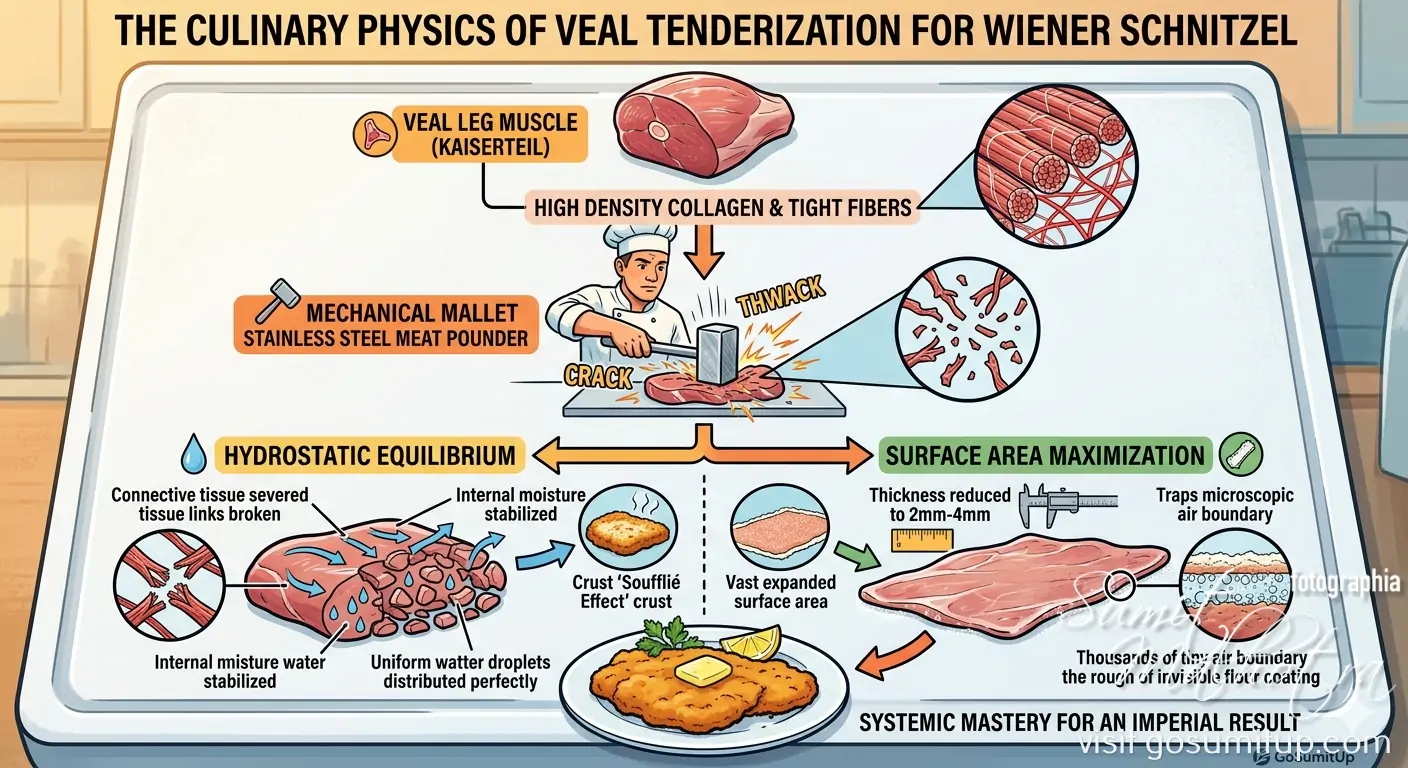
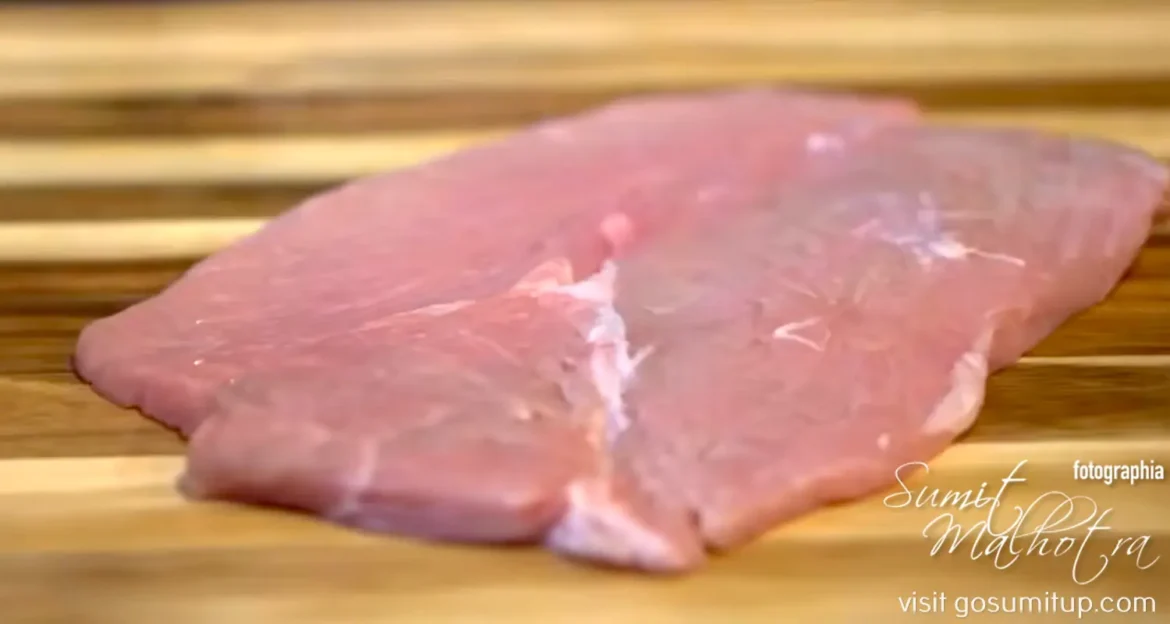
Veal tenderisation
To counter this biological defence mechanism, the kitchen must deploy strict mechanical tenderization.
The veal slice is placed between layers of protective plastic film and subjected to systematic flattening using a heavy, flat-surfaced meat pounder.
The application of this kinetic energy serves a vital dual purpose:
Collagen Severance: The blunt impact forces break down the rigid cell walls and physically sever the elastic collagen cross-links without tearing the delicate muscle meat itself.
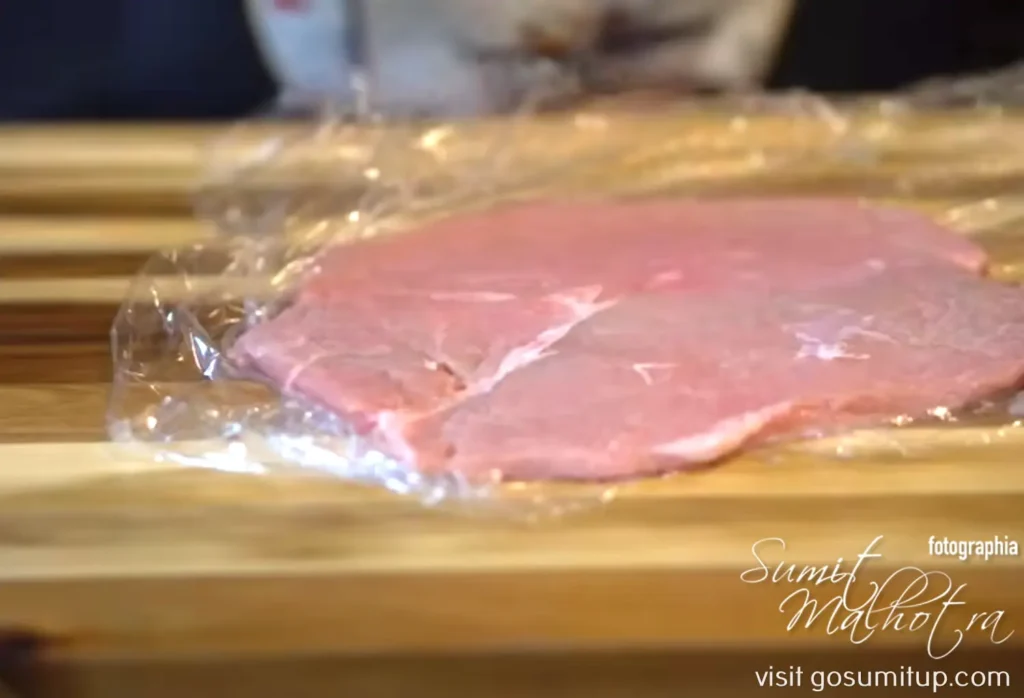
Thickness Standardisation: The meat must be trimmed to a uniform thickness of 2 to 4 millimetres.
This precision is non-negotiable. If the meat is too thick, the core will remain undercooked when the exterior crust achieves optimal browning.
If it is too thin, the meat will overcook instantly, losing its structural integrity.
By standardising the thickness to 2mm, the chef creates a high-surface-area substrate that can achieve instantaneous hydrostatic equilibrium the moment it encounters hot cooking lipids.
Veal Butterfly for Wiener Schnitzel Flattened
The Starch-Protein Shield: The Three-Stage Coating Matrix
In reality, it is the construction of a three-tier thermodynamic shield designed to control the flow of steam and heat.
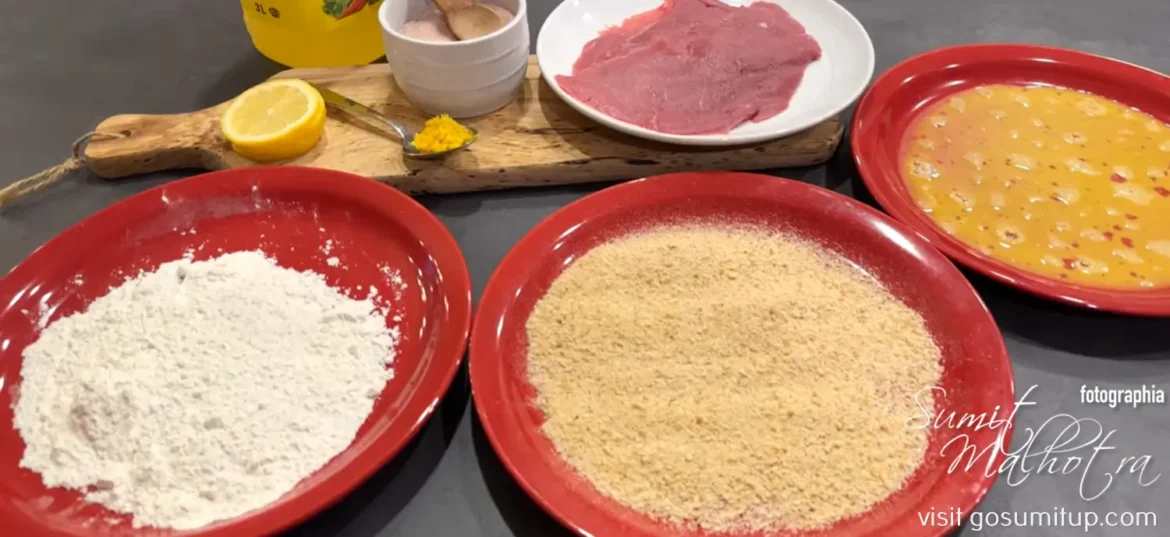
Once the veal sheet is structurally optimized, it enters the critical breading sequence. In high-volume kitchen management, this is often treated as a mindless assembly line. In reality, it is the construction of a three-tier thermodynamic shield designed to control the flow of steam and heat.
The sequence must be executed immediately before cooking to prevent the structural elements from becoming soggy:
The Flour Boundary (Fine Wheat Flour): The dry veal is dusted lightly with fine wheat flour, and any excess is shaken off vigorously.
The flour reacts instantly with the microscopic film of surface moisture on the meat, forming a thin, starch-heavy paste.
This layer seals the microscopic pores of the muscle tissue, acting as a primary water barrier that locks juices inside the meat during the initial heat spike.
The Protein Adhesive (Beaten Whole Eggs): The floured cutlet is submerged into whole eggs that have been beaten gently—never whipped to an aerosol foam.
The egg provides a dense matrix of liquid proteins (ovalbumin and mucoprotein).
This layer binds directly to the flour coating, creating a highly flexible, heat-reactive adhesive layer.
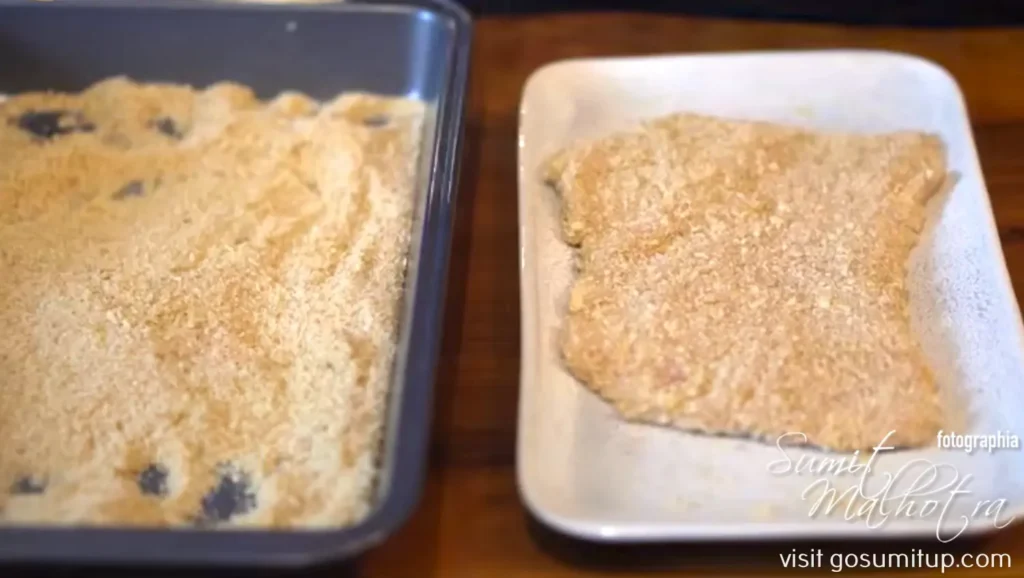
The Low-Density Casing (Fresh White Breadcrumbs): Finally, the cutlet is gently flipped through fresh, un-pressed breadcrumbs derived from traditional crustless Austrian white rolls (Semmeln).
Crucially, the breadcrumbs must never be pressed into the egg layer.
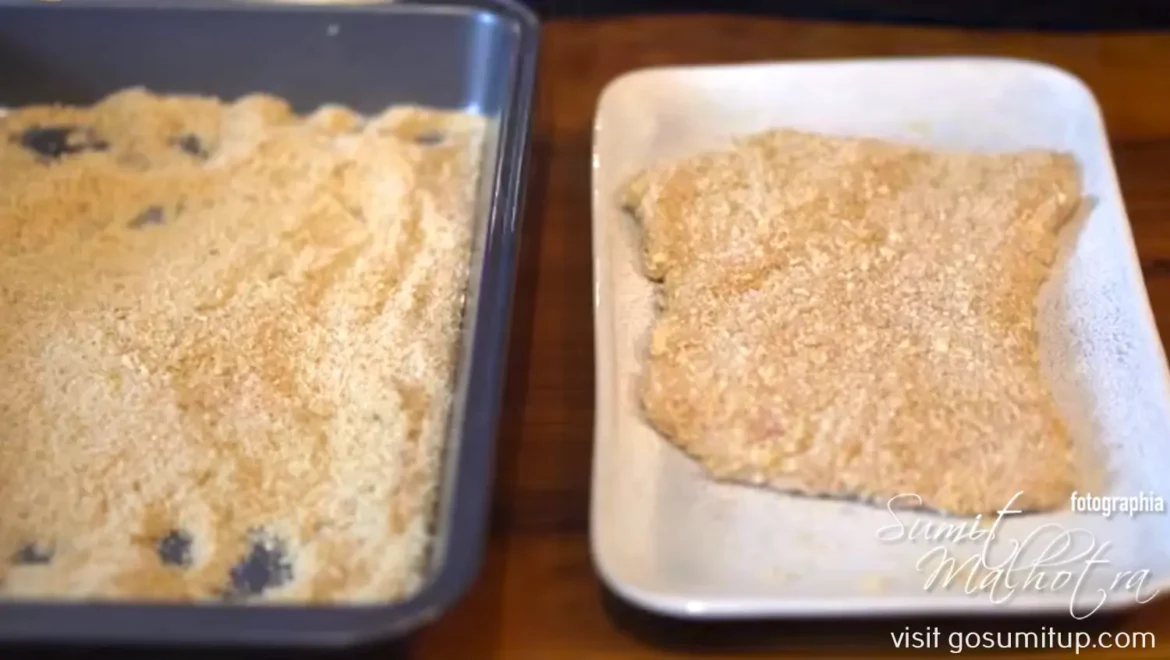
They must sit loosely on top, creating a porous, jagged, low-density outer shell that traps thousands of tiny pockets of atmospheric air between the bread particles and the egg boundary.
Wiener Schnitzel Coated with Breadcrumbs
The Soufflé Effect: Phase-Change Thermodynamics in Action
Authentic Wiener Schnitzel is a crust that ripples and waves across the meat like a golden silk sheet.
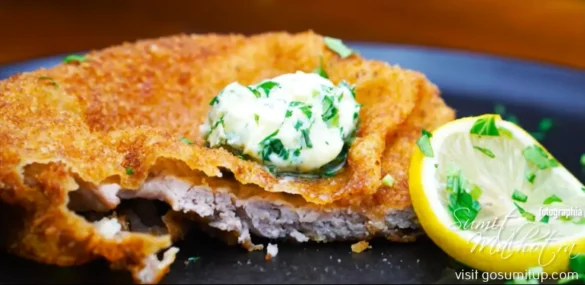
The defining characteristic of an authentic Wiener Schnitzel is a crust that ripples and waves across the meat like a golden silk sheet.
A poorly executed schnitzel suffers from “crust adhesion,” where the breadcrumbs stick flatly to the meat, resulting in a greasy, tough product.
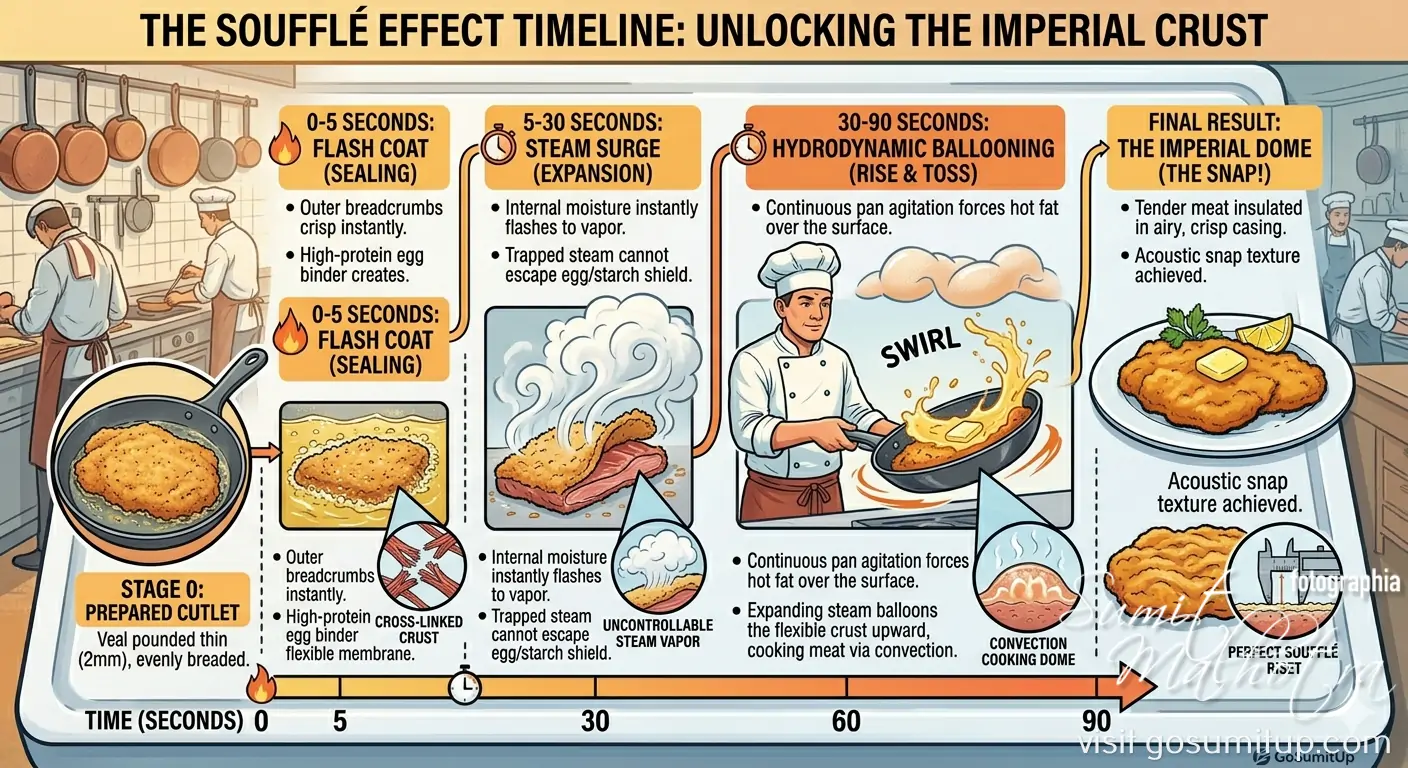
The separation of the crust—the Soufflé Effect—is achieved through precise manipulation of steam expansion.
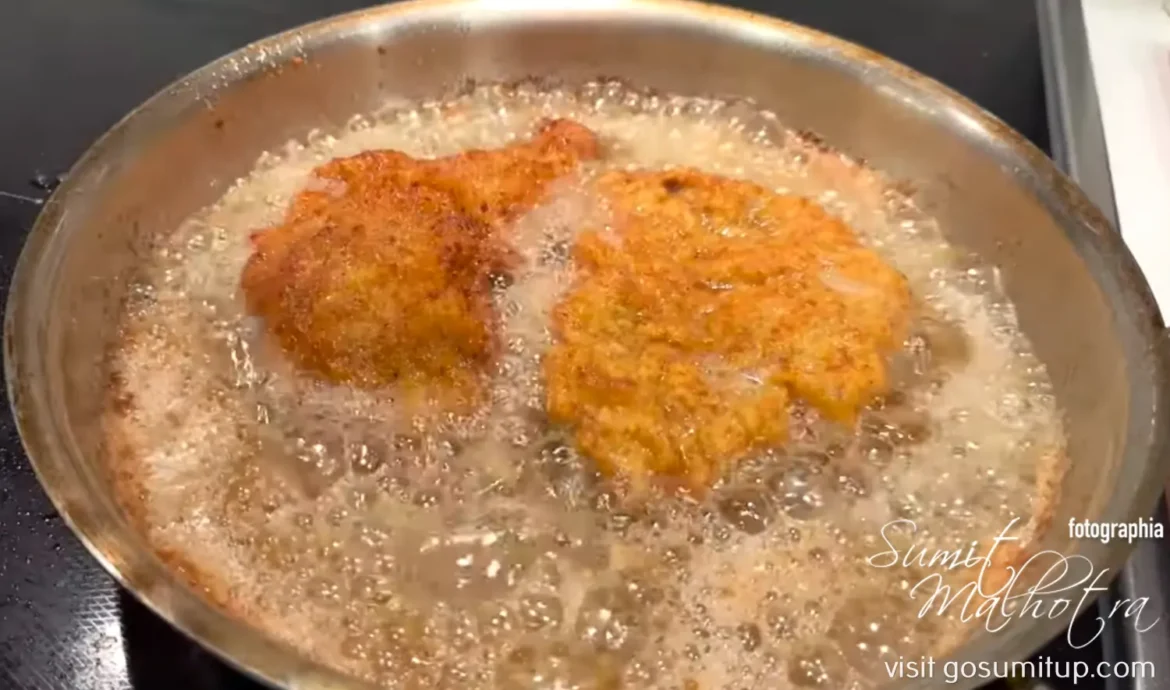
When the prepared cutlet is introduced to a deep pool of pure clarified butter (Schmalz) or lard, it must swim freely.
The cooking fat must be maintained at a strict thermal window of 160°C to 170°C (320°F to 338°F).
The soufflé effect
If the fat drops below 160°C, the porous breadcrumbs act as a sponge, drawing liquid grease into the matrix before the crust can seal, destroying the texture.
If the fat exceeds 180°C, the outer starches will burn into bitter carbon molecules before the interior heat can cook the veal core.
Wiener Schnitzel Being Fried
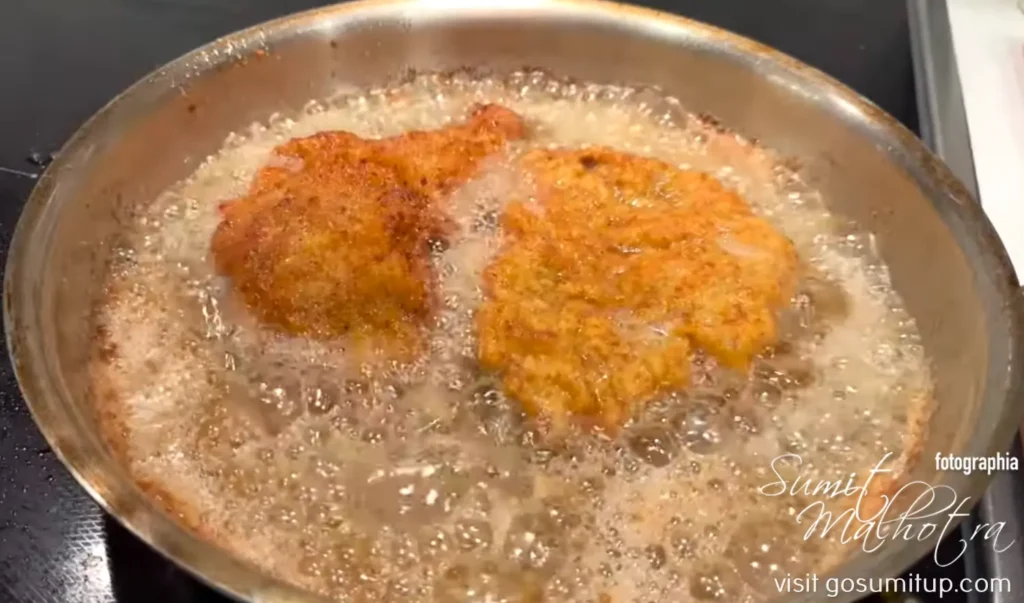
The moment the schnitzel hits the optimal fat pool, a sequence of rapid phase changes occurs.
The intense heat instantly vaporises the water locked within the ultra-thin layer of veal.
This water transitions from a liquid state to a gas, expanding in volume by a factor of nearly 1,600.
Because the outer flour-and-egg shield has already set into a flexible, non-porous membrane, this rapidly expanding steam is trapped.
It cannot escape outward through the breadcrumbs.
With nowhere to go, the steam pushes outward against the crust, ballooning the flexible, egg-bound breadcrumb shell upward away from the surface of the meat.
To ensure this happens uniformly across the entire cutlet, the chef must deploy the Continuous Shaking Protocol.
The skillet is kept in constant, rhythmic motion, causing waves of hot clarified butter to continuously wash over the top of the floating schnitzel.
This dual-sided heat application cooks the meat rapidly and gently via high-pressure steam convection inside its own golden dome.
Thus, keeping the interior veal tender while the exterior achieves a crispness profile that registers a distinct acoustic crunch upon the first bite.
Fried Wiener Schnitzel
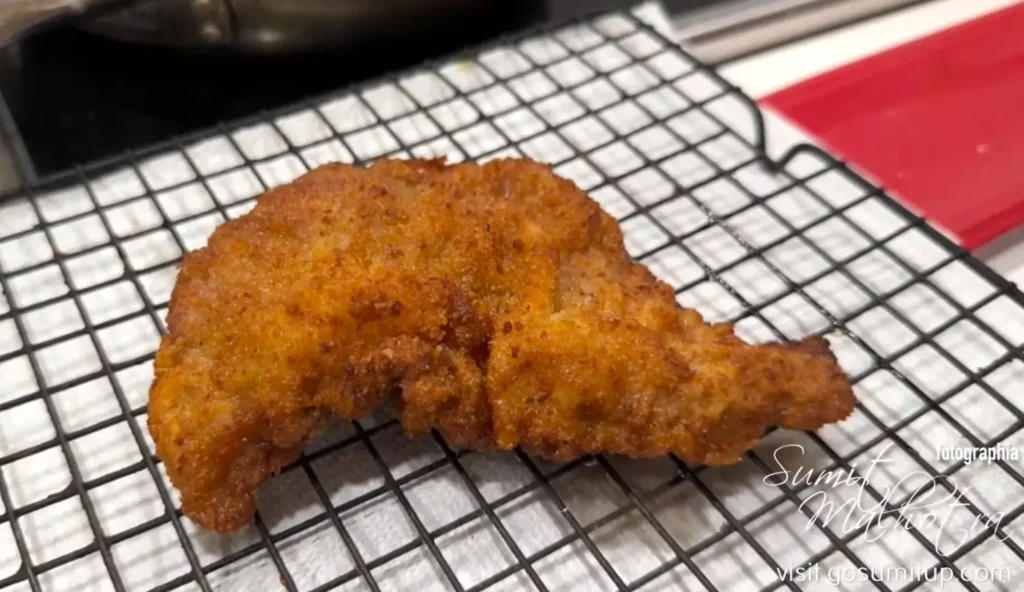
A "Sumit Up" Culinary Insight
Fully embracing the laws of thermal management.
The Wiener Schnitzel challenges the modern cook to step away from guesswork and fully embrace the laws of thermal management.
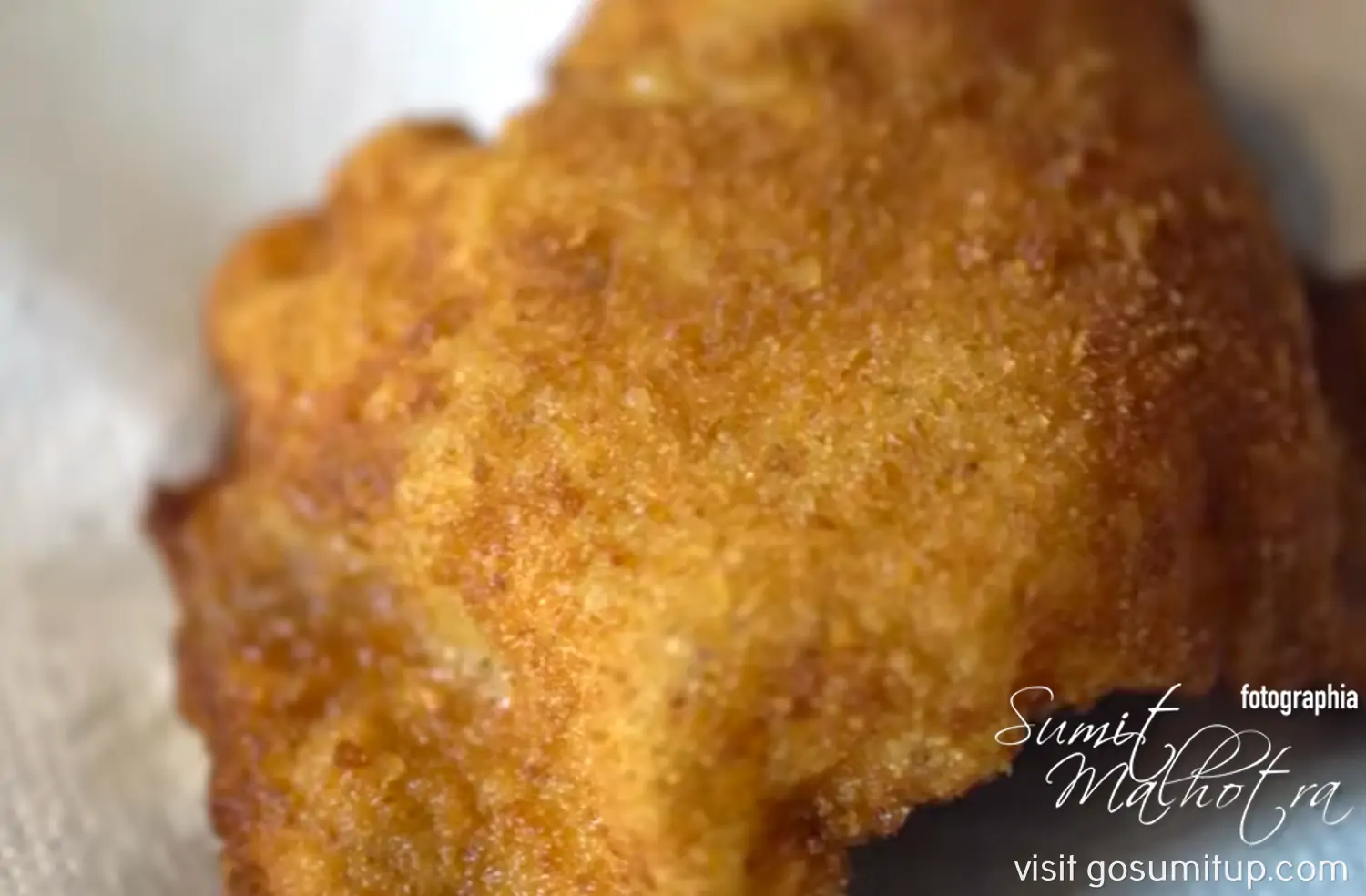
Wiener schnitzel is ready to be plated
When you treat the kitchen breading station not as a chore, but as the building of a complex thermodynamic shield, you elevate a humble fried cutlet into a premium masterpiece worthy of the Habsburg court.
If you are a traveller and or just love to drive, you may find below a list of items that will fortify & thus enrich your travel experience.
I use many of these myself for my trips. They are modestly priced and quite important to keep handy.
- Travel Adapter – https://amzn.to/3A04EJp
- Action Camera – https://amzn.to/4eCSMfF
- Camera Mounts & Accessories – https://amzn.to/4eG4je2
- Dashcam – https://amzn.to/3U2j4Qc
- Neck Rest – https://amzn.to/3Y6ZP98
- Tyre Inflator – https://amzn.to/3U8HpDP
- Storage – https://amzn.to/3XVQFMI
- Car Laptop Charger – https://amzn.to/3XXMVdA
- Vacuum Cleaner Cordless – https://amzn.to/3Yo1hWd
- Air Mattress – https://amzn.to/4015Bvu
- Jack Ratchet Wrench – https://amzn.to/3YkxddO
- Cleaning Cloth Microfibre – https://amzn.to/3NIOFmt
- Rechargeable Solar LED Torch – https://amzn.to/3Yj4h5Y
- Electronics Accessories Organiser – https://amzn.to/3A04XUz
- Pocket Travel Data Transfer Tool – https://amzn.to/3zMTxnc
- Smart Tracker for Keys – https://amzn.to/3BTuIq0
- Camping Cookware Kit – https://amzn.to/3BIy0N3
- Sleeping Bag – https://amzn.to/3U7v2rP
GoSumItUp is a personal blog written and edited personally by me. All opinions expressed are my own, which are honest and have not been influenced by any means.
My reviews are dependent on the visits at the time, and revisits will be reviewed again as they may have a different experience or the same.
I am not a food critic nor do I consider myself as one; this platform allows me to write and review my own personal dining experiences, whether good or bad, delicious or not, all of which are honest and truthful opinions.
Suppose you disagree or agree with me at any point, or do not receive the same experiences as I have. In that case, I do not hold any responsibility as everyone will have their own experiences that they will encounter themselves.
I pay for all meals. However, if any meals or products have been sponsored or compensated or if I was a guest, it will be clearly disclosed at the end of each review.
All images on this blog are my own unless stated otherwise. If you wish to use any of my photography for any purposes, please do not use it without any written permission and give credit and/or link back to the website.
If you would like to send a product or any sponsors/endorsements, it may or may not be published and reviewed on the website.
If you wish to send any products or invitations for any media, press or collaborations, etc., consider if it is something related to the content of the website, and if you see fit, please visit the Contact page for contact details.
Thank You.
Thank you for visiting GoSumItUp! I hope you enjoy the reviews & recipes found at www.gosumitup.com.
This page consists of disclaimers regarding the recipe, its outcome, nutrition, and food handling safety decisions.
The recipes have been cooked and compiled by me for general information only and should not be used to diagnose or treat any medical condition/s.
This information is not intended to diagnose, treat, cure, or prevent any disease as well.
GoSumItUp.com has used all reasonable care in compiling the information but offers no warranty as to its accuracy or its use in any possible form.
Consult a doctor or other health care professional for diagnosis and treatment of any medical condition/s. For more details please refer to our disclosure policy.
If you like this article, you can let us know in the comments below or on social media using #gosumitup and tag @gosumitup on Facebook.
I am always happy to read your feedback, and if you liked the dish or if you made the dish. :)
Better still, take a picture and post it on Instagram and tag it as #gosumitup
Connect directly – You can also connect with me directly on my Instagram, Facebook or Pinterest.
And, keep visiting us for more of such awesomeness. Bookmark gosumitup.com into your web browser now or simply subscribe to our browser notifications.