Origin of Mantu Dumplings – Read the History of Afghan Mantu, one of the Traditional Afghan Mantu Recipe History & a Part of Silk Road Food Evolution
If there is one dish that defines the festive, communal spirit of an Afghan household, it is the Mantu.
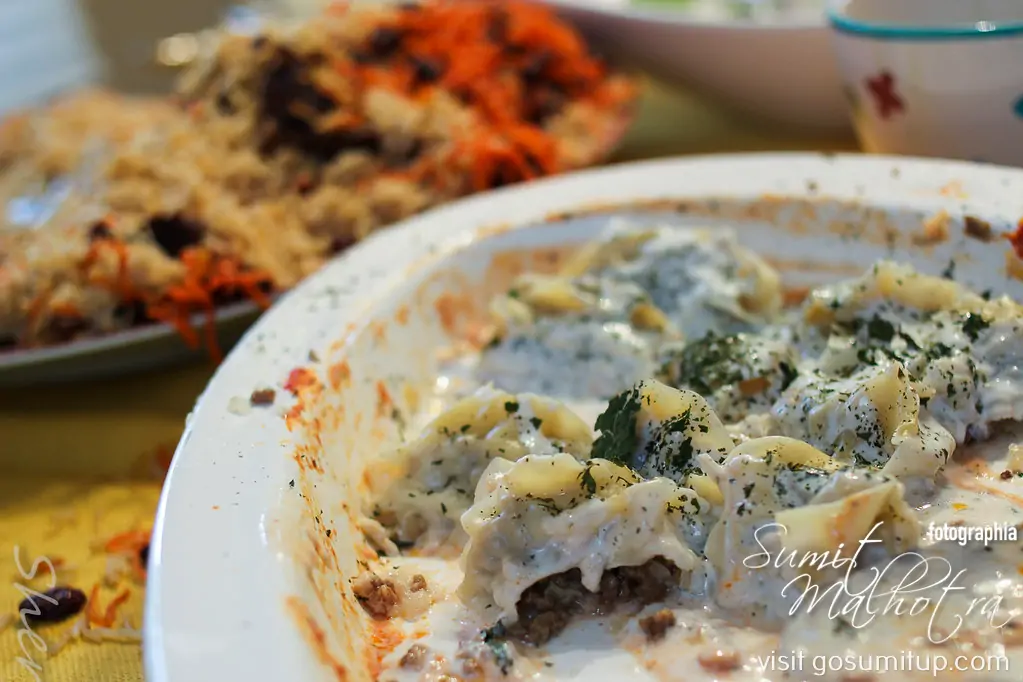
These delicate, steamed dumplings, filled with spiced meat and onions and blanketed in a rich, tangy yoghurt sauce, are the crown jewels of the Afghan table.
However, a shadow of culinary doubt has always loomed over this beloved dish.
Because the name “Mantu” sounds remarkably similar to the Chinese Mantou, the Korean Mandu, or the Japanese Manjū, a persistent myth has taken hold: that the Afghan Mantu is simply a “foreign import,” a direct copy of Chinese dumplings brought over by Silk Road traders.
But is the Mantu truly a Chinese traveller, or does it hold a deeper, more nomadic secret?
To answer this, we must look beyond the name and explore the history of the nomadic empires that once bridged the gap between the East and the West.
Mantu
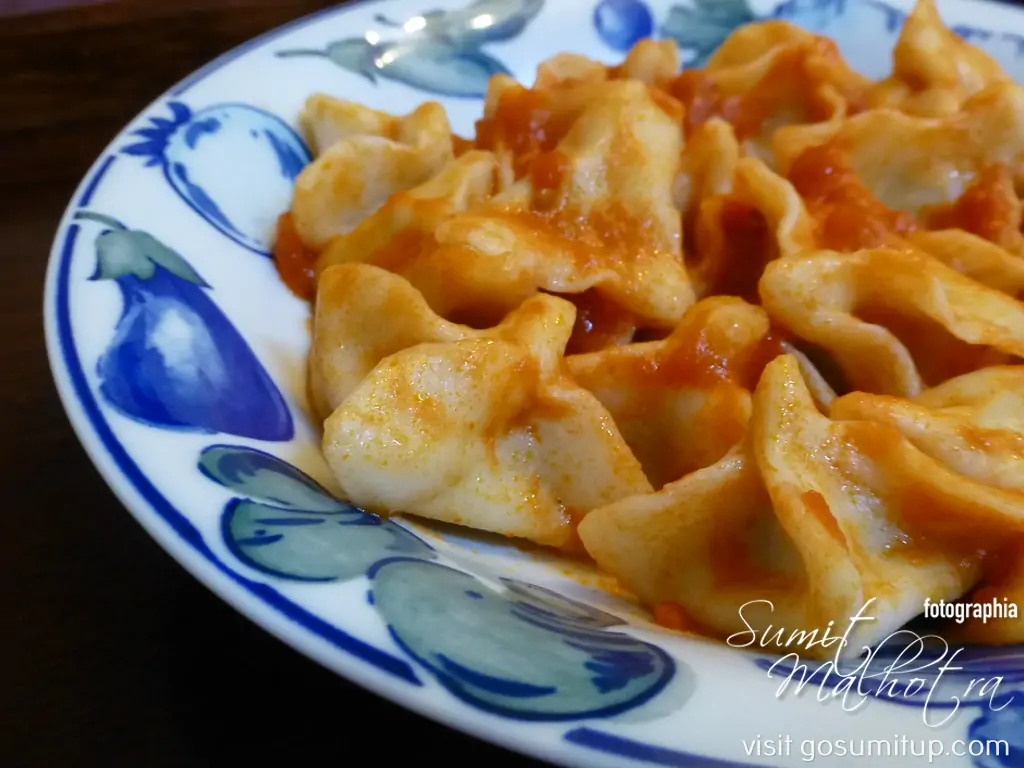
The Linguistic Mirage: Mantou vs. Mantu
As the Silk Road flourished, the concept of "dough wrapped around meat" travelled.
The primary evidence for the “Chinese Import” myth is linguistic. In modern Mandarin, Mantou refers to a plain, steamed bun.
However, historical records from the Jin Dynasty (266–420 CE) suggest that the original Mantou were indeed filled with meat.
As the Silk Road flourished, the concept of “dough wrapped around meat” travelled. But here is where the myth simplifies a complex reality.
While the concept may have sparked in the East, the Mantu we eat in Kabul or Mazar-i-Sharif today didn’t come from the Chinese courts.
It came from the Turkic and Mongol nomads of Central Asia.
For these horse-riding warriors, the Mantu was the ultimate “survival food.”
It was easy to prepare over a campfire using a tiered steamer, portable, and incredibly high in energy.
As the Mongol Empire expanded under Genghis Khan and his successors, they didn’t just carry bows and arrows; they carried the Mantu.
Afghani Mantu
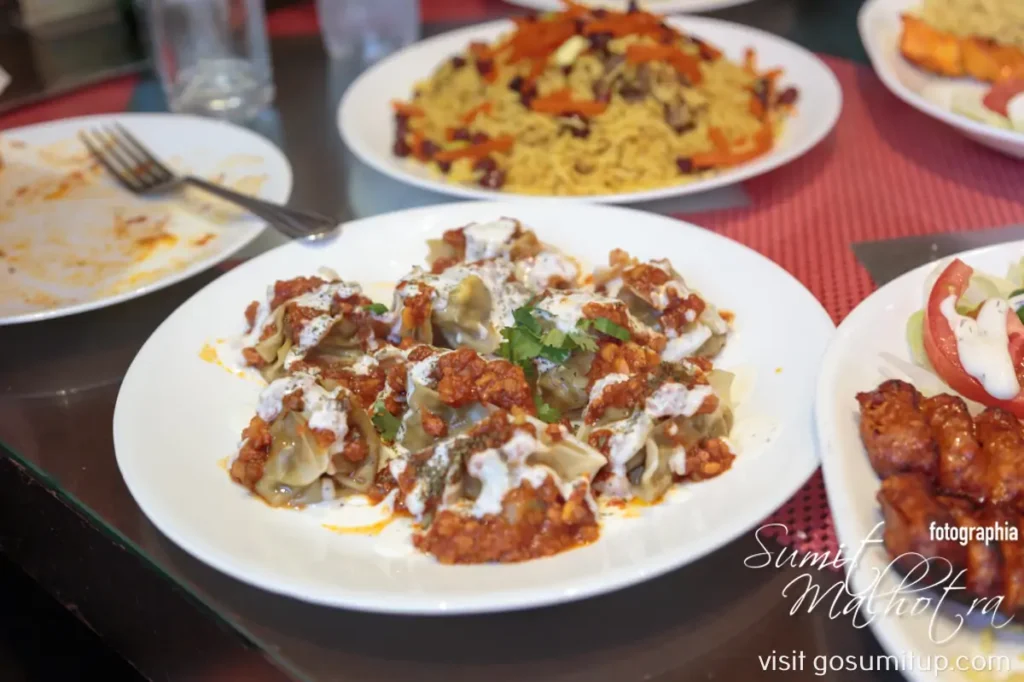
The Nomadic Blueprint: Why Afghan Mantu is Different
The Afghan Mantu is defined by its topping of Chaka.
To claim that the Afghan Mantu is just a “Chinese import” ignores the fundamental culinary evolution that happened on the steppes of Central Asia.
The Afghan Mantu has several “DNA markers” that distinguish it entirely from its East Asian cousins:
The Dough: Unlike the bready, leavened dough often found in Chinese Mantou, the Afghan Mantu uses a paper-thin, unleavened wrapper.
This requires immense manual skill—stretching the dough until it is translucent yet strong enough to hold the steam.
The Yoghurt (Chaka): This is the most significant departure. In East Asian dumpling traditions, yoghurt is virtually non-existent.
The Afghan Mantu is defined by its topping of Chaka (strained, thick yoghurt), dried mint, and garlic.
This reflects the deep dairy-based culture of the Central Asian nomads, for whom fermented milk was a staple of life and health.
The “Double Sauce” Technique: Afghan Mantu isn’t just served with one sauce. It features a tomato-based lentil or split-pea gravy (Qurma) drizzled over the yoghurt.
This layering of “Sard” (cold yoghurt) and “Garm” (hot meat gravy) is a hallmark of Afghan food philosophy that you won’t find in Beijing or Seoul.
Traditional Afghan Mantu
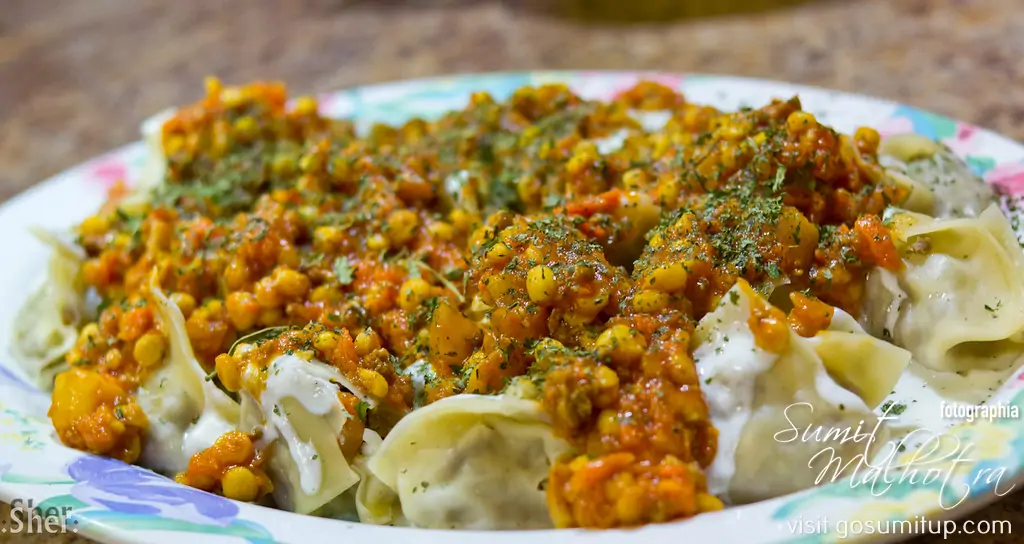
The Royal Refinement: From Steppes to Palaces
During the Timurid and Mughal eras, the Mantu moved from the campfire to the palace.
While the nomads gave the Mantu its soul, the urban centres of Afghanistan gave it its “Royal Legacy.”
During the Timurid and Mughal eras, the Mantu moved from the campfire to the palace.
In the courts of Herat and Kabul, the dish became a test of a chef’s finesse.
The folds of the Mantu became more intricate—traditional Afghan Mantu are folded into a specific “diamond” or “star” shape, leaving the top slightly open to absorb the steam.
It became a dish of celebration, served at weddings (Nikah) and during the holy month of Ramadan to break the fast.
Debunking the Myth: A Shared Heritage, Not a Copy
The Afghan Mantu is a quintessentially Central Asian invention.
So, is the Mantu a Chinese import?
The answer is a resounding no. While the Silk Road facilitated a “Great Exchange” of ideas, the Afghan Mantu is a quintessentially Central Asian invention.
It is a dish that represents the synthesis of nomadic practicality and urban refinement.
To call it a “Chinese import” is to ignore the 1,500 years of innovation by Turkic, Mongol, and Afghan cooks who transformed a simple steamed bun into a complex, multi-layered masterpiece of flavour.
A "Sumit Up" Culinary Insight
Mantu is a a beautiful, delicious transformation.
When you eat Mantu, you aren’t just tasting meat and dough.
You are tasting the history of the Silk Road, the resilience of the nomadic steppes, and the incredible dairy traditions of Afghanistan.
It is a dish that travelled thousands of miles and evolved at every step, proving that in the world of food, there are no “imports”—only beautiful, delicious transformations.
If you are a traveller and or just love to drive, you may find below a list of items that will fortify & thus enrich your travel experience.
I use many of these myself for my trips. They are modestly priced and quite important to keep handy.
- Travel Adapter – https://amzn.to/3A04EJp
- Action Camera – https://amzn.to/4eCSMfF
- Camera Mounts & Accessories – https://amzn.to/4eG4je2
- Dashcam – https://amzn.to/3U2j4Qc
- Neck Rest – https://amzn.to/3Y6ZP98
- Tyre Inflator – https://amzn.to/3U8HpDP
- Storage – https://amzn.to/3XVQFMI
- Car Laptop Charger – https://amzn.to/3XXMVdA
- Vacuum Cleaner Cordless – https://amzn.to/3Yo1hWd
- Air Mattress – https://amzn.to/4015Bvu
- Jack Ratchet Wrench – https://amzn.to/3YkxddO
- Cleaning Cloth Microfibre – https://amzn.to/3NIOFmt
- Rechargeable Solar LED Torch – https://amzn.to/3Yj4h5Y
- Electronics Accessories Organiser – https://amzn.to/3A04XUz
- Pocket Travel Data Transfer Tool – https://amzn.to/3zMTxnc
- Smart Tracker for Keys – https://amzn.to/3BTuIq0
- Camping Cookware Kit – https://amzn.to/3BIy0N3
- Sleeping Bag – https://amzn.to/3U7v2rP
GoSumItUp is a personal blog written and edited personally by me. All opinions expressed are my own, which are honest and have not been influenced by any means.
My reviews are dependent on the visits at the time, and revisits will be reviewed again as they may have a different experience or the same.
I am not a food critic nor do I consider myself as one; this platform allows me to write and review my own personal dining experiences, whether good or bad, delicious or not, all of which are honest and truthful opinions.
Suppose you disagree or agree with me at any point, or do not receive the same experiences as I have. In that case, I do not hold any responsibility as everyone will have their own experiences that they will encounter themselves.
I pay for all meals. However, if any meals or products have been sponsored or compensated or if I was a guest, it will be clearly disclosed at the end of each review.
All images on this blog are my own unless stated otherwise. If you wish to use any of my photography for any purposes, please do not use it without any written permission and give credit and/or link back to the website.
If you would like to send a product or any sponsors/endorsements, it may or may not be published and reviewed on the website.
If you wish to send any products or invitations for any media, press or collaborations, etc., consider if it is something related to the content of the website, and if you see fit, please visit the Contact page for contact details.
Thank You.
Thank you for visiting GoSumItUp! I hope you enjoy the reviews & recipes found at www.gosumitup.com.
This page consists of disclaimers regarding the recipe, its outcome, nutrition, and food handling safety decisions.
The recipes have been cooked and compiled by me for general information only and should not be used to diagnose or treat any medical condition/s.
This information is not intended to diagnose, treat, cure, or prevent any disease as well.
GoSumItUp.com has used all reasonable care in compiling the information but offers no warranty as to its accuracy or its use in any possible form.
Consult a doctor or other health care professional for diagnosis and treatment of any medical condition/s. For more details please refer to our disclosure policy.
If you like this article, you can let us know in the comments below or on social media using #gosumitup and tag @gosumitup on Facebook.
I am always happy to read your feedback, and if you liked the dish or if you made the dish. :)
Better still, take a picture and post it on Instagram and tag it as #gosumitup
Connect directly – You can also connect with me directly on my Instagram, Facebook or Pinterest.
And, keep visiting us for more of such awesomeness. Bookmark gosumitup.com into your web browser now or simply subscribe to our browser notifications.
