Croissant (s) Croissants (p) – Read and learn about Croissant History Myth, Kipferl vs Croissant, Marie Antoinette Pastry Legend, August Zang Paris Bakery, Dough Lamination Method, Flaky Puff Pastry Layers, Enriched Yeast Dough, Cold Butter Sheets, Honeycomb Interior Crumb, Steam Driven Pastry Expansion, Fat Temperature Management, Baking Thermal Mechanics, Starch Fat Interaction, Croissant History, Marie Antoinette Myth, Kipferl Origin, August Zang, French Pastry Secrets, Dough Lamination, Baking Science, Butter Layers, Food Folklore, Kitchen Physics
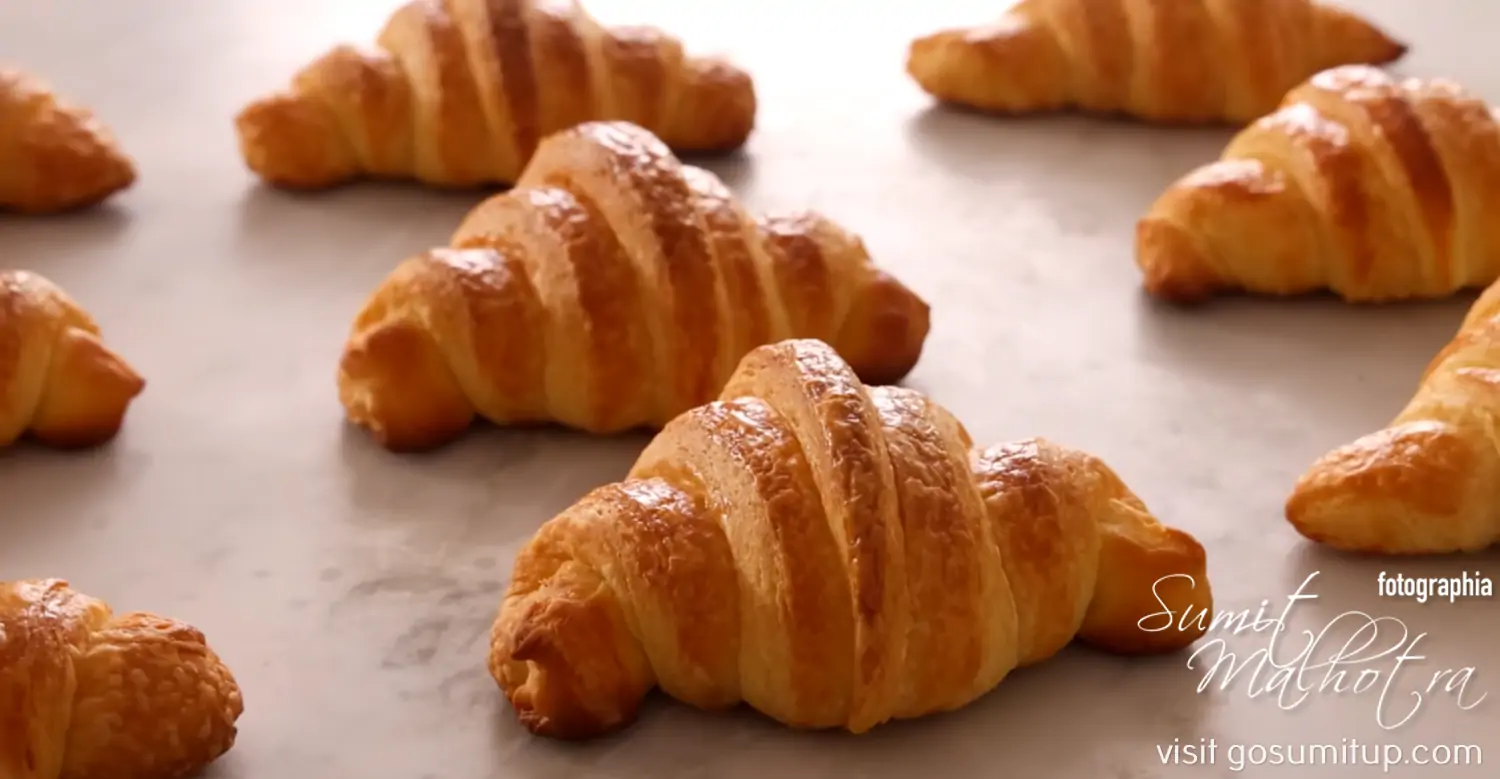
Few things in life match the pure joy of biting into a freshly baked, warm French croissant.
You press your fingers into its golden shell, feeling the paper-thin sheets crackle and shatter.
As you pull it apart, a cloud of rich, buttery steam rises from an interior that looks like an intricate, delicate honeycomb.
It is a pastry so deeply tied to Paris that the image of a croissant next to a cup of espresso has become the universal symbol of French living.
Because it is a national icon, the story of how the croissant came to be is treated with incredible romance.
Tour guides along the River Seine, continental breakfast menus, and historical fiction novels all love to share a legendary tale.
It is a story that links the birth of this flaky pastry directly to a brave group of midnight bakers, a desperate wartime siege, and a tragic French queen who just wanted a taste of home comfort.
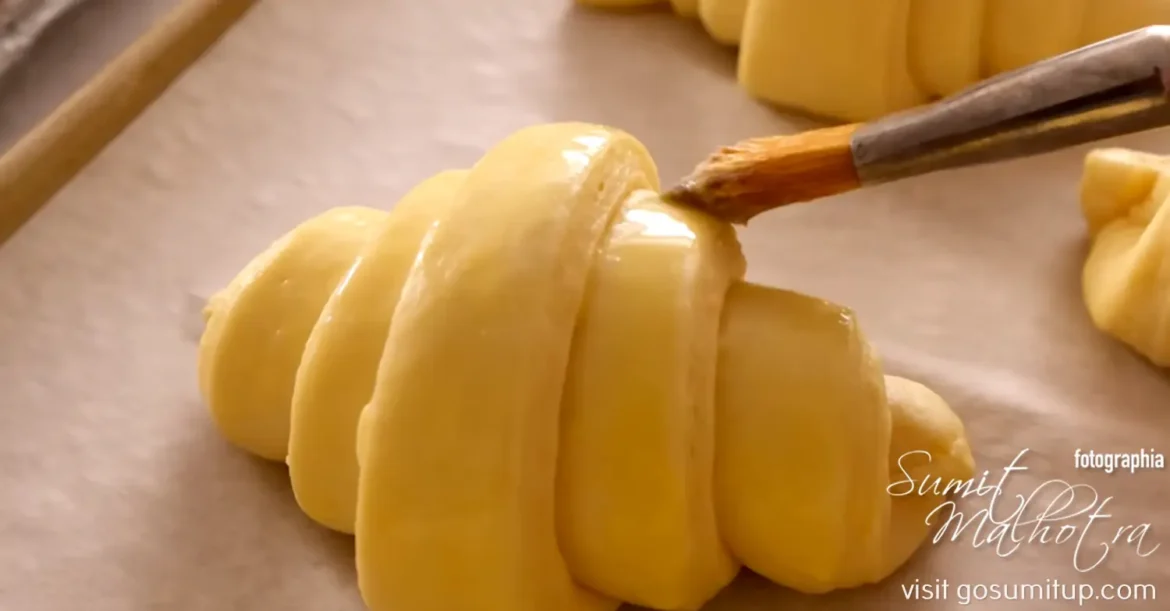
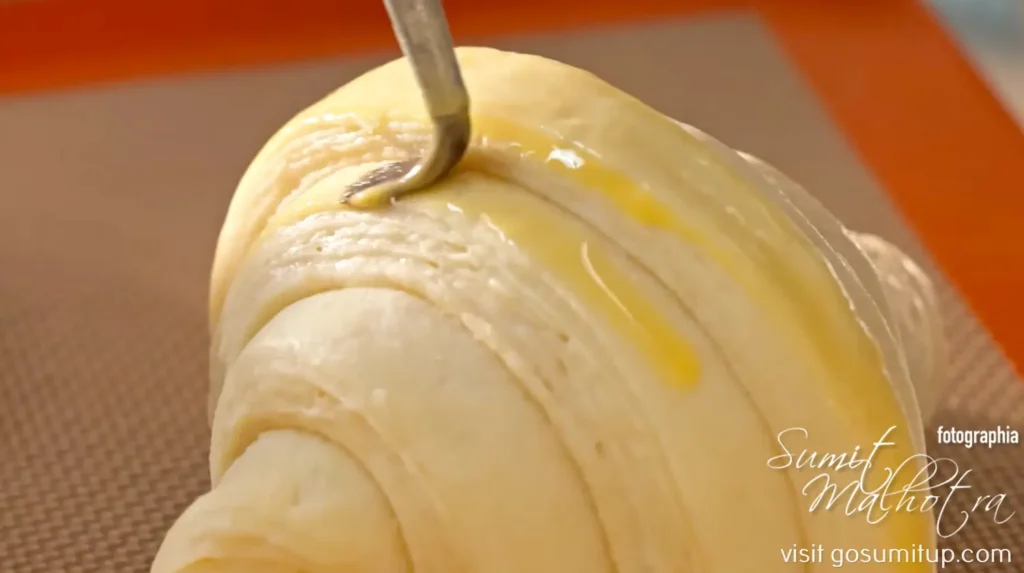
Croissant Being Egg Washed
It is a beautiful narrative that seamlessly blends military triumph with royal high society.
But if you step out of the palace gates, set aside the sweeping folklore, and look closely at actual historical bakery ledgers and the hands-on science of working with butter and yeast, a completely different reality comes to light.
The croissant is not a native French invention born out of a royal craving. Instead, it was the result of a brilliant, nineteenth-century marketing campaign run by a retired Austrian military officer.
He introduced a heavy, simple crescent bread to Paris, which local French bakers completely revolutionised by mastering a complex method of layering fat and dough.
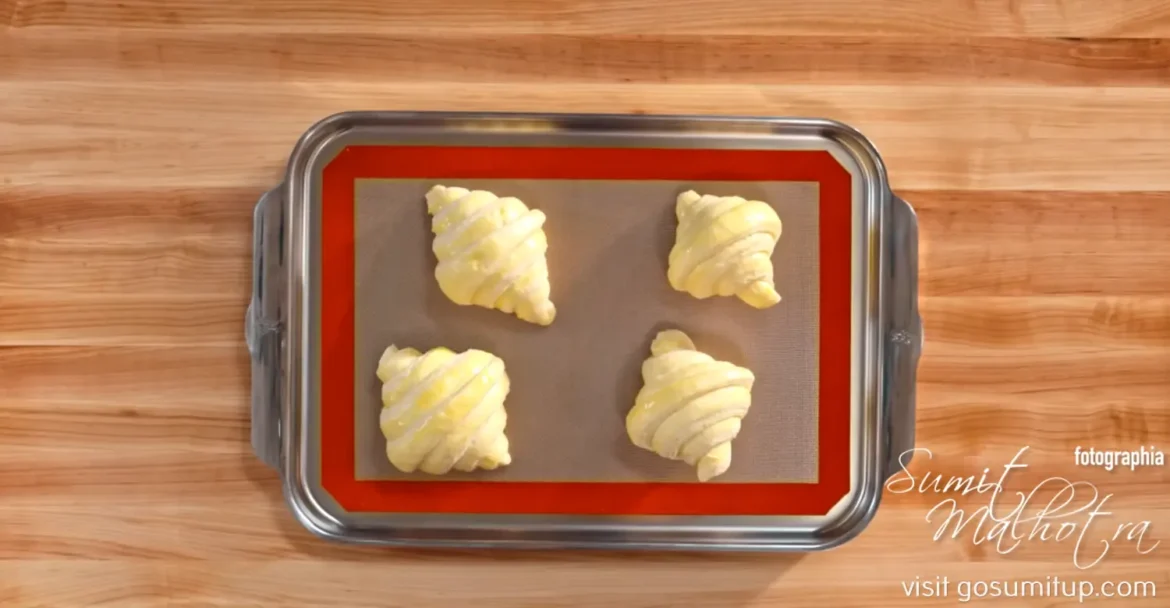
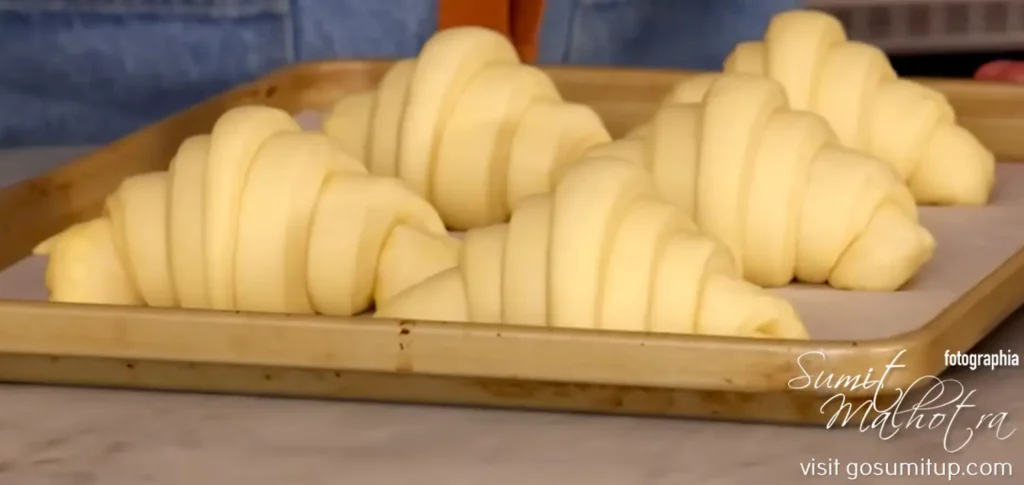
Croissants Laid to be Baked
The Legend of the Battle and the Sovereign
By eating Kipferl, the citizens of Vienna could symbolically "consume" their enemies every morning for breakfast.
To understand how deep this culinary myth goes, we have to travel back in time to two completely different historical eras.
The first part of the legend takes place in the late summer of 1683 in Vienna, Austria.
The city was surrounded by the vast military forces of the Ottoman Empire.
Seeking to breach the city’s thick stone defence walls, Ottoman sappers began digging secret tunnels underground in the dead of night.
As the story goes, a group of local Viennese bakers working in deep basement kitchens heard the faint, rhythmic thumping of shovels beneath their floorboards.
They quickly raised the alarm, allowing the city defenders to counter-attack and save Vienna from destruction.
To celebrate this narrow victory, the bakers allegedly created a special commemorative yeast roll shaped like a crescent moon—the prominent symbol found on the Ottoman flag.
By eating this pastry, the citizens of Vienna could symbolically “consume” their enemies every morning for breakfast.
They called this crescent bread a Kipferl.
The second part of the legend bridges the gap between Austria and France a century later.
In 1770, the young Austrian Archduchess Marie Antoinette left her home in Vienna to marry the future King Louis XVI of France.
The story claims that the teenage queen felt deeply homesick inside the cold, rigid halls of the Palace of Versailles.
Desperate for a taste of her childhood, she ordered the royal palace pastry chefs to recreate the Viennese Kipferl.
The French chefs complied, adapted the name to their own language based on its shape, and thus, the French croissant was born.
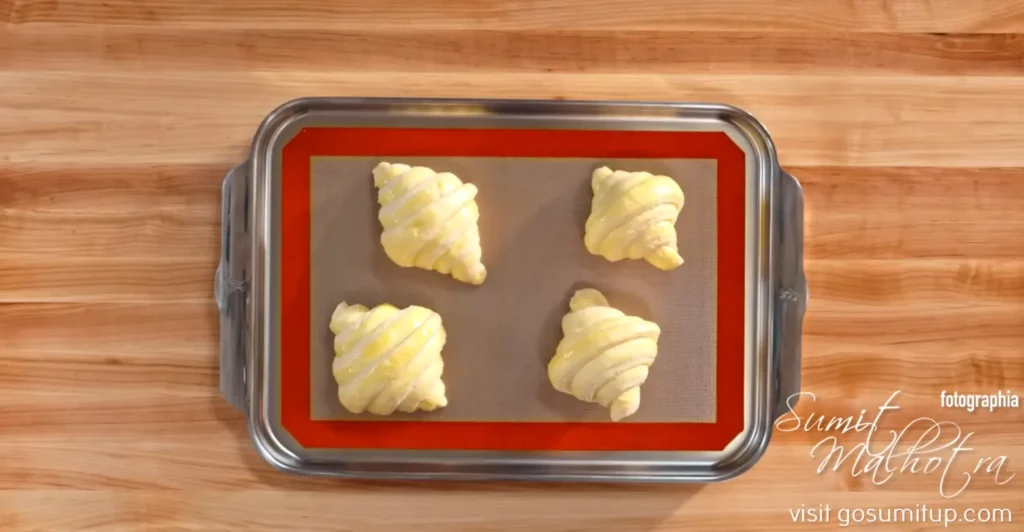
Croissants Laid on the Baking Tray
The Collision of Austrian Bread and French Pastry
French croissant we know today was an entirely French innovation achieved through a process called lamination.
While August Zang introduced the crescent shape to France, the pastry he sold was still fundamentally a bread.
It was soft, dense, and had a uniform, cake-like interior crumb.
The transformation of this heavy Austrian roll into the light, shatteringly crisp French croissant we know today was an entirely French innovation achieved through a process called lamination.
French bakers were already masters of puff pastry (pâte feuilletée), a technique in which cold butter is enclosed within a basic flour-and-water dough and rolled out repeatedly.
They decided to take Zang’s concept of an enriched yeast dough and combine it with their native lamination skills.
[Dense Austrian Yeast Dough] + [French Lamination Technique] ➔ [Modern Flaky Croissant]
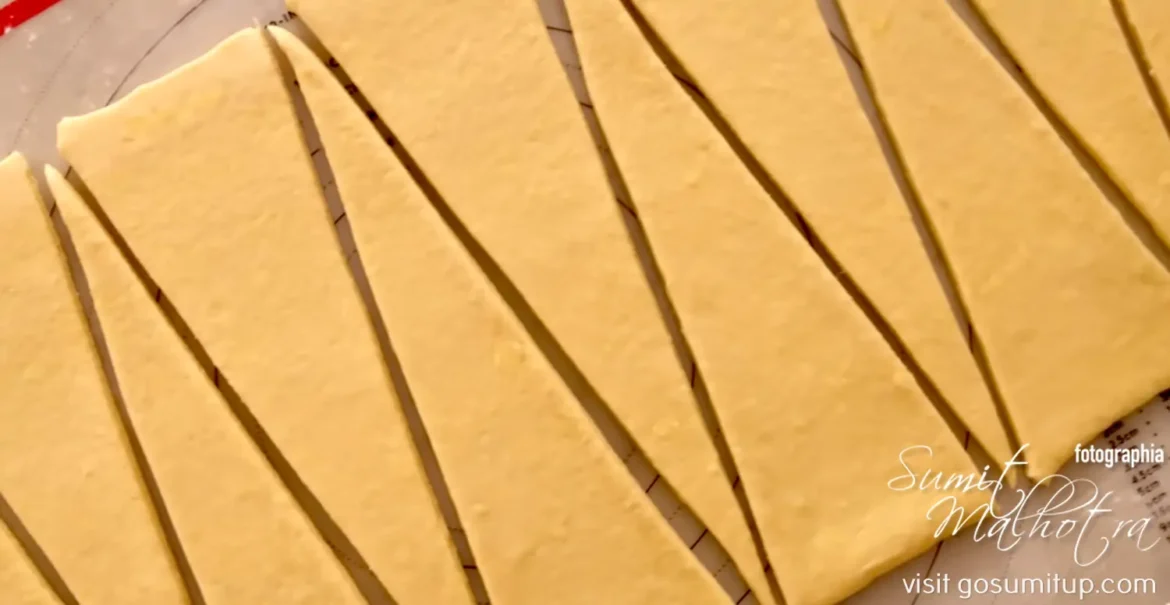
To do this, a baker creates a base dough using yeast, flour, sugar, and milk. This dough is rolled out flat into a cool sheet.
Then, a massive, solid block of cold, pliable butter is placed right in the centre.
The baker folds the edges of the dough over the butter, sealing it completely like a neat package.
Using a heavy rolling pin, the baker rolls this package out into a long rectangle, folds it into thirds like a business letter, and places it in a refrigerator to chill.
This process of rolling and folding is repeated multiple times.
Each time the dough is folded, the single block of butter is forced to split into thinner and thinner sheets.
By the time the process is finished, the baker has created a single sheet of pastry that secretly contains dozens of microscopic, alternating layers of cold fat and yeasted dough, all stacked on top of one another.
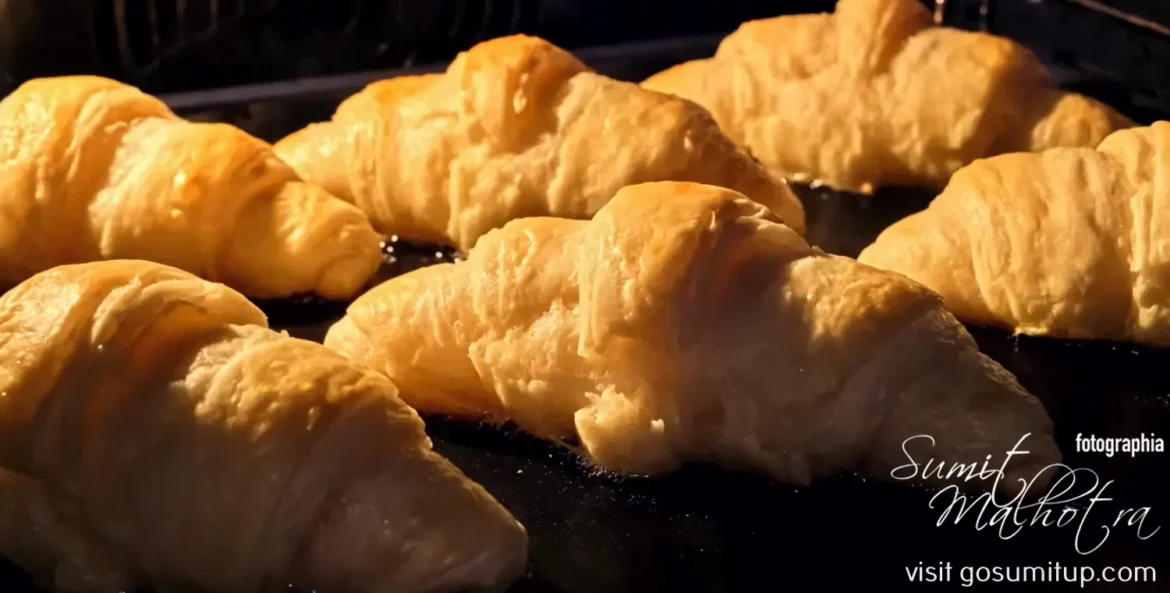
Croissant being Baked
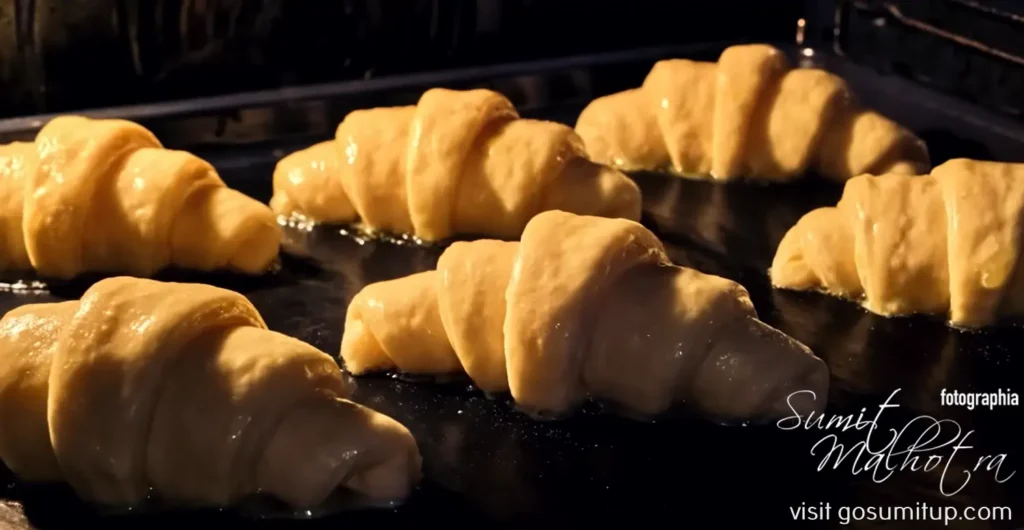
How Steam and Fat Build the Perfect Honeycomb
As the pastry heats up, two distinct reactions happen inside the dough.
The real magic happens when these laminated crescent shapes are placed inside a screaming hot oven.
As the pastry heats up, two distinct reactions happen inside the dough at the exact same time, creating a beautifully balanced structure.
First, the solid sheets of butter between the dough layers begin to melt.
As the butter melts, the natural water trapped inside the fat flashes into steam.
Because steam takes up far more physical space than water, it expands rapidly, pushing upward against the layer of dough directly above it.
This steam pressure forces the individual layers of pastry to lift, separate, and puff outward like dozens of tiny, inflating balloons.
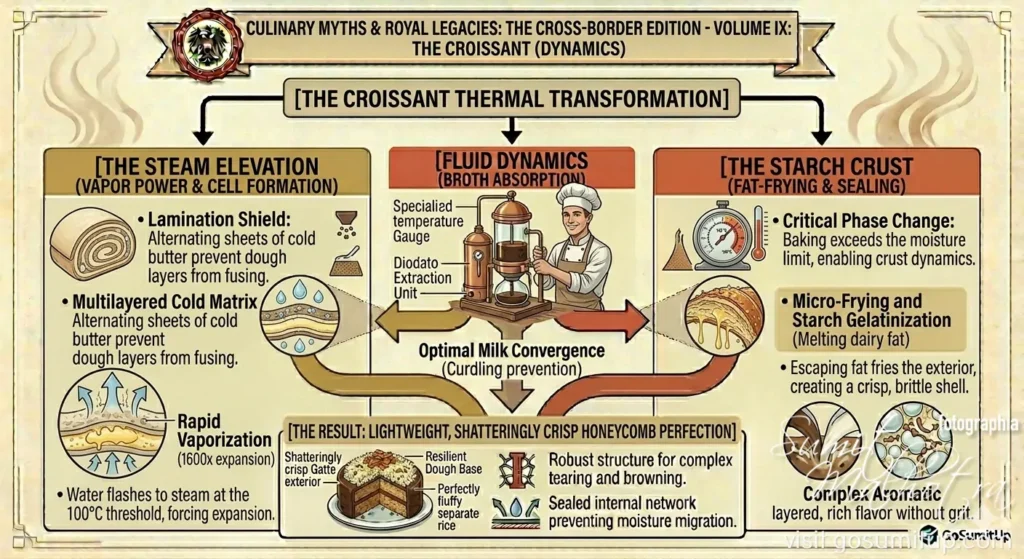
The croissant thermal transformation
While the steam is lifting the dough, the melted butter fat seeps directly into the surrounding flour.
This fat essentially shallow-fries the flour particles at a micro-level, causing them to set into a crisp, brittle texture.
If the baker used standard wheat dough without these layers of fat, the yeast would simply create a uniform, bready loaf.
But because the thin sheets of butter act as a physical barrier, they prevent the dough layers from collapsing back into each other.
When the pastry cools, the spaces where the butter used to be remain permanently locked open as empty, airy pockets, creating the iconic, lightweight honeycomb structure.
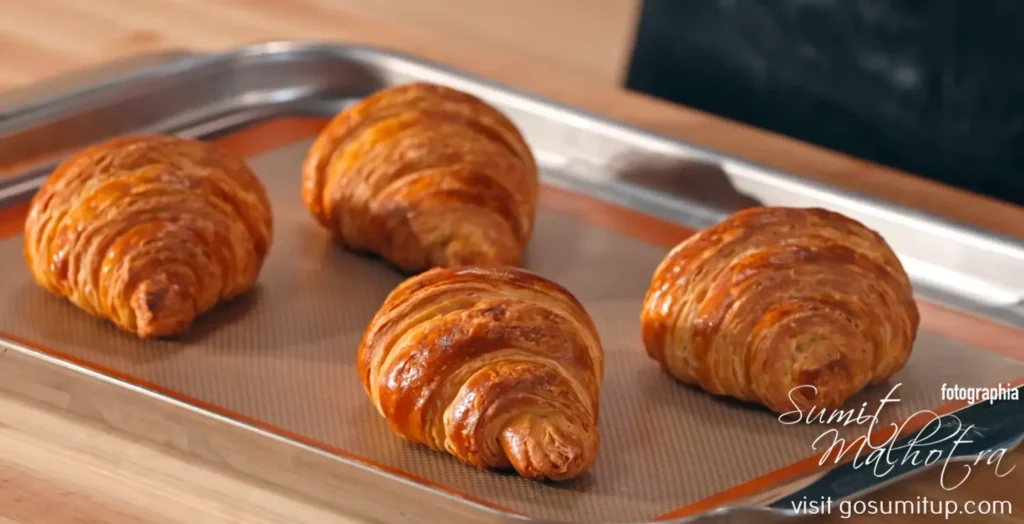
Croissants Removed from the Oven
The Essential Science of the Cold Rest
The traditional bakeries enforce strict cold rest phases between every single fold.
Achieving this perfect balance requires immense precision and a deep respect for temperature.
The greatest enemy of a French croissant baker is warmth before the pastry ever hits the oven.
If a kitchen gets too hot while the baker is rolling and folding the pastry, the internal layers of butter will reach their melting point early.
If the butter melts while it is still on the work table, it will absorb straight into the surrounding flour, turning the mixture into a greasy, heavy, uniform dough.
The distinct, separate layers will be permanently lost, and the pastry will bake into a flat, greasy, dense roll that closely resembles a heavy brioche rather than a light croissant.
This is why traditional bakeries enforce strict cold rest phases between every single fold. The dough is repeatedly returned to a refrigerator to lower its temperature.
This cooling phase ensures that the butter remains a solid, firm sheet of fat, strong enough to withstand the pressure of the rolling pin without breaking.
It proves that the breathtaking lightness of a world-class croissant isn’t just about mixing ingredients; it is a careful game of managing temperature, fat mechanics, and patience.
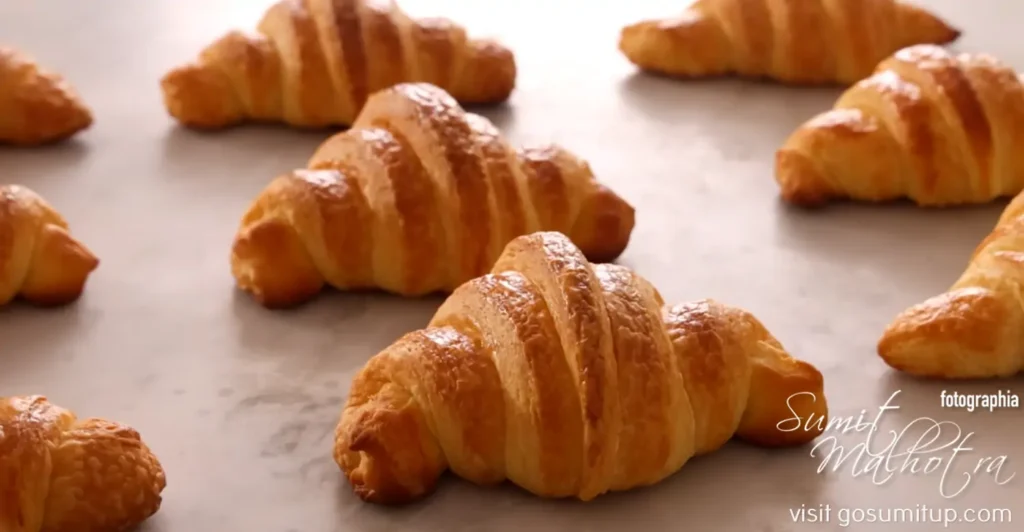
Baked Croissants Resting on a Tray
A "Sumit Up" Culinary Insight
Cultural masterpieces are almost always born when two completely different traditions collide.
The true story of the croissant reminds us that cultural masterpieces are rarely created in total isolation; they are almost always born when two completely different traditions collide.
August Zang brought the distinct Austrian crescent shape and premium business marketing to Paris, but it was the quiet, masterful technique of local French bakers that turned a heavy bread into an ethereal, multi-layered work of art.
As cooks and content creators, the takeaway is clear: don’t be afraid to take a classic, time-tested idea from another culture or discipline and apply your own specialised techniques to it.
By embracing the rigid temperature rules of lamination and letting steam do the heavy lifting inside the oven, those French artisans created a timeless icon.
The folklore of homesick queens is charming, but the real magic lies in the brilliant hands-on execution of the craft.
Making of Baked Croissants
If you are a traveller and or just love to drive, you may find below a list of items that will fortify & thus enrich your travel experience.
I use many of these myself for my trips. They are modestly priced and quite important to keep handy.
- Travel Adapter – https://amzn.to/3A04EJp
- Action Camera – https://amzn.to/4eCSMfF
- Camera Mounts & Accessories – https://amzn.to/4eG4je2
- Dashcam – https://amzn.to/3U2j4Qc
- Neck Rest – https://amzn.to/3Y6ZP98
- Tyre Inflator – https://amzn.to/3U8HpDP
- Storage – https://amzn.to/3XVQFMI
- Car Laptop Charger – https://amzn.to/3XXMVdA
- Vacuum Cleaner Cordless – https://amzn.to/3Yo1hWd
- Air Mattress – https://amzn.to/4015Bvu
- Jack Ratchet Wrench – https://amzn.to/3YkxddO
- Cleaning Cloth Microfibre – https://amzn.to/3NIOFmt
- Rechargeable Solar LED Torch – https://amzn.to/3Yj4h5Y
- Electronics Accessories Organiser – https://amzn.to/3A04XUz
- Pocket Travel Data Transfer Tool – https://amzn.to/3zMTxnc
- Smart Tracker for Keys – https://amzn.to/3BTuIq0
- Camping Cookware Kit – https://amzn.to/3BIy0N3
- Sleeping Bag – https://amzn.to/3U7v2rP
GoSumItUp is a personal blog written and edited personally by me. All opinions expressed are my own, which are honest and have not been influenced by any means.
My reviews are dependent on the visits at the time, and revisits will be reviewed again as they may have a different experience or the same.
I am not a food critic nor do I consider myself as one; this platform allows me to write and review my own personal dining experiences, whether good or bad, delicious or not, all of which are honest and truthful opinions.
Suppose you disagree or agree with me at any point, or do not receive the same experiences as I have. In that case, I do not hold any responsibility as everyone will have their own experiences that they will encounter themselves.
I pay for all meals. However, if any meals or products have been sponsored or compensated or if I was a guest, it will be clearly disclosed at the end of each review.
All images on this blog are my own unless stated otherwise. If you wish to use any of my photography for any purposes, please do not use it without any written permission and give credit and/or link back to the website.
If you would like to send a product or any sponsors/endorsements, it may or may not be published and reviewed on the website.
If you wish to send any products or invitations for any media, press or collaborations, etc., consider if it is something related to the content of the website, and if you see fit, please visit the Contact page for contact details.
Thank You.
Thank you for visiting GoSumItUp! I hope you enjoy the reviews & recipes found at www.gosumitup.com.
This page consists of disclaimers regarding the recipe, its outcome, nutrition, and food handling safety decisions.
The recipes have been cooked and compiled by me for general information only and should not be used to diagnose or treat any medical condition/s.
This information is not intended to diagnose, treat, cure, or prevent any disease as well.
GoSumItUp.com has used all reasonable care in compiling the information but offers no warranty as to its accuracy or its use in any possible form.
Consult a doctor or other health care professional for diagnosis and treatment of any medical condition/s. For more details please refer to our disclosure policy.
If you like this article, you can let us know in the comments below or on social media using #gosumitup and tag @gosumitup on Facebook.
I am always happy to read your feedback, and if you liked the dish or if you made the dish. :)
Better still, take a picture and post it on Instagram and tag it as #gosumitup
Connect directly – You can also connect with me directly on my Instagram, Facebook or Pinterest.
And, keep visiting us for more of such awesomeness. Bookmark gosumitup.com into your web browser now or simply subscribe to our browser notifications.