I have thoroughly unmasked the heavy hitters of the Viennese imperial courts.
The Viennese coffeehouse legends, the laminated secrets of the croissant, the moisture shields of the Sachertorte, the steam-inflated crust of the Schnitzel, and the sub-boiling dynamics of Tafelspitz and the Salzburger Nockerl soufflé have been covered.
While smaller regional folklore exists, I have covered the absolute core pillars of Austria’s culinary mythology.
Let’s head east to the crossroads of Eastern Europe and Western Asia.
Azerbaijan has an incredibly rich, ancient, and highly sophisticated culinary landscape that is absolutely packed with fascinating traditions, master-level food mechanics, and deeply rooted myths.
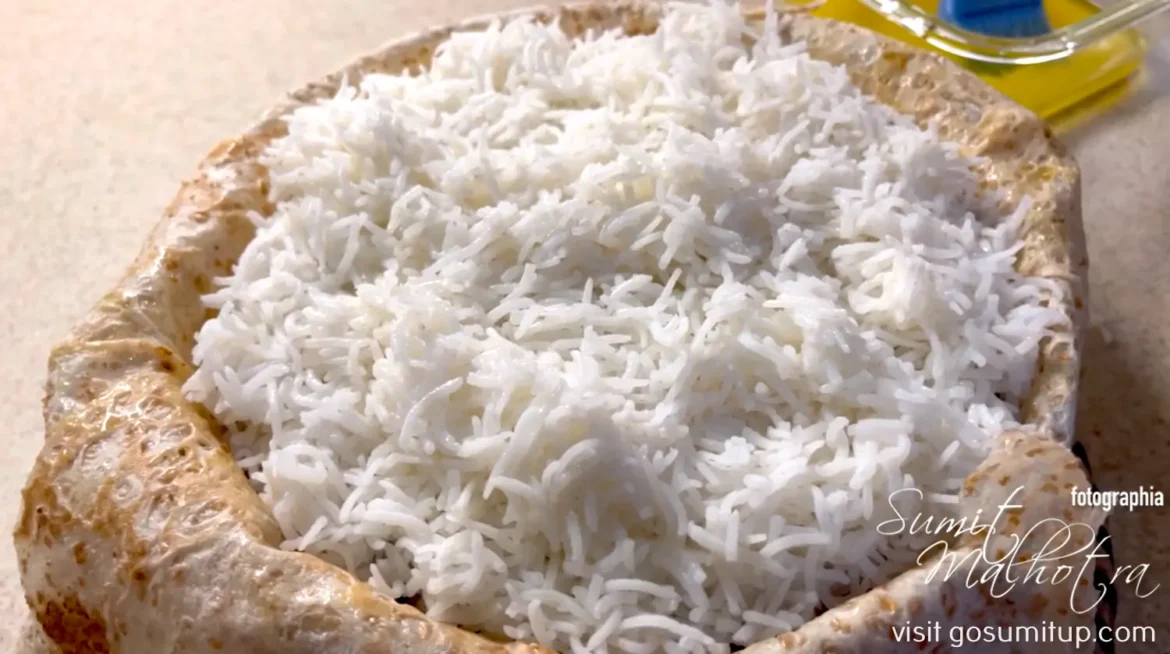
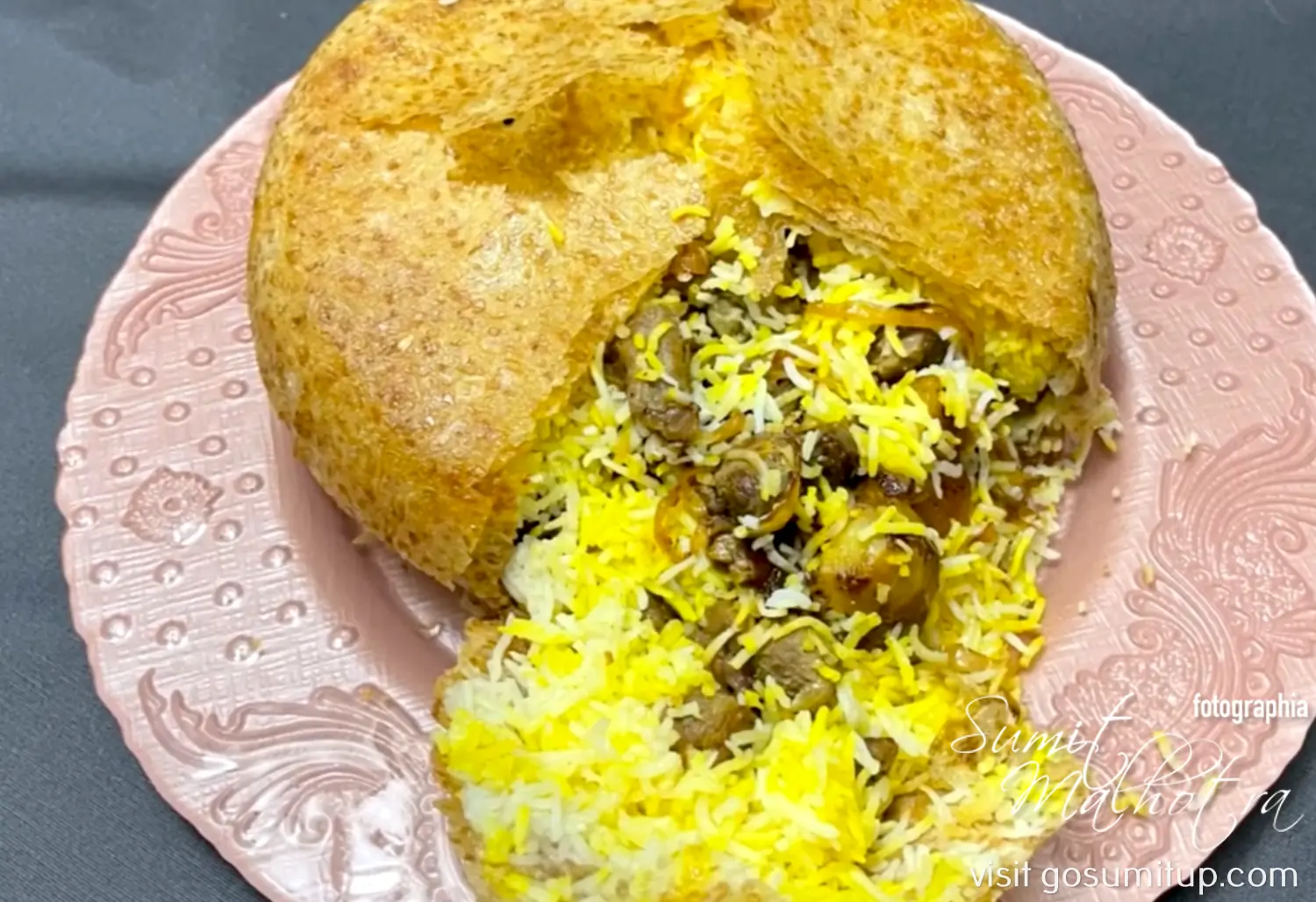
Shah Plov's Casing is Sliced Open
Welcome to Azerbaijan: What We Can Explore Next?
Azerbaijan’s cuisine relies heavily on open-flame mechanics, intricate dough structures, and highly specialised thermal vessels.
I start with one of the most prominent culinary masterworks (and its hidden physics) I can dive into.
The Spectacular Hidden Genius of Shah Plov: The Truth Behind Azerbaijan’s Crown King of Rice
Shah Plov – Read & learn about Shah Plov Azerbaijani Cuisine, Kazmag Rice Crust Secret, King of Pilafs Baku, Traditional Caucasian Wedding Food, Two Stage Rice Parboiling, Amylose Starch Expansion, Clarified Butter Lipids, Sealed Steam Convection Chamber, Lavash Bread Thermal Shield, Shah Plov History, Azerbaijani Rice Secrets, Kazmag Crust Technique, Basmati Starch Science, Enclosed Steam Cooking, Clarified Butter Shield, Silk Road Culinary Folklore, Saffron Infusion Methods, Baku Banquet Traditions, Saffron Water Infusion, Dried Apricot Chestnuts Lamb, Aromatic Essential Oils Cooking, Separate Grain Texture
Saffron Water Added to the Top Layer
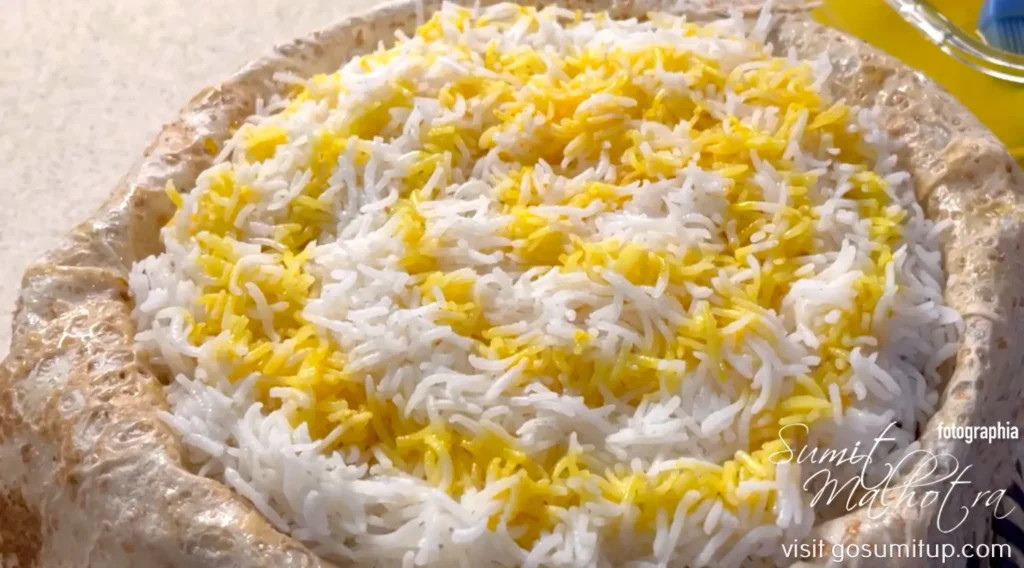
The Spectacular Hidden Genius of Shah Plov
The Truth Behind Azerbaijan’s Crown King of Rice
If you attend a grand wedding, state banquet, or major celebratory feast in Baku, the absolute climax of the evening arrives with a dramatic musical fanfare.
The lights dim, and the head chefs march into the hall carrying a massive, heavy silver platter.
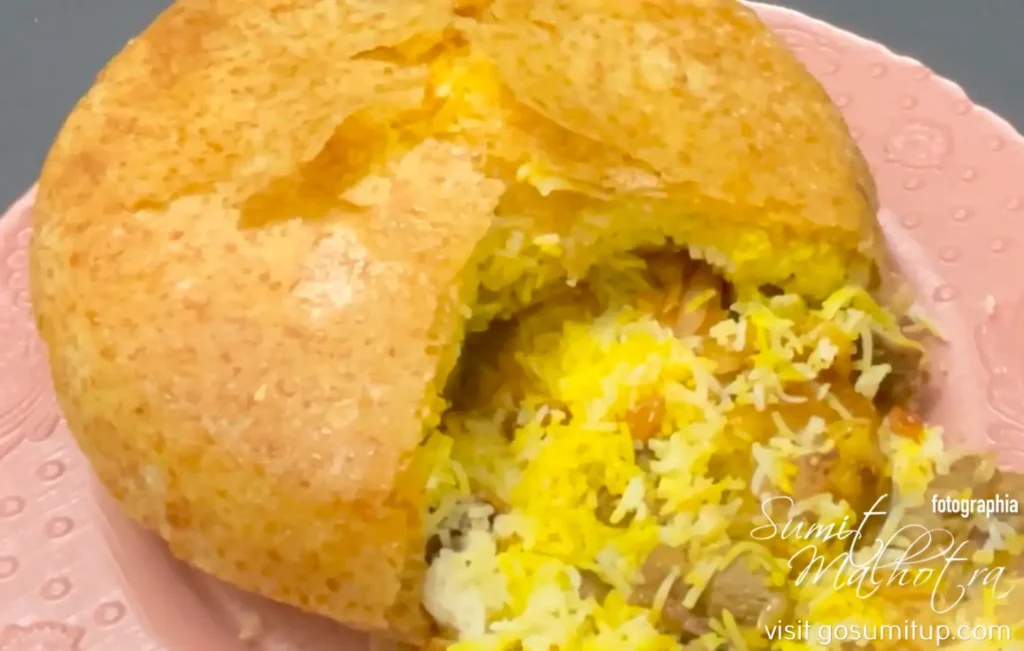
Resting on it is what appears to be a majestic, golden-brown crown. It looks like a beautifully baked, solid cake, intricately decorated with golden folds.
The chef lifts a long knife and makes a series of vertical cuts along the sides of the crown.
As the outer shell peels open like the petals of a blooming lotus flower, a breathtaking cloud of aromatic, saffron-infused steam rolls across the room.
Cascading out from the golden centre is a mountain of long-grain basmati rice—each grain perfectly distinct, glistening, and completely separate, tossed with rich chunks of lamb, sweet apricots, chestnuts, and dark raisins.
This is Shah Plov (the “King’s Pilaf”), the undisputed crown jewel of Azerbaijani hospitality. It is also known as Khan Plov (The Ruler’s Pilaf), Kazmagli Plov (The Crusted Pilaf), Toy Plovu, and Pardali Plov / Veil Plov (The Veiled Pilaf).
Because of its breathtaking presentation, the story of how this dish came to be is treated with immense historical romance.
Cultural guides and old stories tell of ancient caravan journeys across the Silk Road.
They describe travelling monarchs who demanded a dish that could travel for days across the desert heat and still taste as fresh, moist, and fluffy as the moment it left the royal hearth.
It is a beautiful legend that perfectly matches the grand hospitality of the region.
But if you set aside the folklore and look directly at the physical dynamics of enclosed cooking spaces and starch hydration, a far more fascinating reality comes to light.
Shah Plov was not an accidental creation born out of a monarch’s travel whim.
It is a highly engineered culinary masterpiece that solves the ultimate problem of cooking rice: using a fat-saturated, edible pressure shield to master the mechanics of enclosed steam baking.
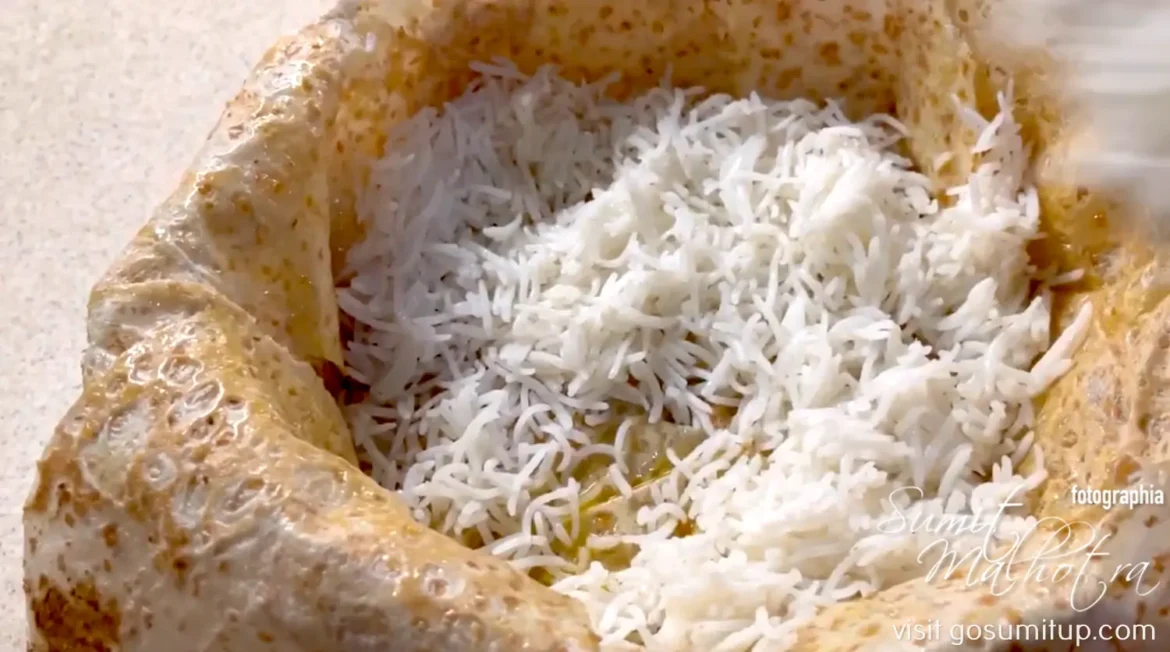
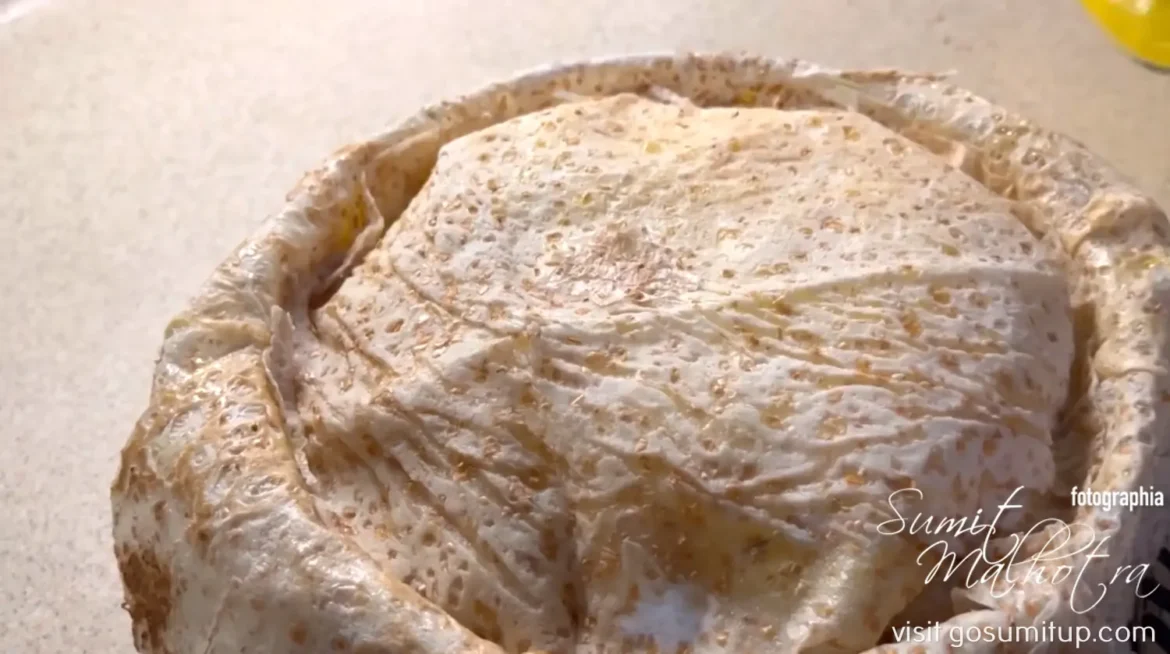
Pre Baked Shah Plov is Wrapped with Lavash
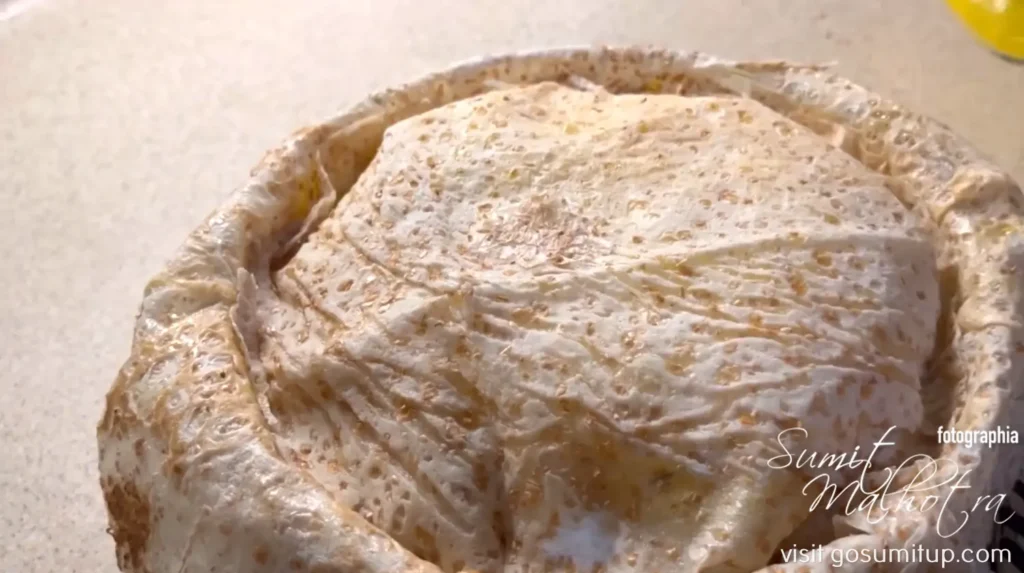
The Royal Legend of the Sealed Caravan Feast
The elite named it Shah Plov, celebrating it as a triumph of royal convenience.
The folklore surrounding Shah Plov is deeply tied to the ancient rulers and travelling courts of Azerbaijan’s historical regions, from Baku to Shamakhi.
According to the legend, a prominent Shah was preparing for an extensive military campaign and diplomatic journey across the dusty, dry plains of the South Caucasus.
The Shah was famously particular about his food, despising the dry, clumpy, or lukewarm rice dishes typically served from mobile iron pots along the road.
He issued a strict challenge to his head palace chefs: design a method to cook his favourite pilaf so that it could endure the rough movement of horses and the cooling desert winds.
It should yet remain piping hot, perfectly moist, and flawlessly fluffy the exact moment he decided to break his fast inside his tent.
The head chef retreated to the palace kitchens and realised that standard pots would never work; the steam would escape, and the rice would dry out and clump together during transit.
His solution was brilliant. He lined the entire interior of a heavy cooking pot with overlapping sheets of lavash—a thin, flexible Azerbaijani flatbread—that had been heavily soaked in rich, clarified butter (ghee).
He packed parboiled rice and braised meats into this bread pocket, folded the flaps over to seal it completely, and baked the entire package inside a roaring wood oven.
The bread was baked into a hard, protective golden armour. The legend says the dish survived the long journey perfectly.
When the outer shell was cracked open days later, the rice inside was fit for a king. The elite named it Shah Plov, celebrating it as a triumph of royal convenience.
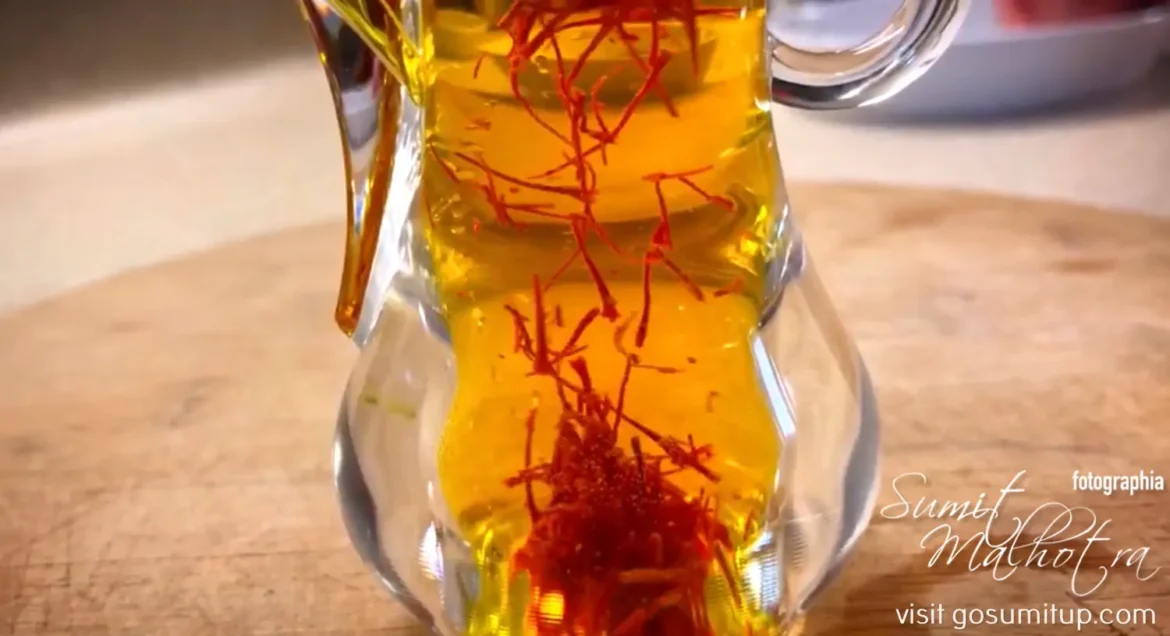
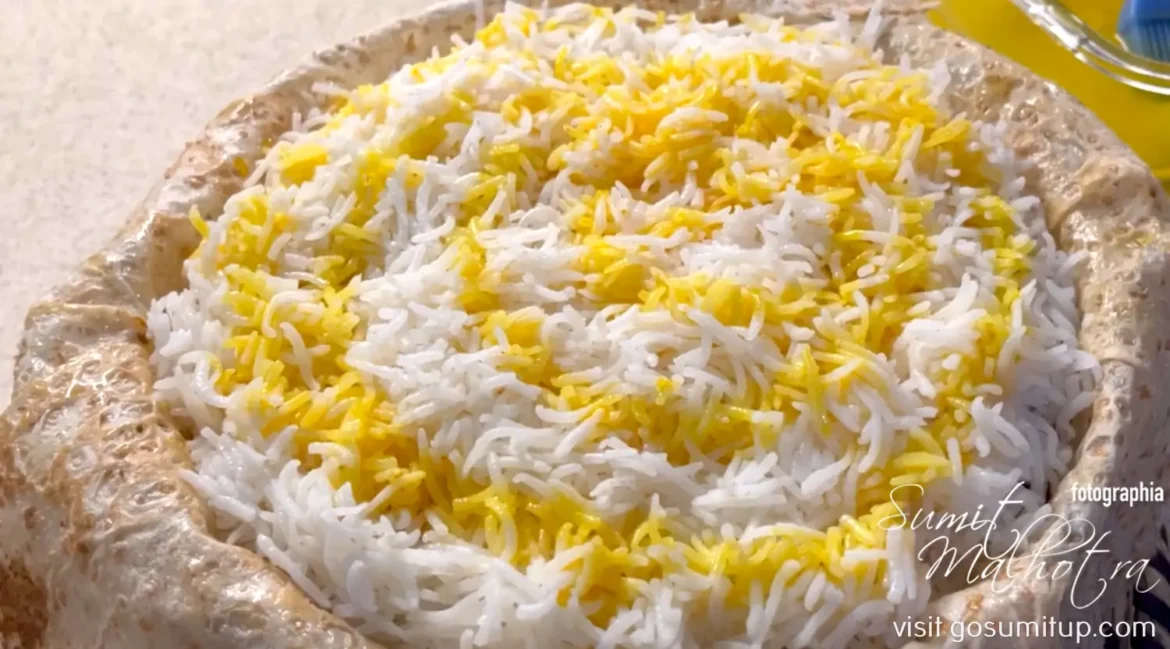
Saffron Water Added to the Top Layer
The Heart of the Dish: The Chemistry of the Perfect Grain
To understand why Shah Plov is such a structural breakthrough, we have to look at what happens to rice when it hits hot water.
While the story of the travelling Shah is a brilliant bit of marketing, the real history of Shah Plov is rooted in the perfection of rice science.
In Azerbaijani culinary culture, the ultimate test of a chef’s skill is the ability to cook rice so that every single grain is completely independent.
If the rice turns out sticky, gummy, clumped, or mushy, the dish is considered an absolute failure.
To understand why Shah Plov is such a structural breakthrough, we have to look at what happens to rice when it hits hot water.
White long-grain basmati rice is packed with starch molecules, specifically a linear starch called amylose.
When raw rice is exposed to high heat and water, these starch molecules absorb moisture, swell up, and eventually burst, releasing a sticky, glue-like gel into the pot.
[Raw Rice Starch Matrix] + [Excess Turbulent Water] ➔ Starch Cell Blowout ➔ Sticky, Mushy Rice Clumps
In standard Western or Asian cooking, rice is boiled directly in a set amount of water until all the liquid is absorbed.
This often leaves the exterior of the grains coated in that sticky, released starch, causing them to cling to one another.
To prevent this clumping, Azerbaijani chefs developed a meticulous two-stage hydration process:
Stage 1 (The Parboil): The rice is first thrown into a massive pot of violently boiling, heavily salted water for just 5 to 7 minutes.
The chefs watch the grains carefully until they stretch out and soften on the outside but still maintain a firm, raw, uncooked core.
The rice is immediately dumped into a colander and rinsed thoroughly with cold water.
This crucial rinse washes away all the loose, sticky surface starches before they can turn into culinary glue.
Stage 2 (The Steaming): The partially cooked, clean grains now need to be gently steamed to finish cooking their raw cores without releasing any more starch.
This is where the engineering of the Shah Plov crust comes into play.
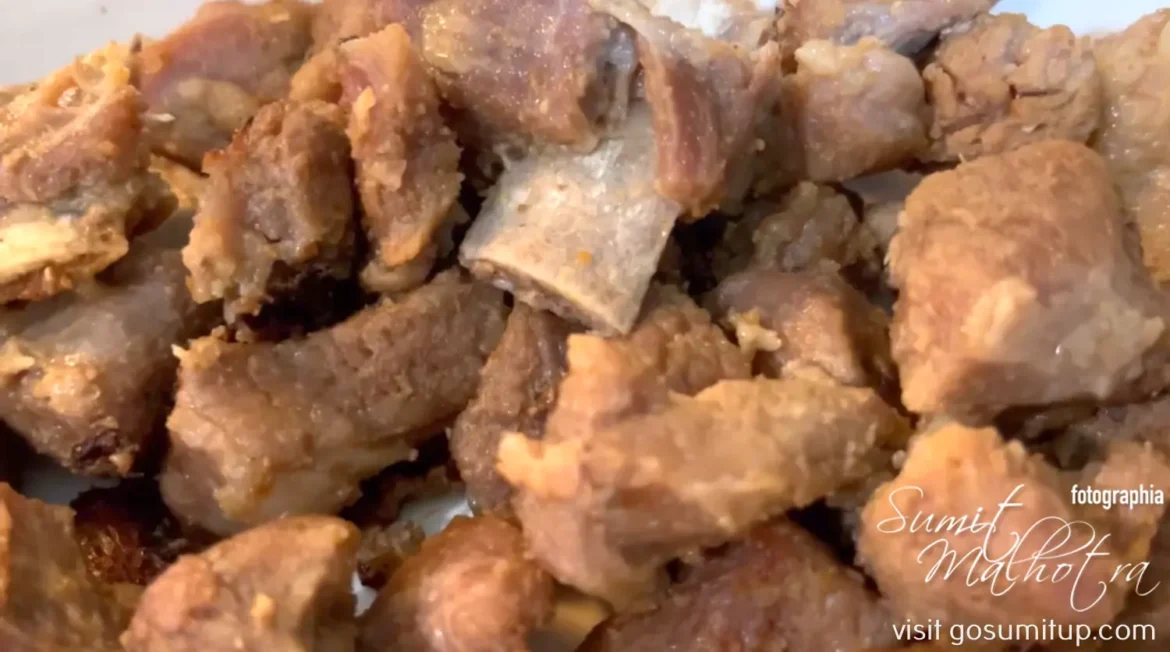
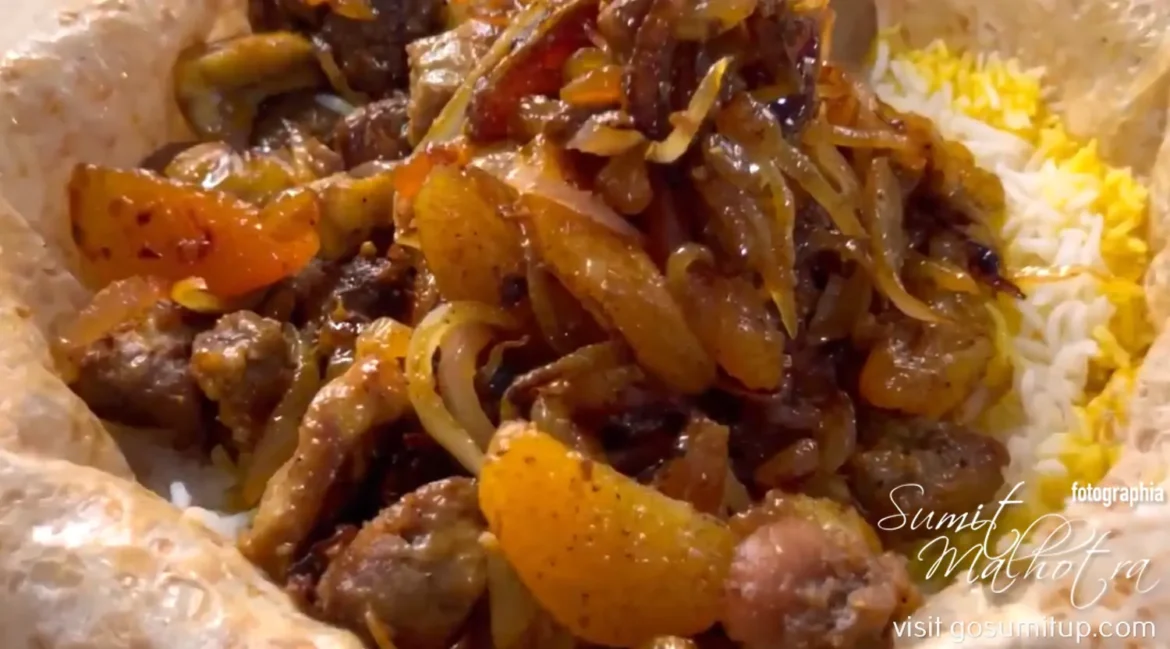
Meat Being Added to the First Layer of Rice for Shah Plov
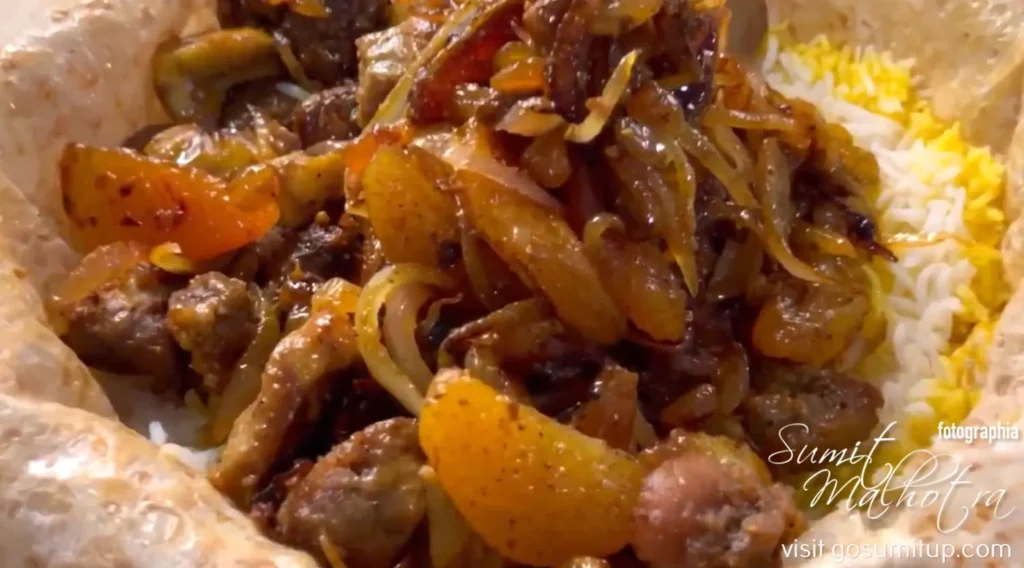
Engineering the Kazmag Crust as a Thermal Shield
To build it, the chef paints the interior of a deep, heavy pot with an abundance of melted clarified butter.
The defining feature of Shah Plov is its magnificent, edible golden shell, known in Azerbaijan as the kazmag.
To build it, the chef paints the interior of a deep, heavy pot with an abundance of melted clarified butter.
They then line the pot with overlapping layers of lavash bread, brushing even more butter between each layer.
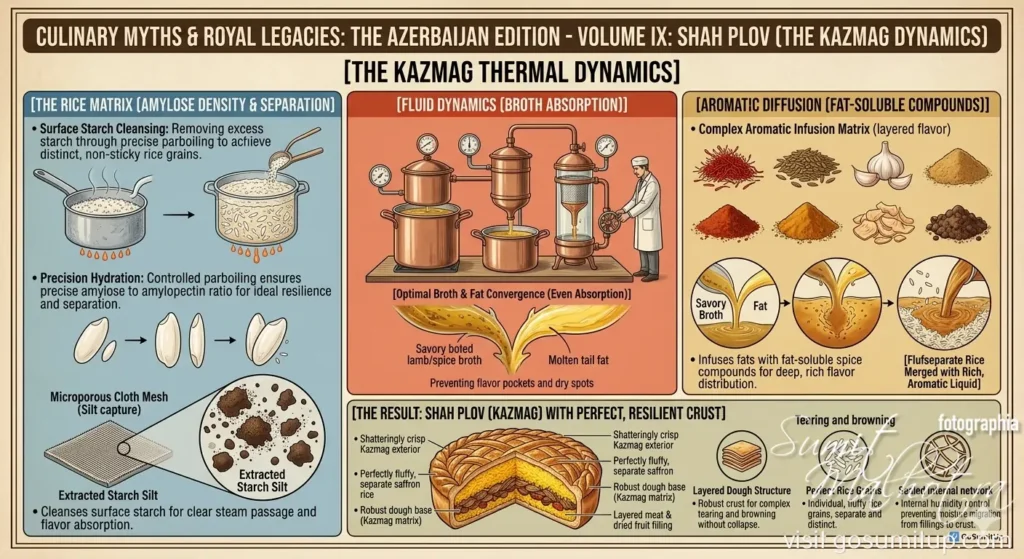
The kazmag thermal dynamics
When this assembly is placed inside a hot oven, the kazmag acts as a brilliant thermal barrier.
Because the thin sheets of bread are heavily saturated with clarified butter, they absorb the intense, direct heat of the oven walls.
Instead of allowing that dry heat to pass directly into the delicate rice and burn it, the butter inside the bread begins to sizzle.
The lavash essentially shallow-fries itself from the outside in, turning into a rigid, shatteringly crisp, deep-golden armour.
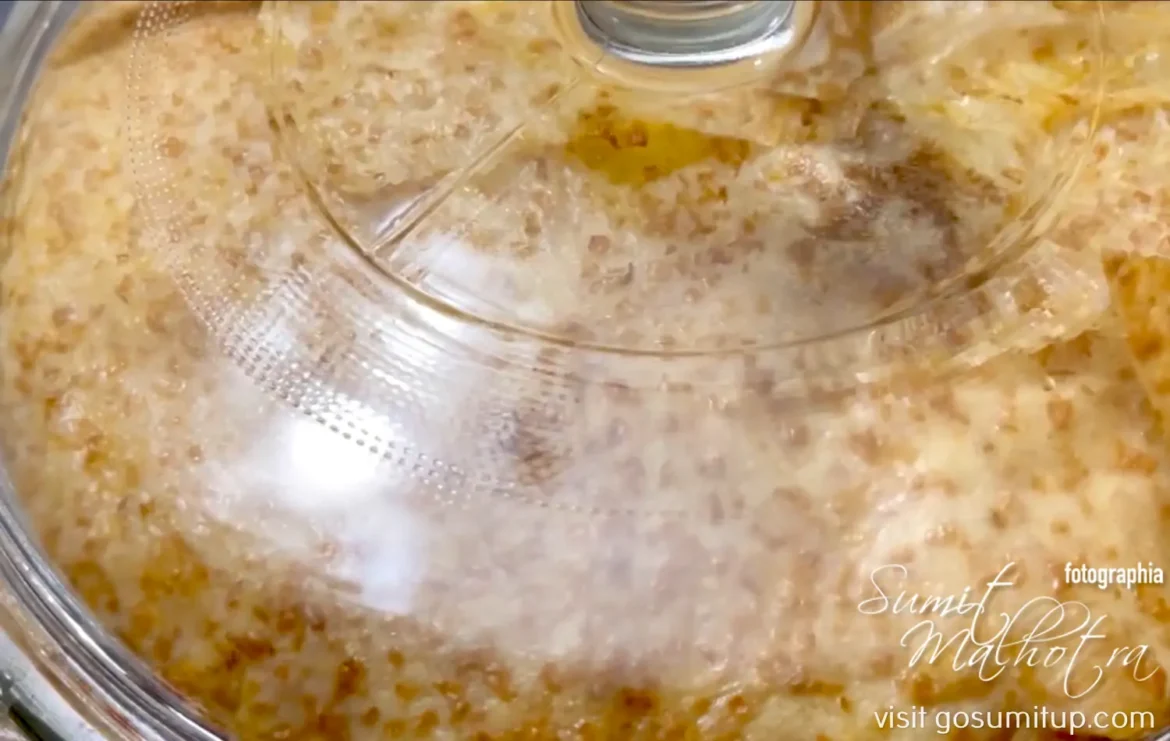
While the outside is frying into a crunchy shell, the bread completely seals off the interior of the pot.
Any remaining water trapped inside the parboiled rice grains quickly heats up and flashes into steam.
Because the bread shell is sealed tightly, this steam cannot escape into the oven. It is trapped inside a beautiful, enclosed pressure chamber.
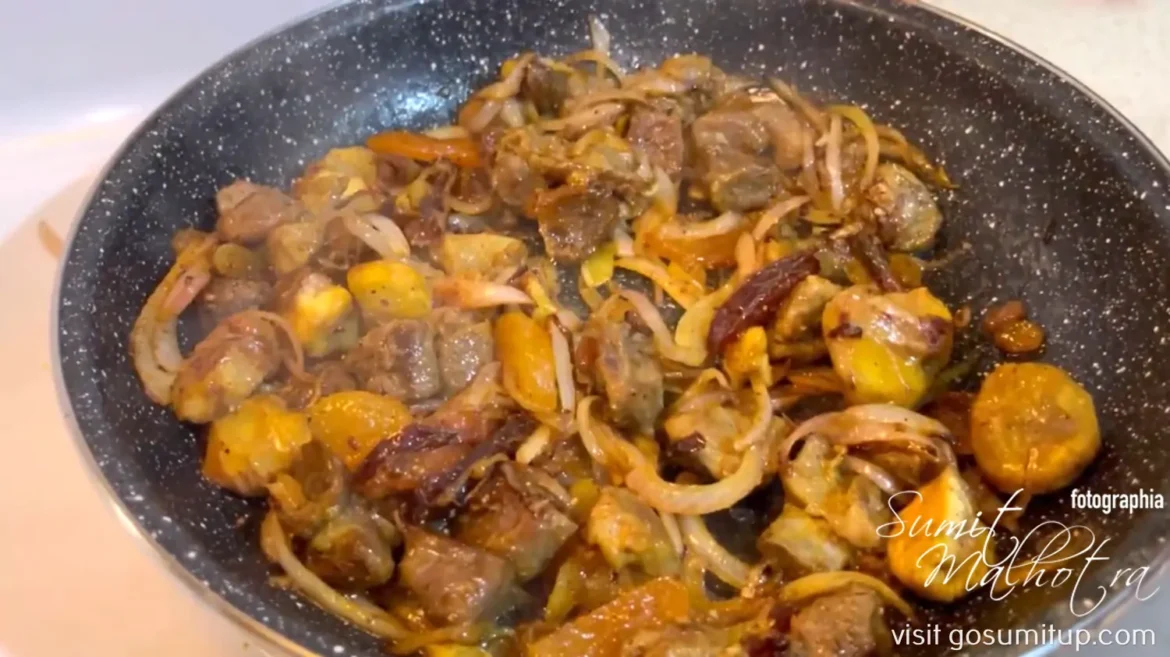
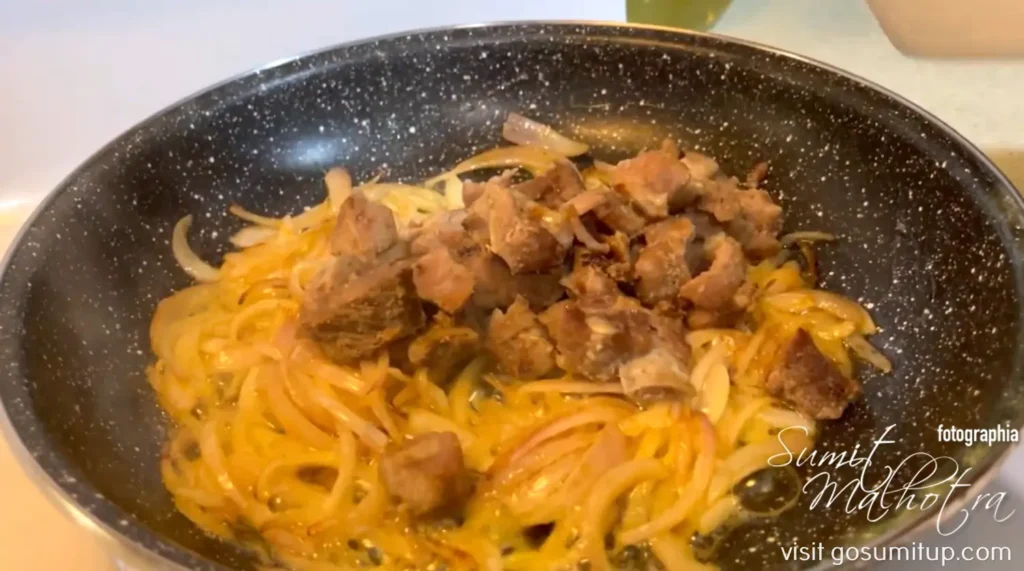
Meat is being Shallow Fired to Assesble Shah Plov
A "Sumit Up" Culinary Insight
The incredible legacy of Tafelspitz teaches us a vital kitchen lesson.
The incredible legacy of Tafelspitz teaches us a vital kitchen lesson: patience and gentle boundary management will always triumph over raw, chaotic force.
A lesser cook looks at a tough, lean piece of meat and tries to conquer it by cranking up the dial to a violent, raging boil.
But all that high heat does is destroy the structure, squeeze out the internal juices, and turn a premium ingredient into a collection of frayed, dry threads.
By keeping your cooking liquid at a calm, sub-boiling whisper and letting a natural cap of fat act as a protective thermal barrier, you allow the meat to transform itself on a structural level.
The tough tissues melt away into luxurious gelatin from the inside out, preserving every drop of deep, meaty flavour.
When you cook at home, stop trying to rush your proteins with high temperatures.
Step back, lower the heat, protect your boundaries, and let time unlock the true potential of your food.
Making of Shah Plov (Part 1)
Making of Shah Plov (Part2)
If you are a traveller and or just love to drive, you may find below a list of items that will fortify & thus enrich your travel experience.
I use many of these myself for my trips. They are modestly priced and quite important to keep handy.
- Travel Adapter – https://amzn.to/3A04EJp
- Action Camera – https://amzn.to/4eCSMfF
- Camera Mounts & Accessories – https://amzn.to/4eG4je2
- Dashcam – https://amzn.to/3U2j4Qc
- Neck Rest – https://amzn.to/3Y6ZP98
- Tyre Inflator – https://amzn.to/3U8HpDP
- Storage – https://amzn.to/3XVQFMI
- Car Laptop Charger – https://amzn.to/3XXMVdA
- Vacuum Cleaner Cordless – https://amzn.to/3Yo1hWd
- Air Mattress – https://amzn.to/4015Bvu
- Jack Ratchet Wrench – https://amzn.to/3YkxddO
- Cleaning Cloth Microfibre – https://amzn.to/3NIOFmt
- Rechargeable Solar LED Torch – https://amzn.to/3Yj4h5Y
- Electronics Accessories Organiser – https://amzn.to/3A04XUz
- Pocket Travel Data Transfer Tool – https://amzn.to/3zMTxnc
- Smart Tracker for Keys – https://amzn.to/3BTuIq0
- Camping Cookware Kit – https://amzn.to/3BIy0N3
- Sleeping Bag – https://amzn.to/3U7v2rP
GoSumItUp is a personal blog written and edited personally by me. All opinions expressed are my own, which are honest and have not been influenced by any means.
My reviews are dependent on the visits at the time, and revisits will be reviewed again as they may have a different experience or the same.
I am not a food critic nor do I consider myself as one; this platform allows me to write and review my own personal dining experiences, whether good or bad, delicious or not, all of which are honest and truthful opinions.
Suppose you disagree or agree with me at any point, or do not receive the same experiences as I have. In that case, I do not hold any responsibility as everyone will have their own experiences that they will encounter themselves.
I pay for all meals. However, if any meals or products have been sponsored or compensated or if I was a guest, it will be clearly disclosed at the end of each review.
All images on this blog are my own unless stated otherwise. If you wish to use any of my photography for any purposes, please do not use it without any written permission and give credit and/or link back to the website.
If you would like to send a product or any sponsors/endorsements, it may or may not be published and reviewed on the website.
If you wish to send any products or invitations for any media, press or collaborations, etc., consider if it is something related to the content of the website, and if you see fit, please visit the Contact page for contact details.
Thank You.
Thank you for visiting GoSumItUp! I hope you enjoy the reviews & recipes found at www.gosumitup.com.
This page consists of disclaimers regarding the recipe, its outcome, nutrition, and food handling safety decisions.
The recipes have been cooked and compiled by me for general information only and should not be used to diagnose or treat any medical condition/s.
This information is not intended to diagnose, treat, cure, or prevent any disease as well.
GoSumItUp.com has used all reasonable care in compiling the information but offers no warranty as to its accuracy or its use in any possible form.
Consult a doctor or other health care professional for diagnosis and treatment of any medical condition/s. For more details please refer to our disclosure policy.
If you like this article, you can let us know in the comments below or on social media using #gosumitup and tag @gosumitup on Facebook.
I am always happy to read your feedback, and if you liked the dish or if you made the dish. :)
Better still, take a picture and post it on Instagram and tag it as #gosumitup
Connect directly – You can also connect with me directly on my Instagram, Facebook or Pinterest.
And, keep visiting us for more of such awesomeness. Bookmark gosumitup.com into your web browser now or simply subscribe to our browser notifications.