Read and learn about Viennese Coffeehouse, Viennese Coffeehouse History, Wiener Melange Origin, First Cafe In Vienna, Traditional Austrian Coffee Culture, Johannes Diodato Merchant, Jerzy Franciszek Kulczycki Spy, Siege Of Vienna 1683, Zur Blauen Flasche Blue Bottle Cafe, Coffee Filtration vs Decoction, Turkish Coffee Mud vs Silt, Cloth Bag Brewing Method, Preventing Milk Curdling In Coffee, Coarse Grind Particle Size, Viennese Cafe Social Institution, Traditional Espresso Steamed Milk Foam, History Of Einspänner Coffee, Austrian Imperial Coffee History
If you ever find yourself sitting in a traditional Viennese café—surrounded by marble tables, velvet booths, and waiters in tuxedos—you will undoubtedly see a drink on the menu called the Wiener Melange.
This beloved beverage, a smooth combination of espresso, steamed milk, and a thick head of foam, is the literal crown jewel of Austrian coffee culture.
As you sip your drink, a glance at the back of the menu or a chat with a local tour guide will likely introduce you to a thrilling tale of wartime bravery.
It is a legendary story that ties the birth of the Viennese coffeehouse directly to military spies, abandoned treasure, and royal rewards.
For over a century, this folklore has been printed on souvenir boxes, shared in travel documentaries, and proudly repeated to millions of tourists every year.
It paints a beautiful picture of a single hero inventing a cultural phenomenon on the fly.
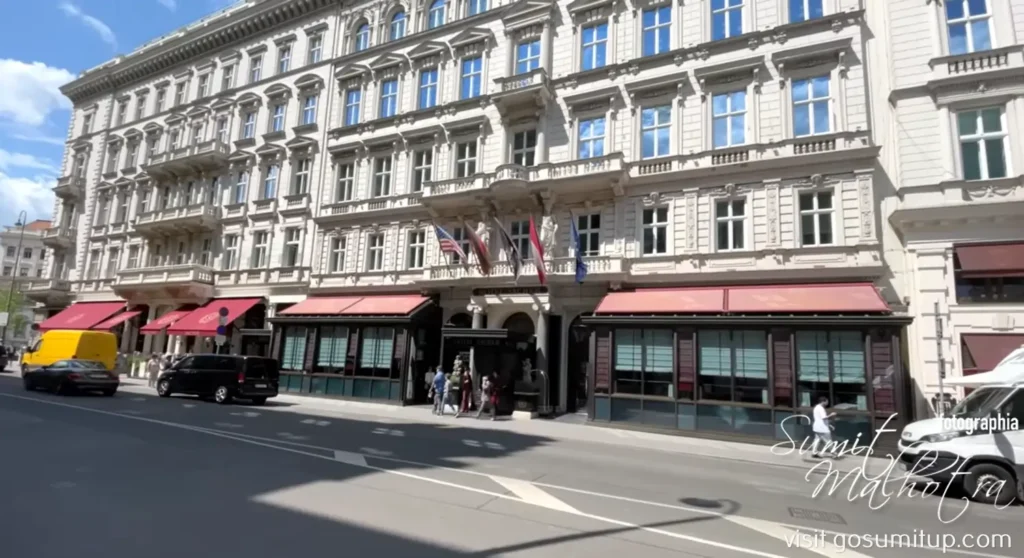
Hotel & Café Sacher
However, if you brush aside the romantic smoke of 17th-century battlefields and look into imperial court registries and the basic mechanics of beverage preparation, a completely different reality emerges.
The famous Viennese coffeehouse was not invented by a wartime scout, nor was it a sudden accident born out of abandoned military supplies.
Instead, it was the calculated creation of a clever merchant who solved a massive culinary problem: how to take a bitter, muddy foreign drink and turn it into something smooth, clear, and perfectly suited for the European palate.
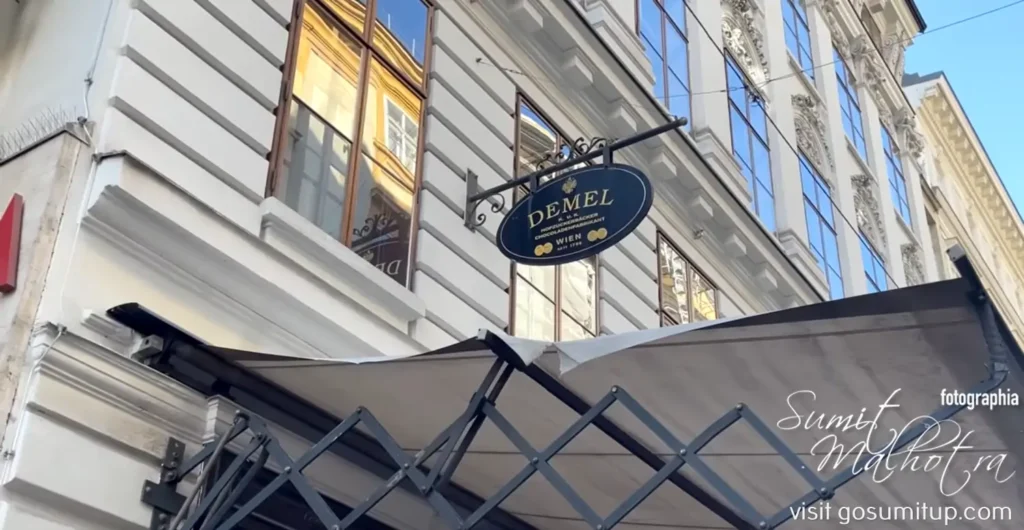
Café Demel Viennese Coffeehouse
The Legend of the Blue Bottle Café
According to the legend, a Polish-Austrian nobleman and merchant named Jerzy Franciszek Kulczycki saved the day.
The traditional story begins in the summer of 1683, during the brutal second Siege of Vienna.
An enormous army from the Ottoman Empire had surrounded the city walls, cutting off all food and communication. Vienna was on the brink of collapse.
According to the legend, a Polish-Austrian nobleman and merchant named Jerzy Franciszek Kulczycki saved the day.
Because he spoke fluent Turkish, Kulczycki bravely disguised himself in enemy clothing.
He then slipped directly through the Ottoman military camp and delivered critical intelligence to the approaching Christian relief forces led by the Polish King Jan III Sobieski.
When the relief army arrived and successfully defeated the Ottoman forces, the retreating soldiers fled in such a hurry that they left behind thousands of supply tents, horses, gold, and hundreds of mysterious sacks filled with small, dark green beans.
The victorious leaders thought these beans were camel feed and threatened to burn them.
But Kulczycki, who had travelled extensively in the Middle East, recognised exactly what they were. He stepped in and claimed the sacks of coffee as his prize, along with a hero’s pension and a permanent property from the city.
The legend goes that he quickly opened Vienna’s very first coffeehouse, named Zur blauen Flasche (“Under the Blue Bottle”).
Finding that the local citizens found the thick, bitter Turkish coffee far too intense, Kulczycki supposedly filtered out the messy grounds, stirred in spoonfuls of sweet honey, added a generous splash of fresh milk, and instantly invented the Wiener Melange and the European café concept in one single evening.
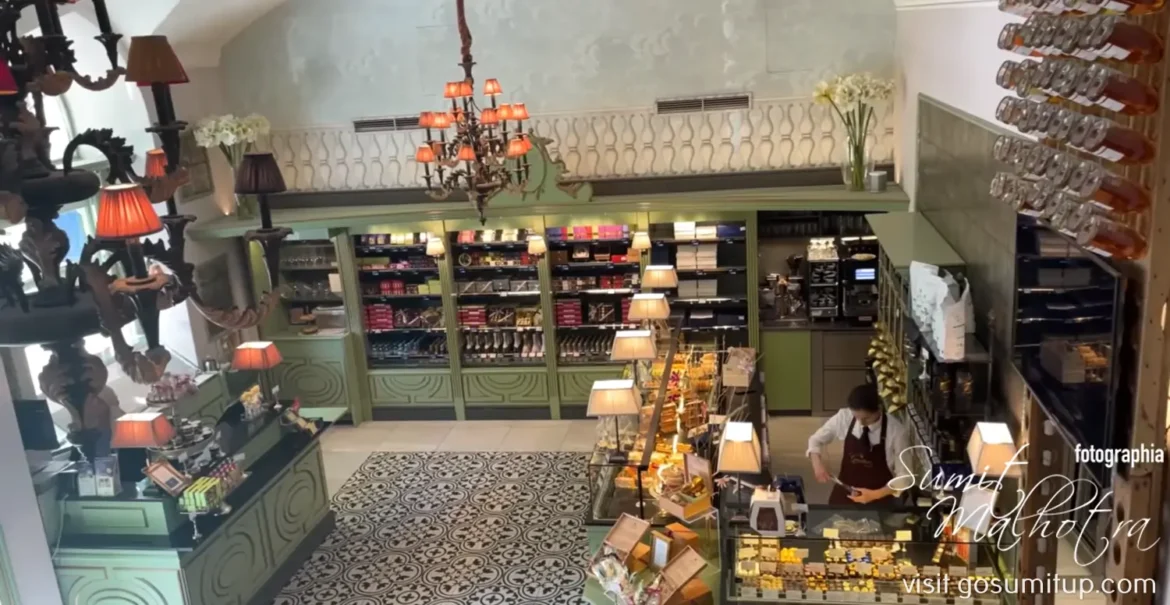
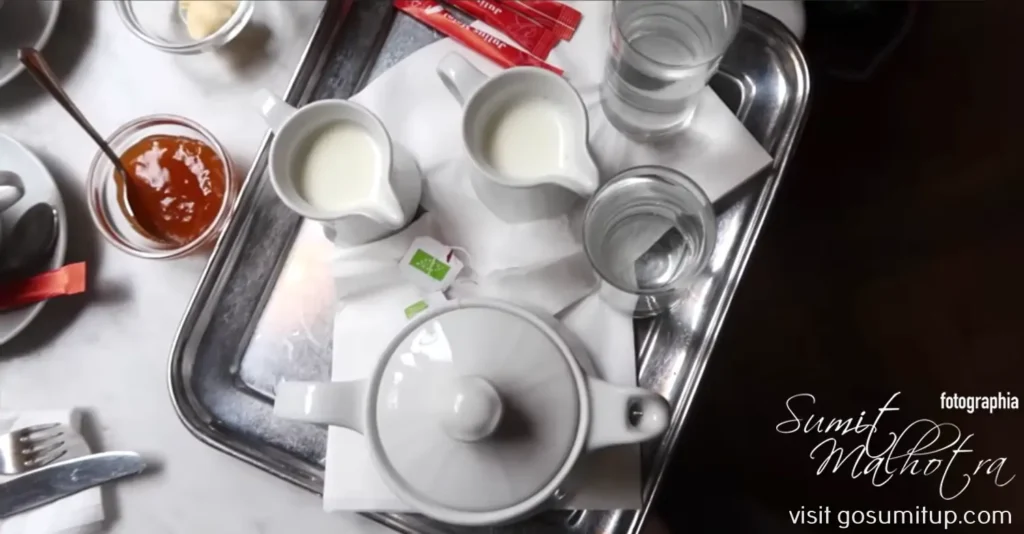
Café Sperl - Breakfast Service Viennese Coffeehouse
The Imperial Paper Trail Discovers the True Pioneer
Diodato had an established commercial supply chain to import high-quality beans directly into the heart of Austria.
It is a fantastic story filled with adventure, patriotism, and a happy ending.
But when modern historians went searching through the official imperial archives of Vienna to verify the paperwork for the Blue Bottle café, they found a completely different name on the original business license.
The city records show that the first official imperial privilege to brew and sell coffee within the city of Vienna was not given to Kulczycki.
It was actually awarded on January 17, 1685—two full years after the great siege—to an Armenian merchant, interpreter, and spy named Johannes Diodato (originally born Owanes Astouatzatur).
Diodato was a highly sophisticated businessman who had spent decades navigating the complex international trade routes between Europe and the East.
Unlike a wartime scout who simply happened upon a pile of discarded supplies, Diodato actually understood the trade value, storage requirements, and preparation methods of coffee.
He didn’t rely on random leftover sacks; he had an established commercial supply chain to import high-quality beans directly into the heart of Austria.
While Kulczycki was a real person and undoubtedly a brave military hero, he performed incredible deeds during the war.
His café business was largely a fictional story created by a coffeehouse owners’ association in the late 1800s to give their trade a heroic, patriotic founding father.
The real pioneer who laid the foundation for Vienna’s café culture was an immigrant merchant working quietly with official trade permits.
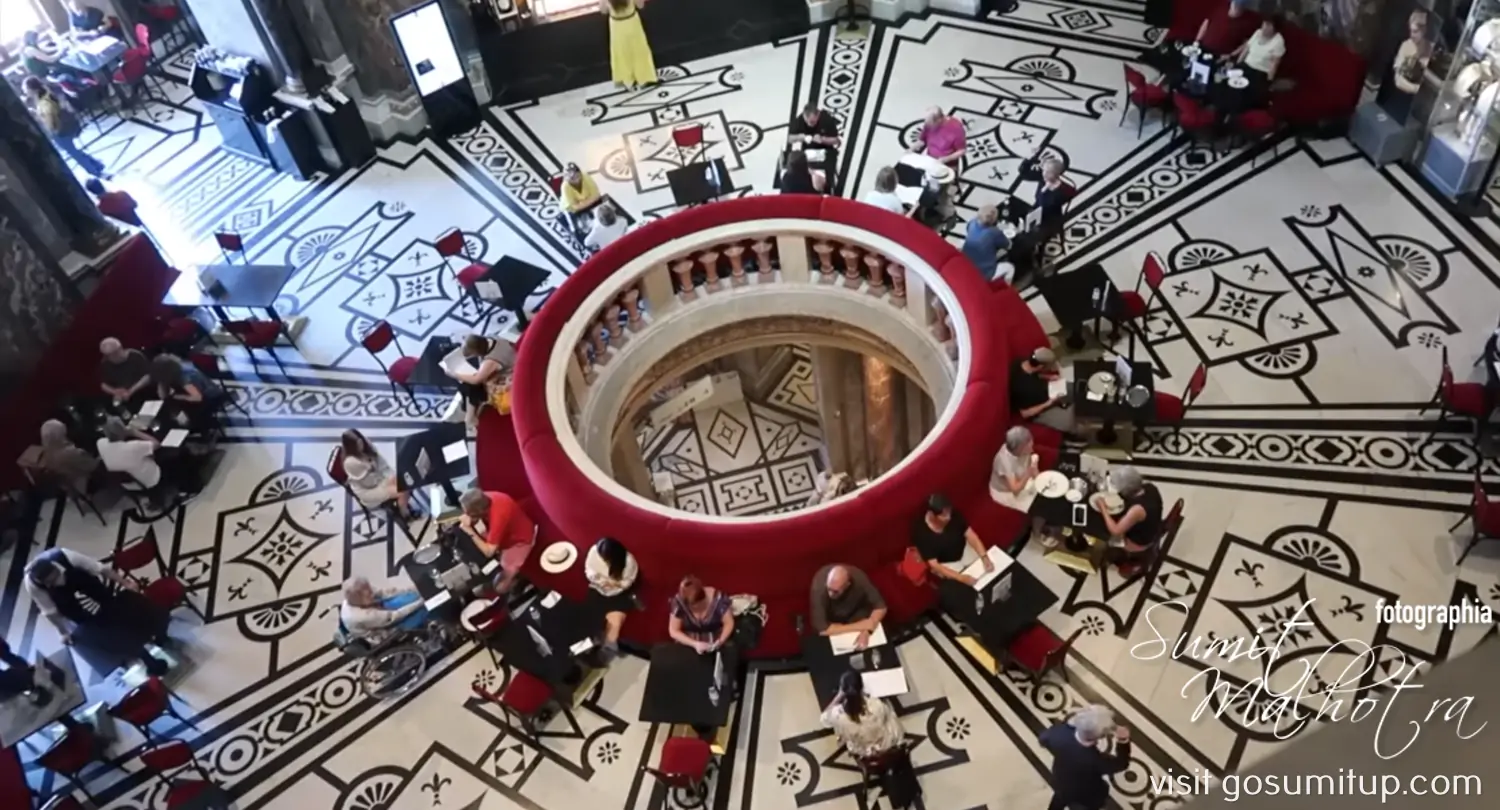
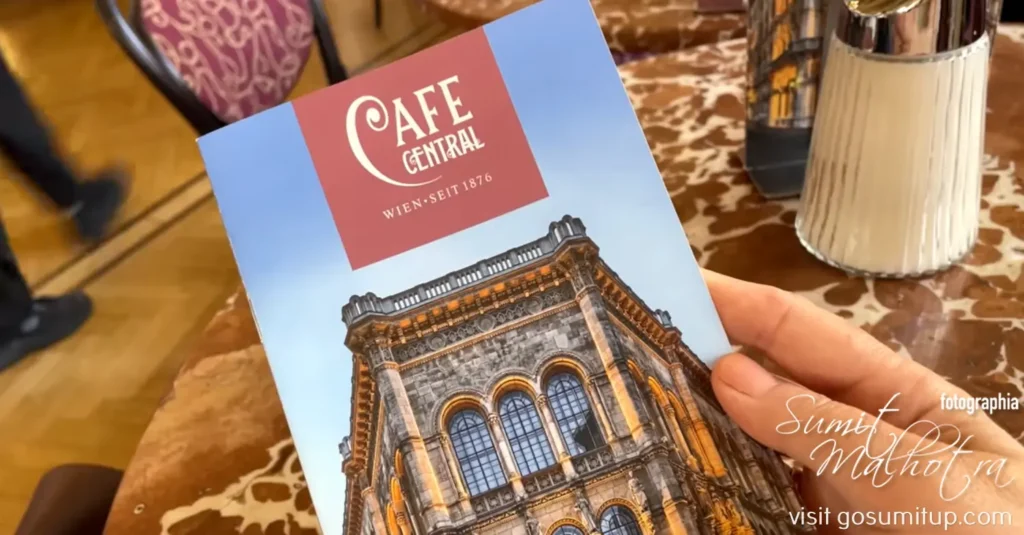
Café Central Wein Viennese Coffeehouse
The Separation of Mud and Milk
The traditional style of coffee popular across the Ottoman Empire was a decoction.
To understand why Diodato’s commercial approach succeeded where traditional brewing failed, we have to look at the texture of classical coffee.
The traditional style of coffee popular across the Ottoman Empire was a decoction.
To make it, coffee beans were ground down into an incredibly fine, flour-like powder.
This powder was tossed directly into a small copper pot called a cezve along with water and sugar, brought to a boil several times, and poured straight into a small cup.
This method creates an intensely strong, rich beverage.
However, it also means the coffee is a continuous, thick fluid filled with thousands of floating micro-particles of silt.
When you take a sip, you are drinking both the extracted liquid and the physical dust from the coffee beans.
While this style was highly celebrated in the East, it posed a major problem for European tastes, especially when bakers and cooks tried to incorporate fresh dairy into the mix.
When you pour fresh milk or cream into a hot, unfiltered cup of coffee full of acidic micro-grounds, a disappointing reaction happens.
The heat and the high acidity concentrated on the floating silt particles cause the delicate proteins in the milk to clump together.
Instead of a smooth, uniform beverage, you end up with a curdled, gritty liquid that looks unappealing and feels heavy on the tongue.
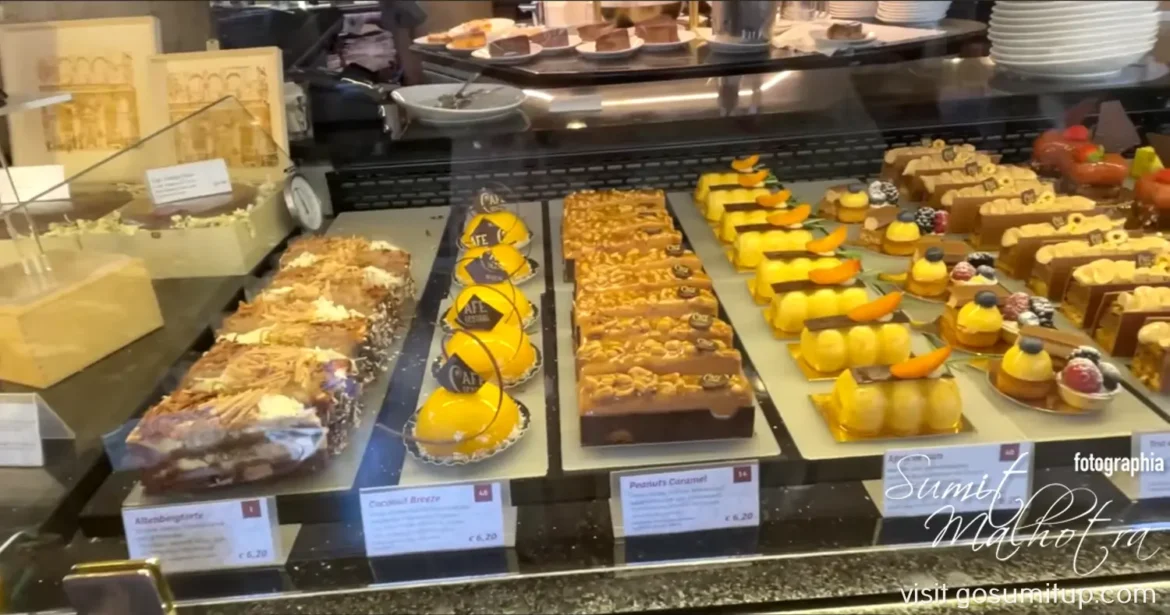
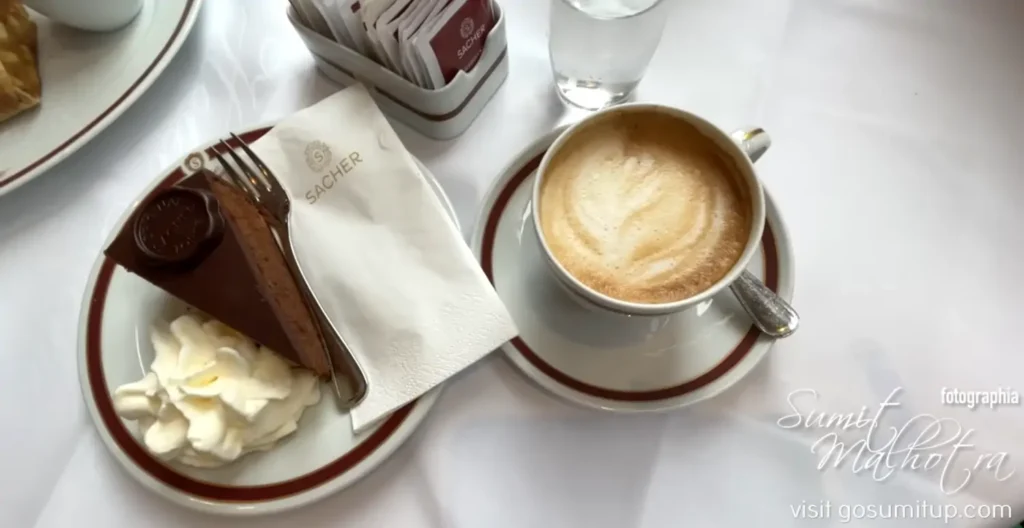
SacherTorte or Sacher Torte & Cappucino at Café Sacher
The Invention of the Aromatic Filter Shield
Early Viennese coffeehouse masters they had to redesign the entire brewing process from the ground up.
Early Viennese coffeehouse masters quickly realised that if they wanted to build a business around mixing milk and coffee, they had to redesign the entire brewing process from the ground up.
They needed to find a way to separate the delicious, aromatic oils of the coffee bean from the messy, powdery solid particles.
To achieve this, they abandoned the boiling pot method and turned to filtration.
Instead of grinding the coffee beans into a fine powder, they used heavy iron mills to crush the dark-roasted beans into a coarse, sand-like texture.
They then placed this coarse coffee into large bags sewn from tightly woven, heavy cloth.
Hot water was poured slowly over the top of the bags, dripping down into large porcelain serving carafes below.
The tiny pores in the woven cloth acted as a physical shield.
They allowed the water to wash over the beans and extract the rich, fat-soluble flavour compounds and dark pigments, while trapping every single grain of solid bean dust inside the bag.
[Coarse Coffee Beans] ➔ Placed in Tightly Woven Cloth Bags ➔ Hot Water Poured Over Top ➔ Traps All Solid Silt ➔ Clean, Silt-Free Liquid Base
The result was a brilliant culinary transformation: a clear, clean, and completely sediment-free liquid base.
This new, smooth coffee matrix changed everything.
Because there were no longer any floating micro-particles to disrupt the liquid, fresh milk and whipped cream could be stirred into the hot coffee flawlessly.
The dairy fats blended smoothly with the clear coffee, creating a luxurious, velvet-like texture without any curdling or grit.
This simple shift from boiling to filtering is the exact technique that made drinks like the Wiener Melange and the cream-topped Einspänner possible.
The Coffee Extraction System - The Viennese Cafe
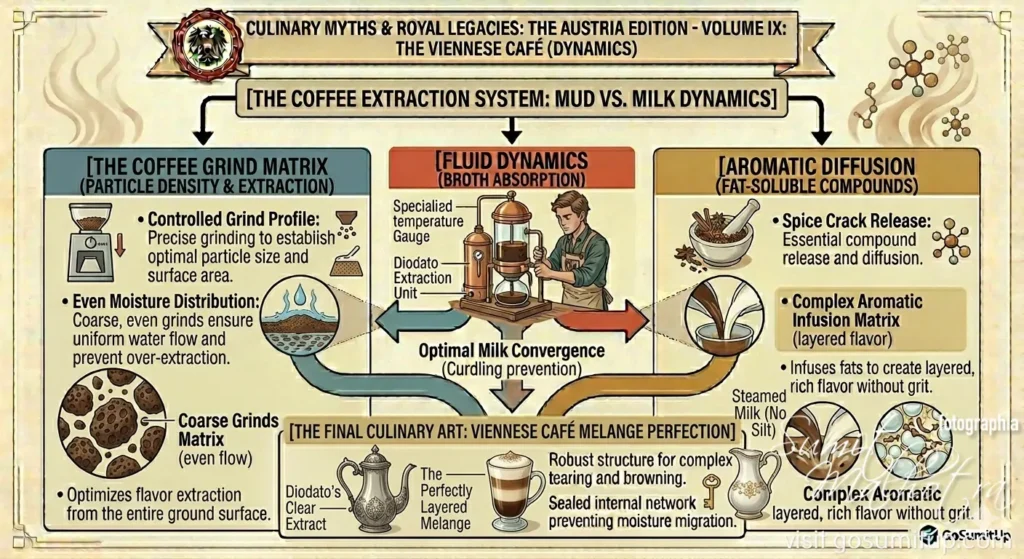
A "Sumit Up" Culinary Insight
The Slow Evolution into a Social Institution
Once the coffee itself was perfected, the Viennese coffeehouse evolved from a simple beverage shop into a massive cultural institution.
The true genius of the early café owners wasn’t just the filtration method; it was how they set up the environment.
In most parts of the world, a shop is a place where you buy a good, consume it, and leave.
But the Viennese turned their cafés into an extension of the living room.
For the price of a single cup of coffee, a customer was allowed—and actively encouraged—to sit at a table for hours on end.
Cafés provided dozens of international newspapers mounted on elegant wooden frames, shelves of chessboards, and writing materials.
It became a second home for writers, artists, politicians, and philosophers.
Great works of literature, political movements, and artistic styles were debated and written directly on the marble tables of these coffeehouses.
The myth of the heroic barista slipping through enemy lines is fun, but the true history of the Viennese café is a story of how an innovative brewing technique created a clean, adaptable beverage that brought people together, fundamentally changing the social and intellectual fabric of Europe forever.
Café Gerstner
If you are a traveller and or just love to drive, you may find below a list of items that will fortify & thus enrich your travel experience.
I use many of these myself for my trips. They are modestly priced and quite important to keep handy.
- Travel Adapter – https://amzn.to/3A04EJp
- Action Camera – https://amzn.to/4eCSMfF
- Camera Mounts & Accessories – https://amzn.to/4eG4je2
- Dashcam – https://amzn.to/3U2j4Qc
- Neck Rest – https://amzn.to/3Y6ZP98
- Tyre Inflator – https://amzn.to/3U8HpDP
- Storage – https://amzn.to/3XVQFMI
- Car Laptop Charger – https://amzn.to/3XXMVdA
- Vacuum Cleaner Cordless – https://amzn.to/3Yo1hWd
- Air Mattress – https://amzn.to/4015Bvu
- Jack Ratchet Wrench – https://amzn.to/3YkxddO
- Cleaning Cloth Microfibre – https://amzn.to/3NIOFmt
- Rechargeable Solar LED Torch – https://amzn.to/3Yj4h5Y
- Electronics Accessories Organiser – https://amzn.to/3A04XUz
- Pocket Travel Data Transfer Tool – https://amzn.to/3zMTxnc
- Smart Tracker for Keys – https://amzn.to/3BTuIq0
- Camping Cookware Kit – https://amzn.to/3BIy0N3
- Sleeping Bag – https://amzn.to/3U7v2rP
GoSumItUp is a personal blog written and edited personally by me. All opinions expressed are my own, which are honest and have not been influenced by any means.
My reviews are dependent on the visits at the time, and revisits will be reviewed again as they may have a different experience or the same.
I am not a food critic nor do I consider myself as one; this platform allows me to write and review my own personal dining experiences, whether good or bad, delicious or not, all of which are honest and truthful opinions.
Suppose you disagree or agree with me at any point, or do not receive the same experiences as I have. In that case, I do not hold any responsibility as everyone will have their own experiences that they will encounter themselves.
I pay for all meals. However, if any meals or products have been sponsored or compensated or if I was a guest, it will be clearly disclosed at the end of each review.
All images on this blog are my own unless stated otherwise. If you wish to use any of my photography for any purposes, please do not use it without any written permission and give credit and/or link back to the website.
If you would like to send a product or any sponsors/endorsements, it may or may not be published and reviewed on the website.
If you wish to send any products or invitations for any media, press or collaborations, etc., consider if it is something related to the content of the website, and if you see fit, please visit the Contact page for contact details.
Thank You.
Thank you for visiting GoSumItUp! I hope you enjoy the reviews & recipes found at www.gosumitup.com.
This page consists of disclaimers regarding the recipe, its outcome, nutrition, and food handling safety decisions.
The recipes have been cooked and compiled by me for general information only and should not be used to diagnose or treat any medical condition/s.
This information is not intended to diagnose, treat, cure, or prevent any disease as well.
GoSumItUp.com has used all reasonable care in compiling the information but offers no warranty as to its accuracy or its use in any possible form.
Consult a doctor or other health care professional for diagnosis and treatment of any medical condition/s. For more details please refer to our disclosure policy.
If you like this article, you can let us know in the comments below or on social media using #gosumitup and tag @gosumitup on Facebook.
I am always happy to read your feedback, and if you liked the dish or if you made the dish. :)
Better still, take a picture and post it on Instagram and tag it as #gosumitup
Connect directly – You can also connect with me directly on my Instagram, Facebook or Pinterest.
And, keep visiting us for more of such awesomeness. Bookmark gosumitup.com into your web browser now or simply subscribe to our browser notifications.