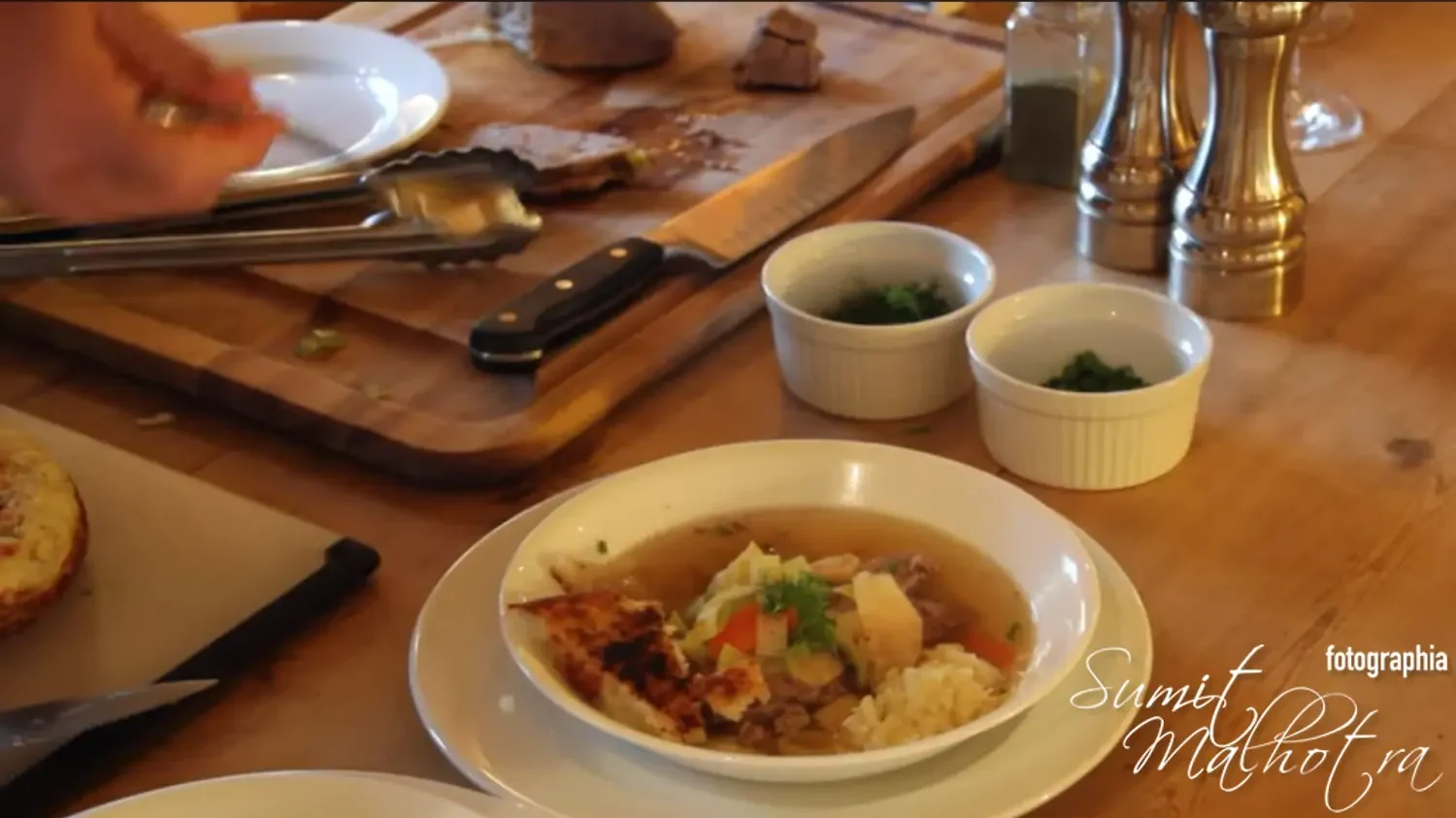
Tafelspitz Beef History, Austrian Boiled Beef Cut, Emperor Franz Joseph Food, Hotel Sacher Anna Sacher Story, Sub-Boiling Simmer Technique, Rump Cap Fat Shield, Muscle Fiber Connective Tissue, Gelatin Conversion Meat, Clean Slicing Beef Structure, Apfelkren Apple Horseradish, Chive Cream Sauce, Viennese Beef Broth Course, Spanish Court Etiquette Food, Tafelspitz History, Boiled Beef Secrets, Emperor Franz Joseph, Anna Sacher, Austrian Savory Food, Simmering Techniques, Kitchen Science, Meat Texture Tips, Imperial Vienna Cuisine
If you step into a classic, wood-panelled dining room in Vienna, you will witness a culinary ritual that has remained unchanged for centuries.
Waiters carry large, gleaming copper pots to the tables.
Inside, swimming in a crystal-clear, golden vegetable broth, is a massive, prize cut of beef topped with a beautiful, snow-white cap of fat.
The waiter carves the meat into perfectly neat, uniform slices that look incredibly delicate yet hold their shape flawlessly.
This is Tafelspitz, the undisputed king of Austrian savoury cuisine.
It is a dish so deeply woven into the identity of the nation that it is treated with a level of reverence usually reserved for fine art.
Ask any local guide or hospitality expert about its origins, and they will immediately sweep you away into the high-stakes world of the 19th-century Austro-Hungarian imperial court.
It is a legendary tale of strict royal etiquette, frantic palace chefs, starving military generals, and a brilliant hotel matriarch who swooped in to save the day with a hot pot of meat.
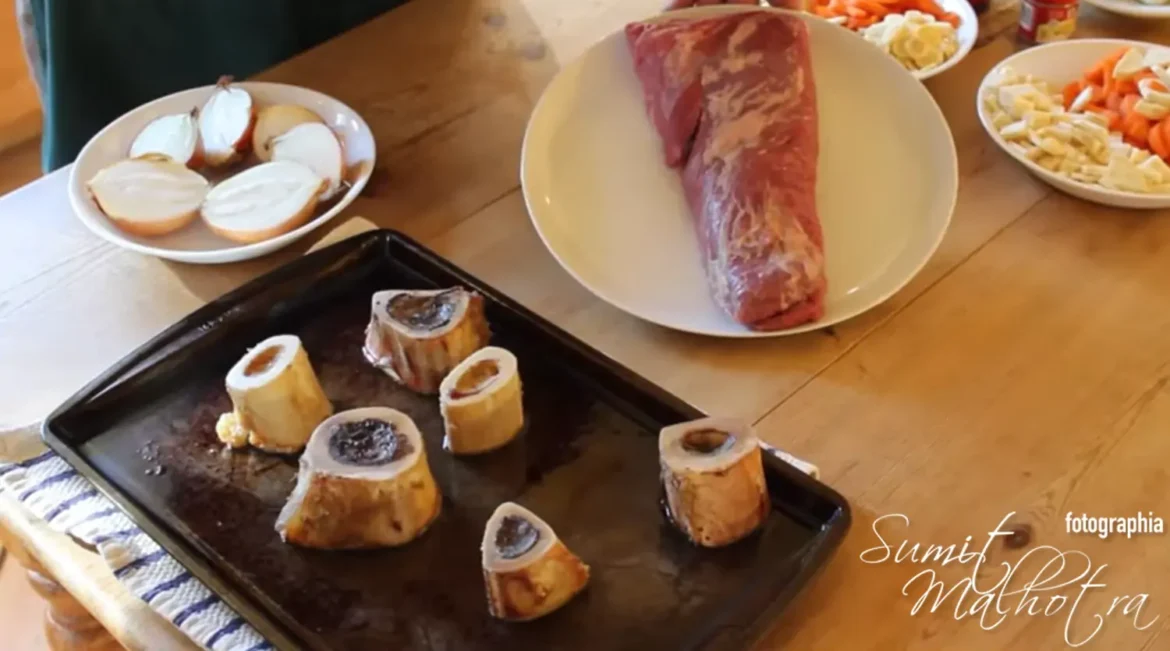
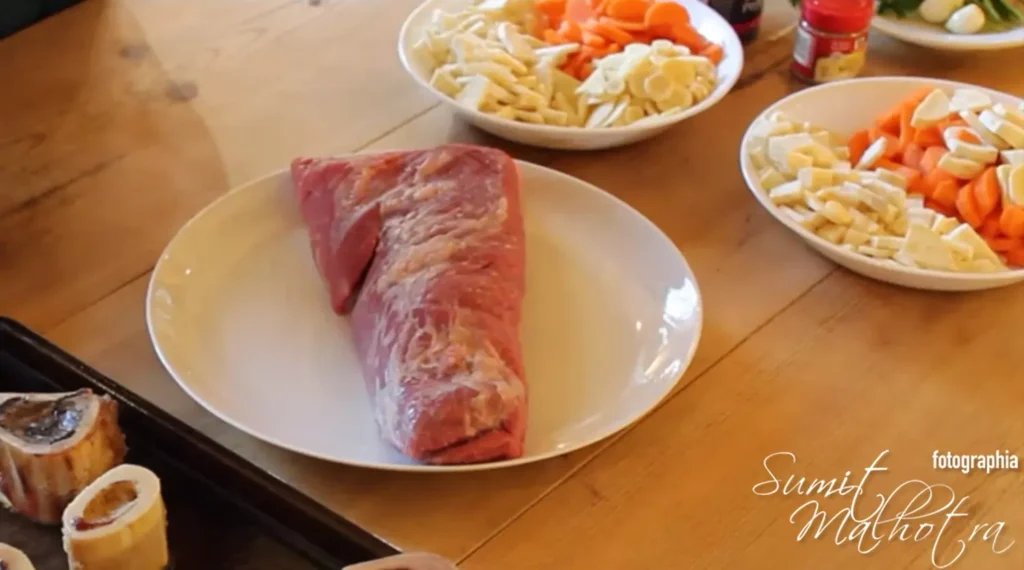
Sirloin Rump Cap for Tafelspitz
It is a wonderful, highly entertaining story that perfectly captures the opulence and drama of Imperial Vienna.
But if you step away from the velvet curtains of the palace, set aside the romantic folklore, and look directly at historical Austrian household ledgers and the hands-on science of how muscle fibres and heat interact, a far more interesting reality appears.
Tafelspitz was not a sudden invention created to solve a scheduling crisis at court.
Instead, it was the absolute peak of a centuries-old Viennese obsession with boiled meat, perfected by chefs who mastered a simple yet brilliant trick: using a low, gentle simmer and a natural fat shield to turn a notoriously tough cut of beef into an incredibly juicy masterpiece.
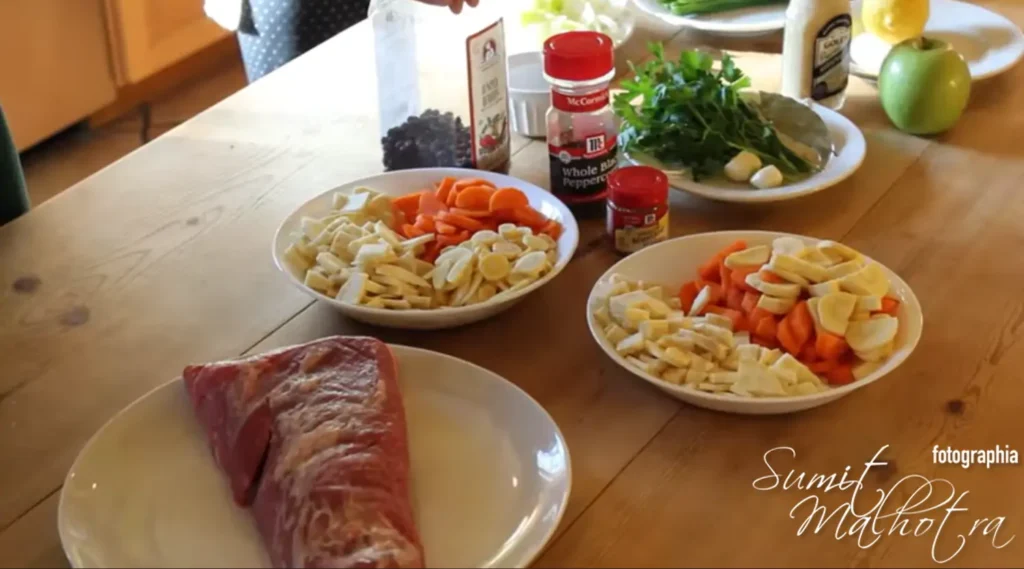
Root Vegetables & Sirloin Rump Cap for Tafelspitz
The Legend of the Starving Imperial Court
Emperor Franz Joseph I rarely spent more than ten to twelve minutes finishing a plate.
The traditional story of Tafelspitz centres entirely around the rigid lifestyle of Emperor Franz Joseph I, who ruled the Austro-Hungarian Empire with an iron fist from 1848 until 1916.
The Emperor was a man of intense, almost fanatical discipline.
He woke up before dawn, wore strict military uniforms every single day, and treated mealtimes not as a luxury but as a quick, necessary chore.
When hosting grand diplomatic banquets or formal dinners with his top military generals, the Emperor would sit at the head of the table and eat his food with astonishing speed.
He rarely spent more than ten to twelve minutes finishing a plate. This created a massive, terrifying problem for his guests.
According to the absolute laws of Spanish Court Etiquette—the strict code of conduct that governed the Austrian palace – the moment the reigning Emperor laid down his fork and knife, the entire dinner service ended instantly.
Imperial footmen would immediately rush into the banquet hall, swoop down on the tables, and snatch away every single plate in the room, regardless of whether the guests had finished eating.
Because the Emperor was served first, he would finish his food while the lower-ranking guests at the far end of the long tables had barely received their plates.
Diplomats, ministers, and battle-hardened military officers routinely walked out of royal palace banquets completely starving, their stomachs rumbling in frustration.
According to the legend, Anna Sacher, the famous, cigar-smoking matriarch who ran the luxurious Hotel Sacher right next to the opera house, saw a massive business opportunity.
She instructed her kitchen staff to design a premium, comforting dish that could sit simmering gently in a hot broth for hours on end without drying out, overcooking, or losing its structure.
When the desperate, hungry officers inevitably fled the palace gates in search of real sustenance, they would sprint straight into the dining rooms of the Hotel Sacher.
There, Anna Sacher would immediately present them with freshly carved, steaming slices of perfectly tender, juicy boiled beef.
The grateful elite named this specific cut Tafelspitz (meaning “the tip of the table”), and it instantly became a legendary national icon.
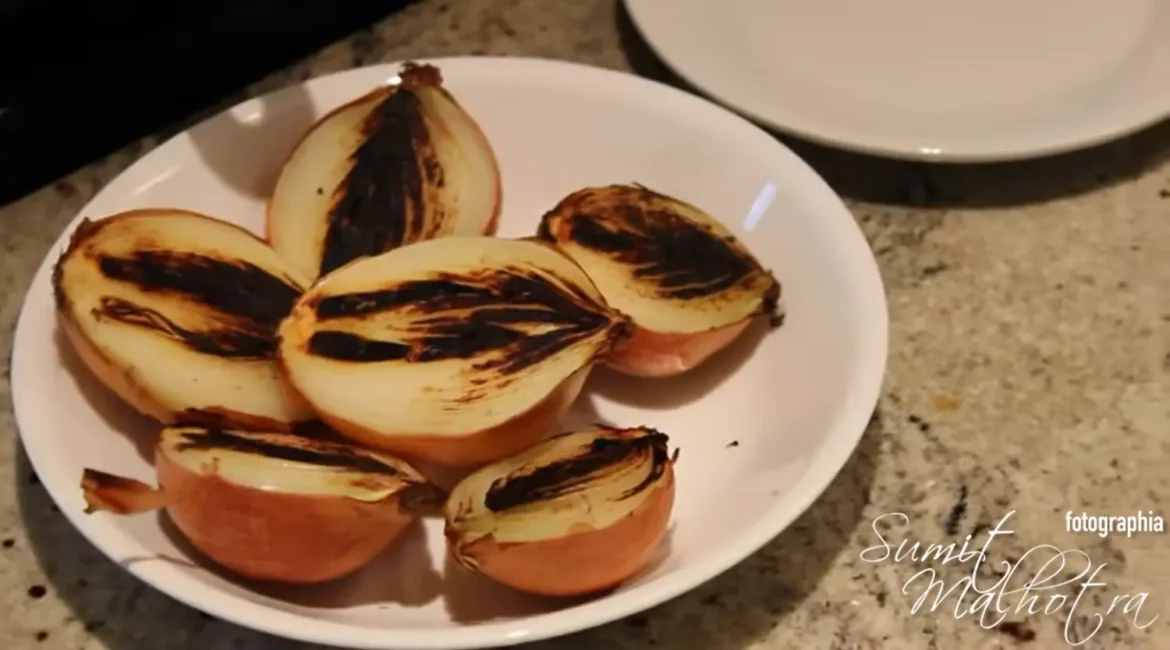
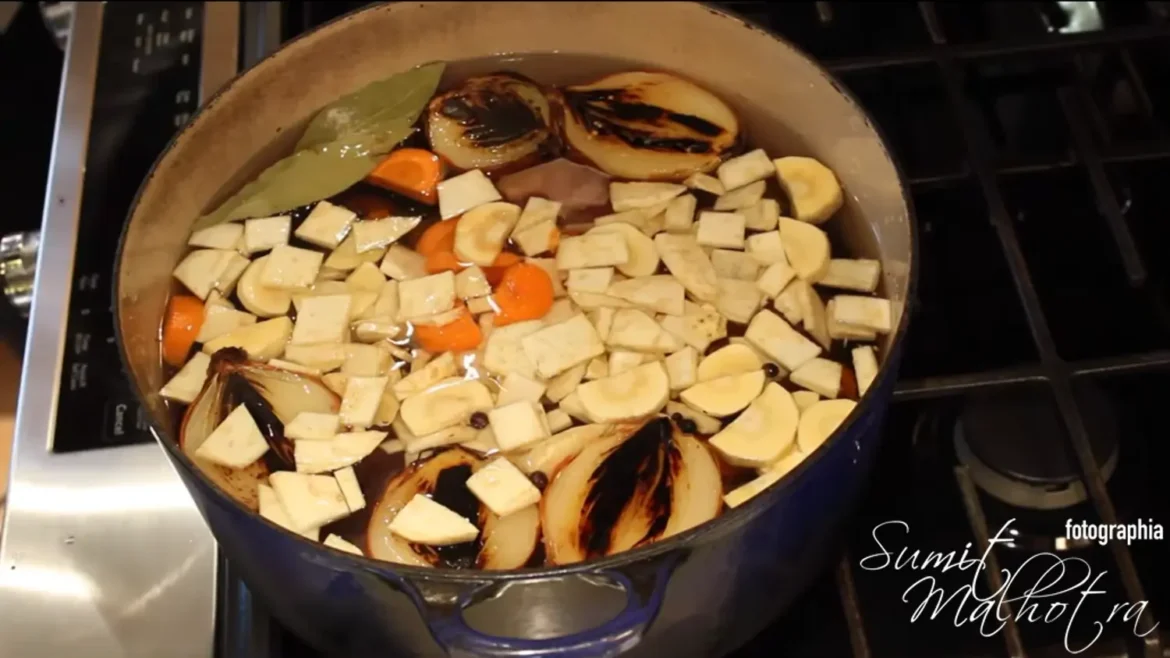
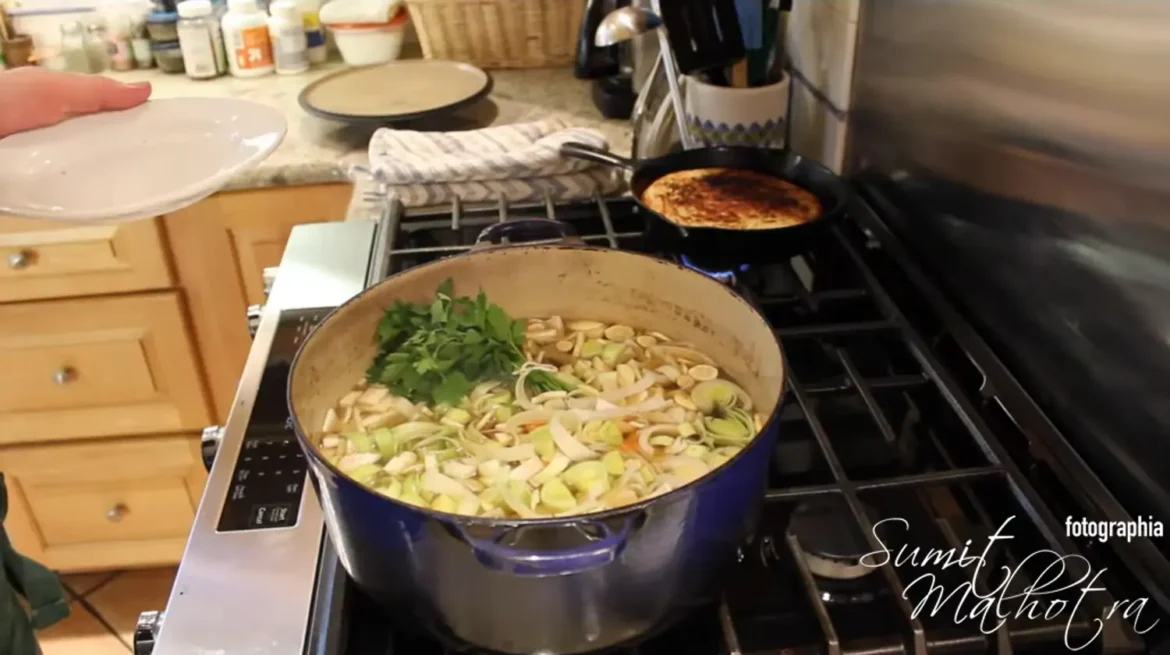
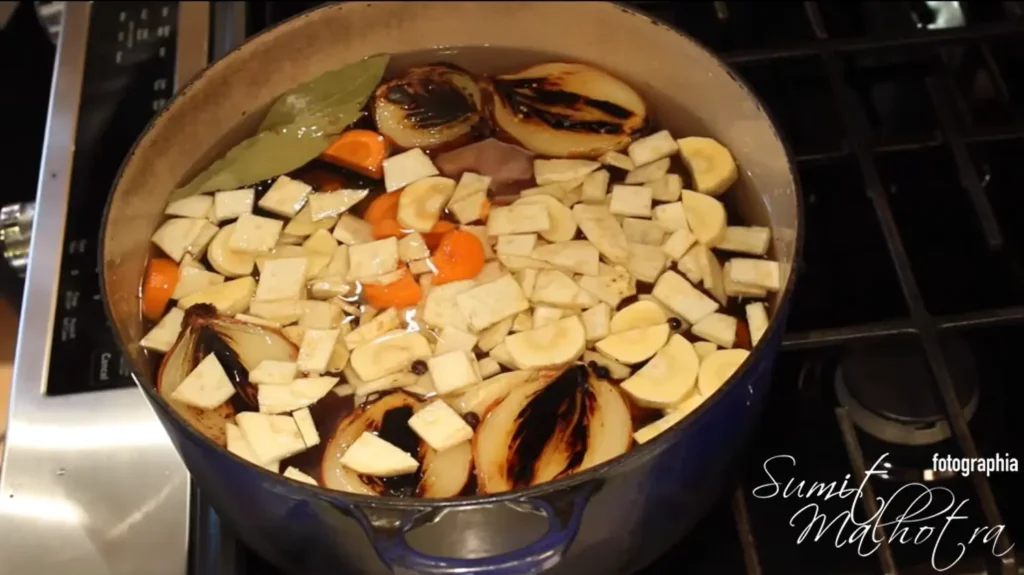
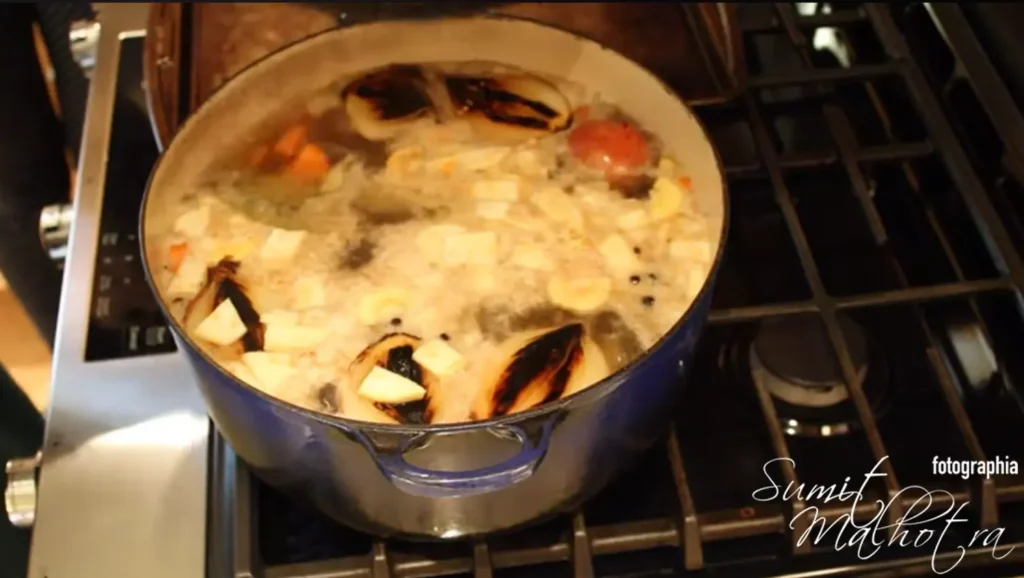
Ready to be Boiled - Root Vegetables, Bay Leaves, Spices & Browned Onions with Sirloin Rump Cap for Tafelspitz
The Crucial Battle Between the Stew and the Simmer
For a stew, meat is chopped up into small cubes and thrown into a pot of water.
To understand why Tafelspitz became an aristocratic luxury while other boiled meats remained simple peasant food, we have to look at how muscle fibres react to different types of heat.
When most amateur cooks think of cooking beef in water, they think of a standard beef stew.
For a stew, meat is chopped up into small cubes and thrown into a pot of water that is brought to an aggressive, roaring boil.
Under high, turbulent heat, the liquid bubbles violently, tossing the meat around.
This aggressive boiling causes the tightly wound protein fibres inside the meat to seize up and contract tightly, squeezing out all of their natural internal juices like a wrung-out sponge.
While the tough connective tissues inside the meat do eventually melt into gelatin after hours of boiling, the physical fibres themselves become ragged, loose, and frayed.
You end up with a shredded, soft texture where the meat easily disintegrates into a messy pile of loose threads.
[High, Turbulent Boiling Heat] ➔ Protein Fibres Seize Up ➔ Natural Juices Squeezed Out ➔ Shredded, Frayed Meat Threads
This ragged, shredded texture was an absolute sin in the eyes of high-society Viennese chefs.
Imperial presentation demanded that the beef be carved into pristine, elegant, solid slices that could sit beautifully on a silver platter without falling apart.
To achieve this, the master chefs of Vienna completely banned the aggressive boil and replaced it with a technique called precision simmering.
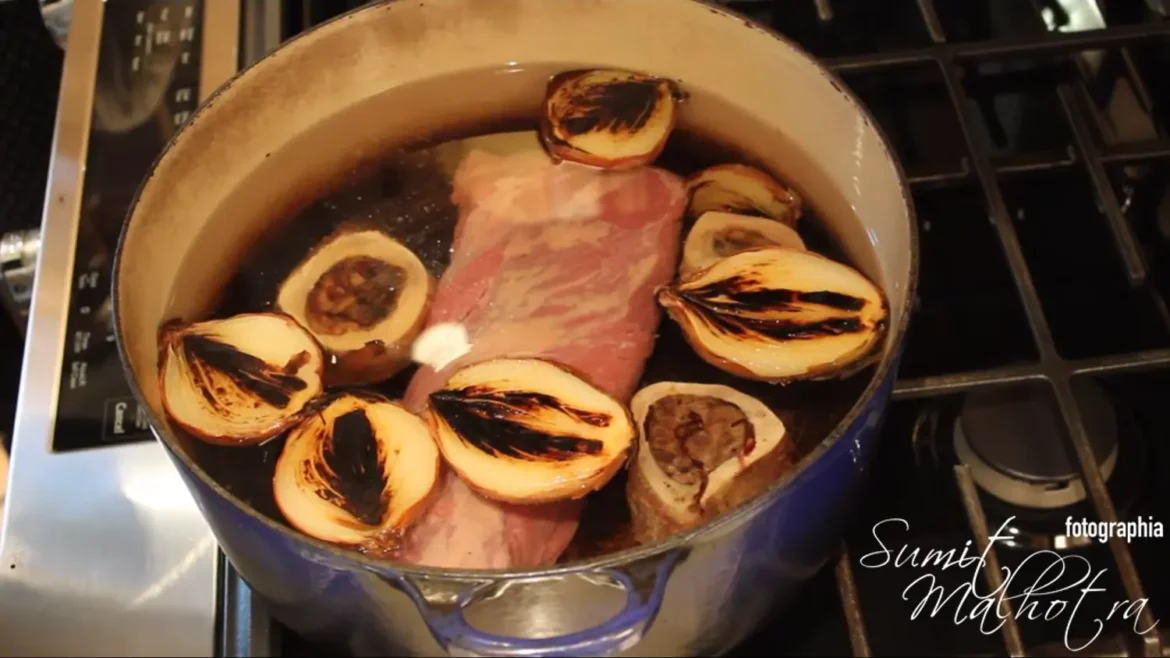
Boiling - Root Vegetables, Bay Leaves, Spices & Browned Onions with Sirloin Rump Cap for Tafelspitz
Engineering the Natural Fat Shield
The low thermal energy treats the meat with incredible delicacy.
The secret to a perfect Tafelspitz lies in keeping the cooking liquid at a gentle, constant sub-boiling temperature—right around 85°C to 90°C.
At this level, the water never erupts into bubbles. Instead, the surface of the broth merely shivers and trembles.
When the large, whole rump cap of beef is lowered into this hot, gentle bath, the low thermal energy treats the meat with incredible delicacy.
Instead of shocking the protein fibres and causing them to squeeze tight, the gentle heat allows the tough connective tissues woven throughout the muscle to melt down slowly into a rich, luscious gelatin over the course of three to four hours.
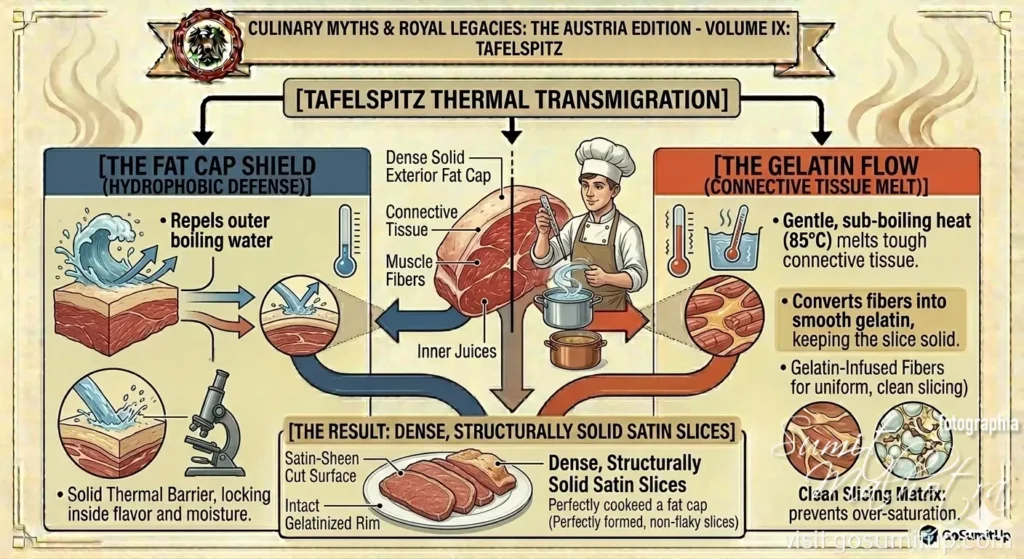
Tafelspitz thermal transmigration
This is where the physical architecture of the Tafelspitz cut performs its true magic.
That thick, beautiful cap of exterior fat on top of the meat acts as a natural thermal shield.
Because fat and water do not mix, this solid layer of dairy fat prevents the surrounding broth from directly washing into the core of the muscle and stripping away its natural flavour compounds.
The fat cap absorbs the initial heat of the water, melting at a highly controlled rate and dripping down into the meat fibres below, basting the muscle from the outside in.
This gorgeous shield locks the moisture inside, ensuring that the meat remains intensely juicy, while the uniform grain of the muscle stays perfectly intact.
When you pull the meat out of the pot, it hasn’t turned into a frayed, ragged mess.
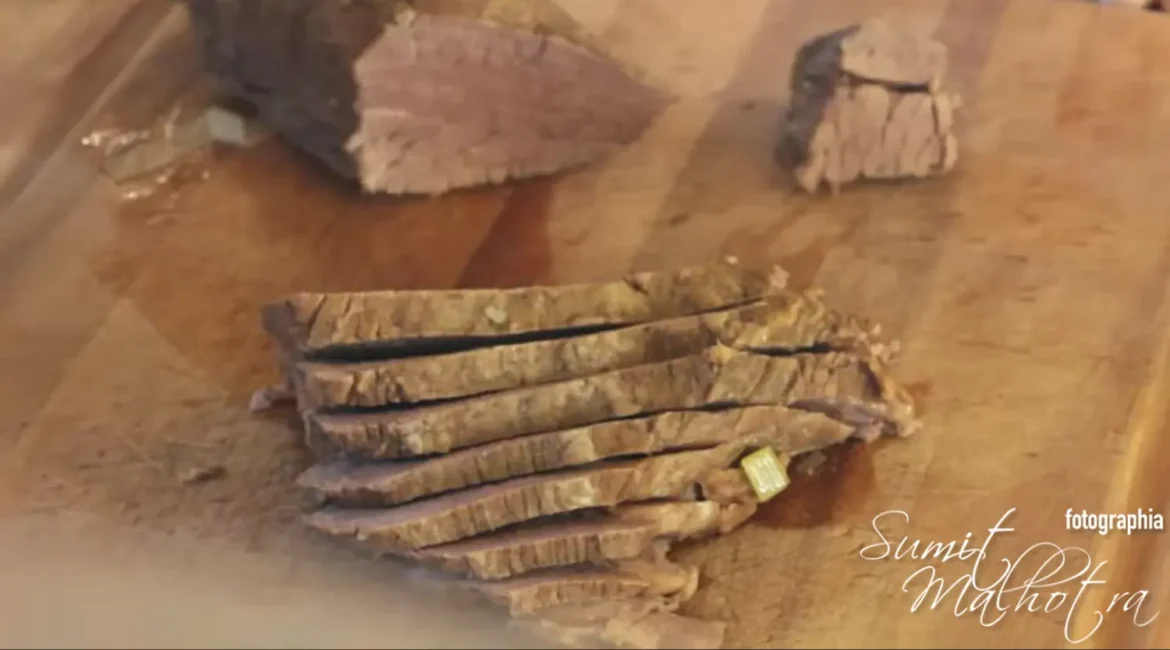
It is a solid, structurally sound piece of culinary art that can be carved into clean, satin-like slices that melt in your mouth but look immaculate on the plate.
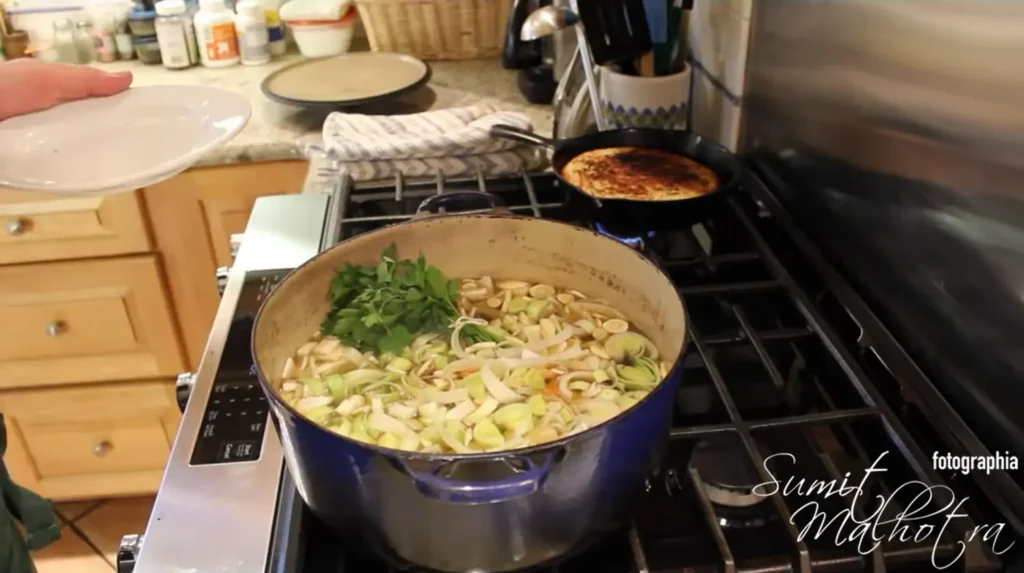
Broth Ready to be Boiled - Spices, Root Vegetables, Parsley & Stock from Boiled Sirloin Rump Cap for Tafelspitz
The Complete Imperial Symphony of Flavour
Tafelspitz is part of a carefully orchestrated multi-course experience designed to show off the balance of different flavors.
A true Tafelspitz is never served alone; it is part of a carefully orchestrated multi-course experience designed to show off the balance of different flavours.
The cooking process itself creates a magnificent byproduct: an incredibly rich, golden beef broth infused with the essence of marrow bones, root vegetables, and the slow-melted fats of the meat.
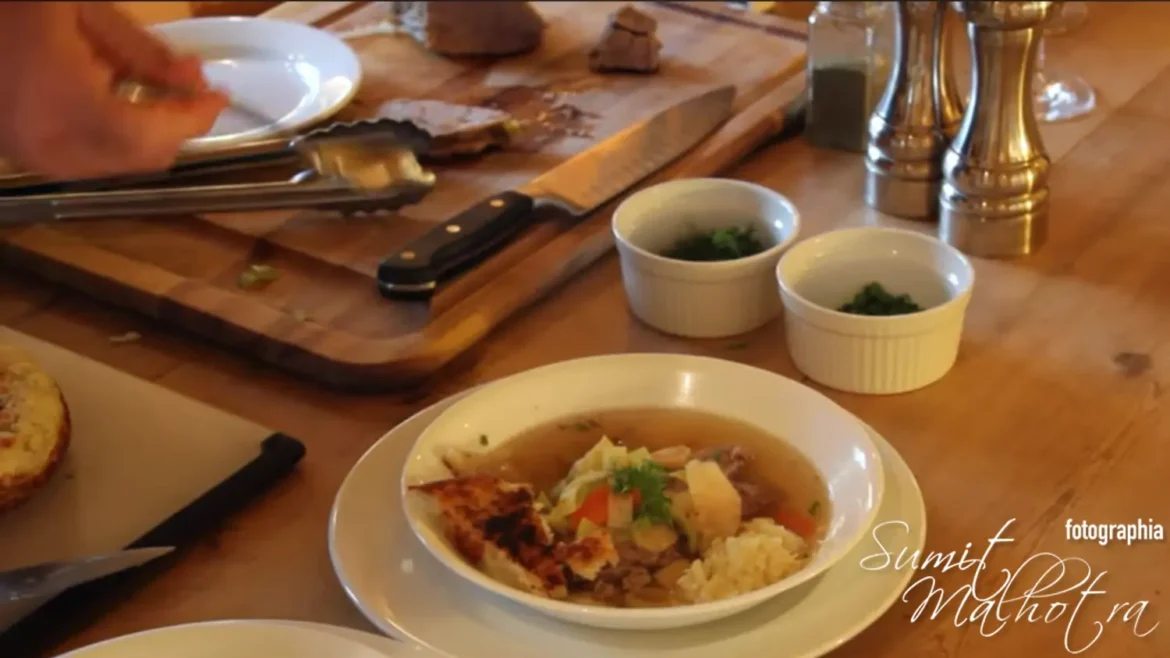
The meal traditionally begins with this clear broth, served piping hot in a bowl, often garnished with thin strips of savoury crepes (Fridatten).
Only after the soup has been enjoyed does the main event arrive.
The carved slices of beef are served alongside a vibrant array of traditional sides designed to contrast the rich, heavy flavour of the meat fats.
There is Apfelkren – a sharp, refreshing condiment made by mixing tart, grated apples with fiery, cleared horseradish.
There is a cool, creamy chive sauce made with hard-boiled eggs and oil, and a side of crispy, pan-fried potato cakes known as Erdäpfelschmarrn.
The contrast between the hot, rich, gelatinous beef and the cold, fiery, sweet sauces is what makes the dish an absolute masterpiece of balance.
The legend of the starving military officers looking for a quick bite to eat at the Hotel Sacher is a fantastic piece of marketing folklore.
But the true history of Tafelspitz is a testament to generations of anonymous Viennese cooks who looked past the simple, chaotic methods of boiling.
They learnt exactly how to use low temperatures and a natural layer of fat to turn a humble, tough muscle into a legendary royal feast.
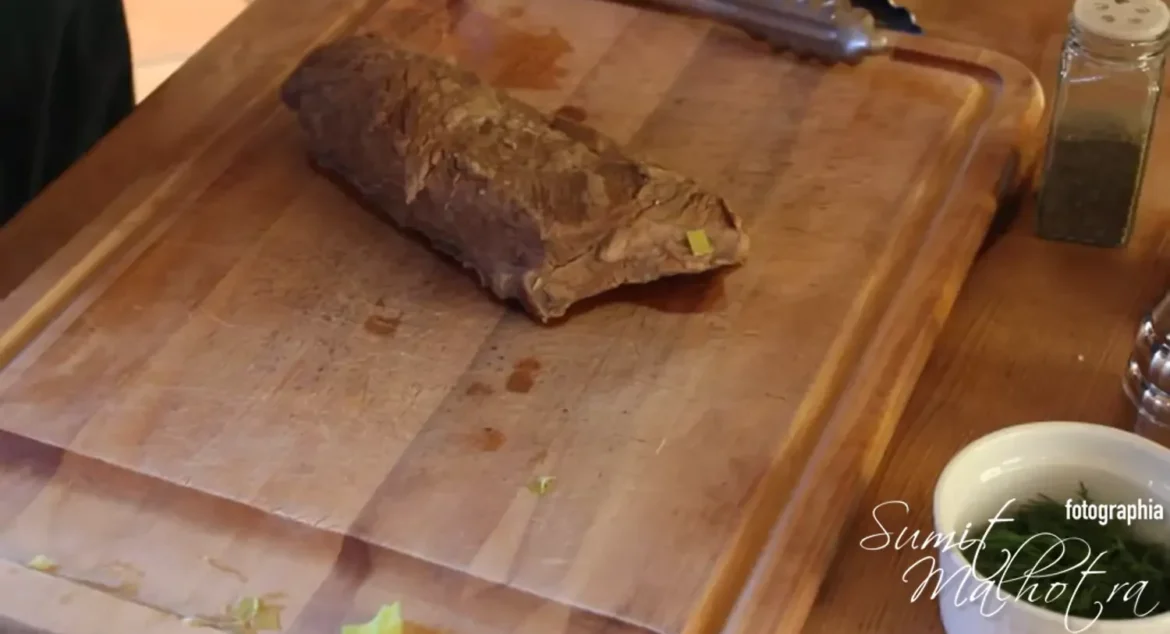
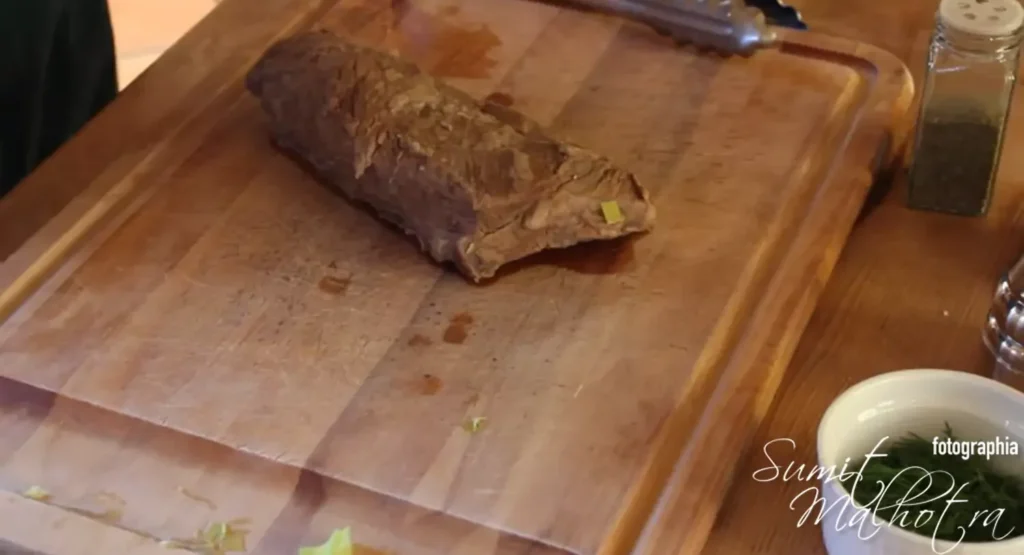
Boiled Sirloin Rump Cap for Tafelspitz
A "Sumit Up" Culinary Insight
The incredible legacy of Tafelspitz teaches us a vital kitchen lesson.
The incredible legacy of Tafelspitz teaches us a vital kitchen lesson: patience and gentle boundary management will always triumph over raw, chaotic force.
A lesser cook looks at a tough, lean piece of meat and tries to conquer it by cranking up the dial to a violent, raging boil.
But all that high heat does is destroy the structure, squeeze out the internal juices, and turn a premium ingredient into a collection of frayed, dry threads.
By keeping your cooking liquid at a calm, sub-boiling whisper and letting a natural cap of fat act as a protective thermal barrier, you allow the meat to transform itself on a structural level.
The tough tissues melt away into luxurious gelatin from the inside out, preserving every drop of deep, meaty flavour.
When you cook at home, stop trying to rush your proteins with high temperatures.
Step back, lower the heat, protect your boundaries, and let time unlock the true potential of your food.
Making of Tafelspitz (Part 1)
Making of Tafelspitz (Part2)
If you are a traveller and or just love to drive, you may find below a list of items that will fortify & thus enrich your travel experience.
I use many of these myself for my trips. They are modestly priced and quite important to keep handy.
- Travel Adapter – https://amzn.to/3A04EJp
- Action Camera – https://amzn.to/4eCSMfF
- Camera Mounts & Accessories – https://amzn.to/4eG4je2
- Dashcam – https://amzn.to/3U2j4Qc
- Neck Rest – https://amzn.to/3Y6ZP98
- Tyre Inflator – https://amzn.to/3U8HpDP
- Storage – https://amzn.to/3XVQFMI
- Car Laptop Charger – https://amzn.to/3XXMVdA
- Vacuum Cleaner Cordless – https://amzn.to/3Yo1hWd
- Air Mattress – https://amzn.to/4015Bvu
- Jack Ratchet Wrench – https://amzn.to/3YkxddO
- Cleaning Cloth Microfibre – https://amzn.to/3NIOFmt
- Rechargeable Solar LED Torch – https://amzn.to/3Yj4h5Y
- Electronics Accessories Organiser – https://amzn.to/3A04XUz
- Pocket Travel Data Transfer Tool – https://amzn.to/3zMTxnc
- Smart Tracker for Keys – https://amzn.to/3BTuIq0
- Camping Cookware Kit – https://amzn.to/3BIy0N3
- Sleeping Bag – https://amzn.to/3U7v2rP
GoSumItUp is a personal blog written and edited personally by me. All opinions expressed are my own, which are honest and have not been influenced by any means.
My reviews are dependent on the visits at the time, and revisits will be reviewed again as they may have a different experience or the same.
I am not a food critic nor do I consider myself as one; this platform allows me to write and review my own personal dining experiences, whether good or bad, delicious or not, all of which are honest and truthful opinions.
Suppose you disagree or agree with me at any point, or do not receive the same experiences as I have. In that case, I do not hold any responsibility as everyone will have their own experiences that they will encounter themselves.
I pay for all meals. However, if any meals or products have been sponsored or compensated or if I was a guest, it will be clearly disclosed at the end of each review.
All images on this blog are my own unless stated otherwise. If you wish to use any of my photography for any purposes, please do not use it without any written permission and give credit and/or link back to the website.
If you would like to send a product or any sponsors/endorsements, it may or may not be published and reviewed on the website.
If you wish to send any products or invitations for any media, press or collaborations, etc., consider if it is something related to the content of the website, and if you see fit, please visit the Contact page for contact details.
Thank You.
Thank you for visiting GoSumItUp! I hope you enjoy the reviews & recipes found at www.gosumitup.com.
This page consists of disclaimers regarding the recipe, its outcome, nutrition, and food handling safety decisions.
The recipes have been cooked and compiled by me for general information only and should not be used to diagnose or treat any medical condition/s.
This information is not intended to diagnose, treat, cure, or prevent any disease as well.
GoSumItUp.com has used all reasonable care in compiling the information but offers no warranty as to its accuracy or its use in any possible form.
Consult a doctor or other health care professional for diagnosis and treatment of any medical condition/s. For more details please refer to our disclosure policy.
If you like this article, you can let us know in the comments below or on social media using #gosumitup and tag @gosumitup on Facebook.
I am always happy to read your feedback, and if you liked the dish or if you made the dish. :)
Better still, take a picture and post it on Instagram and tag it as #gosumitup
Connect directly – You can also connect with me directly on my Instagram, Facebook or Pinterest.
And, keep visiting us for more of such awesomeness. Bookmark gosumitup.com into your web browser now or simply subscribe to our browser notifications.