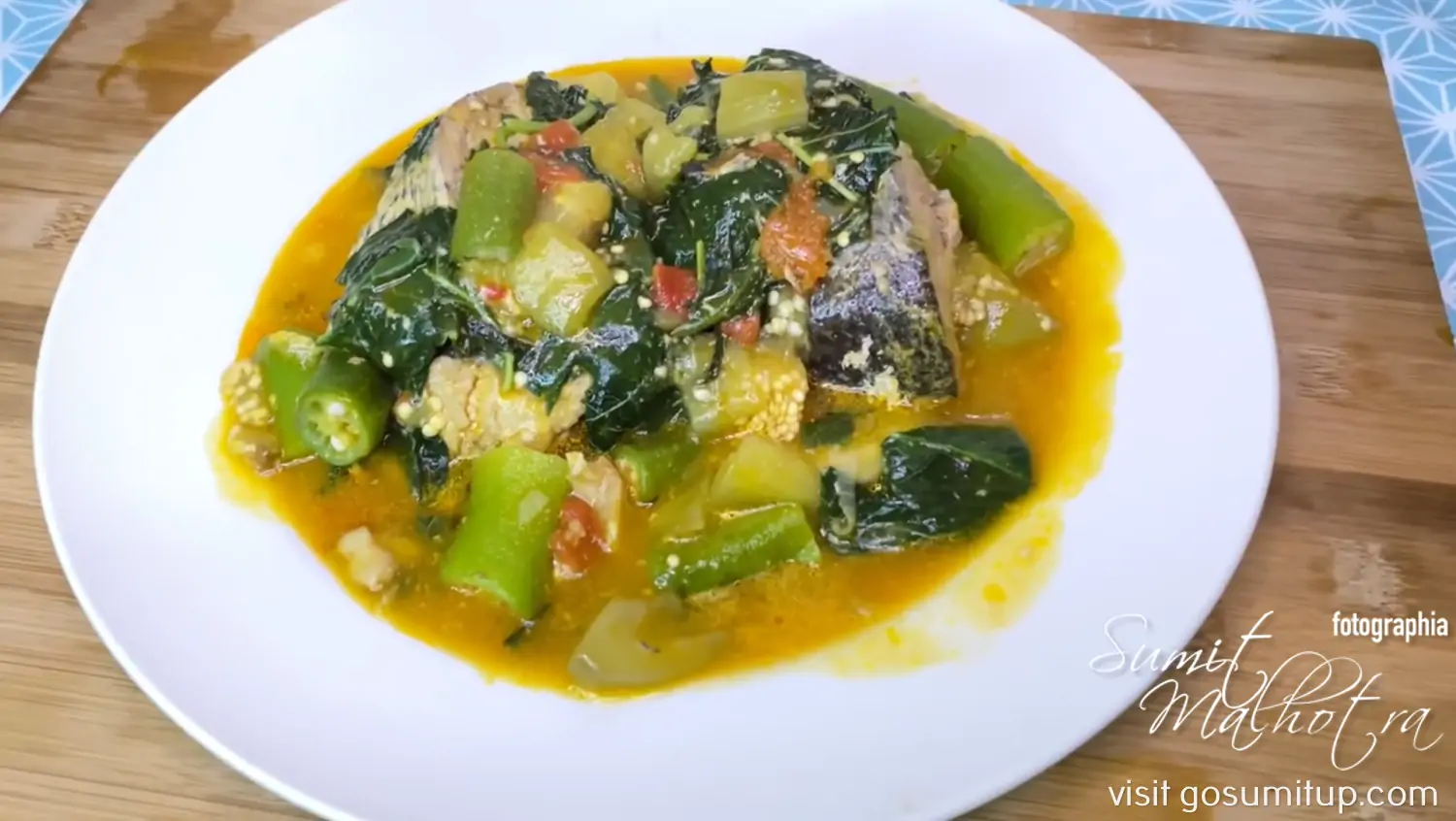
Calulu – While Muamba de Galinha represents the union of the inland kingdoms. Calulu is the salt-sprayed soul of the Angolan coast as per the History of Angolan Calulu.
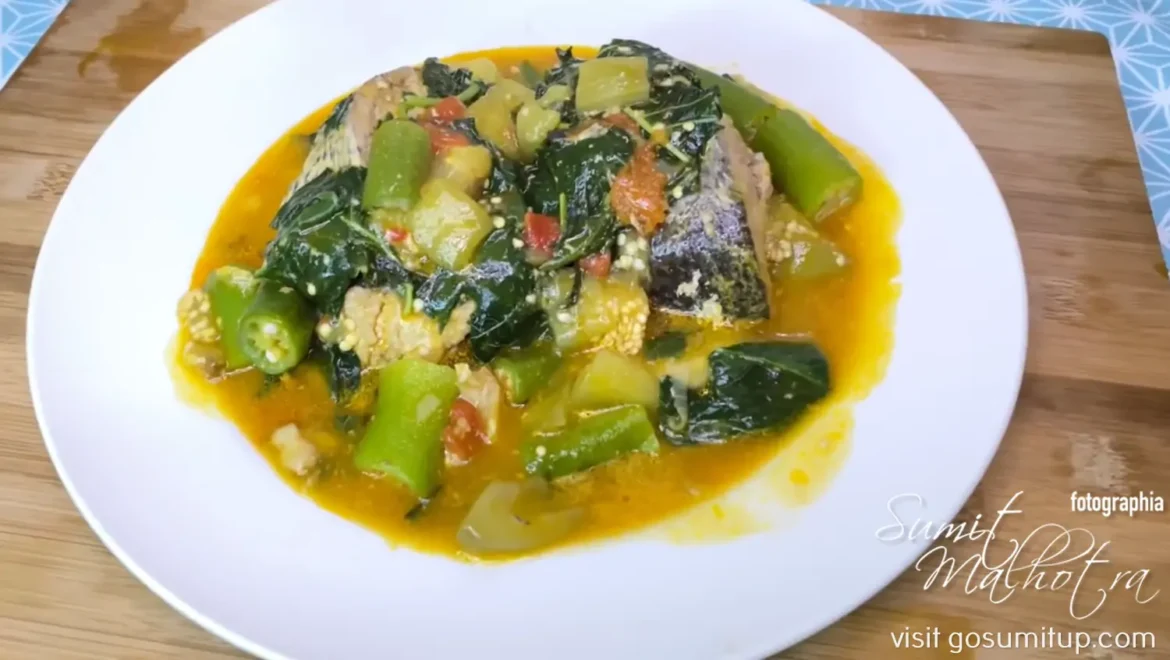
It is a dish that defies the standard definition of a “stew”—a complex, layered construction of dried and fresh fish, sweet potato leaves (osso), and okra, all bound together by the omnipresent red palm oil (traditional fish calulu recipe).
In the coastal enclaves of Luanda and Benguela, a persistent myth suggests that Calulu was once a Forbidden Dish.
Legend tells of a time when the colonial authorities sought to ban the preparation of Calulu. So, there was an Angolan food and resistance to it.
They did so fearing that the specific ritual of drying the fish and gathering the wild greens was a secret language used by the enslaved populations to communicate across the plantations of the Atlantic.
Just one of the myths of using dried fish in African cooking.
Calulu Stew
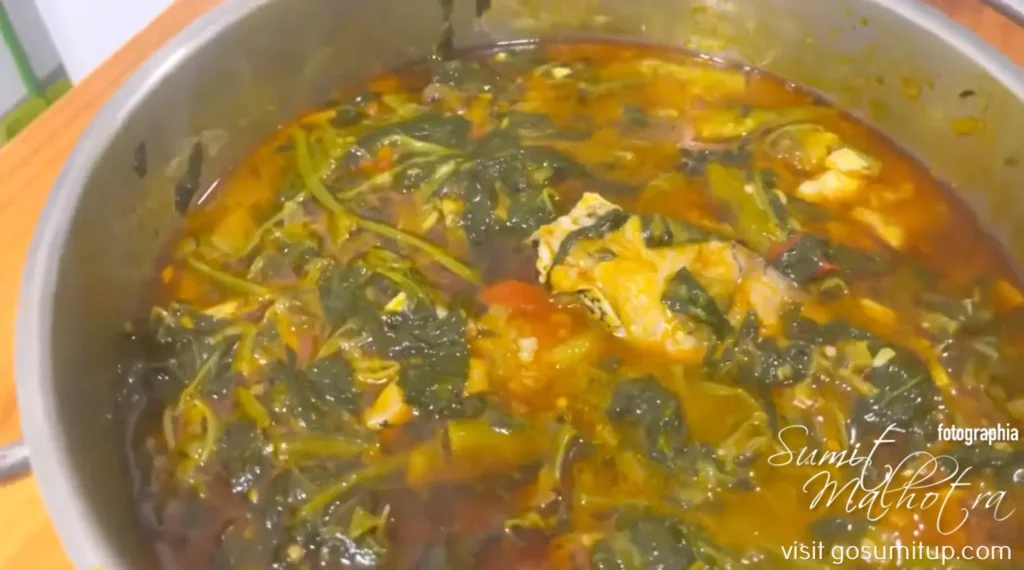
Gimboa and Osso: The Myth of the "Wild Greens"
These greens have "magical" properties that can heal the spirit of someone who is homesick (saudade)
In the modern markets of Luanda, you will see women selling bundles of Gimboa (amaranth) and Osso (sweet potato leaves).
There is a myth that these greens (Angolan sweet potato leaf recipes) have “magical” properties that can heal the spirit of someone who is homesick (saudade).
The Technical Reality: These aren’t just “weeds”; they are Technological Thickening Agents.
The Mucilage Factor: Much like okra, these leaves release a natural mucilage when simmered.
This thickens the palm oil and water into a cohesive sauce without the need for flour or starch, making it a necessity in red palm oil in fish stews
The Iron Content: These greens are nutrient-dense powerhouses.
For a population living under the stresses of colonial history, these “wild” additions were the difference between malnutrition and survival.
They provide the “Sard” (Cooling) mineral balance to the heavy, oil-rich base of the stew, answering the question Is Calulu a healthy dish?
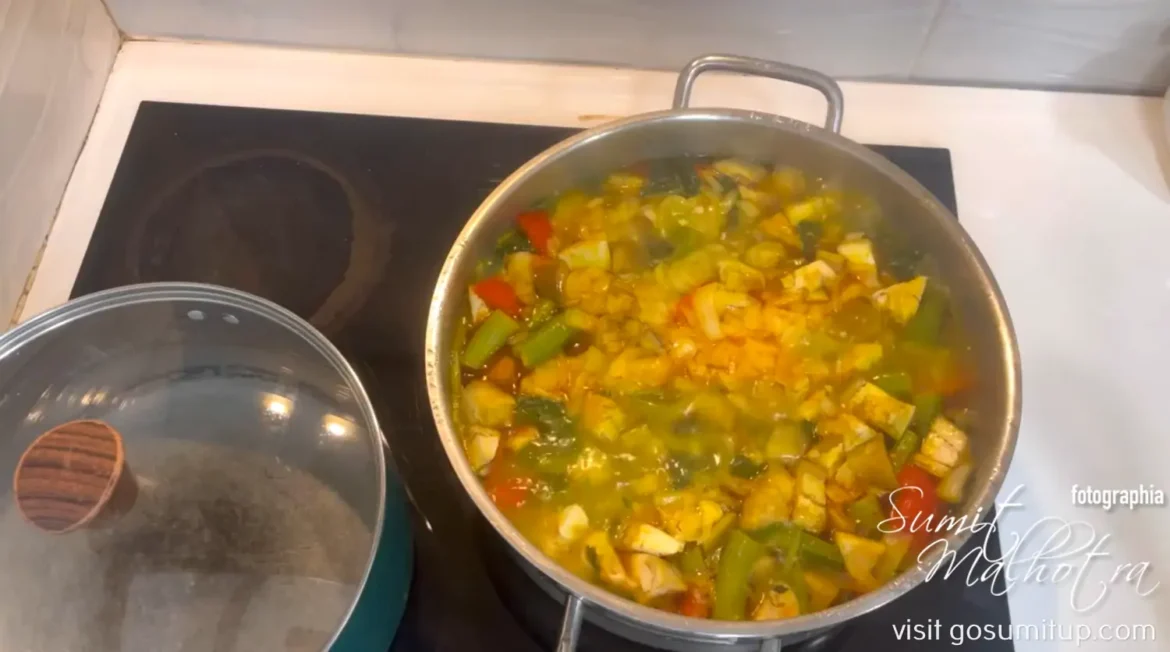
Calulu Stew Being Cooked
If you travel across the Atlantic to Bahia, Brazil, you will find a dish called Caruru.
This was done to "fool the spirits" into thinking the meal was more abundant than it actually was.
Perhaps the greatest myth of all is that Calulu is “just” an Angolan dish. If you travel across the Atlantic to Bahia, Brazil, you will find a dish called Caruru.
The Global “Sumit Up”: The two dishes are twins separated by an ocean.
While the Brazilian Caruru pivoted toward a focus on shrimp and peanuts, the Angolan Calulu remained anchored to the fish of the Benguela Current. That perhaps is the only difference between Calulu and Caruru.
The Legacy: This connection proves that Angola’s “Culinary Legacy” isn’t confined by its borders.
The “Hidden Myth” of Calulu is that it is the DNA of the entire African Diaspora’s culinary soul.
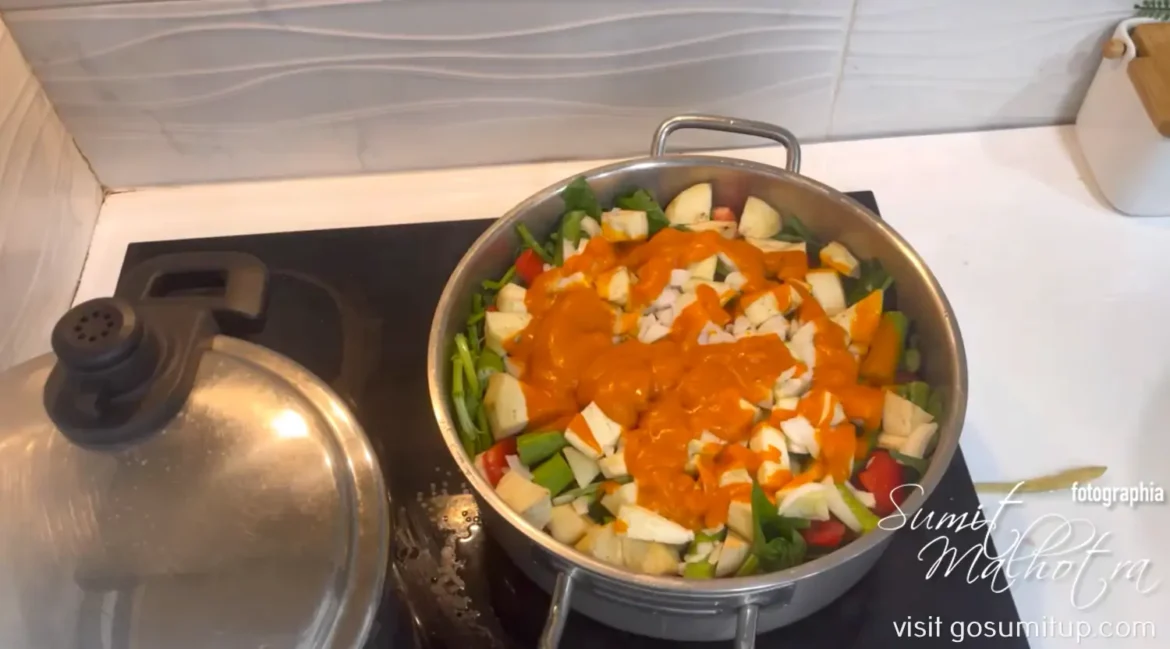
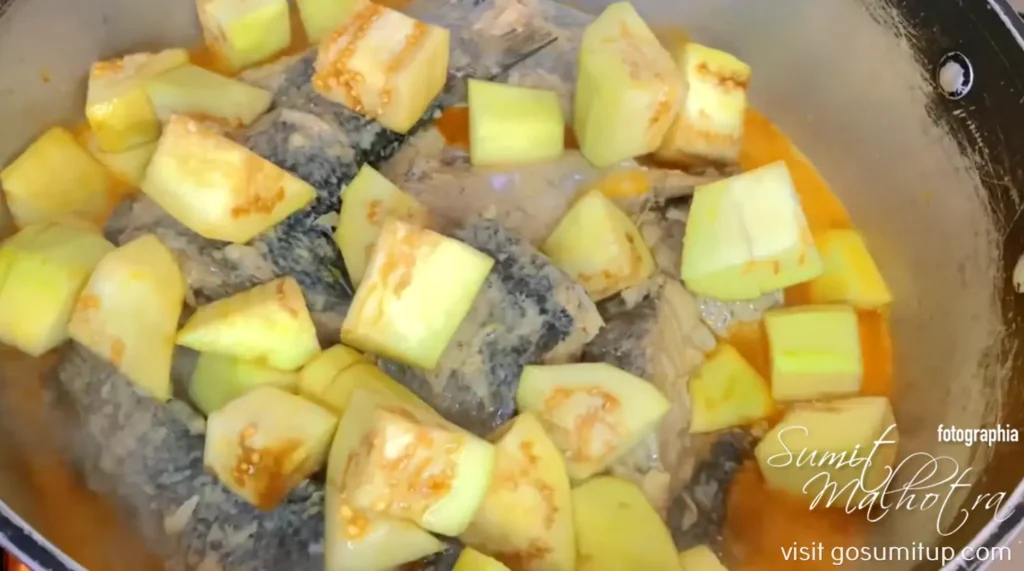
Eggplant Added to the Calulu Stew
African Diaspora Culinary History, especially the Traditional food of Luanda and Benguela states:
While they share a similar name and a deep historical lineage, Calulu (Angola) and Caruru (Brazil) are culinary “twins” separated by the Atlantic Ocean.
They represent one of the most powerful examples of how African food traditions crossed the Middle Passage and adapted to the local ingredients of South America.
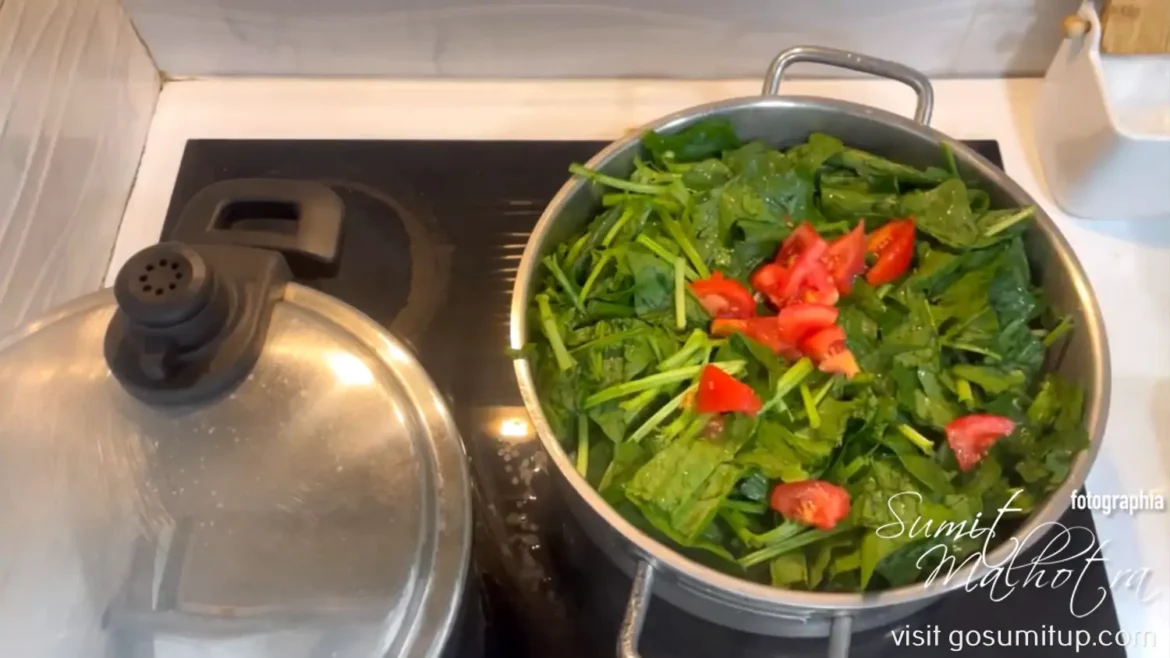
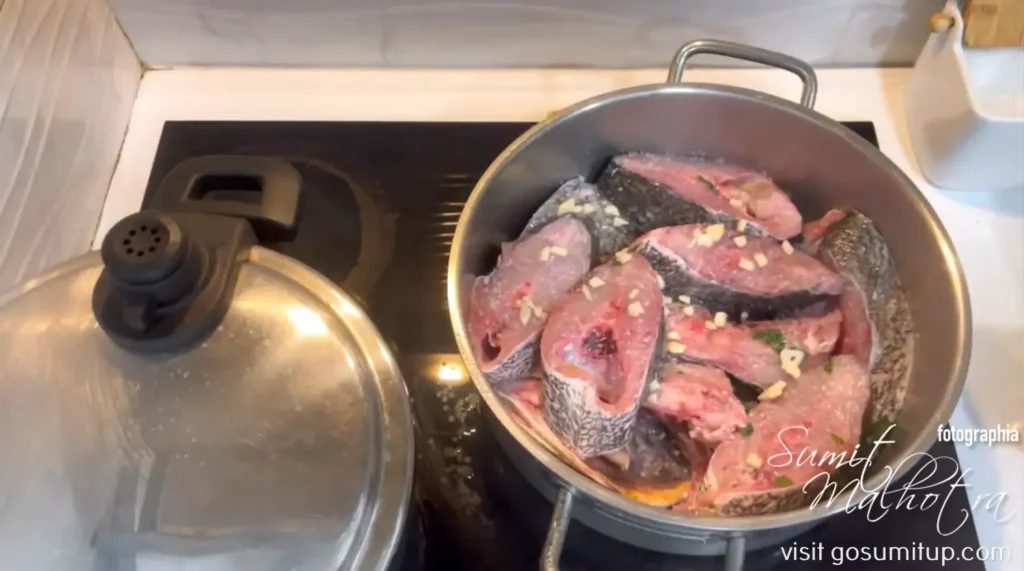
Fish & Garlic Ready for Calulu Stew
Difference between Calulu and Caruru
Here is the technical breakdown of the Angolan original versus the Brazilian evolution
1. The Protein (Sea vs. Land)
- Calulu (Angola): The heart of this dish is Fish. It traditionally uses a combination of fresh fish (like Tilapia or Snapper) and salt-dried fish. The dried fish provides a deep, savoury, fermented base that is essential to the Angolan flavour profile.
- Caruru (Brazil): In the state of Bahia, the dish shifted toward Shrimp. While some versions use dried shrimp for seasoning, the primary protein is typically fresh or dried shrimp rather than the layered fish found in Angola.
2. The Thickening Agent (Okra vs. Peanuts)
- Calulu: Relies on Okra and indigenous greens like Gimboa (amaranth) or Osso (sweet potato leaves). These greens provide a natural mucilage that thickens the stew into a cohesive, silky texture.
- Caruru: While it also uses massive amounts of okra, the Brazilian version adds Toasted Peanuts and Cashews. These are ground into a paste and added to the pot, giving the Brazilian dish a much creamier, nuttier, and heavier consistency.
3. The Foundation (Palm Oil vs. Dendê)
- Calulu: Uses raw Red Palm Oil. It is often cooked in layers—vegetables first, then fish, then palm oil—resulting in a vibrant, orange-red sauce that is relatively fluid.
- Caruru: Uses Azeite de Dendê (the Brazilian name for red palm oil). However, the cooking process in Brazil often involves sautéing aromatics like onions, ginger, and garlic in the oil first, a technique influenced by Portuguese and indigenous Brazilian methods.
4. The “Handshake” (Funge vs. Acarajé)
- Calulu: In Luanda, Calulu is inseparable from Funge (cassava or corn mash). It is a meal meant to be eaten with the hands, scooping the sauce with a ball of dough.
- Caruru: In Brazil, Caruru is often served as a component of a larger ritual plate. Most famously, it is one of the essential fillings for Acarajé (deep-fried black-eyed pea fritters) sold by the Baianas de Acarajé on the streets of Salvador.
The “Sumit Up” Technical Comparison
|
Feature |
Calulu (Angola) |
Caruru (Brazil) |
|
Primary Protein |
Fresh & Salt-Dried Fish |
Shrimp (Dried & Fresh) |
|
Key Nut/Seed |
None |
Peanuts & Cashews |
|
Vegetable Base |
Sweet Potato Leaves & Okra |
Primarily Okra |
|
Aromatics |
Simple: Onion & Tomato |
Complex: Ginger, Garlic, Onion |
|
Cultural Context |
National family staple |
Sacred food of the Candomblé religion |
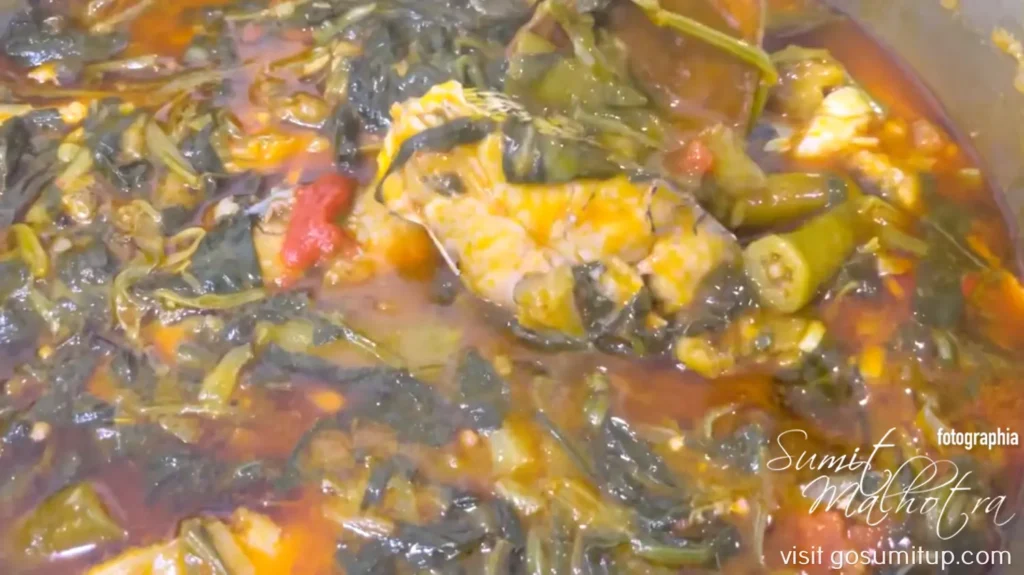
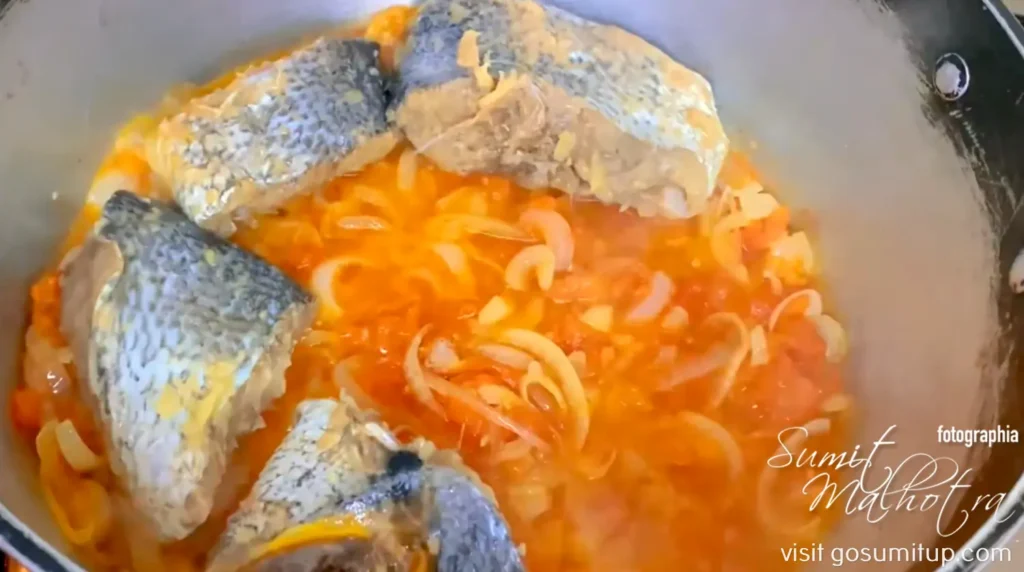
Fish Added to the Calulu Stew
The shift from Calulu to Caruru is a story of environmental adaptation.
When enslaved West Africans arrived in Brazil, they found many of the same plants (okra and palm oil) but had to substitute local ingredients (peanuts and different greens).
Over 400 years, the “Angolan Layered Stew” transformed into the “Bahian Nutty Paste,” yet they both remain anchored by the same blood-red palm oil and the sacred use of okra.
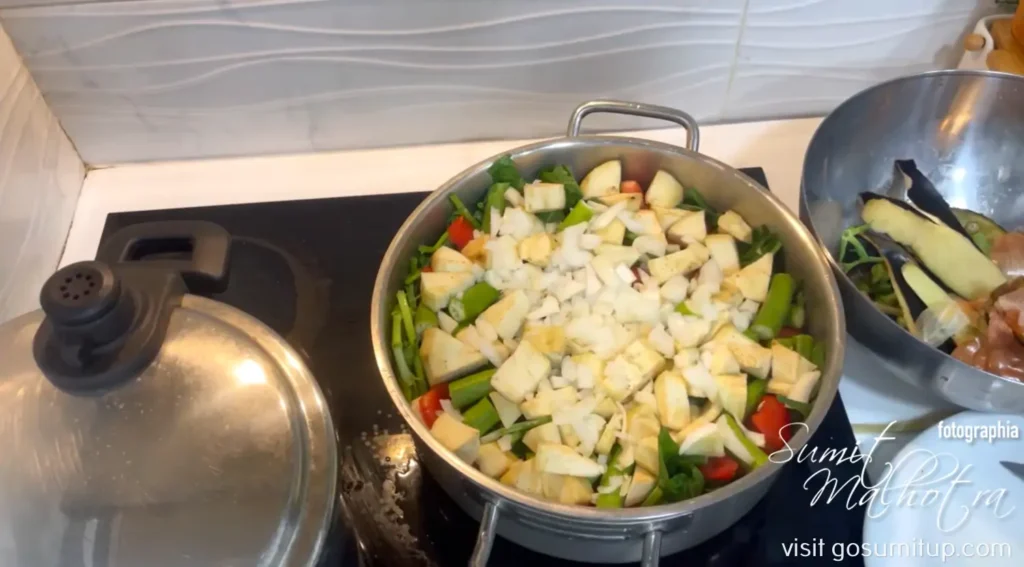
Okra & Eggplant Added to Calulu Stew
A "Sumit Up" Culinary Insight
Angola is a nation that cooks with Memory. Whether it is the Muamba of the royal courts or the Calulu of the coastal rebels, every dish is an act of preservation.
It is a cuisine that turned the “Red Gold” of its soil and the salt of its sea into a shield against the erasure of its culture.
As we finish our time in the South Atlantic, we carry with us the lesson that a recipe is the most portable form of freedom.
Preperation of Calulu
If you are a traveller and or just love to drive, you may find below a list of items that will fortify & thus enrich your travel experience.
I use many of these myself for my trips. They are modestly priced and quite important to keep handy.
- Travel Adapter – https://amzn.to/3A04EJp
- Action Camera – https://amzn.to/4eCSMfF
- Camera Mounts & Accessories – https://amzn.to/4eG4je2
- Dashcam – https://amzn.to/3U2j4Qc
- Neck Rest – https://amzn.to/3Y6ZP98
- Tyre Inflator – https://amzn.to/3U8HpDP
- Storage – https://amzn.to/3XVQFMI
- Car Laptop Charger – https://amzn.to/3XXMVdA
- Vacuum Cleaner Cordless – https://amzn.to/3Yo1hWd
- Air Mattress – https://amzn.to/4015Bvu
- Jack Ratchet Wrench – https://amzn.to/3YkxddO
- Cleaning Cloth Microfibre – https://amzn.to/3NIOFmt
- Rechargeable Solar LED Torch – https://amzn.to/3Yj4h5Y
- Electronics Accessories Organiser – https://amzn.to/3A04XUz
- Pocket Travel Data Transfer Tool – https://amzn.to/3zMTxnc
- Smart Tracker for Keys – https://amzn.to/3BTuIq0
- Camping Cookware Kit – https://amzn.to/3BIy0N3
- Sleeping Bag – https://amzn.to/3U7v2rP
GoSumItUp is a personal blog written and edited personally by me. All opinions expressed are my own, which are honest and have not been influenced by any means.
My reviews are dependent on the visits at the time, and revisits will be reviewed again as they may have a different experience or the same.
I am not a food critic nor do I consider myself as one; this platform allows me to write and review my own personal dining experiences, whether good or bad, delicious or not, all of which are honest and truthful opinions.
Suppose you disagree or agree with me at any point, or do not receive the same experiences as I have. In that case, I do not hold any responsibility as everyone will have their own experiences that they will encounter themselves.
I pay for all meals. However, if any meals or products have been sponsored or compensated or if I was a guest, it will be clearly disclosed at the end of each review.
All images on this blog are my own unless stated otherwise. If you wish to use any of my photography for any purposes, please do not use it without any written permission and give credit and/or link back to the website.
If you would like to send a product or any sponsors/endorsements, it may or may not be published and reviewed on the website.
If you wish to send any products or invitations for any media, press or collaborations, etc., consider if it is something related to the content of the website, and if you see fit, please visit the Contact page for contact details.
Thank You.
Thank you for visiting GoSumItUp! I hope you enjoy the reviews & recipes found at www.gosumitup.com.
This page consists of disclaimers regarding the recipe, its outcome, nutrition, and food handling safety decisions.
The recipes have been cooked and compiled by me for general information only and should not be used to diagnose or treat any medical condition/s.
This information is not intended to diagnose, treat, cure, or prevent any disease as well.
GoSumItUp.com has used all reasonable care in compiling the information but offers no warranty as to its accuracy or its use in any possible form.
Consult a doctor or other health care professional for diagnosis and treatment of any medical condition/s. For more details please refer to our disclosure policy.
If you like this article, you can let us know in the comments below or on social media using #gosumitup and tag @gosumitup on Facebook.
I am always happy to read your feedback, and if you liked the dish or if you made the dish. :)
Better still, take a picture and post it on Instagram and tag it as #gosumitup
Connect directly – You can also connect with me directly on my Instagram, Facebook or Pinterest.
And, keep visiting us for more of such awesomeness. Bookmark gosumitup.com into your web browser now or simply subscribe to our browser notifications.