The Science of Gatte Ka Pulao: Protein Cross-Linking, Lipid Layering, and Starch Hydration
Gatte Ka Pulao, a celebrated jewel of royal Rajasthani heritage, is a complex study in textural engineering and hydration thermodynamics.
Born out of necessity in an arid, water-scarce geographic terrain where fresh vegetables were historic luxuries, this dish replaces fresh produce with dense, seasoned chickpea flour (besan) dumplings known as gatte.
The culinary challenge—and scientific triumph—of a flawless Gatte Ka Pulao lies in achieving structural harmony between two wildly different textural elements: a firm, tender, protein-dense legume dumpling and incredibly light, elongated, separate grains of aromatic rice.
1. Protein Cross-Linking: The Mechanics of the Gatta
The creation of the gatta is entirely governed by legume protein structural dynamics.
Chickpea flour is highly dense in globulin proteins, which lack the elastic gluten networks found in wheat.
To build a cohesive, resilient dough matrix without structural crumbly failure, a crucial lipid-interfacing technique (moyen) is used.
Mixing melted ghee directly into the dry chickpea powder before adding water coats the native starch particles, breaking up potential tough protein webs.
When water is added, and the dough is rolled into cylinders and dropped into boiling water, the heat triggers rapid protein coagulation and starch gelatinisation.
This locks the cylindrical shape into place.
The dumplings are boiled until surface blisters appear—a visual indicator that internal water vaporisation has created miniature steam channels, rendering the dense protein matrix tender rather than rubbery.
2. Starch Segregation: The Fat-Jacket Sear
Once boiled, the dumplings are sliced and subjected to a rapid, high-heat pan sear in hot ghee along with traditional whole spices (cumin, cloves, and bay leaves).
This serves a vital dual purpose:
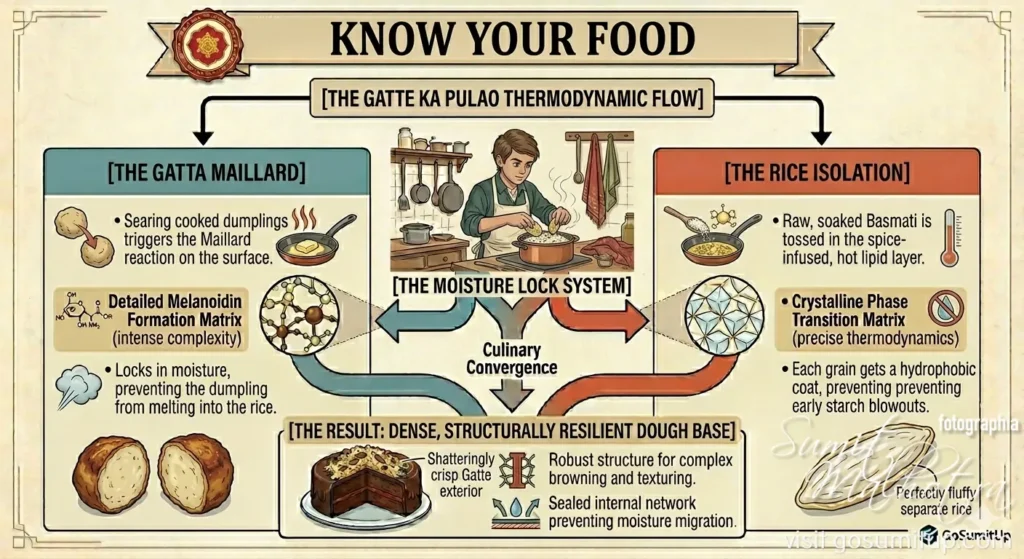
Gatte ka pulao thermodynamic flow
When the raw, pre-soaked Basmati rice (selected for a high amylose density of over 22%) is added to this identical fat substrate, the ghee envelops each grain.
This lipid barrier limits early moisture penetration, keeping the delicate outer starches of the rice kernel from rupturing during the subsequent simmering phase.
3. The Dum Hybrid: Achieving Structural Equilibrium
A rich, highly acidic yoghurt-and-water broth is introduced to the pan.
The lactic acid in the yoghurt lowers the pH of the cooking medium, which physically strengthens the pectin and starch structures of the rice grains, allowing them to expand longitudinally without breaking apart.
The pot is sealed tightly to initiate the Dum stage.
Inside the sealed chamber, the trapped steam finishes cooking the rice via capillary absorption, while the par-cooked gatte absorb the spice-infused broth, expanding slightly and achieving a perfect, meltingly tender equilibrium with the surrounding fluffy rice.