Read about Shor Gogal, Azerbaijani solar pastry, lamination physics, baking thermodynamics
Find more about Shorgoghal, Shorqoğal, Qoğal, Shirin Gogal, Novruz pastries, ghee lamination, mechanical emulsification, volatile spice chemistry, Azerbaijani cuisine, culinary myths, food science
Know more about Novruz Pastry, Novruz Baking, Badambura, Cooking Science, Pastry Physics, Azerbaijani Desserts, Food Chemistry, Lamination Mechanics
Learn About Shor Gogal, Shorgoghal, Shorghoghal, Shorqoğal, Qoğal, Shirin Gogal, Azerbaijani Cuisine, Culinary Myths, Food Science, Lamination Physics, Novruz Pastries, Baku Food, Baking Thermodynamics, Ghee Lamination, World Food Architecture
Walk into an Azerbaijani home during the ancient spring festival of Novruz, and you are not merely stepping into a dining room; you are entering an edible model of the cosmos.
The festive table, or khoncha, is anchored by three foundational pastries whose geometries represent the celestial bodies that govern human life.
There is Shekerbura, its crescent shape and meticulously carved wheat-ear patterns mimicking the glowing craters of the moon.
There is Baku Pahlava, an intricate diamond-cut matrix representing the stars and ancient constellations.
And riding high above them both is Shor Gogal (alternately romanised as Shorgoghal, Shorghoghal, or natively written in the Azerbaijani Latin script as Şorqoğal)
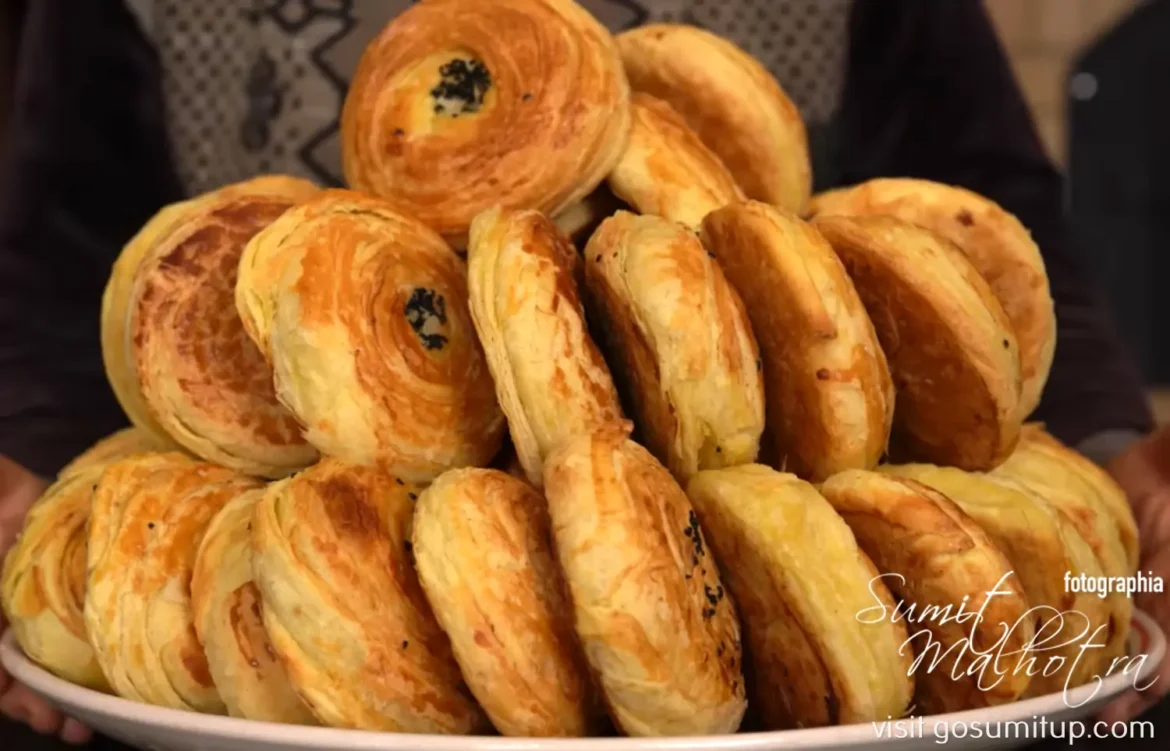
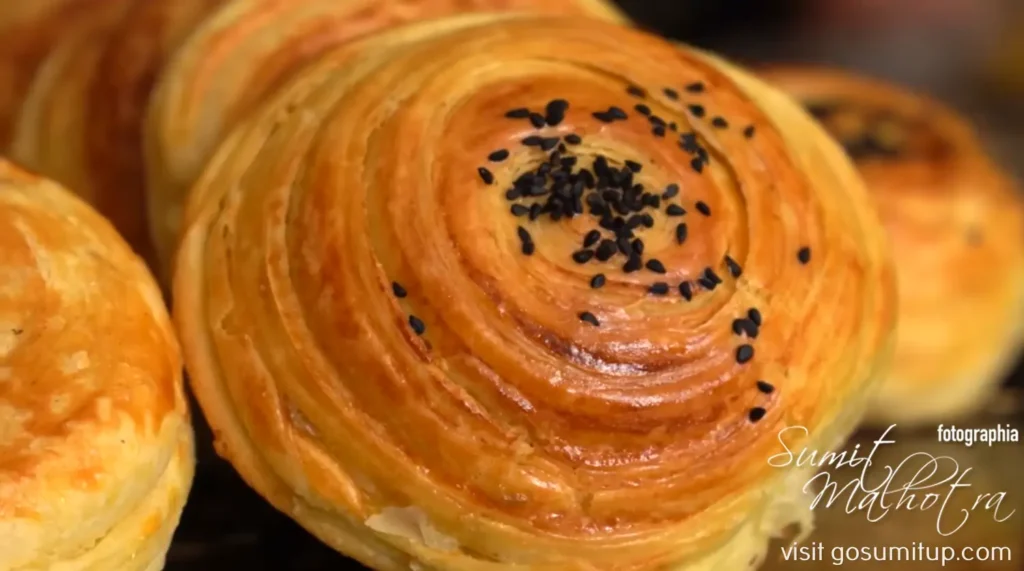
Shor Gogal is a heavy, radiant, circular disc burnished to a golden yellow hue and heavily dusted with black poppy or sesame seeds.
Within Azerbaijani folklore, the Gogal is the physical embodiment of the sun.
Its circular form represents eternity, its golden colour symbolises life-giving heat, and eating it acts as a ritualistic welcoming of the spring equinox, celebrating the absolute triumph of light over winter darkness.
Serve the Shor Gogal aka Shorgoghal with Tea
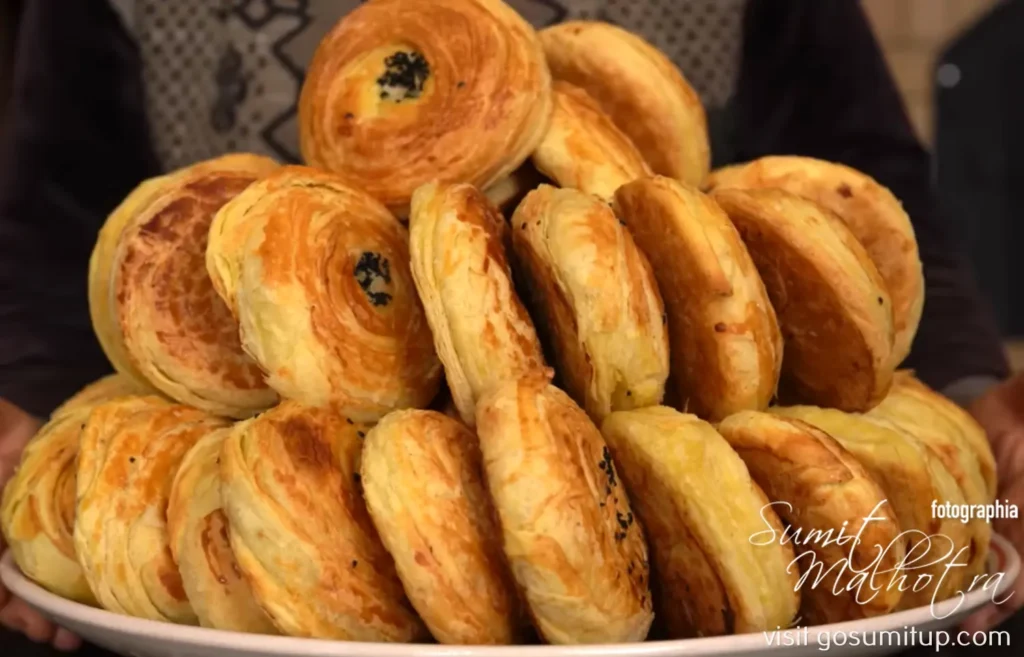
Unlike its sweet celestial siblings, the traditional Novruz Gogal is fiercely, unabashedly savoury.
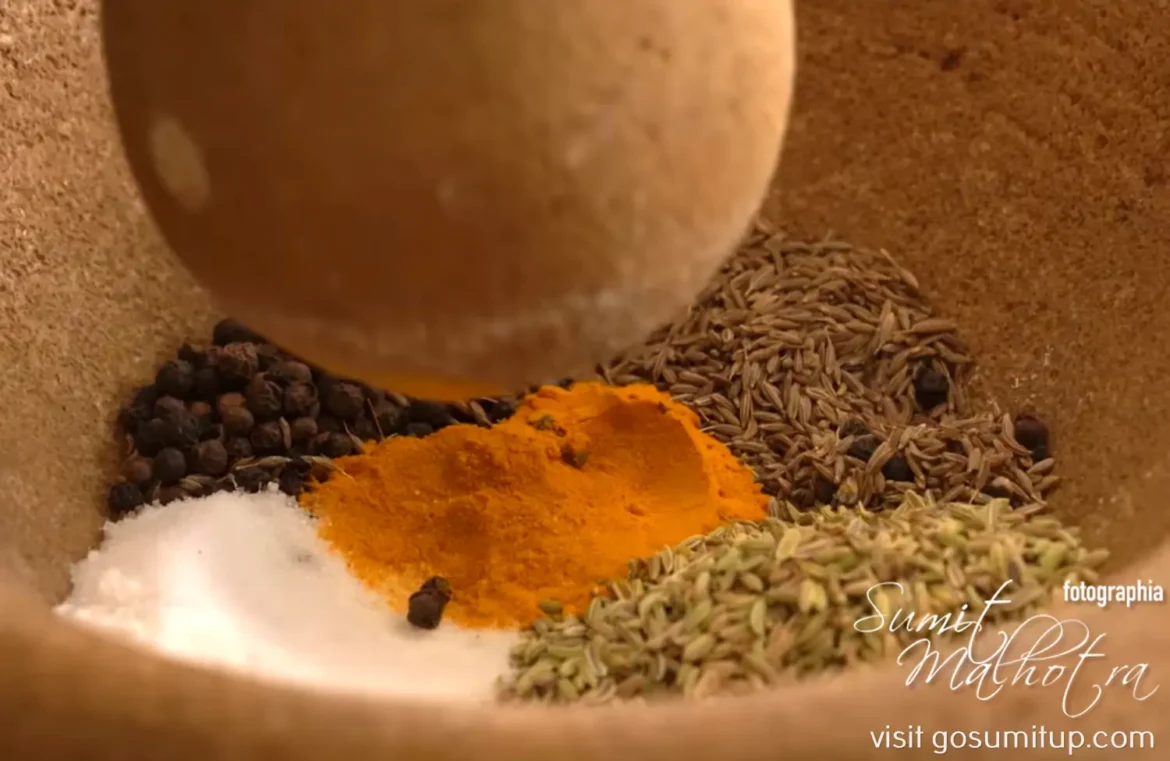
It is packed with a dense, crumbly core of clarified butter, flour, and an aggressively aromatic spice mixture of fennel, cumin, anise, and turmeric.
While a sweet, nut-filled variant known as Shirin Gogal (Şirin qoğal) is prepared throughout the year, traditional family laws dictate that the salty, heavily spiced version must take centre stage for Novruz.
It acts as a profound palate cleanser and a spiritual grounding ballast to the surrounding mountain of sugar.
However, watch a multi-generational assembly of women rolling out dough in a Baku kitchen, and the conversation quickly pivots from planetary alignment to severe culinary superstitions.
The elders will warn you that to properly capture the sun’s life-force, the baker must possess a “light spirit,” absolute tranquillity, and an incredibly delicate touch.
They warn of the “Heavy Hand” Curse: if a baker handles the dough with internal stress, anxiety, or applies too much physical force when pressing the coiled rings into discs, the sun will “collapse.”
The internal rings will fuse, leaving you with a dense, solid brick instead of a shatteringly crisp pastry.
Pastry dough, however, possesses no spiritual receptors. It is an unfeeling network of proteins, starches, water molecules, and lipids.
When we strip away the beautiful, romanticised folklore of the Azerbaijani kitchen, the solar disc reveals itself to be a stunning piece of unpowered fluid engineering.
Its legendary, fragile flakiness is governed entirely by the unforgiving laws of lipid lamination kinetics and vapour-pressure thermodynamics.
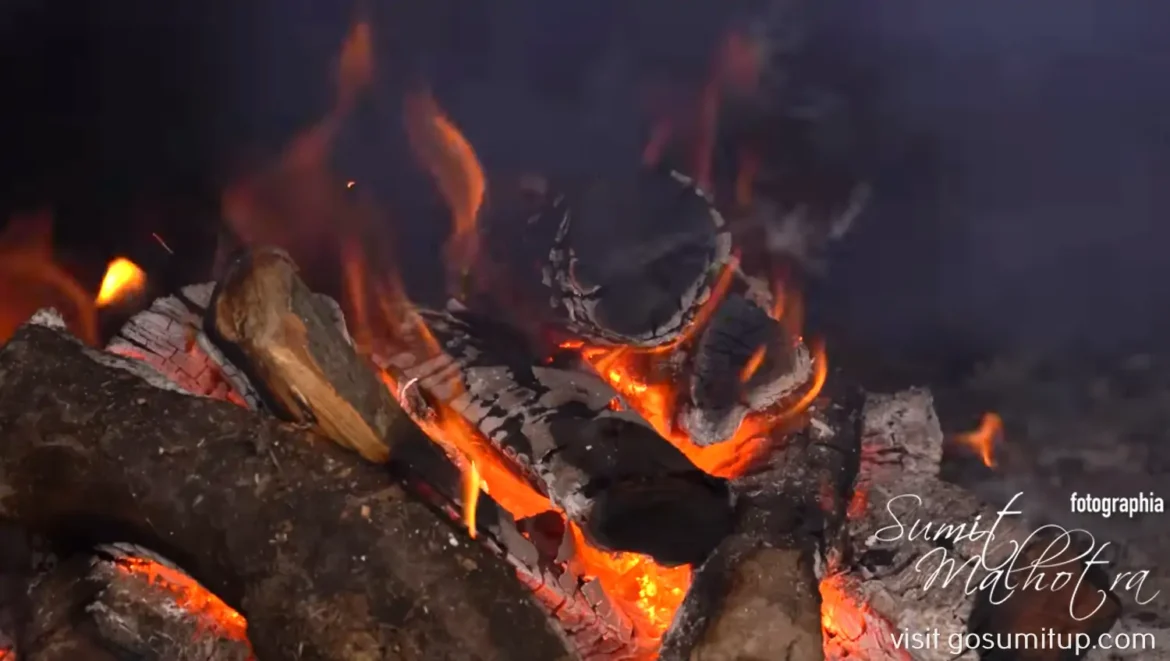
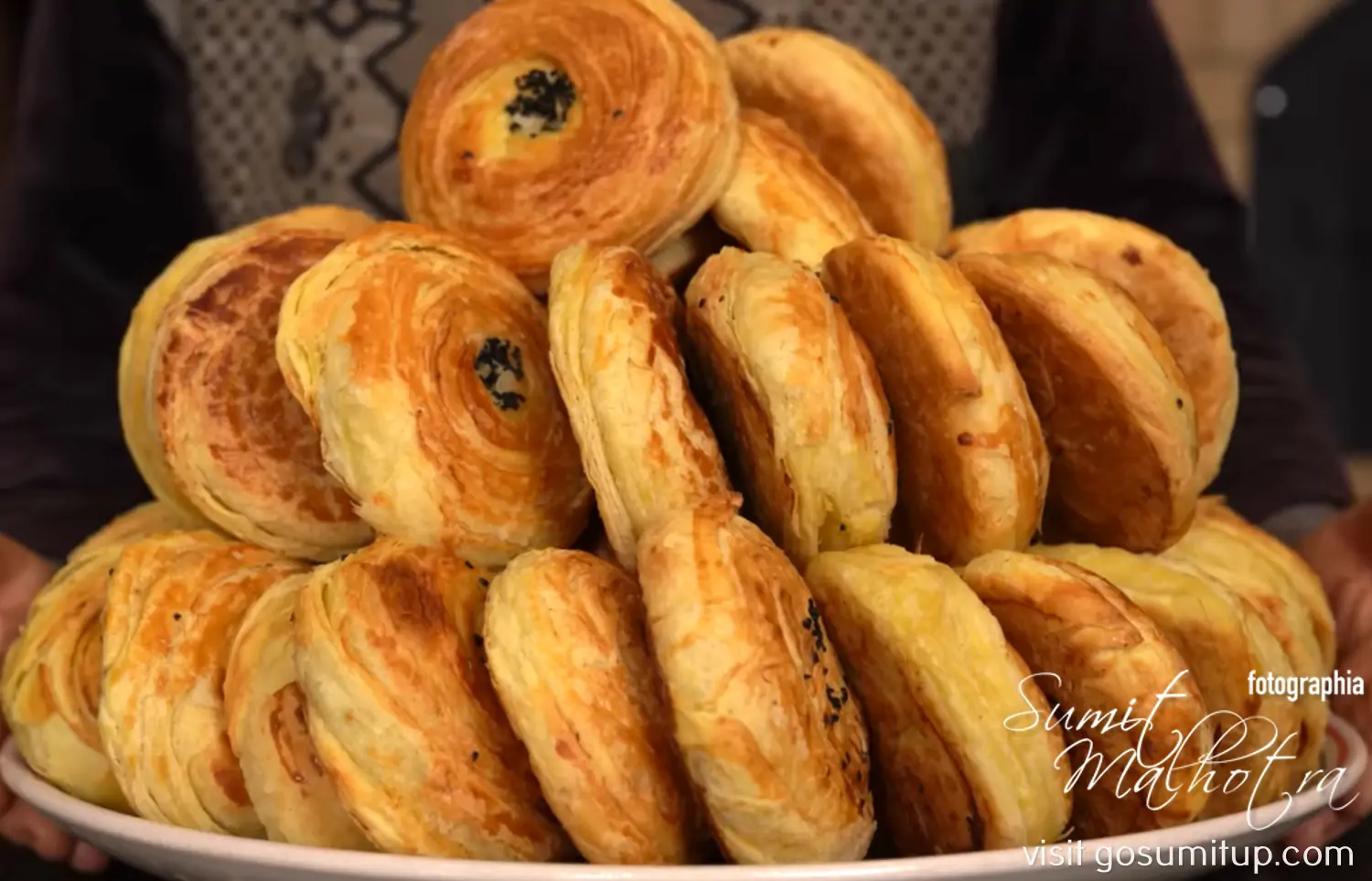
Bake them in the Oven and Remove Shor Gogal aka Shorgoghal, Şorqoğal Golden Brown
The Anatomy of Linguistic and Regional Geometry
The term shorgoghal is a compound noun formed via an Azerbaijani linguistic construction.
To understand the engineering of the pastry, one must first dismantle its name and the regional forms it assumes across the Caucasus.
The term shorgoghal is a compound noun formed via an Azerbaijani linguistic construction.
The first component, shor (şor), translates to “salty” or “briny,” signalling the pastry’s savoury, mineral-forward profile.
This is heavily borrowed from the Classical Persian root for salted foods. The second component, gogal (qoğal), relates directly to “bun” or “layered pastry cake.”
Across different districts of Azerbaijan, the thickness and texture of the dough layers shift based on microclimates and localised oven tech.
In the western regions like Ganja, the layers are often kept robust to withstand the intense radiant heat of large communal clay tandoors.
In the coastal enclave of Baku, the preference tilts toward a delicate, paper-thin lamination that yields a lighter, highly friable crust that breaks apart at the slightest touch.
Regardless of the regional accent, the baseline architecture remains invariant: it is a highly concentrated puff pastry dough engineered out of an enriched, yeasted flour base.
Unlike European puff pastry (pâte feuilletée), which utilises a solid block of cold butter folded into a lean dough, Shor Gogal utilises an ancient Eastern method.
It uses a highly hydrated, soft yeasted dough that is sheeted into microscopic layers and painted continuously with liquid clarified butter, or ghee.
This subtle difference completely changes how the pastry behaves under thermal duress.
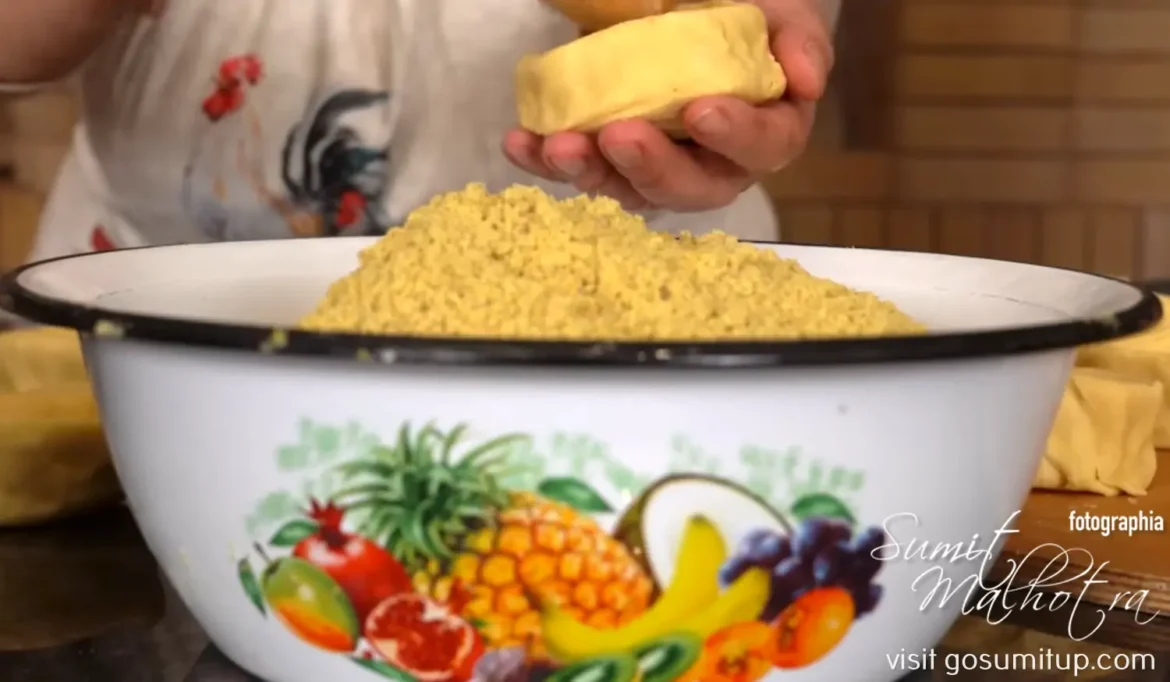
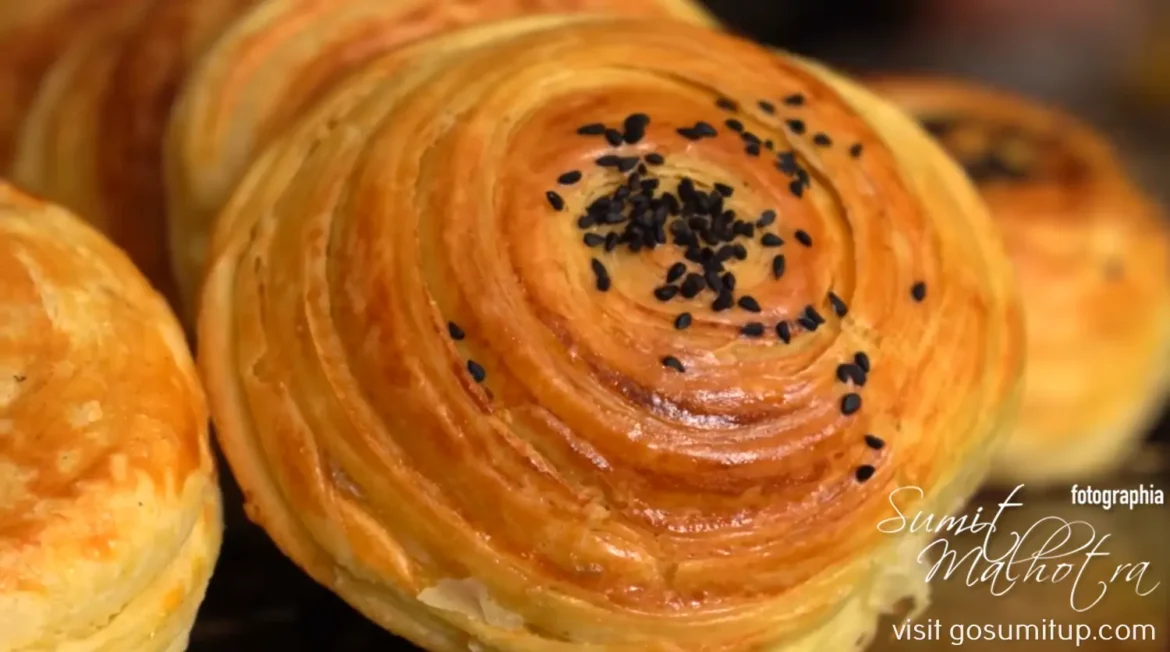
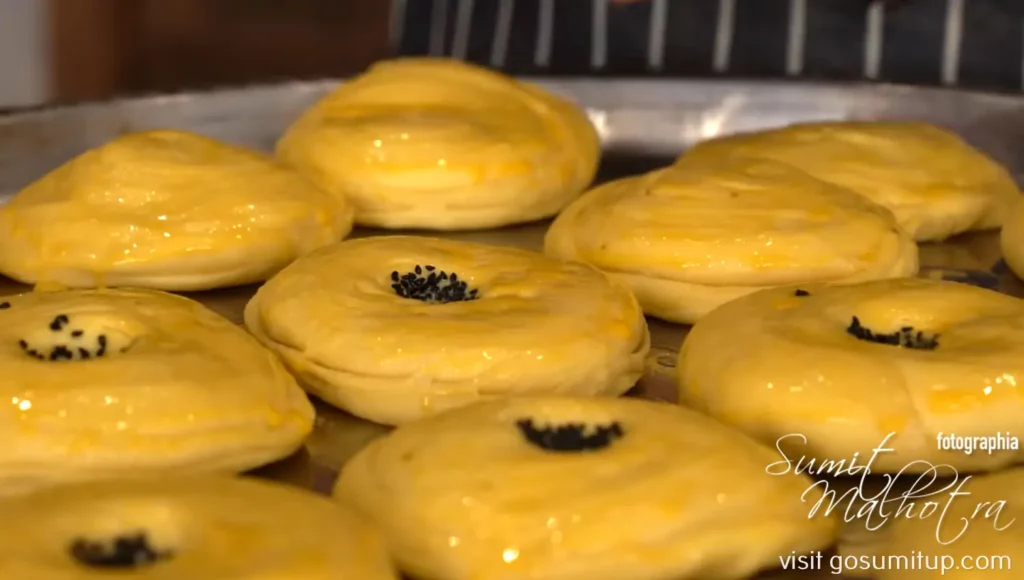
Press the Pastry and Garnish with Black Cumin for Making Shor Gogal aka Shorgoghal, Şorqoğal
The Myth of the "Heavy Hand" vs. Mechanical Emulsification
The process of constructing a Shor Gogal is a masterclass in structural stress.
The household law stating that an anxious or heavy-handed baker will ruin a batch of Gogal is widely accepted because the symptom is real: improper handling undeniably turns the pastry into a dense, oily biscuit.
However, the diagnosis is purely mechanical, not spiritual. The process of constructing a Shor Gogal is a masterclass in structural stress.
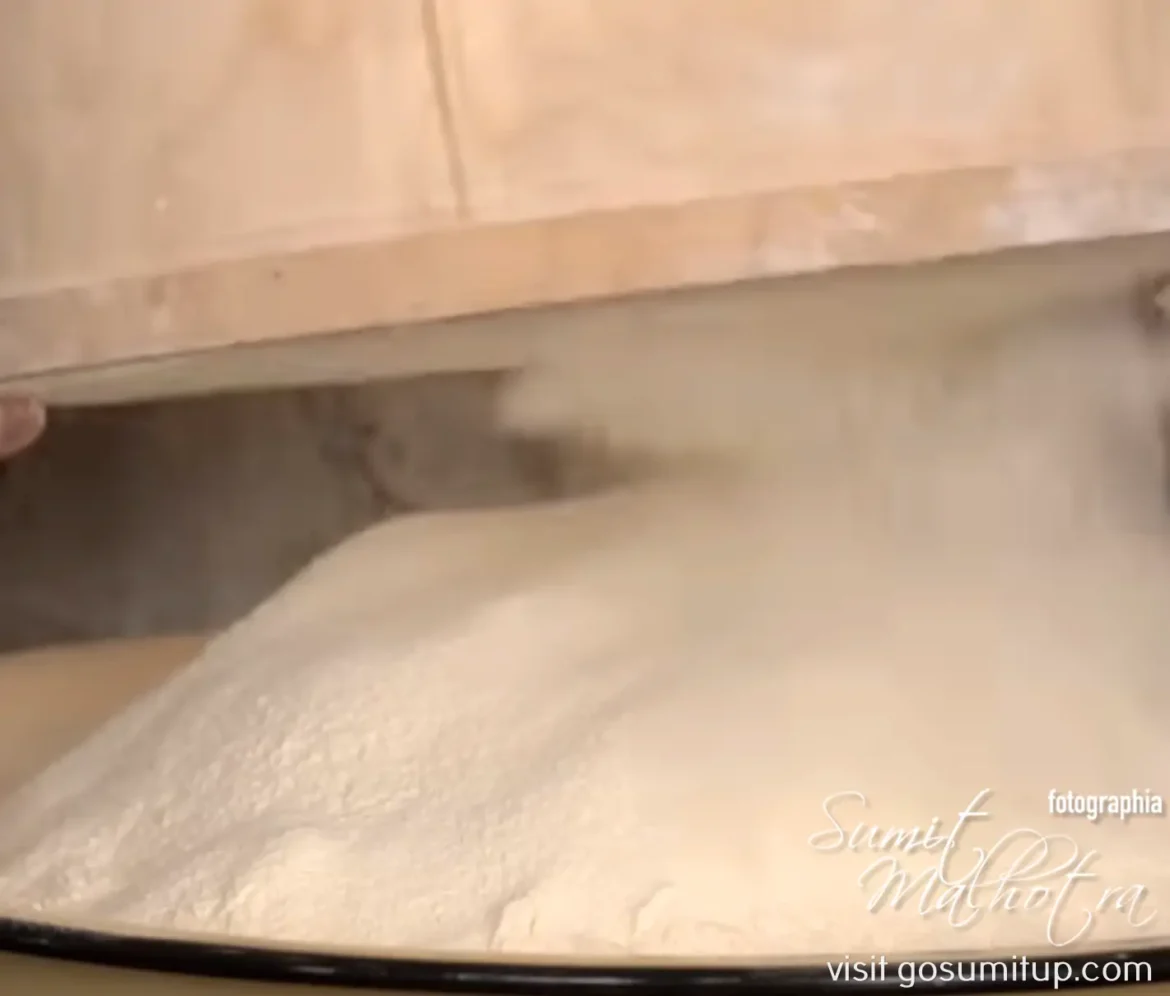
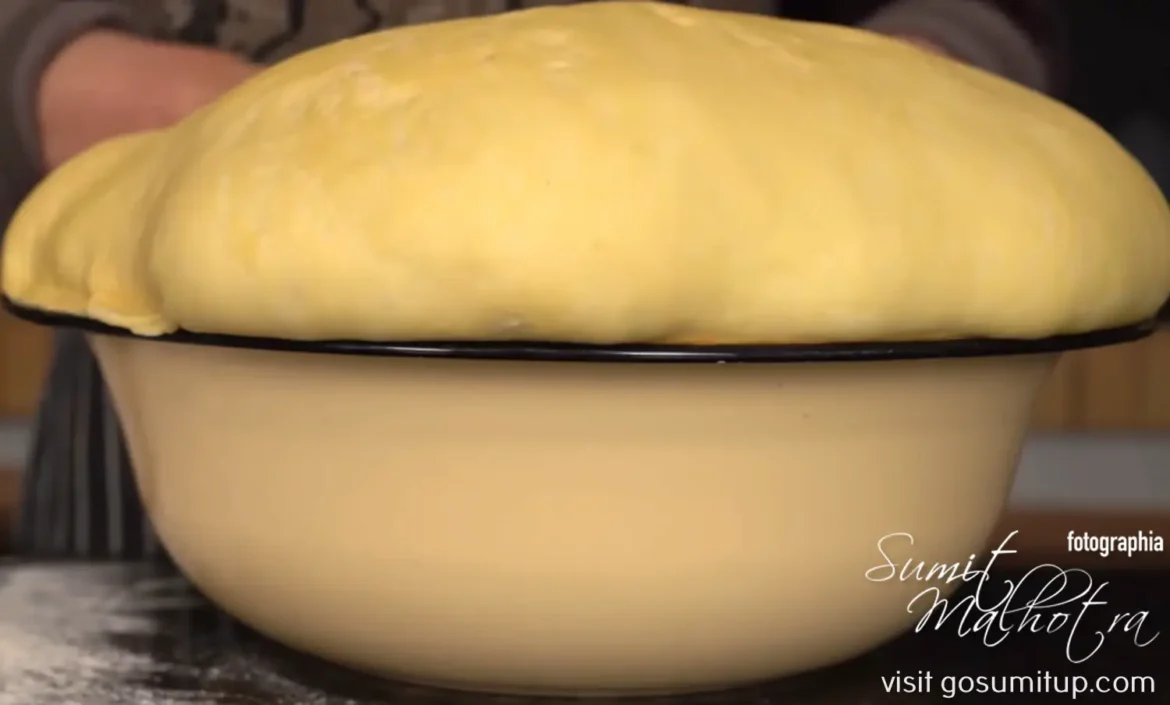
A rich dough—softened with sour cream, eggs, and milk—is allowed to undergo a primary fermentation for up to two hours.
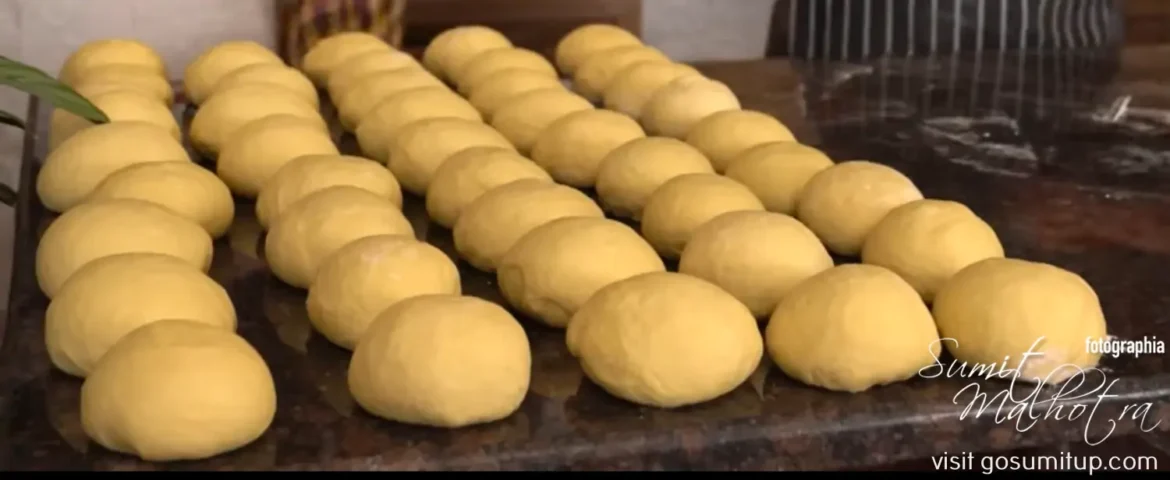
Once puffy, it is partitioned into 9 to 12 identical spheres.
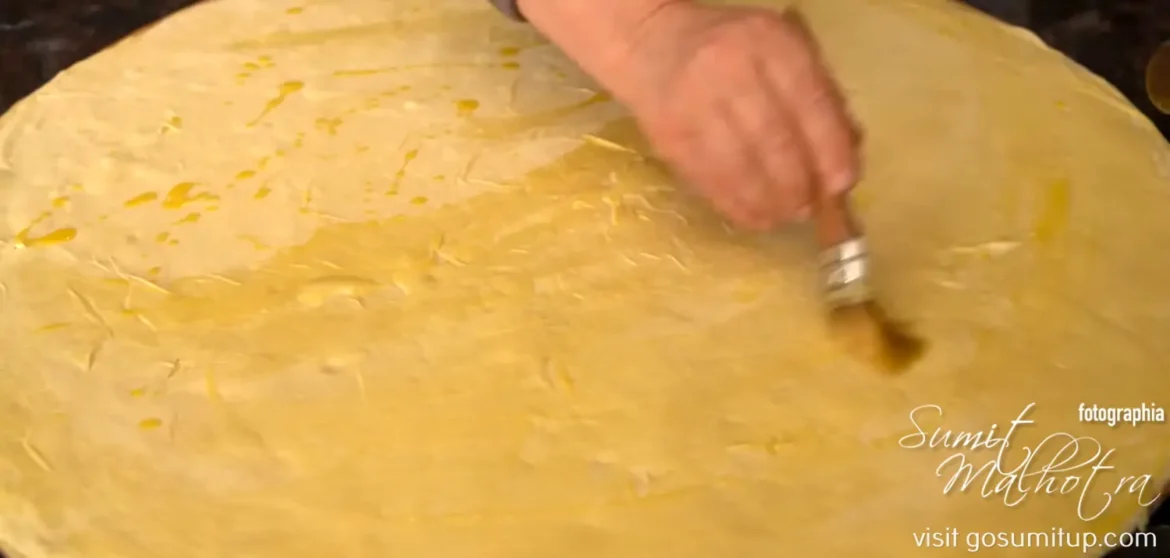
Using a thin, elongated rolling pin (an okhlou), the baker rolls each ball into a massive circle, roughly 20 inches in diameter and a staggering 1/16th of an inch thick.
At this point, the baker brushes a continuous sheet of melted clarified butter across the surface.
The next transparent sheet of dough is laid precisely on top, and the greasing is repeated until a monolithic, 12-tier stack of alternating dough and fat is achieved.
[9-12 Micro-Thin Gluten Sheets]
↓
[Hydrophobic Ghee Layering] → [Spiral Tube Rolling] → [Vertical Coil Twisting]
↓
[Mechanical Flattening Phase] → Creates a High-Density Maze of Vapour Traps
The breakdown happens during the final shaping phase.
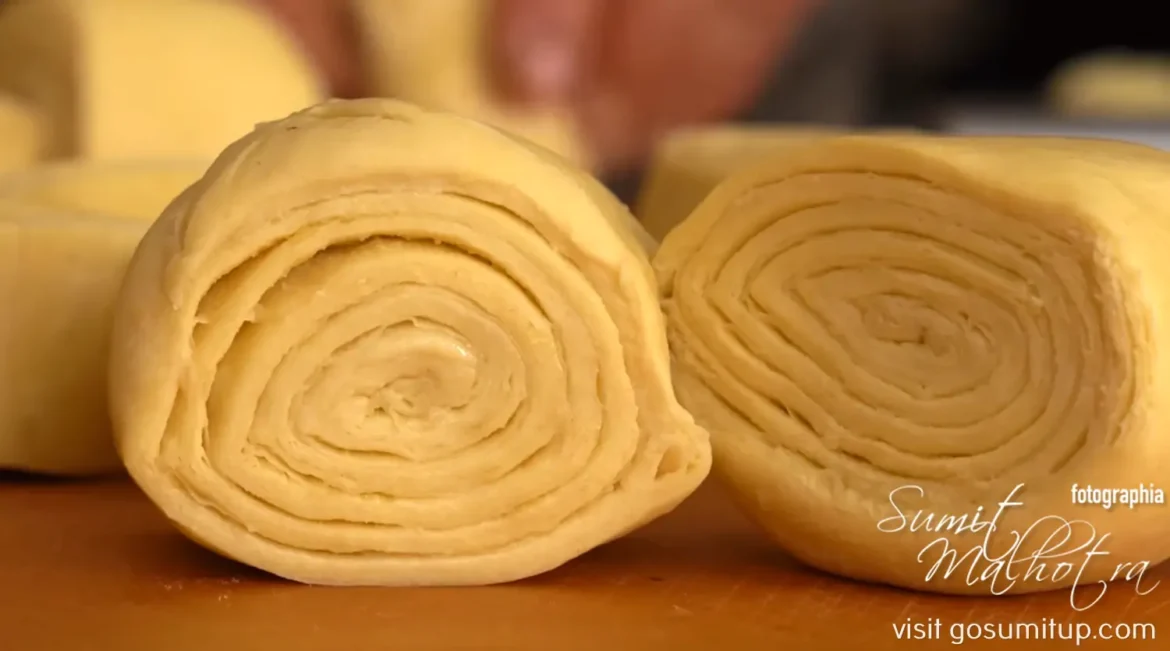
The stacked sheet is cut into long ribbons, rolled tightly into a cylindrical rope (resembling a tourniquet), and then twisted into a vertical spiral coil that looks like a turban.
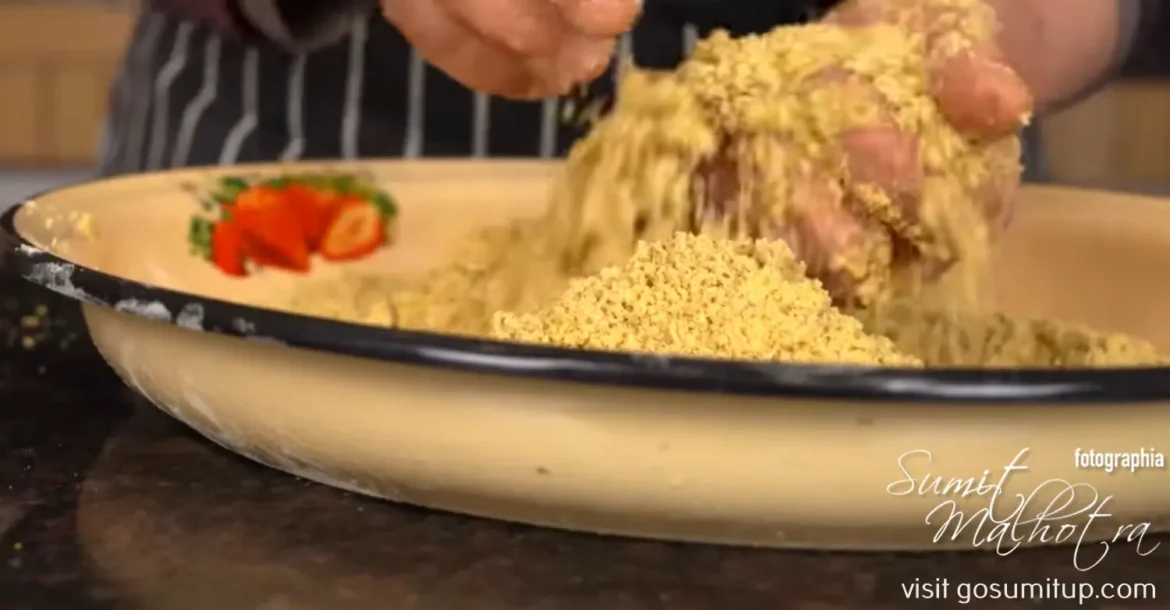
The centre of this turban is hollowed out with the thumbs to form a cup, packed with the spice filling, sealed at the base, and then gently pressed flat into its final solar disc shape.
When an old-school baker warns against a “heavy hand” during this final press, they are trying to prevent mechanical emulsification.
When the dough is rolled and coiled vertically, the alternating layers of dough and fat shift from a horizontal plane to a vertical labyrinth.
If a baker applies excessive downward shear force or compresses the raw disc too aggressively, the immense mechanical pressure destabilises the boundaries between the layers.
The liquid butter is violently forced into the porous structure of the raw dough sheets, coating the individual starch granules and gluten strands.
Instead of remaining separate, the fat and the hydrated flour merge into a singular, homogeneous emulsion.
The continuous fat barriers are completely obliterated.
Without these barriers, the pastry can no longer function as a steam engine, causing it to bake into a solid, heavy, grease-soaked brick.
The Deconstruction: The Hydrophobic Steam Vault
If the baker handles the dough correctly, the raw Shor Gogal enters the oven with its structural integrity perfectly intact.
If the baker handles the dough correctly, the raw Shor Gogal enters the oven with its structural integrity perfectly intact.
At this stage, it becomes an active thermodynamic reactor governed by the properties of water and lipids.
The dough layers are hydrophilic (water-loving), holding bound moisture within their elastic gluten networks derived from the milk, water, and sour cream.
Conversely, the clarified butter layers are purely hydrophobic (water-repelling). Because clarified butter has had its milk solids and water boiled off, it is a 100% pure lipid shield.
When the Gogal is blasted with intense oven heat (180°C to 220°C), a violent molecular race against time begins.
The thermal energy penetrates the disc, causing the liquid water trapped inside the thin dough sheets to hit its boiling point and flash into steam.
As gas expands, its volume increases exponentially, and it desperately seeks an escape route out of the pastry.
However, the steam immediately hits a wall: the surrounding layers of hot, liquid ghee. Because steam cannot dissolve into or easily pass through a continuous lipid barrier, the expanding vapour is trapped inside micro-chambers.
The rising vapour pressure has no choice but to push outward, lifting the upper gluten sheets physically away from the lower ones.
Simultaneously, the high heat causes the starches in the flour to gelatinise and the gluten proteins to coagulate, turning the soft dough into a rigid, structural wall.
By the time the steam finally escapes into the oven atmosphere, the hollow gaps have been permanently locked into place.
It is this exact system of hydrophobic containment and steam expansion that forces a heavy, dense disk of dough to bloom into a light, flaky solar disc with dozens of distinct, shatter-crisp rings.
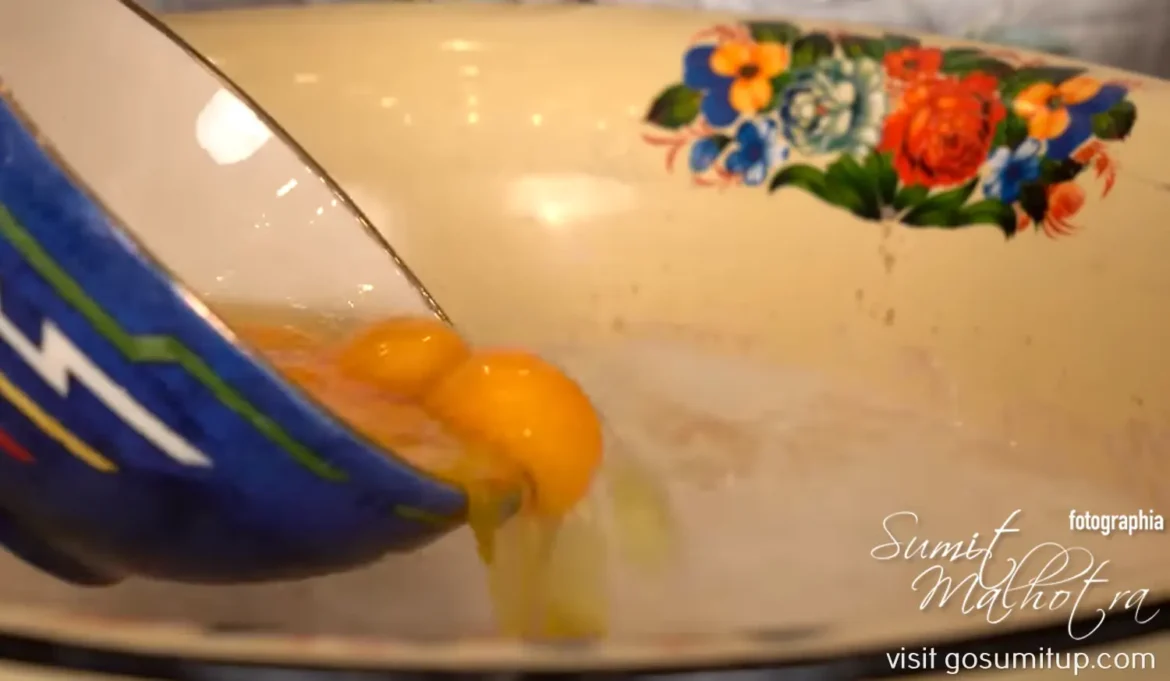
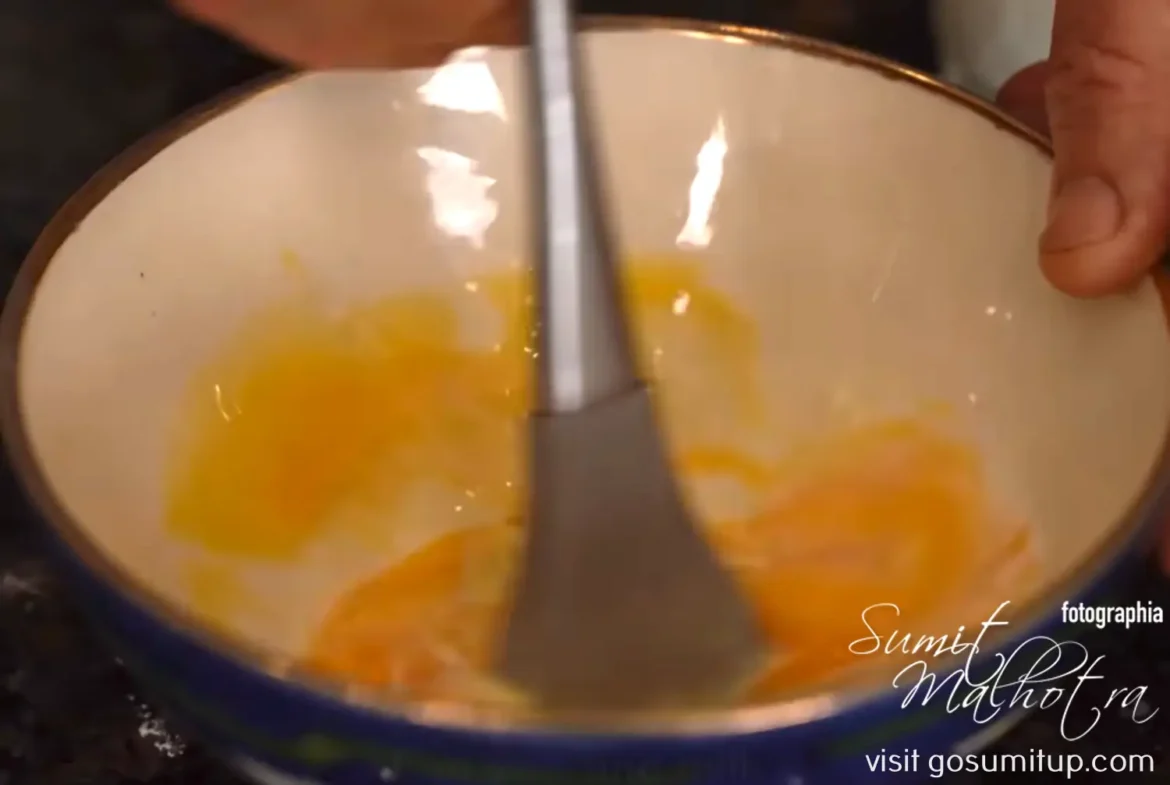
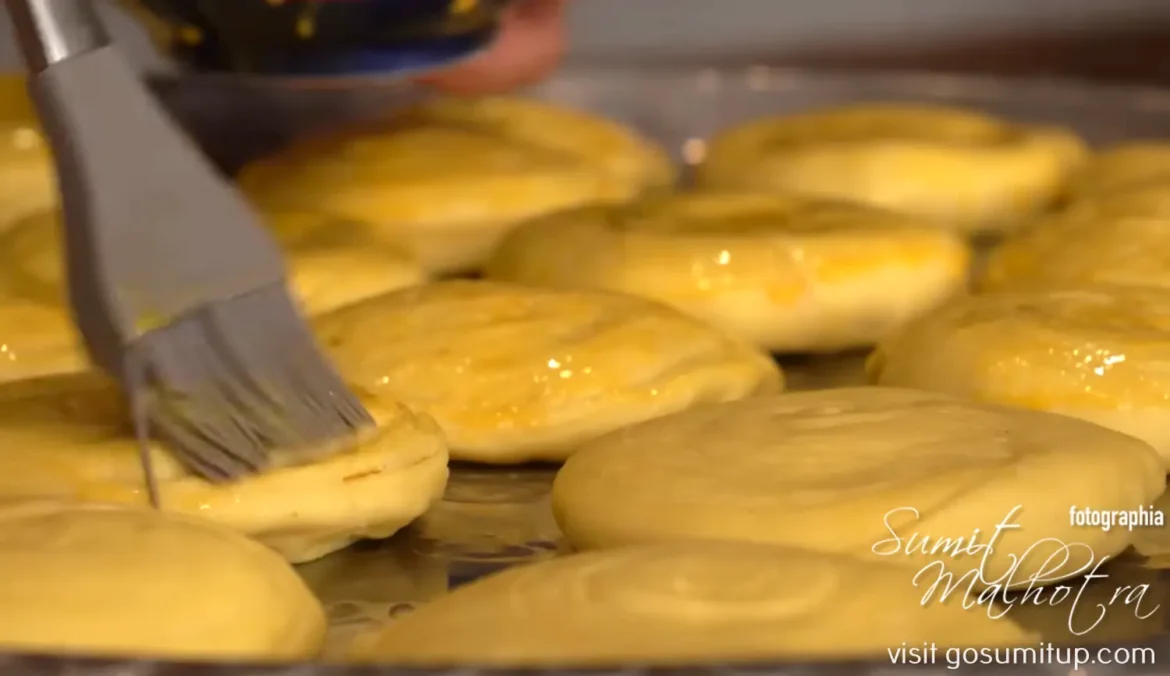
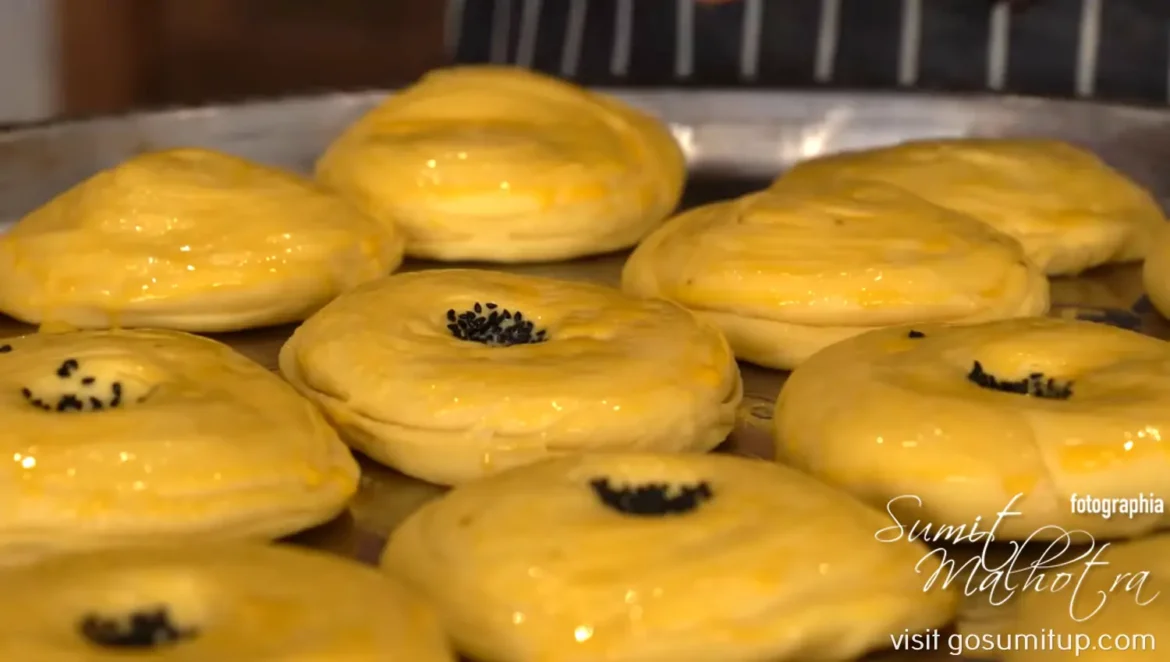
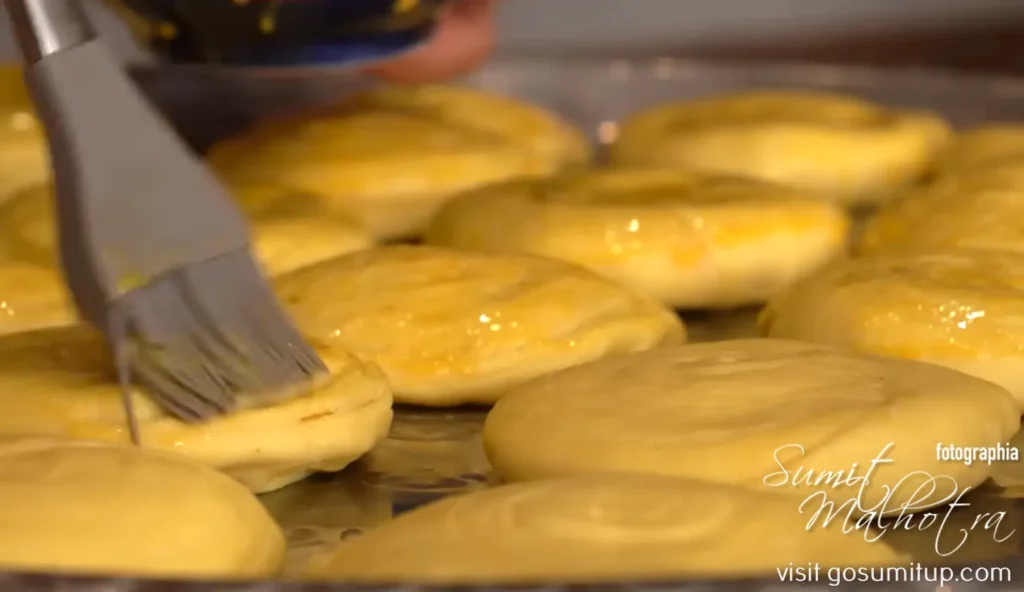
Coat the Top of the Stuffed Pasteries with Egg Yolks
The Volatile Chemistry of the Spice Core
The food science of Shor Gogal is not restricted to the structural kinetics of its crust.
It extends directly into the chemistry of its savoury spice core, or ichlik.
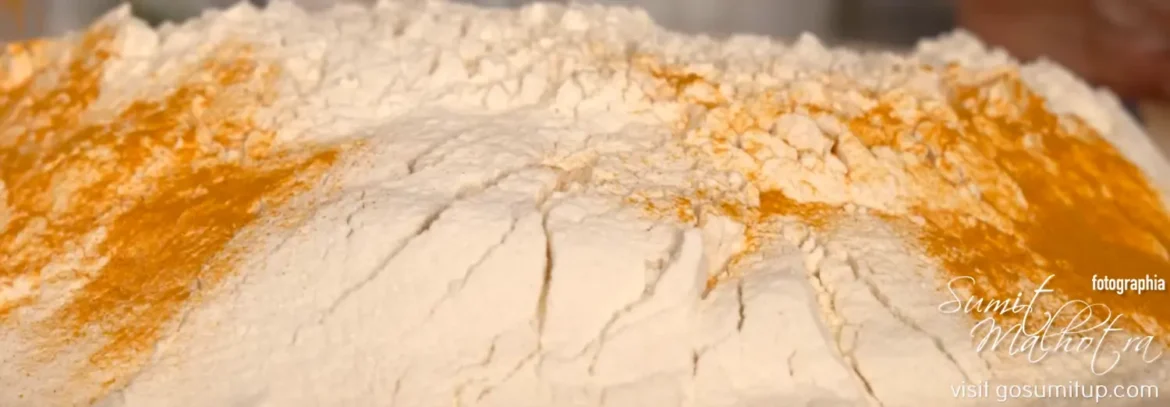
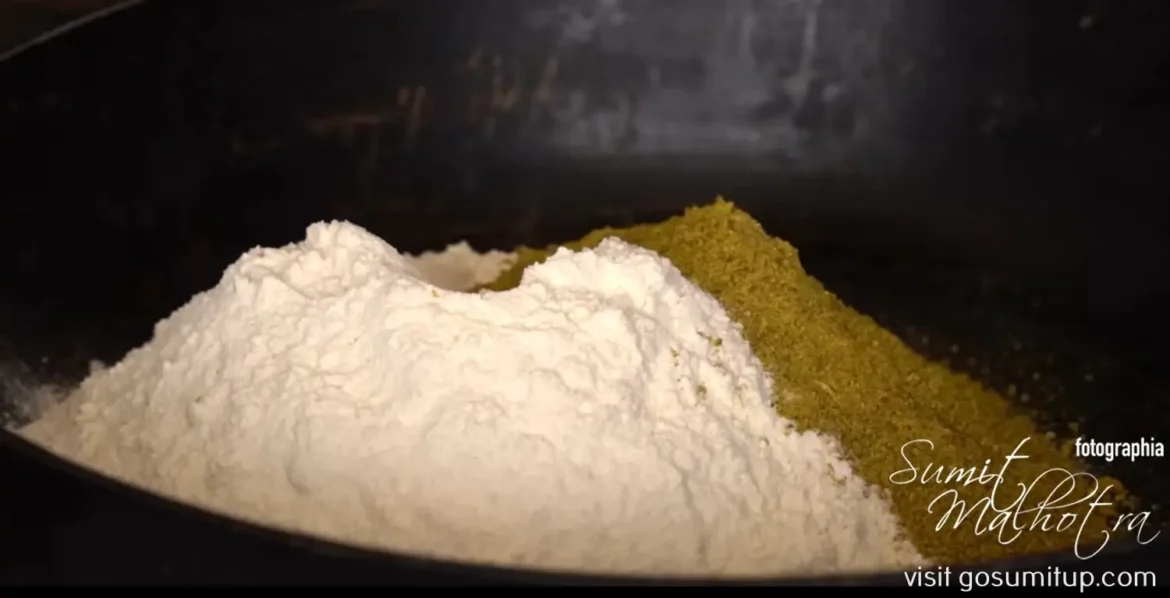
The filling is a traditional mixture of flour, salt, turmeric, and heavily bruised seeds of fennel, cumin, and anise.
Crucially, Azerbaijani culinary law dictates that these spices must never be mixed raw.
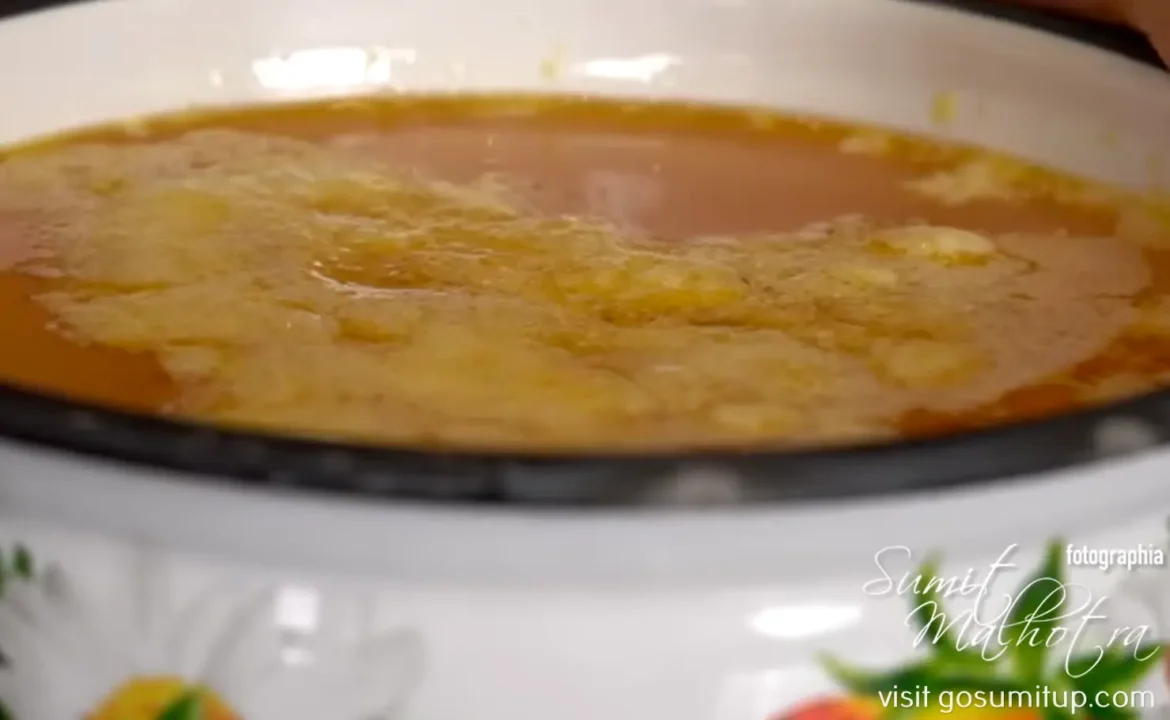
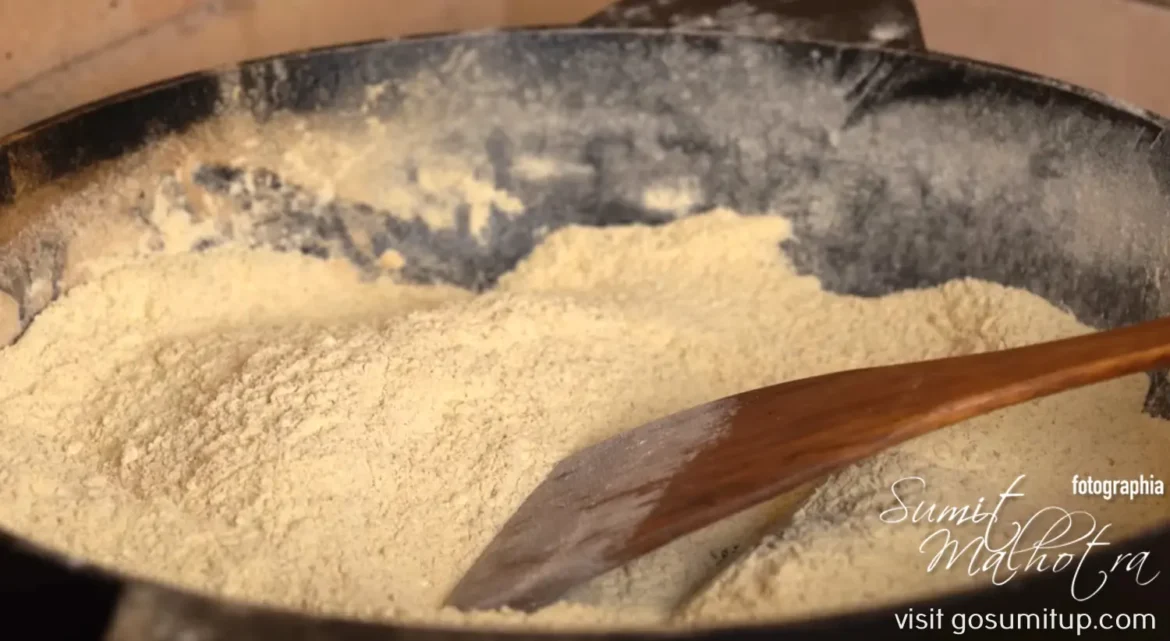
They must be lightly toasted in a hot pan with butter and flour before being stuffed into the dough.
This step triggers thermal pyrolysis—a chemical decomposition of organic materials brought about by high temperatures in the absence of extra oxygen.
[Fennel, Cumin, Anise] + Heat → Activates Anethole & Cuminaldehyde
↓
Lipophilic Dissolution into Ghee
The raw seeds of fennel, cumin, and anise hold heavy, highly complex volatile essential oils locked safely within their rigid cellular walls.
Applying direct dry and lipid-assisted heat breaks down these protective cell walls, freeing the aromatic compounds.
Anethole: The primary essential oil found in fennel and anise, responsible for the distinct, liquorice-like, warming sweetness.
Cuminaldehyde: The volatile powerhouse inside cumin seeds, delivering an earthy, pungent, and intensely warm counter-note.
Both anethole and cuminaldehyde are highly lipophilic (fat-soluble).
By roasting them directly in melted butter, these flavour molecules dissolve completely into the fat phase. They use the lipids as a delivery vehicle.
When the Shor Gogal is baking, and the internal ghee melts and moves through the expanding dough sheets, it acts as a conveyor belt for flavour.
The fat carries these dissolved spice molecules into every square millimetre of the expanding pastry layers.
This ensures that the warm, earthy notes are not clumped in the centre but are thoroughly integrated into the entire flaky matrix, providing the essential savoury contrast needed to ground the festive Novruz meal.
Saffron, Turmeric, and the Physics of Surface Coloration
This is not merely an aesthetic choice to honor the sun; it is a tactical intervention in the Maillard reaction.
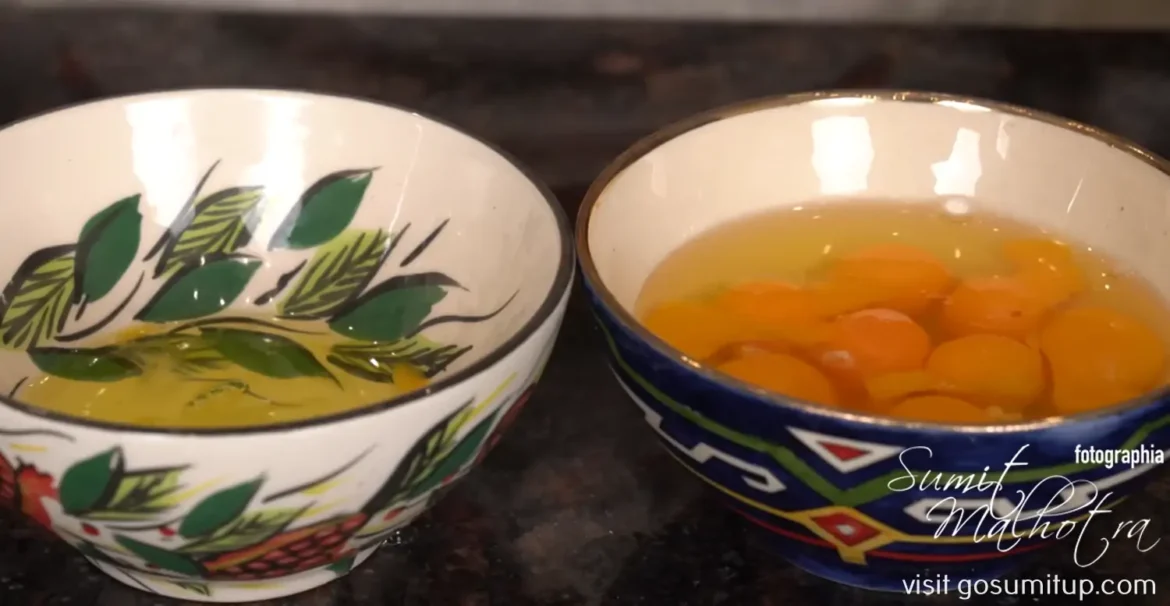
The unmistakable visual signature of a Shor Gogal is its deep, lustrous golden top, which is brushed with a wash of egg yolk and often infused with crushed saffron threads or turmeric before being baked.
This is not merely an aesthetic choice to honour the sun; it is a tactical intervention in the Maillard reaction.
The Maillard reaction is a chemical reaction between amino acids and reducing sugars that gives browned food its desirable, complex flavour profile.
It typically requires high temperatures (140°C to 165°C) to thrive.
However, because the interior of the Shor Gogal is packed with fat and expanding steam, the outer surface of the pastry is constantly cooled by evaporative moisture during the first ten minutes of baking, which can stall natural browning.
By brushing the surface with an egg yolk wash enriched with the lipophilic pigments of turmeric (curcumin) and saffron (crocin), the baker bypasses the delayed browning window.
The egg wash introduces a highly concentrated blast of proteins and lipids directly to the surface.
As the hot air circulates, the protein wash rapidly coagulates, trapping the golden yellow pigments across the top crust while generating a beautifully glossy, crisp top layer.
The final scattering of black poppy or nigella seeds provides more than just a visual contrast representing solar flares; the intense heat causes the oils inside the dark seeds to express themselves, introducing a sharp, nutty bitterness that cuts through the rich, buttery top crust.
To Sumit up Culinary Insight
Shor Gogal is not a fragile spiritual charm; it is a masterfully calculated kinetic steam trap.
The glorious, flaky separation of its layers is a precise calculation of thermal kinetic energy overcoming structural gluten resistance.
The ancient domestic laws of the Azerbaijani kitchen—demanding everything from a “light spirit” to an incredibly gentle hand during the flattening phase—are simply romanticised guardrails designed to protect a highly sensitive system of micro-vapour traps.
By brushing distinct fat barriers between hyper-stretched sheets of dough, ancient Azerbaijani bakers created a flawless thermodynamic engine, proving that the brilliant architecture of the solar pastry is driven entirely by the laws of physics.
Making of Azerbaijan's Shor Gogal (Part 1)
Making of Azerbaijan's Shor Gogal (Part 2)
Making of Azerbaijan's Shor Gogal (Part 3)
Making of Azerbaijan's Shor Gogal (Part 4)
Making of Azerbaijan's Shor Gogal (Part 5)
Disclaimers
If you like this article, you can let us know in the comments below or on social media using #gosumitup and tag @gosumitup on Facebook.
I am always happy to read your feedback and if you liked the dish or if you made the dish. :)
Better still, take a picture and post it on Instagram and tag it as #gosumitup
Connect direct – You can also connect with me directly on my Instagram and Facebook or on Pinterest.
And, keep visiting us for more of such awesomeness. Do bookmark gosumitup.com into your web browser now or simply subscribe to our browser notifications.
If you are a traveller and or a driver, you may find below a list of items that will fortify your travel experience. I use many of these myself for all my trips. They are modestly priced and quite important to keep handy.
- Travel Adapter – https://amzn.to/3A04EJp
- Action Camera – https://amzn.to/4eCSMfF
- Camera Mounts & Accessories – https://amzn.to/4eG4je2
- Dashcam – https://amzn.to/3U2j4Qc
- Neck Rest – https://amzn.to/3Y6ZP98
- Tyre Inflator – https://amzn.to/3U8HpDP
- Storage – https://amzn.to/3XVQFMI
- Car Laptop Charger – https://amzn.to/3XXMVdA
- Vacuum Cleaner Cordless – https://amzn.to/3Yo1hWd
- Air Mattress – https://amzn.to/4015Bvu
- Jack Ratchet Wrench – https://amzn.to/3YkxddO
- Cleaning Cloth Microfibre – https://amzn.to/3NIOFmt
- Rechargeable Solar LED Torch – https://amzn.to/3Yj4h5Y
- Electronics Accessories Organiser – https://amzn.to/3A04XUz
- Pocket Travel Data Transfer Tool – https://amzn.to/3zMTxnc
- Smart Tracker for Keys – https://amzn.to/3BTuIq0
- Camping Cookware Kit – https://amzn.to/3BIy0N3
- Rechargeable Electric Gas Lighter for Stoves – https://amzn.to/4orBsin
- Sleeping Bag – https://amzn.to/3U7v2rP
GoSumItUp is a personal blog written and edited personally by me. All opinions expressed are my own which are honest and have not been influenced by any means.
My reviews are dependent on the visits at the time and revisits will be reviewed again as they may have a different experience or the same.
I am not a food critic nor do I consider myself as one, this platform allows me to write and review my own personal dining experiences, may they be good or bad, delicious or not, all are honest and truthful opinions.
Suppose you disagree or agree with me at any point or do not receive the same experiences as I have. In that case, I do not hold any responsibility as everyone will have their own experiences that they will encounter themselves.
I pay for all meals. However, if any meals or product has been sponsored or compensated or if I was an invited guest, it will be clearly disclosed at the end of each review.
All images on this blog are my own unless stated otherwise. If you wish to use any of my photography for any purposes, please do not use it without any written permission and give credit and/or link back to the website.
If you would like to send a product or any sponsors/endorsements, it may or may not be published and reviewed on the website.
If you wish to send any products or invitations for any media, press or collaborations etc., consider if it is something related to the content of the website and if you see fit, please visit the Contact page for contact details.
Thank You.
Thank you for visiting GoSumItUp! I hope you enjoy the reviews & recipes found at www.gosumitup.com.
This page consists of disclaimers regarding the recipe, its outcome, nutrition, and food handling safety decisions.
The recipes have been cooked and compiled by me for general information only and should not be used to diagnose or treat any medical condition/s.
This information is not intended to diagnose, treat, cure, or prevent any disease as well.
GoSumItUp.com has used all reasonable care in compiling the information but offers no warranty as to its accuracy or its use in any possible form.
Consult a doctor or other health care professional for diagnosis and treatment of any medical condition/s. For more details please refer to our disclosure policy.
The nutritional and health information provided in this article is for educational and informational purposes only and is not intended as medical advice, diagnosis, or treatment.
While herbs and spices on this website have a long history of traditional and clinical use, individual health needs vary.
Always consult with a qualified healthcare professional, registered dietitian, or physician before introducing therapeutic doses of any of these into your daily diet, especially if you are pregnant, nursing, taking blood-thinning medications, or managing chronic conditions like diabetes.