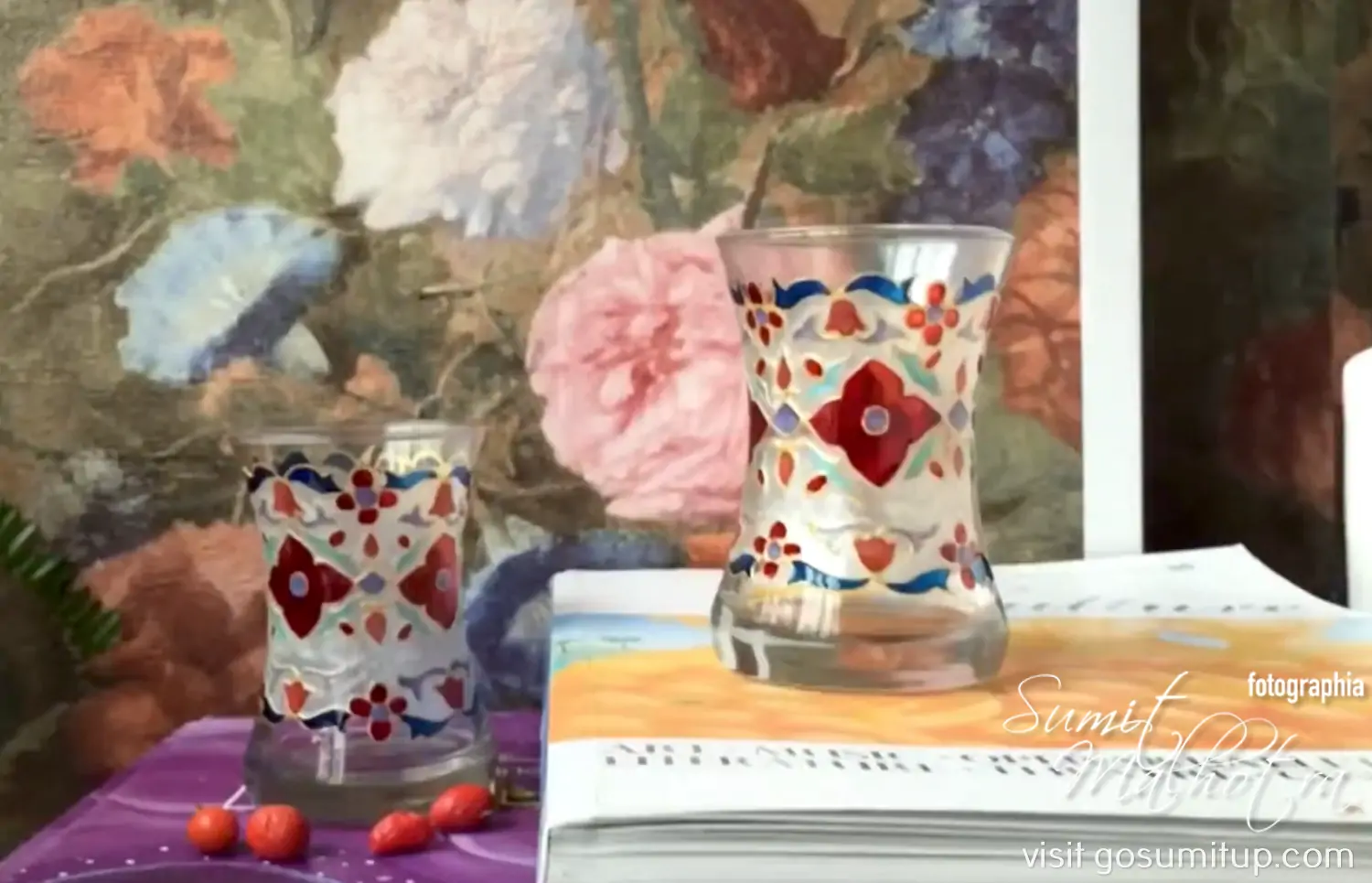
Read about Armudu glass, Azerbaijani tea culture, pear-shaped glass thermodynamics, and fluid convection loops
Learn about Armudu tea cup, Armudu stəkan, thermal equilibrium, hydrostatic pressure, tea science, Caucasus hospitality, glass architecture, fluid mechanics
Know more about Armudu Glass, Azerbaijan Tea Culture, Fluid Mechanics, Thermodynamics, Convection Loops, Tea Science, Baku Hospitality, Cultural Heritage, Heat Transfer, Culinary Physics, Glass Architecture, Caucasus Traditions
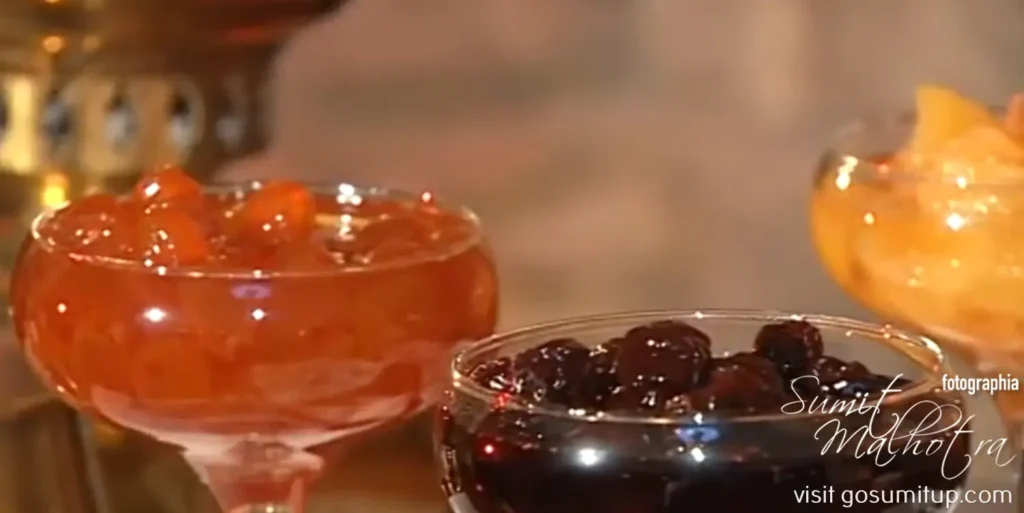
Azerbaijani fruit desserts & candies for azerbaijani tea ritual
Introduction: The Geometric Silhouette of Caucasus Hospitality
To step into a traditional Azerbaijani tea house—a chaykhana—is to witness a ritual centered around a unique vessel.
Amidst the low hum of backgammon dice and the hiss of a coal-fired copper samovar, tea is never served in ceramic mugs or wide-rimmed European porcelain.
Instead, it is poured into a diminutive, handleless glass known as the Armudu (written natively as Armudu stəkan).
The term armudu translates directly to “pear-shaped,” a linguistic reflection of the glass’s distinctive anatomy: a wide, flared rim at the top, a dramatic constriction or “waist” in the middle, and a bulbous, heavy spherical base at the bottom.
In Azerbaijani folklore, this specific form is rich with romantic allegory. It is frequently described as a structural tribute to the idealized female figure, or compared to the silhouette of a nascent pear growing in the orchards of Quba.
Cultural historians note that the transparency of the glass serves a dual social purpose: it allows the host to instantly verify the clarity and deep ruby color (pürrəngi) of the tea, proving its quality, while signaling to the guest that nothing is hidden in the offering.
However, beneath the layers of poetic folklore and hospitality customs lies an accidental masterclass in classical physics.
The Armudu glass is a sophisticated, self-regulating thermal engine. It requires no moving parts, mechanical valves, or modern insulation fabrics.
Instead, its legendary ability to keep tea at the absolute peak drinking temperature for extended periods is governed entirely by the unforgiving laws of fluid dynamics, natural convection loops, and vapor pressure mitigation.
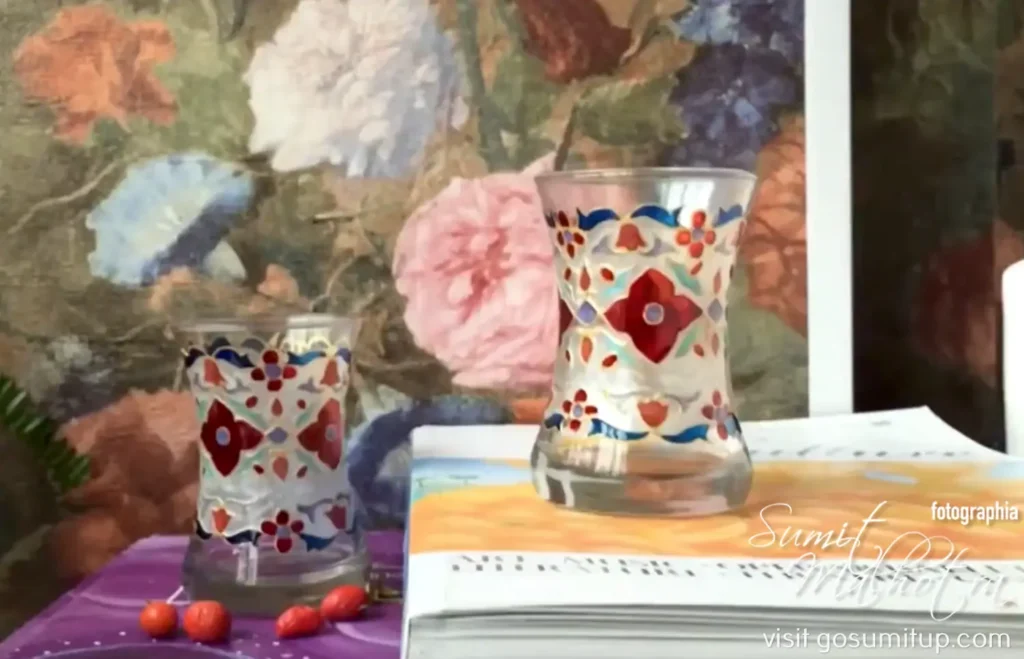
Azerbaijani Armadu Cup or Armudu stəkan
The Anatomy of the Pear-Shaped Thermal Barrier
To analyse how the Armudu operates as a thermodynamic trap, we must first dissect its architectural geometry into three distinct zones, each serving as a separate heat-transfer environment.
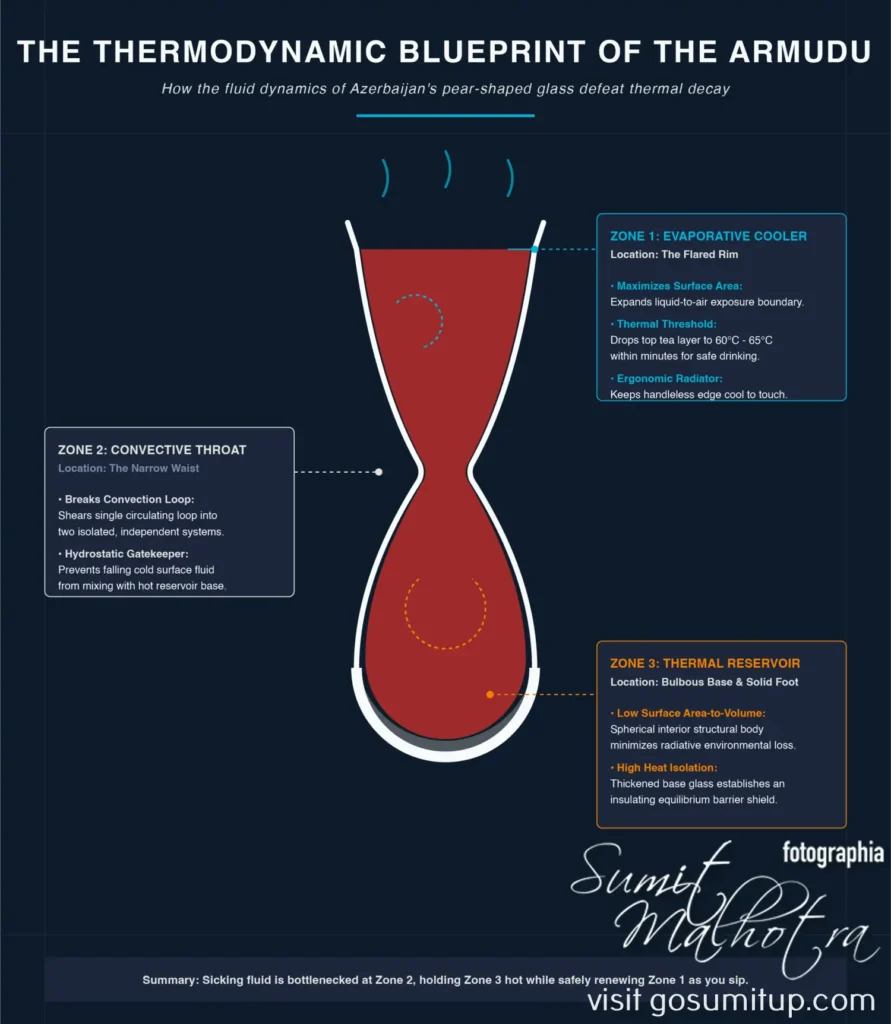
The pear-shaped thermal barrier of the azerbaijani armadu
Armudu Plaza is a distinctive architectural project inspired by Azerbaijan’s cultural heritage and reinterpreted through a modern design approach.
The project’s main concept is based on the elegant, recognisable shape of the traditional Azerbaijani armudu tea glass.
This idea is reflected in the building’s overall form, giving it both a strong visual identity and symbolic value.
Armadu Plaza Mall in Azerbaijan

Molecular Profiles of the Minced Lamb Emulsion
We must first break down the biological and structural profile of traditional Azerbaijani kabab meat.
The Flared Top Zone (The Evaporative Cooler): The upper third of the glass features a wide, aggressively sloping rim.
This structural flare artificially maximises the surface area of the liquid exposed directly to the ambient air.
The Constricted Middle Throat (The Hydrostatic Bottleneck): The centre of the glass pinches tightly inward, creating a narrow bottleneck that serves as a physical interface between the upper and lower chambers.
The Spherical Base Zone (The Thermal Reservoir): The bottom third of the glass expands into a dense, high-volume sphere insulated by a significantly thickened glass base.
This area minimises the surface-area-to-volume ratio of the trapped fluid.
When boiling tea is poured into a standard cylindrical vessel or a wide-mouthed western teacup, the entire surface boundary cools at a uniform rate, establishing a single, massive convection current that rapidly drops the temperature of the entire drink.
The Armudu completely disrupts this uniform degradation by segmenting the fluid into two micro-climates separated by a fluid-dynamic gatekeeper.
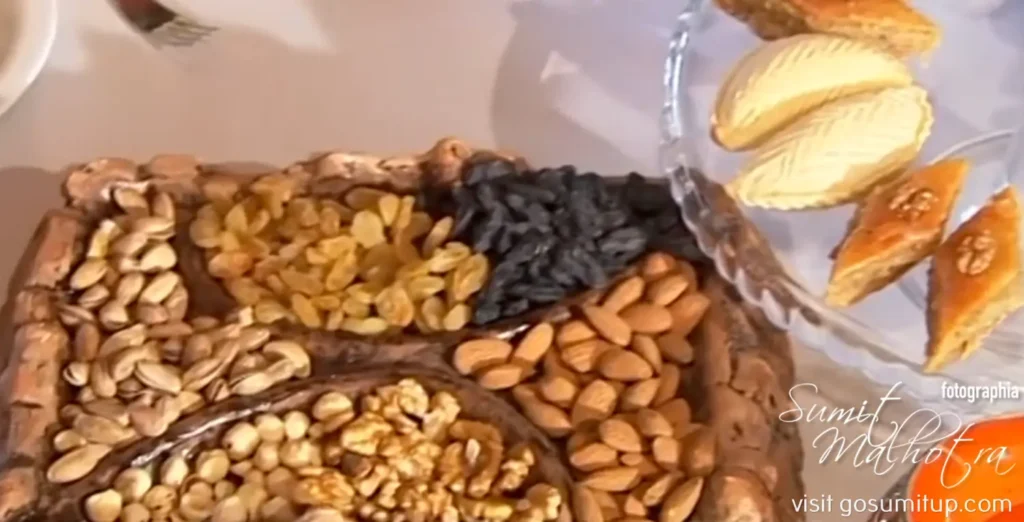
Nuts & Pastries for Azerbaijani Tea Ritual
The Physics of the Waist: Breaking the Convection Loop
When a hot liquid is exposed to cooler ambient air at the surface, it loses heat, increases in density.
The primary mechanism that drives fluid cooling is natural convection.
When a hot liquid is exposed to cooler ambient air at the surface, it loses heat, increases in density, and sinks toward the bottom of the container.
Simultaneously, the hotter, less dense liquid at the base rises to take its place, creating a continuous, circulating macro-loop that rapidly cools the entire system.
In the Armudu, the constricted middle throat acts as a severe bottleneck that alters the rules of fluid convection kinetics.
The physical narrowing of the glass creates a zone of high flow resistance.
As the tea at the wide top surface loses heat to the atmosphere, it cools and begins its descent.
However, upon reaching the narrow waist, the downward velocity of the cool fluid is checked by the constriction.
It must squeeze through a narrow aperture against the hydrostatic pressure of the massive, hot volume of liquid trapped in the bulbous base below.
This creates a localised barrier. Instead of a single, unrestricted macro-convection loop sweeping through the entire glass, the waist effectively shears the system into two separate, independent convection loops:
The Upper Loop: A rapid, high-turnover cooling loop confined to the flared rim.
The Lower Loop: A slow, insulated, high-heat retention loop trapped within the spherical base.
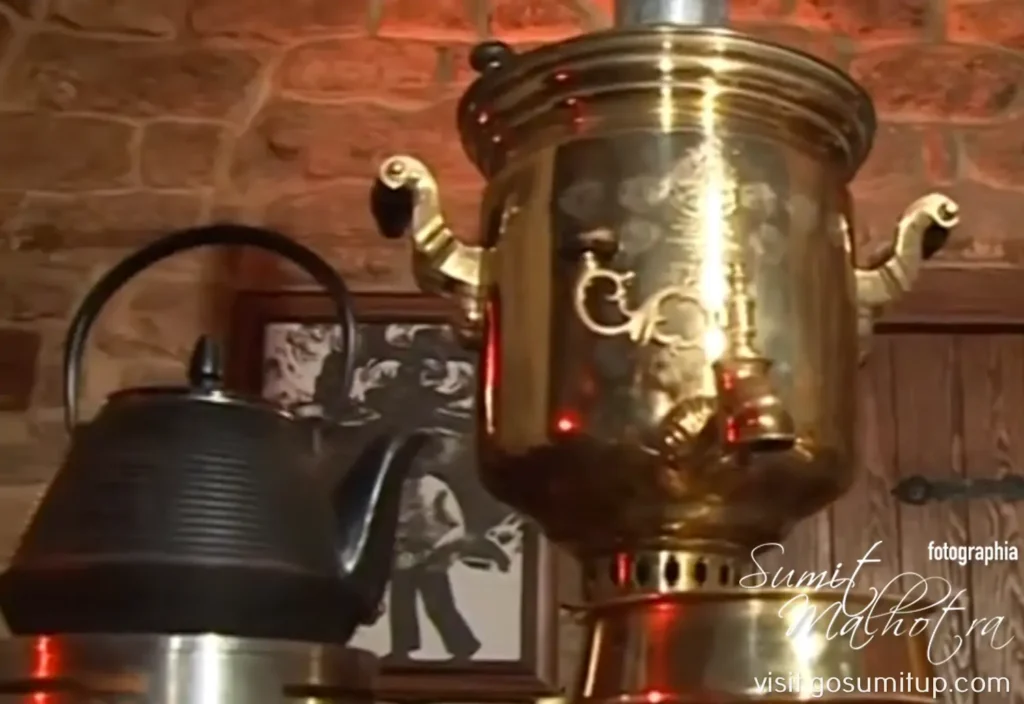
Azerbaijani Samovar & Tea Kettle
The Dual-Temperature Paradox: Ready at the Top, Hot at the Bottom
The wide, flared rim at the top acts as a sacrificial cooling deck.
This structural segmentation yields a phenomenon that appears paradoxical but is a direct outcome of thermal layering.
The tea at the very top of the Armudu cools to a perfectly drinkable temperature, 60-65°C, within minutes, while the tea trapped in the bulb base remains scaldingly hot, hovering near its initial pour temperature.
The wide, flared rim at the top acts as a sacrificial cooling deck.
Because the surface area is vastly expanded relative to the fluid volume in that upper section, evaporative cooling – the process where high-energy molecules escape as vapour, lowering the average kinetic energy of the remaining liquid—occurs at an accelerated rate.
Furthermore, because the glass is handleless, the guest naturally grasps the vessel by its flared, empty top edge.
The heat from the topmost layer of tea is partially absorbed by the conductor (the glass walls) and radiated out into the air, keeping the rim cool enough for human fingers to comfortably hold without burning.
As the guest sips from the cool upper reservoir, the volume of liquid in the top zone drops. This decrease in fluid level relieves hydrostatic pressure at the narrow waist.
The hotter, less dense tea from the bottom reservoir is then drawn upward through the bottleneck to replenish the top.
As it passes through the narrow throat, it undergoes a slight expansion and immediate cooling upon reaching the wide surface area of the top rim.
This ensures that every subsequent sip drawn from the glass delivers tea at an identical, optimised drinking temperature, while the reservoir below acts as a biological thermos preserving the remaining infusion.
Thermal Mass and Glass Material Mechanics
Traditional Azerbaijani Armudu glasses are molded with a remarkably thick, dense glass base.
The geometry of the Armudu is heavily reinforced by the material science of its construction.
Traditional Azerbaijani Armudu glasses are molded with a remarkably thick, dense glass base—frequently accounting for up to 25% of the total weight of the vessel.
Glass is a notoriously poor conductor of heat, possessing a relatively low thermal conductivity coefficient (k~ 0.8 W/m·K).
By concentrating a massive thermal mass of glass at the bottom sphere, the Armudu creates a powerful insulating shield around the base reservoir.
The thick glass at the base slowly absorbs a small amount of initial heat during the pour, reaching a state of thermal equilibrium with the bottom layer of tea.
Once this equilibrium is established, the thick glass acts as a barrier, preventing the rapid dissipation of heat into the table surface or the surrounding air.
Simultaneously, the spherical shape of the base zone minimises the overall surface area through which heat can escape via radiation.
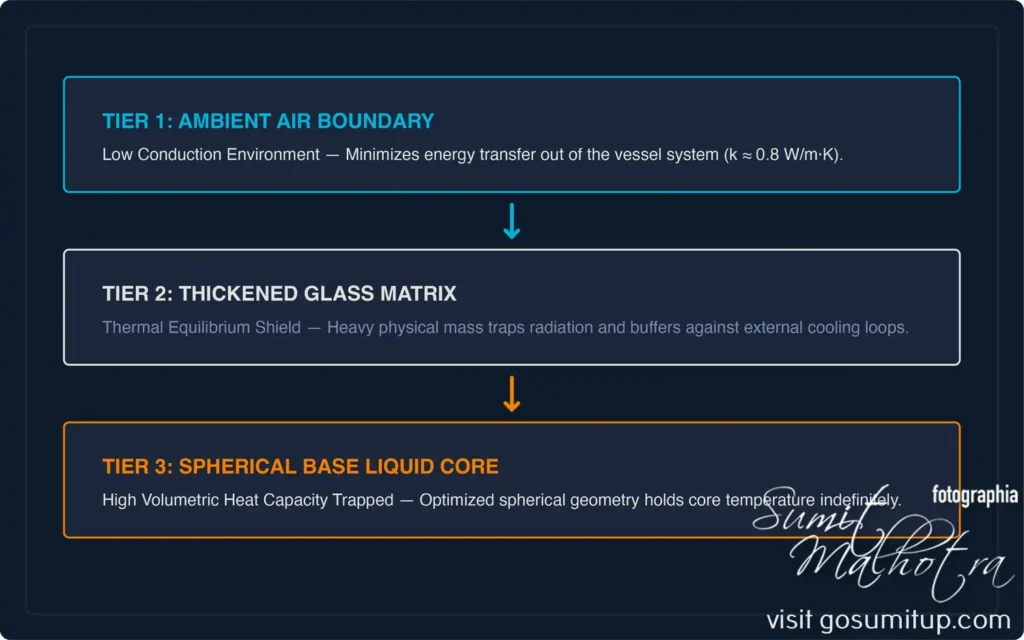
Tiers of armudu or armudu stəkan
In geometry, a sphere represents the absolute minimum surface area for any given volume.
By keeping the bottom reservoir as spherical as possible, the Armudu minimises its environmental exposure, ensuring that the core heat of the tea is locked away until it is pulled through the thermodynamic throat.
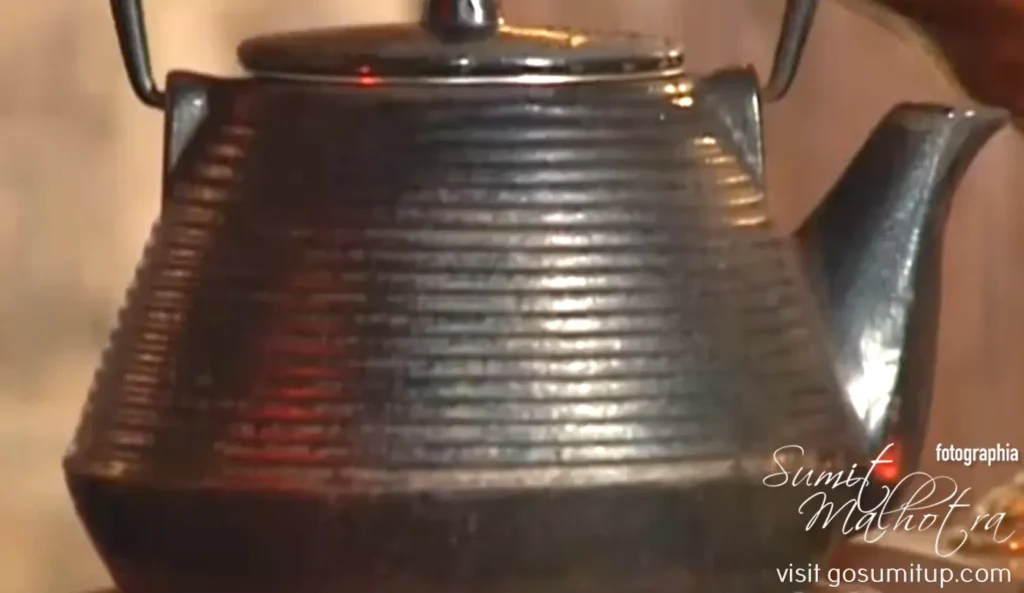
Azerbaijani Tea Kettle
To Sumit up Culinary Insight
The ancient design of the Azerbaijani pear-shaped cup is a brilliant manipulation of fluid dynamics and heat transfer.
The Armudu glass is a masterfully realised fluid-dynamic throat that weaponizes structural restriction to defeat thermal decay.
The ancient design of the Azerbaijani pear-shaped cup is a brilliant manipulation of fluid dynamics and heat transfer.
By using a narrow bottleneck to split a single liquid mass into two distinct convection environments, the Armudu creates a self-regulating thermal system.
It forces rapid evaporative cooling at the top for immediate enjoyment, while using a low-surface-area spherical base to isolate and lock away the core heat below.
It stands as a flawless marriage of cultural heritage and mechanical physics, ensuring the last sip of tea is just as hot, fragrant, and comforting as the first.
Disclaimer
If you like this article, you can let us know in the comments below or on social media using #gosumitup and tag @gosumitup on Facebook.
I am always happy to read your feedback and if you liked the dish or if you made the dish. :)
Better still, take a picture and post it on Instagram and tag it as #gosumitup
Connect direct – You can also connect with me directly on my Instagram and Facebook or on Pinterest.
And, keep visiting us for more of such awesomeness. Do bookmark gosumitup.com into your web browser now or simply subscribe to our browser notifications.
If you are a traveller and or a driver, you may find below a list of items that will fortify your travel experience. I use many of these myself for all my trips. They are modestly priced and quite important to keep handy.
- Travel Adapter – https://amzn.to/3A04EJp
- Action Camera – https://amzn.to/4eCSMfF
- Camera Mounts & Accessories – https://amzn.to/4eG4je2
- Dashcam – https://amzn.to/3U2j4Qc
- Neck Rest – https://amzn.to/3Y6ZP98
- Tyre Inflator – https://amzn.to/3U8HpDP
- Storage – https://amzn.to/3XVQFMI
- Car Laptop Charger – https://amzn.to/3XXMVdA
- Vacuum Cleaner Cordless – https://amzn.to/3Yo1hWd
- Air Mattress – https://amzn.to/4015Bvu
- Jack Ratchet Wrench – https://amzn.to/3YkxddO
- Cleaning Cloth Microfibre – https://amzn.to/3NIOFmt
- Rechargeable Solar LED Torch – https://amzn.to/3Yj4h5Y
- Electronics Accessories Organiser – https://amzn.to/3A04XUz
- Pocket Travel Data Transfer Tool – https://amzn.to/3zMTxnc
- Smart Tracker for Keys – https://amzn.to/3BTuIq0
- Camping Cookware Kit – https://amzn.to/3BIy0N3
- Rechargeable Electric Gas Lighter for Stoves – https://amzn.to/4orBsin
- Sleeping Bag – https://amzn.to/3U7v2rP
GoSumItUp is a personal blog written and edited personally by me. All opinions expressed are my own which are honest and have not been influenced by any means.
My reviews are dependent on the visits at the time and revisits will be reviewed again as they may have a different experience or the same.
I am not a food critic nor do I consider myself as one, this platform allows me to write and review my own personal dining experiences, may they be good or bad, delicious or not, all are honest and truthful opinions.
Suppose you disagree or agree with me at any point or do not receive the same experiences as I have. In that case, I do not hold any responsibility as everyone will have their own experiences that they will encounter themselves.
I pay for all meals. However, if any meals or product has been sponsored or compensated or if I was an invited guest, it will be clearly disclosed at the end of each review.
All images on this blog are my own unless stated otherwise. If you wish to use any of my photography for any purposes, please do not use it without any written permission and give credit and/or link back to the website.
If you would like to send a product or any sponsors/endorsements, it may or may not be published and reviewed on the website.
If you wish to send any products or invitations for any media, press or collaborations etc., consider if it is something related to the content of the website and if you see fit, please visit the Contact page for contact details.
Thank You.
Thank you for visiting GoSumItUp! I hope you enjoy the reviews & recipes found at www.gosumitup.com.
This page consists of disclaimers regarding the recipe, its outcome, nutrition, and food handling safety decisions.
The recipes have been cooked and compiled by me for general information only and should not be used to diagnose or treat any medical condition/s.
This information is not intended to diagnose, treat, cure, or prevent any disease as well.
GoSumItUp.com has used all reasonable care in compiling the information but offers no warranty as to its accuracy or its use in any possible form.
Consult a doctor or other health care professional for diagnosis and treatment of any medical condition/s. For more details please refer to our disclosure policy.
The nutritional and health information provided in this article is for educational and informational purposes only and is not intended as medical advice, diagnosis, or treatment.
While fenugreek (Trigonella foenum-graecum) has a long history of traditional and clinical use, individual health needs vary.
Always consult with a qualified healthcare professional, registered dietitian, or physician before introducing therapeutic doses of fenugreek into your daily diet, especially if you are pregnant, nursing, taking blood-thinning medications, or managing chronic conditions like diabetes.
