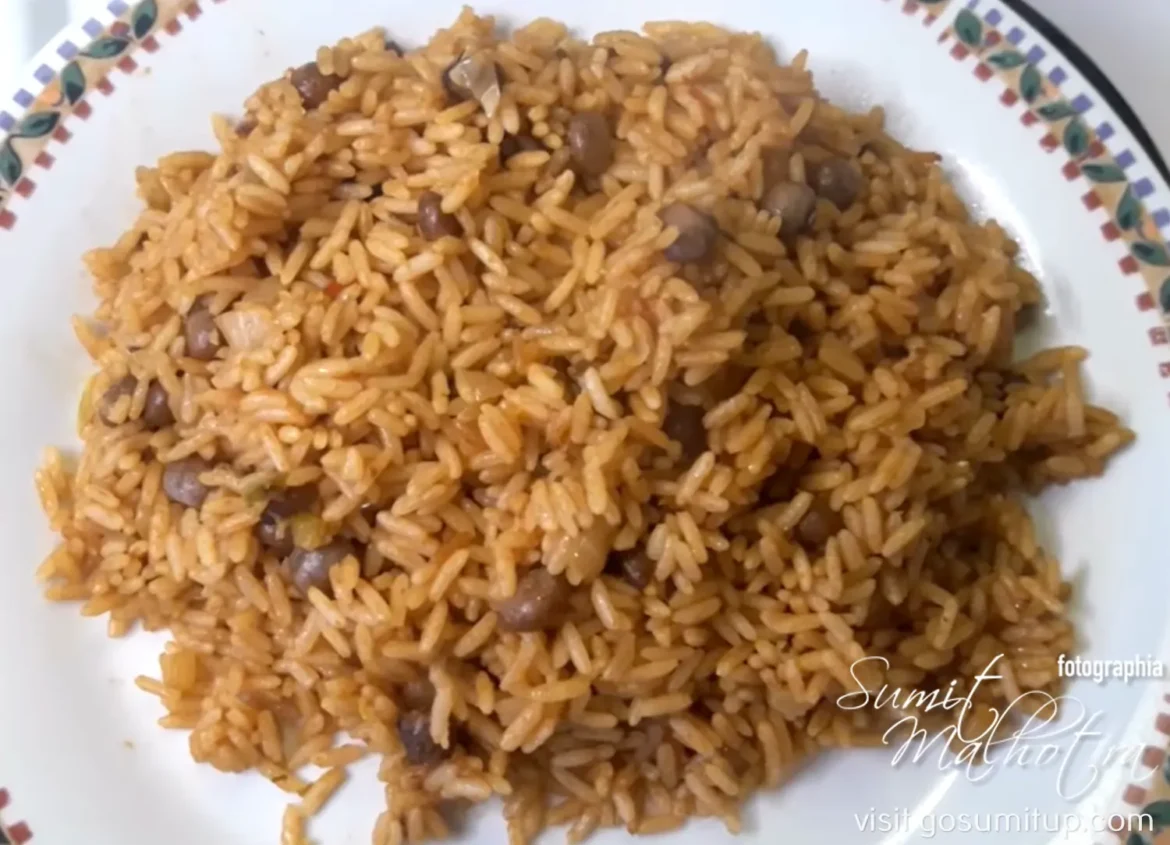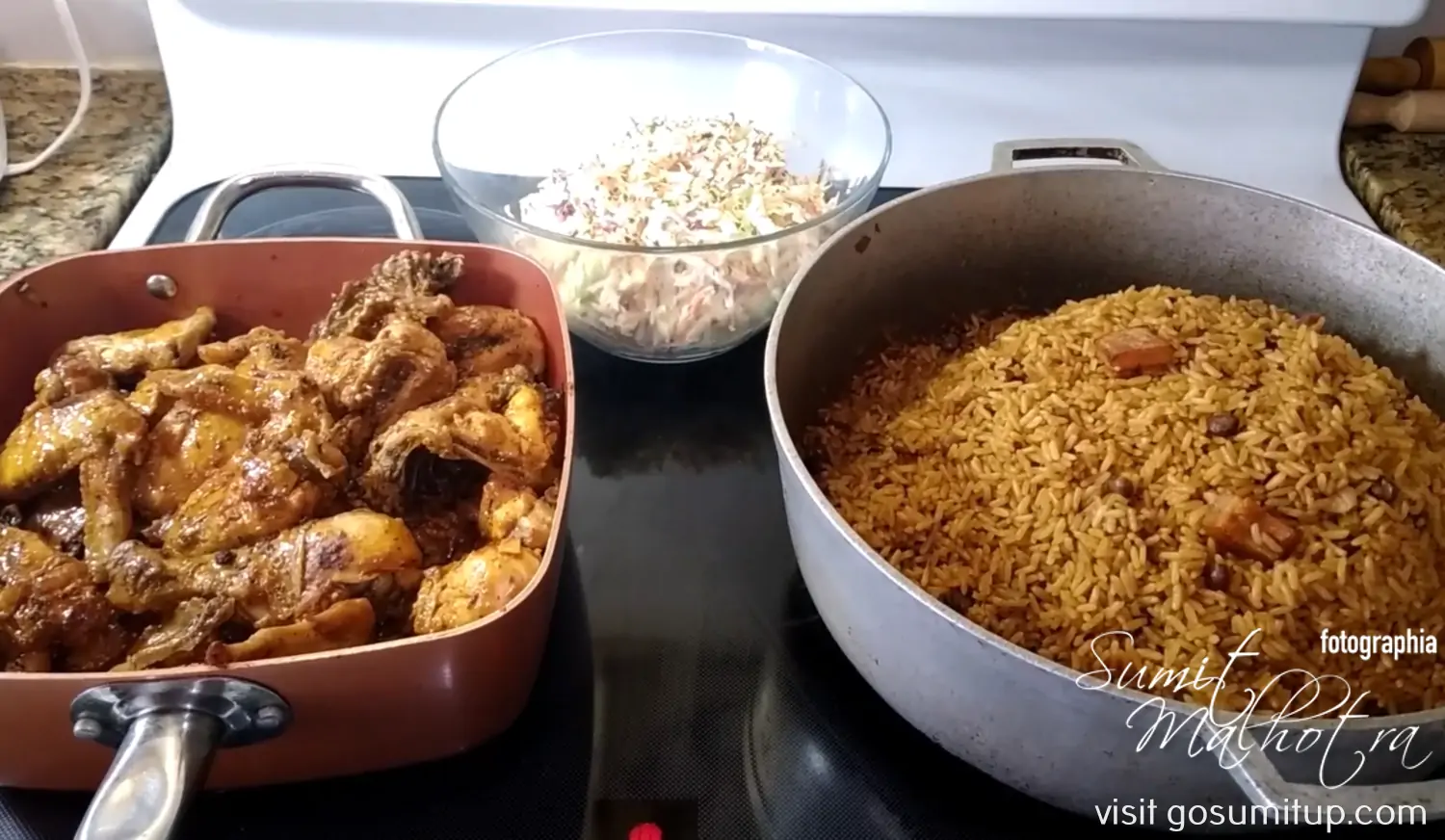
Bahamian Peas and Rice stands as one of the most structurally refined single-pot starch-legume composite systems in Afro-Caribbean gastronomy.
Read about High-Temperature Lipid Rendering and Concentrated Solanum Lycopersicum Caramelisation Protocols, Cajanus Cajan Kernel Integrity and Pectin Cross-Linking Dynamics, Amylose Hydrothermal Gelatinisation and Steam-Driven Vaporisation Equilibrium, Starch Gelatinisation Frameworks, Bahamian Peas and Rice Material Science
Learn more about Bahamian Peas and Rice, Caribbean Culinary Physics, Pigeon Peas Science, Rice Starch Gelatinisation, Food Chemistry, Maillard Reaction Logistics, Lipid Extraction, Bahamian Gastronomy, Sumit Malhotra Famous Food Gastronomy Essays
Bahamian Peas & Rice
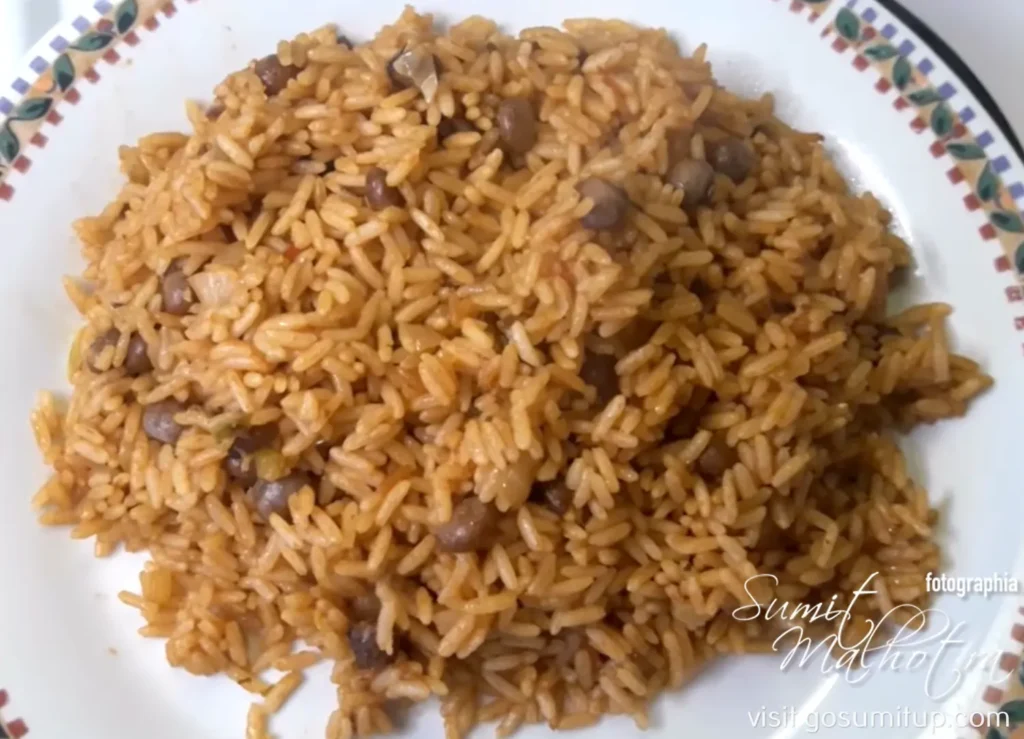
Beyond its cultural status as a quintessential Sunday staple across the Lucayan Archipelago, the dish represents a sophisticated application of organic chemistry, polymer thermodynamics, and fluid mechanics.
The transformation of long-grain rice (Oryza sativa) and pigeon peas (Cajanus cajan) into a cohesive, deeply seasoned, high-density matrix relies on four distinct physical-chemical phases: high-temperature lipid rendering and non-enzymatic browning, pectin stabilization of the legume middle lamella, surfactant-mediated lipid-water emulsification, and controlled amylose gelatinisation under sealed vaporisation equilibria.
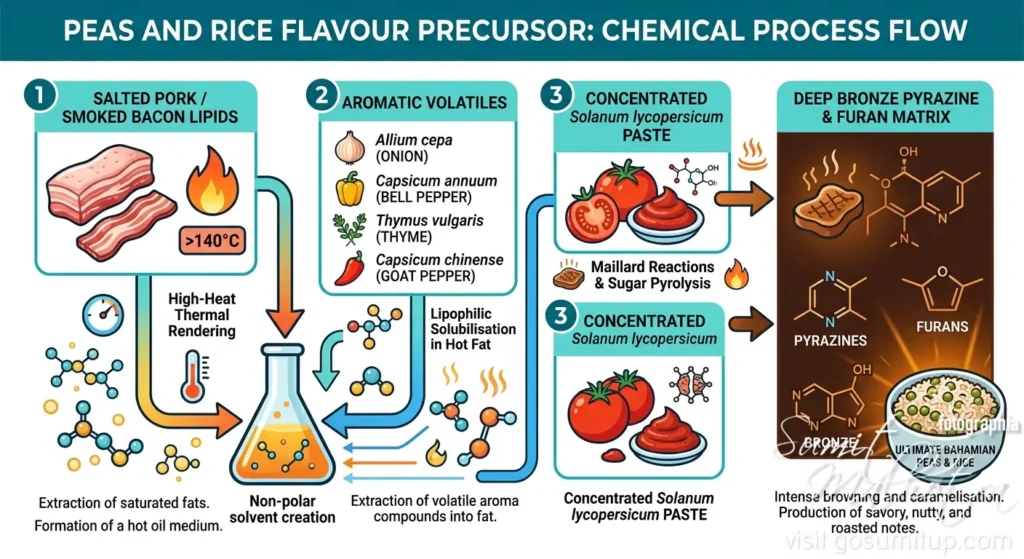
Peas and Rice Flavour Precursor - Chemical Process Flow
High-Temperature Lipid Rendering and Solanum Lycopersicum Caramelisation
The foundational flavour profile of authentic Bahamian Peas and Rice is established through a lipid-phase extraction process rather than a simple water-based simmer.
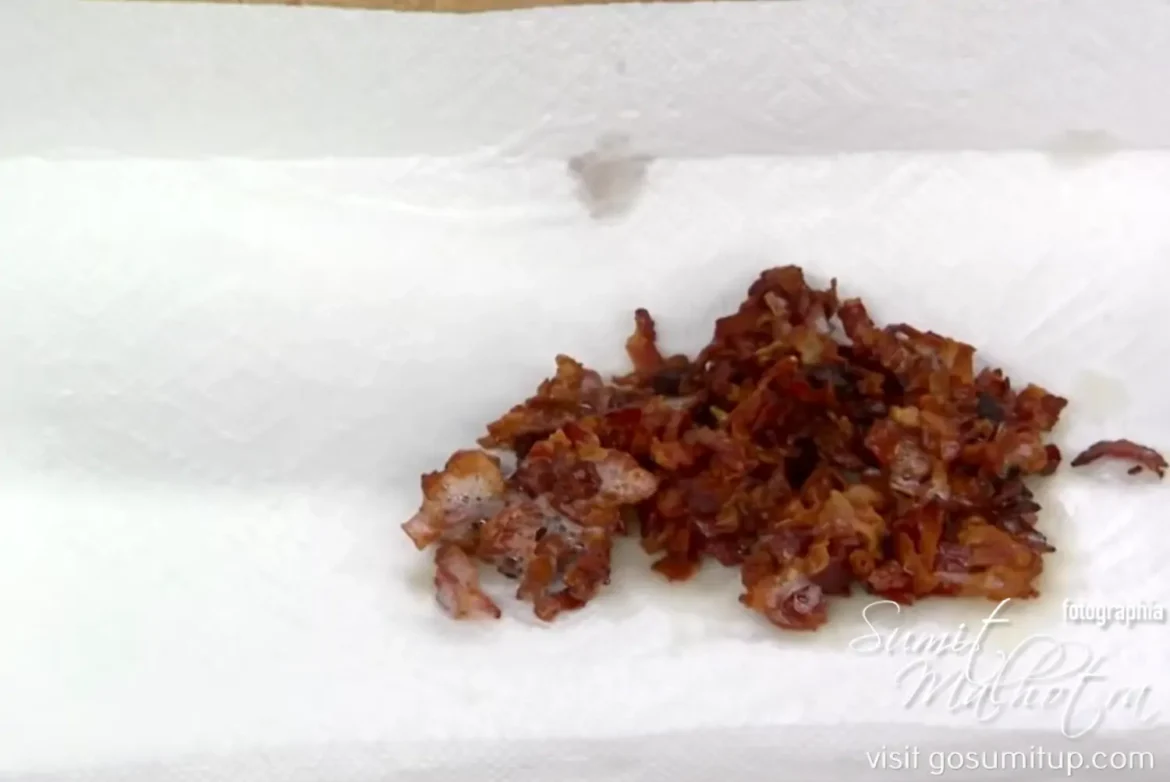
The preparation initiates with the rendering of high-density animal lipids—typically salted pork belly (cured Sus domesticus) or thick-cut smoked bacon—in a heavy cast-iron or heavy-gauge aluminium vessel (caldero).
As the saturated and monounsaturated triacylglycerols within the animal fats melt, they create a hydrophobic, non-polar solvent capable of reaching operational temperatures well above the 100°C boiling point of water.
Into this hot lipid medium (typically operating between 135°C and 160°C), fine aromatics are introduced:
Allium cepa (Onions): Providing sulfur-containing precursor compounds like S-alk(en)yl-L-cysteine sulfoxides.
Capsicum annuum (Sweet Bell Peppers): Contributing pyrazines and carotenoid pigments.
Thymus vulgaris (Fresh Thyme): Releasing volatile monoterpenes, primarily thymol and carvacrol.
Capsicum chinense (Bahamian Goat Pepper): Imparting lipophilic capsaicinoids and distinctive fruity esters.
The essential oils and volatile aromatic compounds within these botanicals rapidly dissolve into the liquid fat matrix.
Because many of these aroma compounds are lipophilic, hydrophobic fat acts as a superior extraction solvent compared to water, trapping volatile notes and preventing their premature evaporation into the atmosphere.
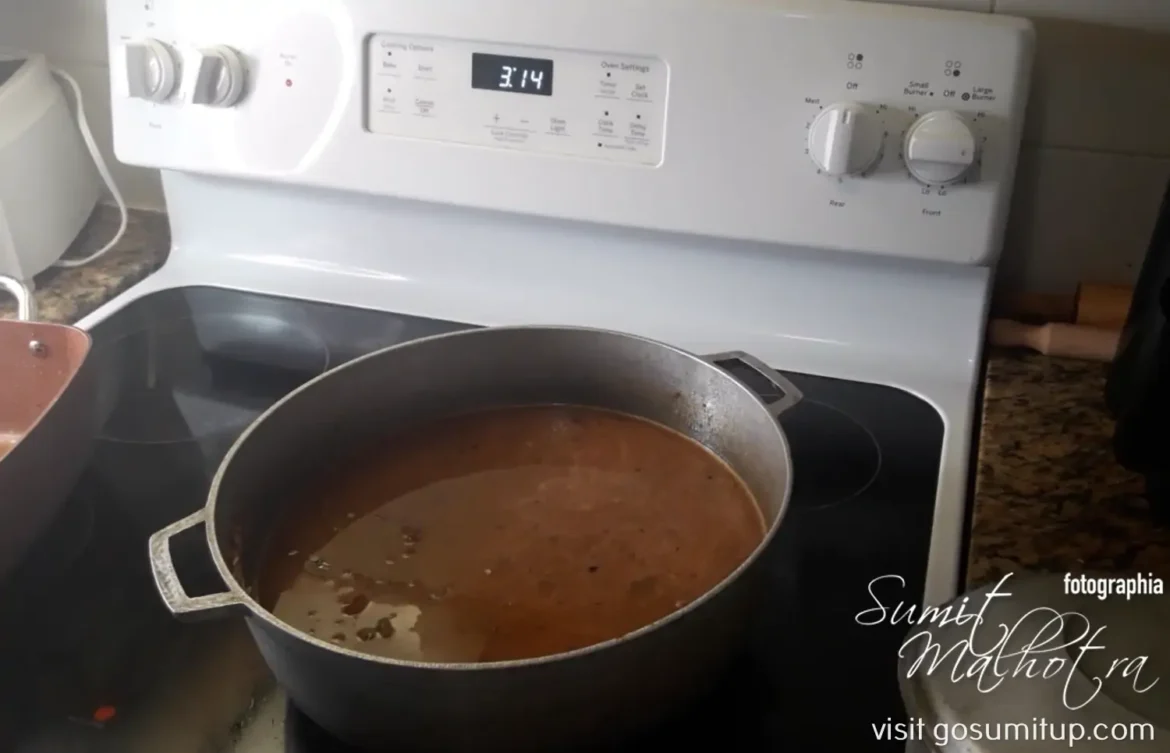
Immediately following aromatic extraction, double-concentrated tomato paste (Solanum lycopersicum) is introduced directly into the boiling fat—a technique known locally as “caramelising the paste.”
This step triggers aggressive non-enzymatic browning (Maillard reactions) between the amino acids and reducing sugars in the concentrated fruit paste, alongside the thermal pyrolysis of sucrose, glucose, and fructose.
The high thermal energy breaks down raw citric and malic acid notes, generating dark pyrazines, furans, and complex heterocyclic compounds.
This chemical shift provides both the signature deep mahogany-bronze hue and the dark, savoury, slightly bittersweet backbone characteristic of the Bahamian culinary profile.
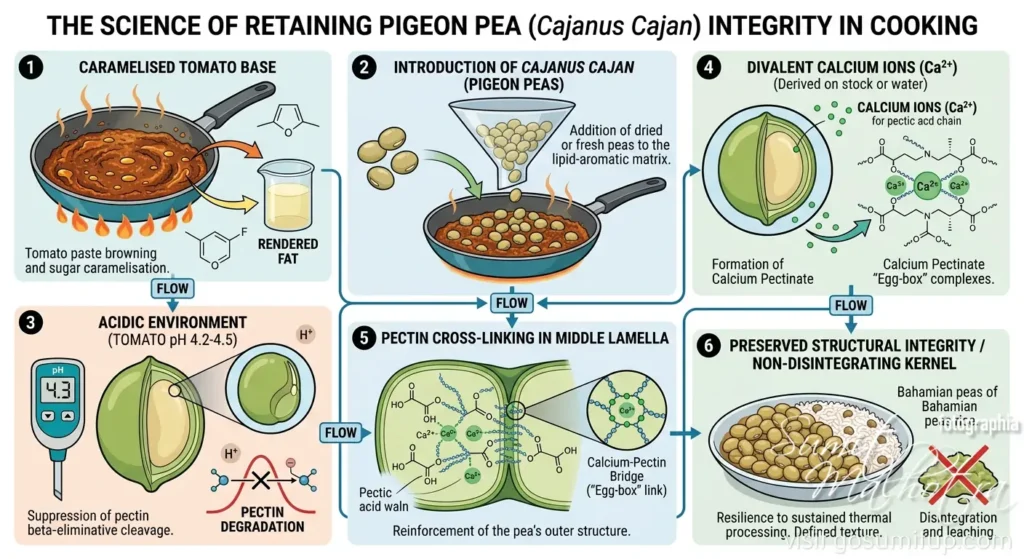
The Science of Retaining Pigeon Pea Integrity in Cooking
3. Emulsion Kinetics and Surfactant Action in Single-Pot Systems
A frequently overlooked aspect of high-tier Bahamian Peas and Rice preparation is the physical state of the cooking liquid just prior to the addition of the grain.
The pot at this stage contains a heterogeneous mixture of water, aqueous-soluble compounds, suspended solids, and a substantial layer of hydrophobic rendered animal fats and vegetable oils.
Without proper integration, the free lipid phase would float atop the aqueous phase due to density differentials.
When rice is added to a system with un-emulsified surface fat, the top grains become heavily coated in grease while the lower grains simmer in an unfatty water medium, causing uneven hydration and greasy surface pooling.
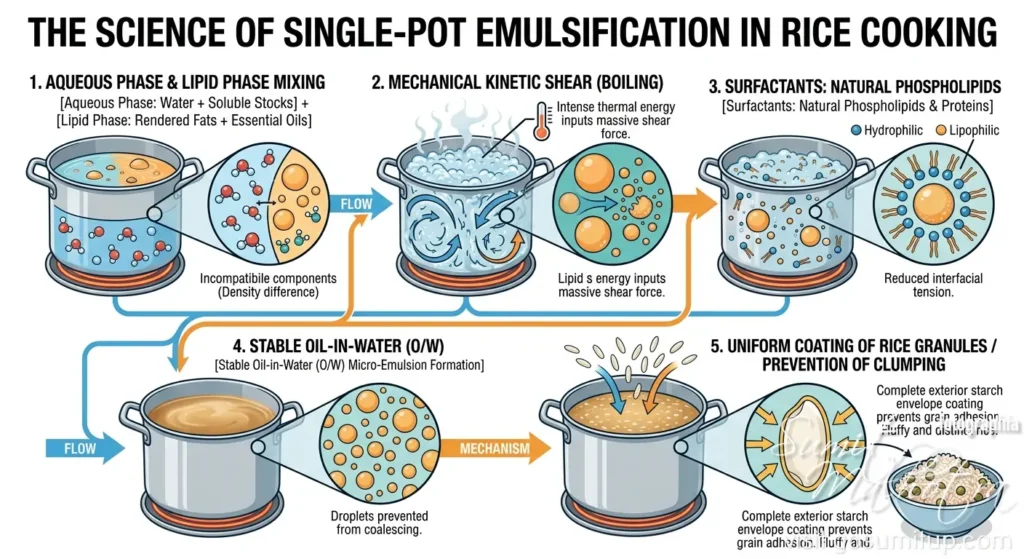
The solution lies in the creation of a temporary Oil-in-Water (O/W) emulsion via kinetic energy and natural amphiphilic surfactants:
Surfactant Sources: Dissolved soluble proteins leached from the legume cotyledons, natural plant phospholipids, and hydrolysed gelatin from rich bone-based stocks act as surface-active agents.
These molecules contain both hydrophilic (water-attracting) heads and lipophilic (fat-attracting) tails.
Kinetic Shear: Bringing the liquid broth to a vigorous, turbulent boil prior to adding the rice provides the mechanical shear force necessary to break large lipid droplets into micro-scale droplets.
Interfacial Tension Reduction: The surfactants position themselves at the boundary between the water and the micro-lipid droplets, drastically reducing interfacial tension and preventing immediate coalescent phase separation.
This stable emulsion ensures that when the rice is introduced, every individual grain is exposed to a homogeneous mixture of water, dissolved salts, carotenoid pigments, and emulsified lipids.
The micro-droplets of lipid adhere uniformly to the exterior protein-starch envelope of each rice grain, setting up the exact physical conditions required for clean grain separation after cooking.
The Science of Single-Pot Emulsification in Rice Cooking
4. Amylose Hydrothermal Gelatinisation and Vapor-Phase Swelling
The final and most critical physical phase is the absorption cooking of long-grain rice within the emulsified, seasoned broth.
Long-grain rice varieties (Oryza sativa subsp. indica) feature a high ratio of linear amylose polymers relative to highly branched amylopectin polymers, typically containing 22% to 28% amylose by dry weight.
| Operational Parameter | Exact Target / Range | Underlying Chemical Mechanics |
| Water-to-Rice Mass Ratio | 1.8:1 to 2.0:1 | Provides exact stoichiometric water required for total starch hydration without excess free water that induces inter-grain friction and mechanical slurring. |
| Gelatinisation Range | 68°C – 78°C | Disruption of intramolecular hydrogen bonds within semi-crystalline starch granules; irreversible swelling and uncoiling of amylose polymers. |
| Thermal Delivery Profile | High initial boil >> Low lid-sealed hold | Rapid initial heat drives convection currents; low heat transitions system to static steam-driven vapour absorption. |
| Grain Surface State | Dry, discrete, high-modulus kernel | Hydrophobic emulsified lipid layer coats exterior starch, forming a physical barrier against amylose-mediated inter-grain adhesion. |
When long-grain rice is introduced into the boiling broth, water molecules begin diffusing across the outer aleurone layer and into the semi-crystalline starch granules located within the endosperm.
As the internal temperature of the grain passes its specific gelatinisation threshold (68°C–78°C), the heat provides sufficient kinetic energy to break the hydrogen bonds holding the crystalline amylose-amylopectin double helices together.
As water rushes into the granule, it swells irreversibly. In an unmonitored system with high liquid volumes and continuous mechanical agitation, amylose molecules leach out of the granules into the surrounding water, forming a sticky, viscous gel that glues the grains together.
To prevent this outcome, the system must transition to a static vapour-phase absorption state:
Thermal Drop and Steam Trap: Once the liquid level drops to coincide with the surface of the expanded rice bed, the vessel is covered with a heavy, tightly fitting lid, and the heat source is reduced to a minimal thermal hold (maintaining internal temperatures near 90°C–95°C).
Pressure and Steam Equilibrium: Trapping the steam creates a pressurised, saturated vapour space above the rice bed.
Water is no longer absorbed via liquid immersion; instead, it condenses uniformly onto the surface of the rice grains and diffuses inward via vapour-phase equilibrium.
Elimination of Shear Turbulence: By eliminating fluid boiling, kinetic collision between rice grains drops to zero.
The delicate, swollen starch granules are protected from mechanical shear damage, preventing structural rupture.
Retrogradation and Hydrophobic Shielding: As the pot rests off the heat prior to serving, the temperature slightly decreases.
The high-amylose polymers begin a process known as retrogradation, where linear amylose chains realign and re-form hydrogen bonds, firming up the grain texture.
Simultaneously, the microscopic lipid film surrounding each grain acts as a non-polar lubricant, allowing the grains to slide past one another effortlessly when fluffing with a fork.
5. Quantitative Formula and Operational Execution Protocol
To translate these thermodynamic and chemical principles into a repeatable, high-precision culinary execution, the following quantitative formulation and step-by-step physical protocol must be followed:
Mass Balance and Ingredient Metric System
- Long-Grain Indica Rice (Parboiled or Aged): 400 g (100% base dry weight)
- Pre-Cooked Pigeon Peas (Cajanus cajan): 250 g (62.5% baker’s percentage equivalent)
- Salted Pork Belly / Smoked Bacon: 100 g (25.0% dry rice weight)
- Double-Concentrated Tomato Paste: 45 g (11.25% dry rice weight)
- Aromatic Trinity (Onion, Bell Pepper, Celery/Thyme): 180 g combined (45.0% dry rice weight)
- Bahamian Goat Pepper (Whole, intact): 1 unit (approx. 10 g)
- Emulsified Stock / Water Liquid Volume: 720 mL (180% liquid-to-rice ratio by weight)
- Sodium Chloride (Adjusted for pork salinity): ~8 g (2.0% dry rice weight)
Step-by-Step Structural Protocol
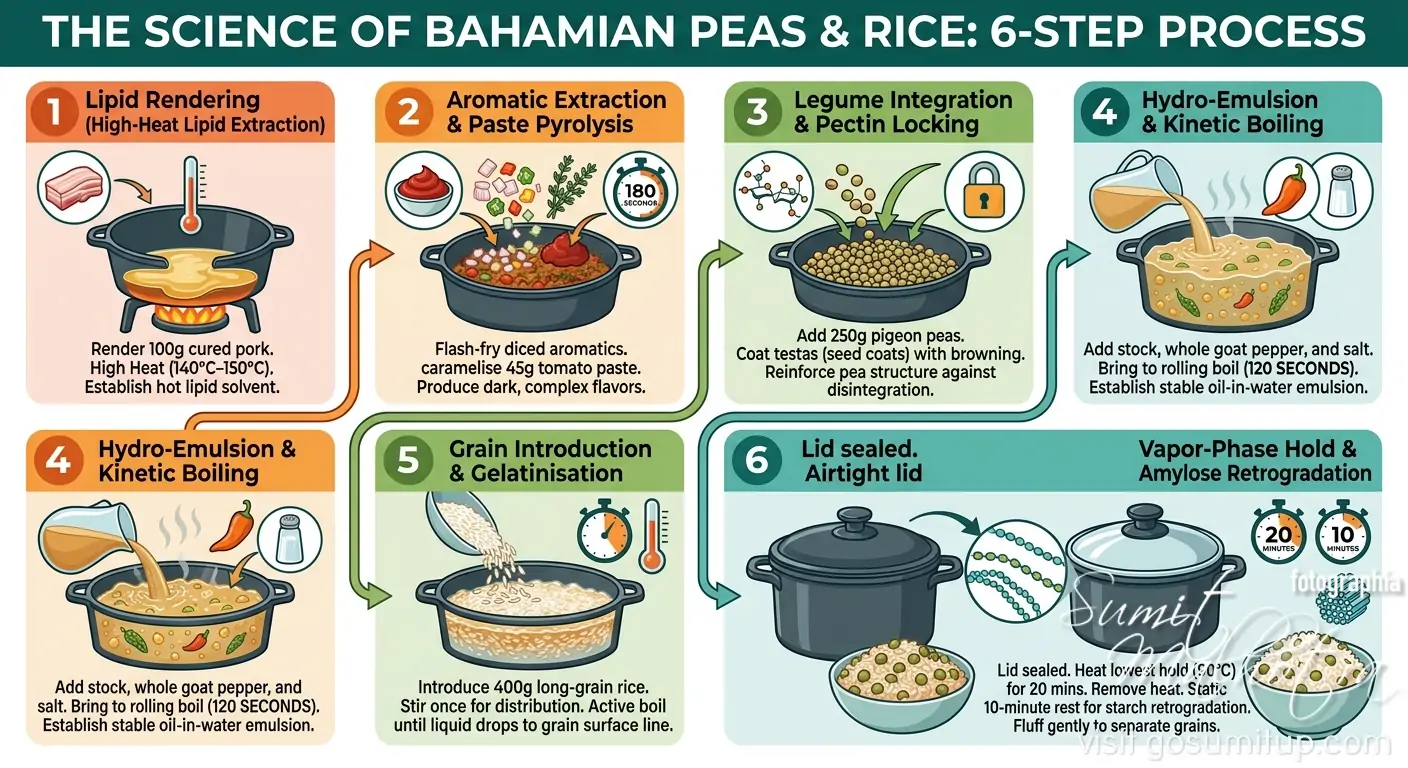
The science of bahamian peas and rice – 6 step process
Step-by-Step Structural Protocol
Lipid Rendering Phase: Place the diced salted pork belly into a cold, heavy-bottomed pot.
Apply medium-high thermal energy to gradually render out the animal fat without burning the milk solids or connective tissue.
Continue until the pork turns golden crisp and a generous pool of liquid lipid is established at the base of the vessel.
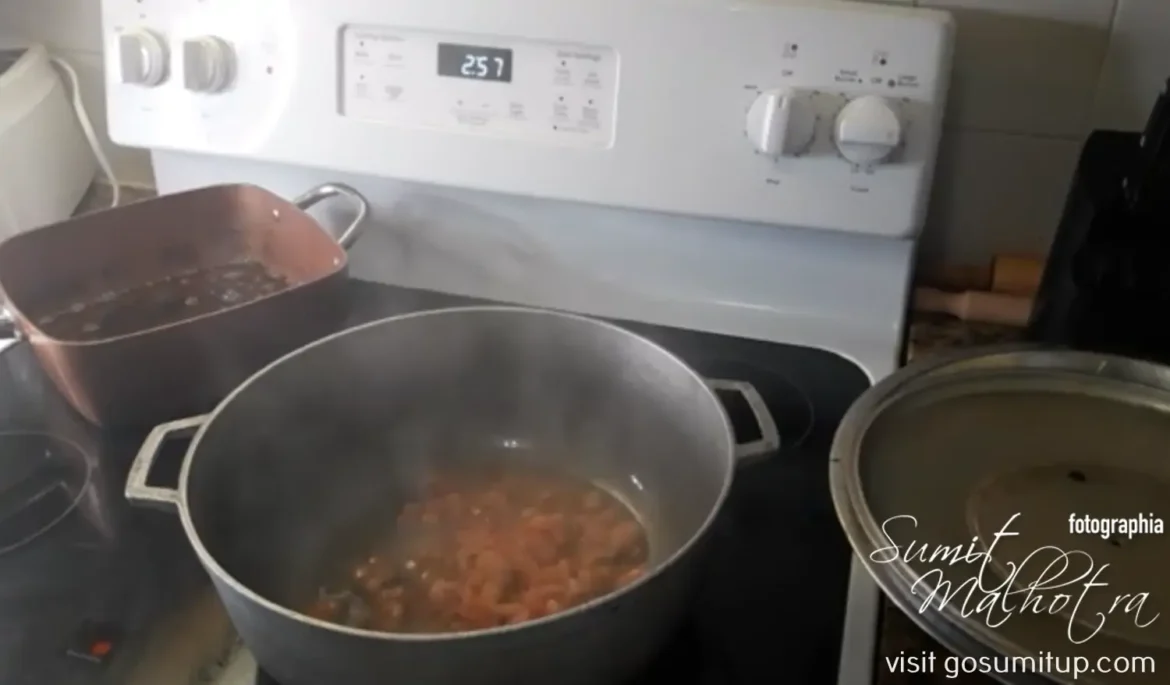
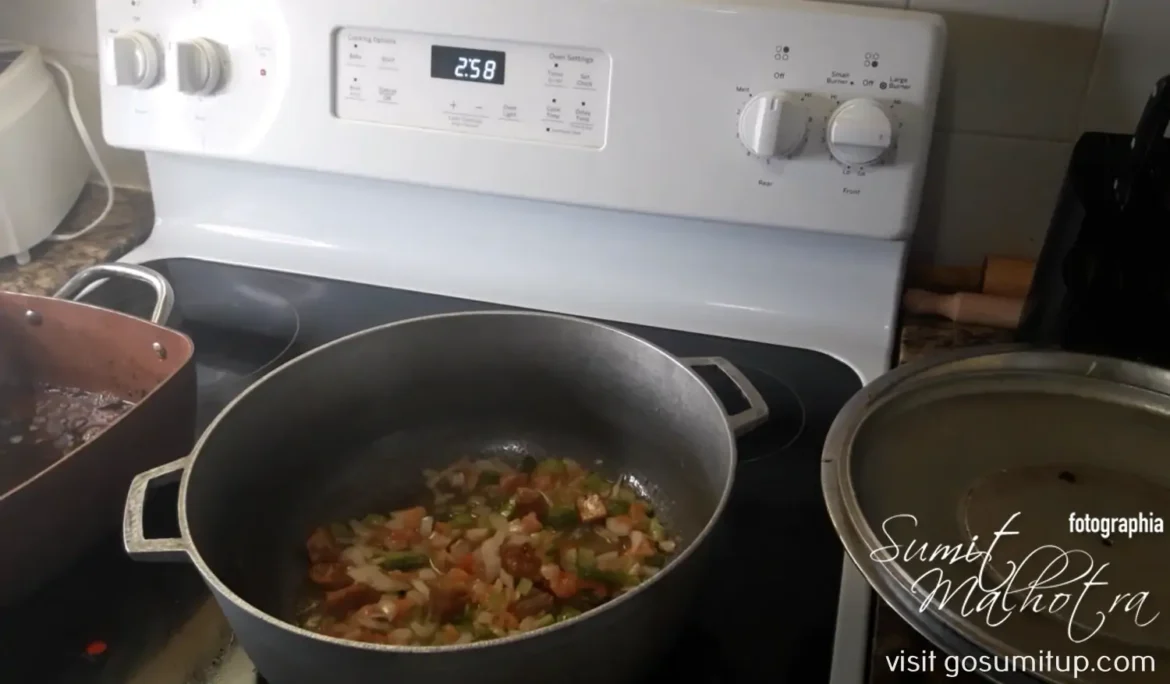
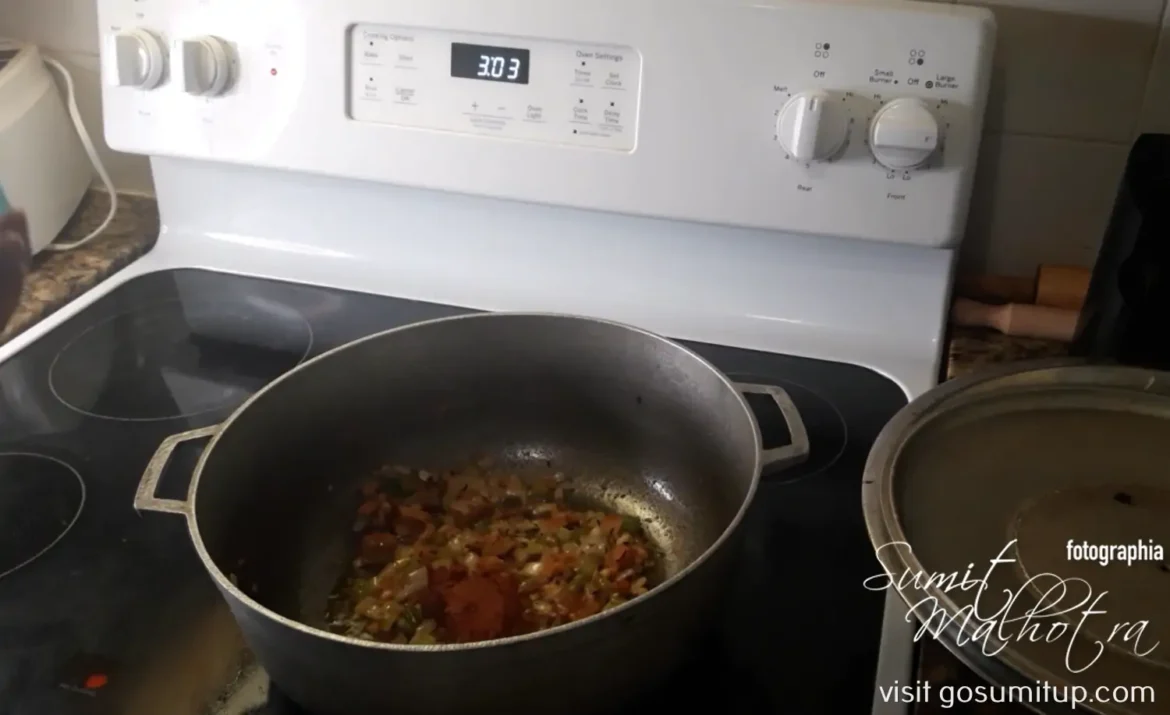
Aromatic Extraction & Caramelisation: Introduce the finely diced onions, sweet bell peppers, and fresh thyme directly into the hot fat.
Saute until the allium becomes translucent and releases volatile aroma compounds into the lipid solvent.
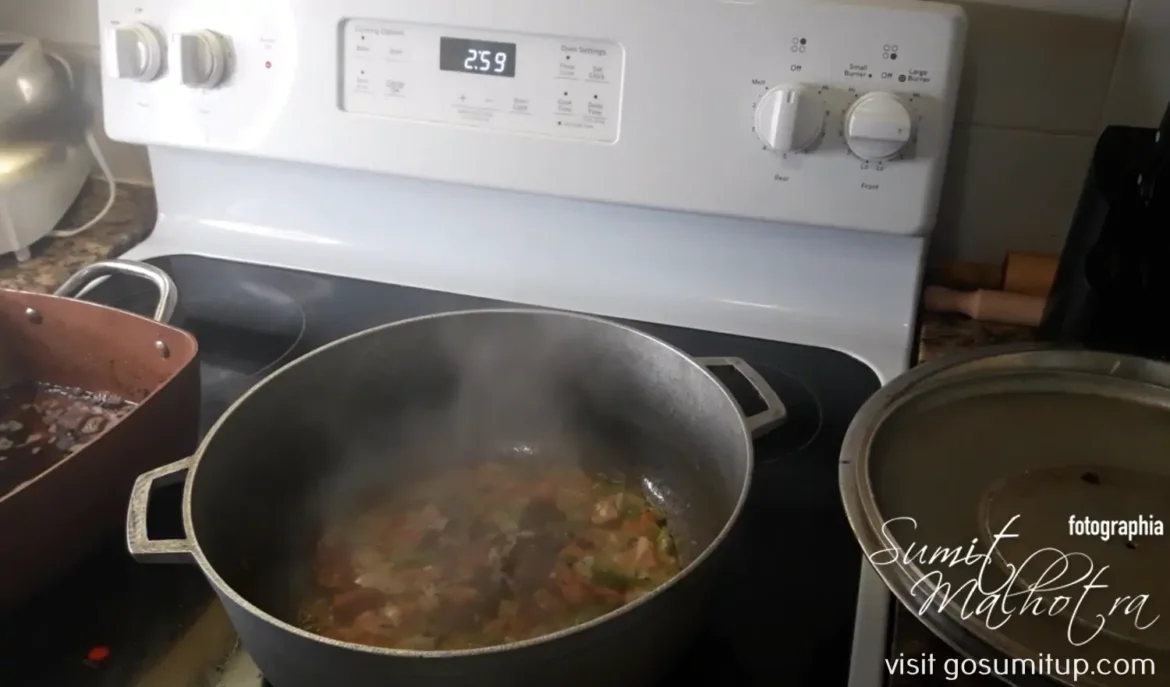
Push the vegetables to the perimeter of the vessel and drop the double-concentrated tomato paste into the clear centre lipid pool.
Fry the paste vigorously in the fat, turning it from bright crimson to a dark, fragrant mahogany bronze.
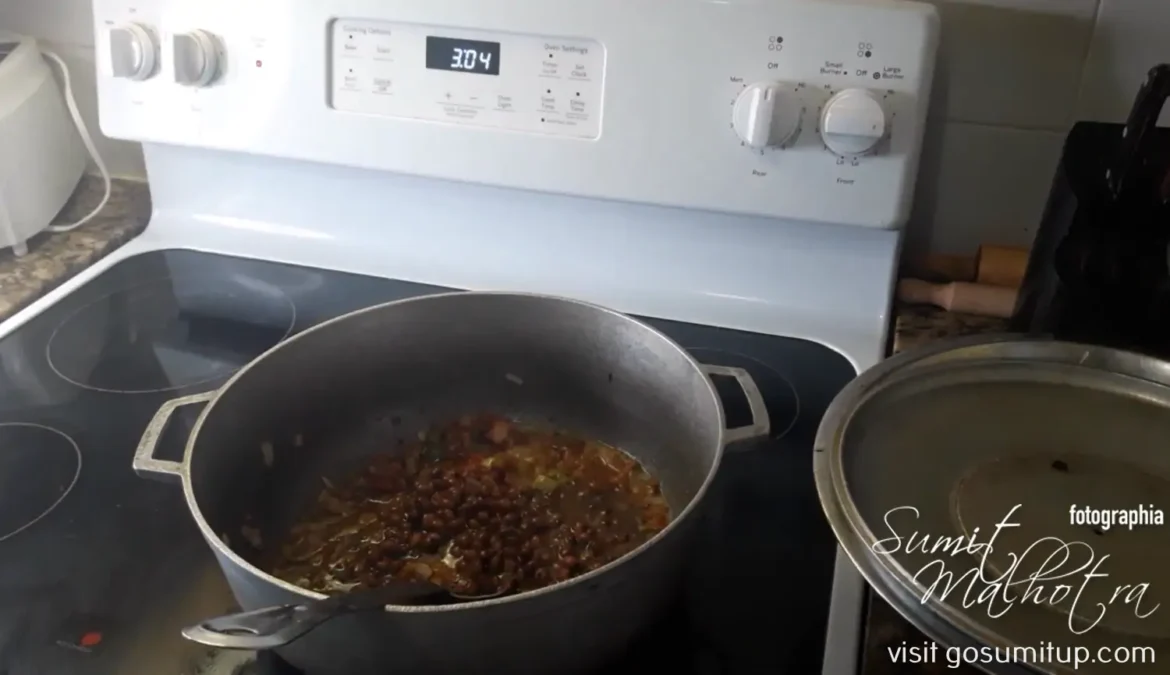
Pectin Integration: Add the pigeon peas into the hot tomato-lipid mixture. Coat the peas thoroughly in the fat-and-paste matrix for 60 to 90 seconds.
This ensures the acidic tomato solids and calcium ions in the fat phase make direct contact with the legume cell wall pectins before large volumes of water are introduced.
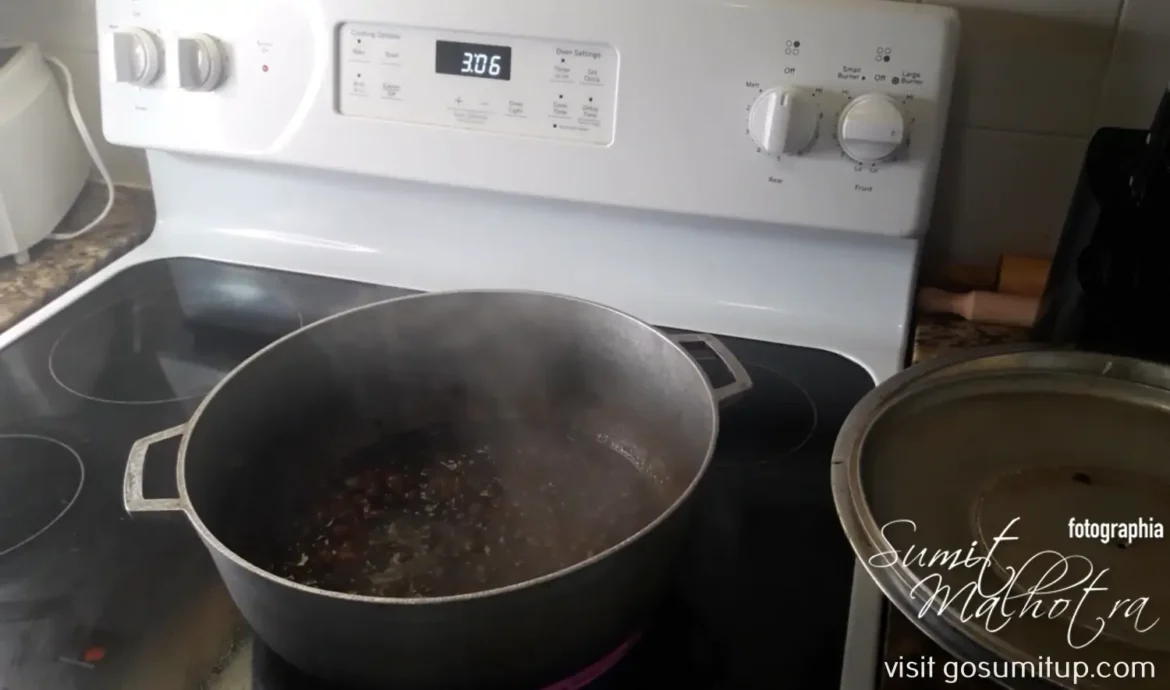
Hydro-Emulsion Build: Pour in the measured stock or water, add the intact whole goat pepper (taking care not to puncture the skin to prevent uncontrolled capsaicin release), and adjust salt metrics.
Bring the liquid to a rapid, violent rolling boil.
The mechanical turbulence combined with natural proteins and phospholipids from the peas will create a stable, golden-brown Oil-in-Water emulsion.
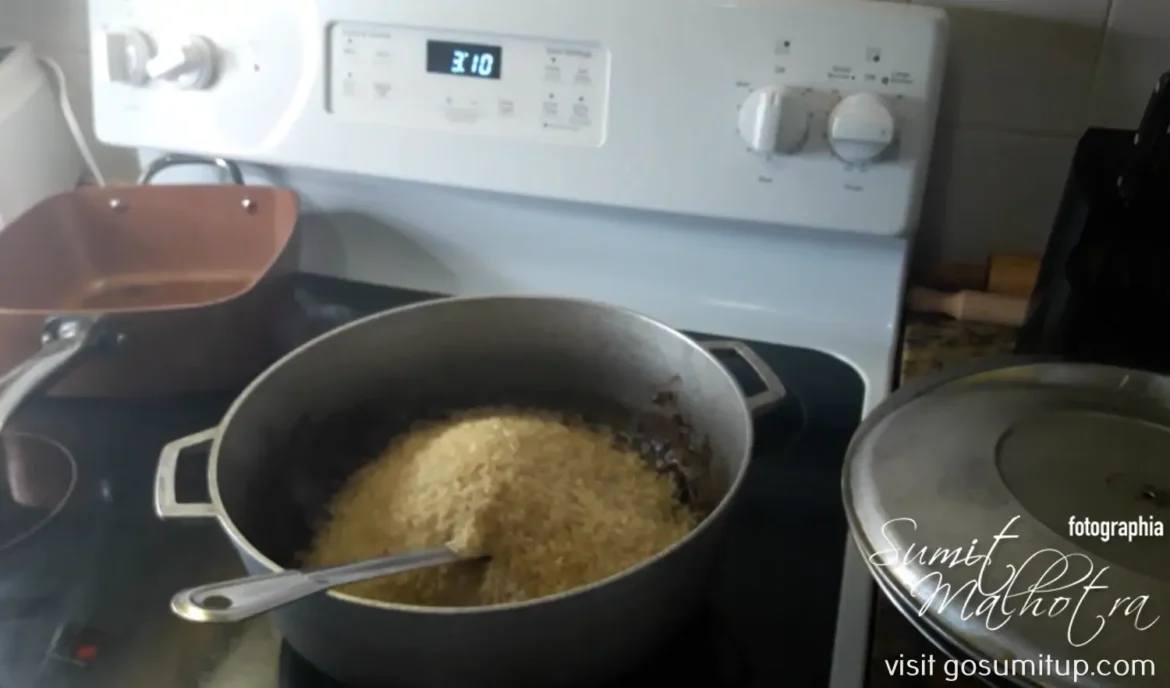
Grain Introduction and Absorption: Add the long-grain rice (which has been washed briefly in cold water to remove loose, broken surface starch granules).
Stir the pot gently once to ensure even horizontal distribution of the grains and legumes.
Allow the uncovered pot to boil rapidly until the liquid level is absorbed to the point where the tips of the rice grains break the surface of the bubbling fluid matrix.
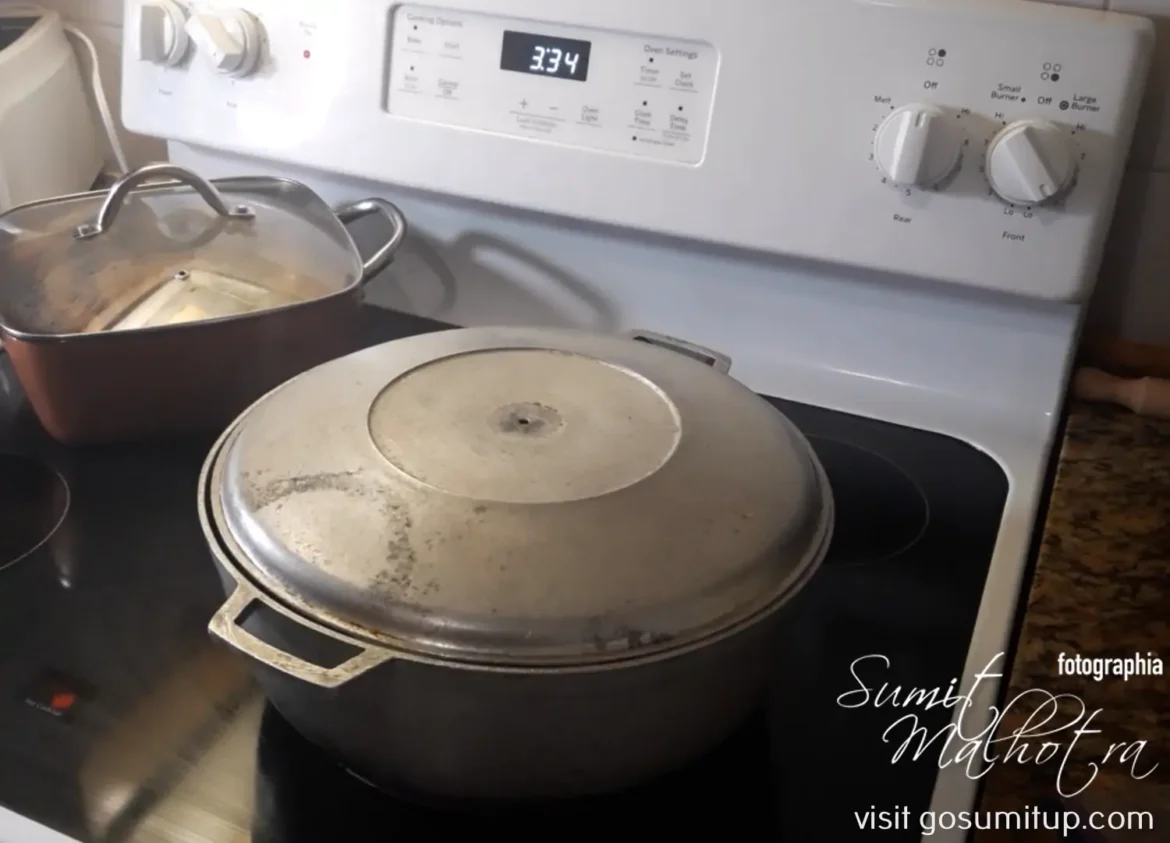
Sealed Vapor-Phase Hold: Immediately place a heavy, tight-fitting lid onto the pot to seal the steam space.
Reduce the thermal input to its lowest possible operational setting. Allow the system to rest under low thermal input for exactly 20 minutes without lifting the lid or disturbing the vapour space.
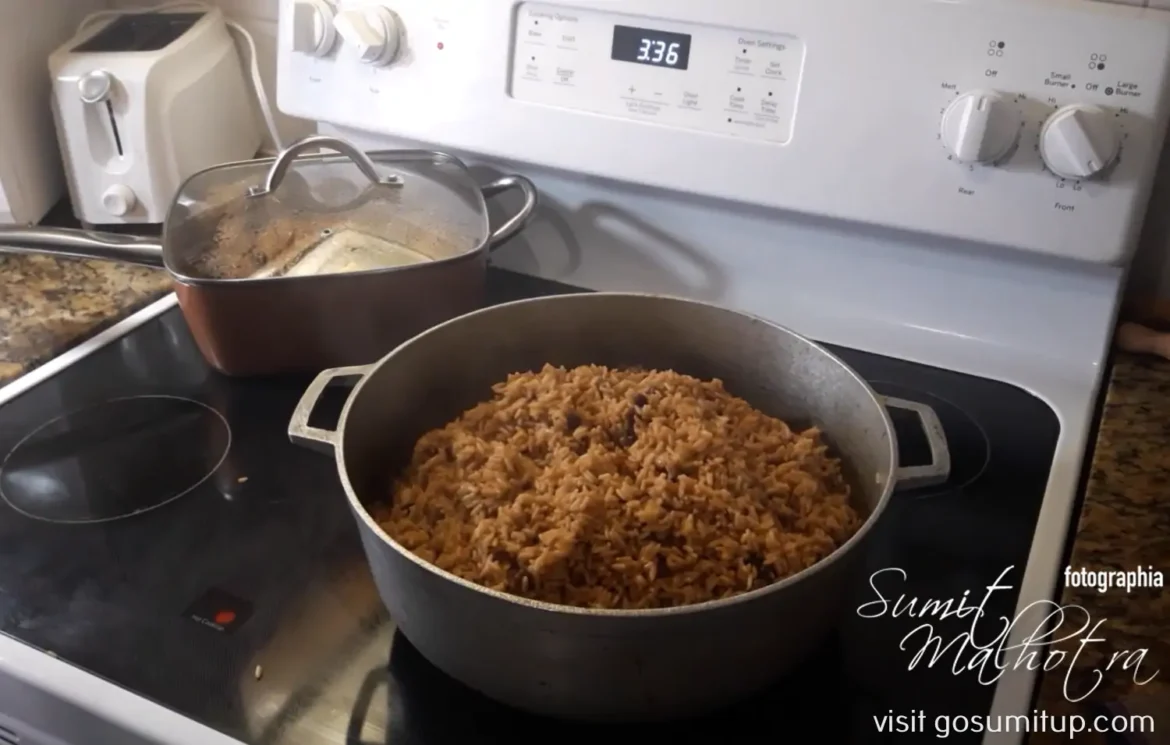
Resting and Retrogradation: Turn off the thermal source completely. Leave the pot undisturbed with the lid locked for an additional 10 minutes.
This resting phase allows the internal temperature to drop slowly, promoting amylose retrogradation and firming the outer layer of each grain.
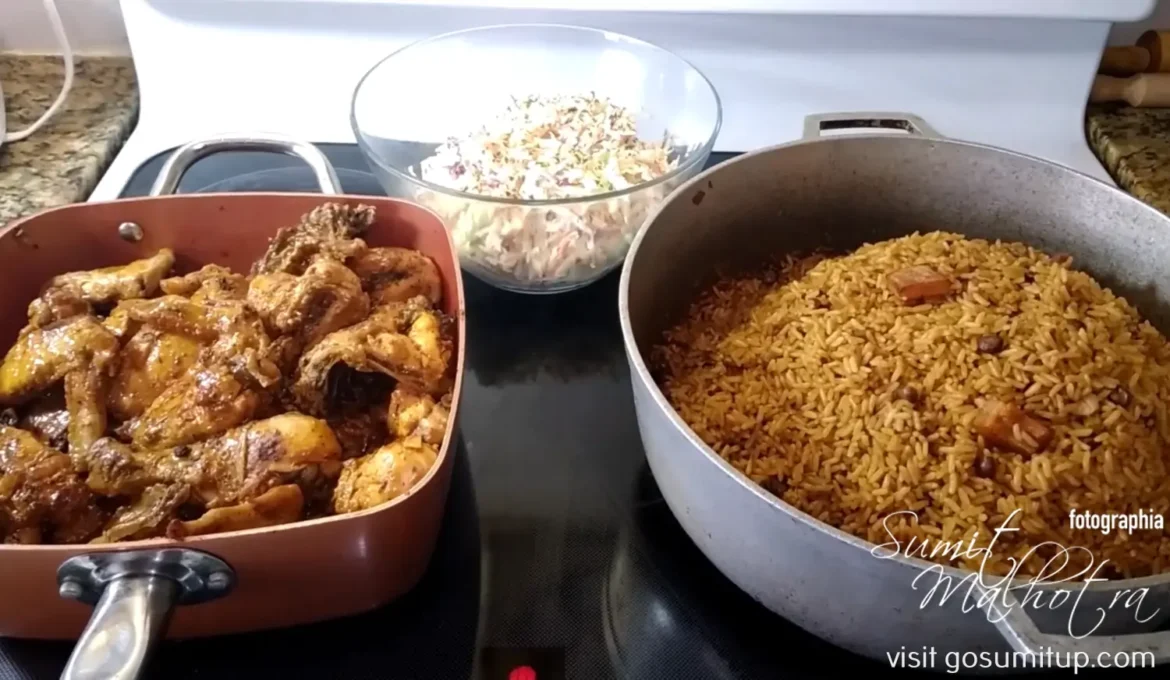
Remove the lid, discard the spent thyme stems, and gently lift the rice using a wide-tined fork to break up any light surface tension, revealing a perfectly fluffy, highly aromatic, and structurally distinct Bahamian Peas and Rice.
How to Make Bahamian Peas & Rice (Part 1)
How to Make Bahamian Peas & Rice (Part 2)
How to Make Bahamian Peas & Rice (Part 3)
To Sumit up Culinary Insight
“Bahamian Peas & Rice is just a simple, rustic side dish made by boiling rice, canned peas, and tomatoes together in seasoned water.”
Bahamian Peas & Rice is also a masterclass in lipid-phase flavor extraction, pectin preservation chemistry, and kinetic emulsification.
The common misconception is that the dish’s distinct mahogany colour and deep flavour come solely from dark spices or heavy additions of tomato paste dissolved in water.
Many assume that the order of ingredients doesn’t matter and that pigeon peas easily turn mushy or disintegrate during the cooking process unless cooked separately.
Disclaimer
If you like this article, you can let us know in the comments below or on social media using #gosumitup and tag @gosumitup on Facebook.
I am always happy to read your feedback and if you liked the dish or if you made the dish. :)
Better still, take a picture and post it on Instagram and tag it as #gosumitup
Connect direct – You can also connect with me directly on my Instagram and Facebook or on Pinterest.
And, keep visiting us for more of such awesomeness. Do bookmark gosumitup.com into your web browser now or simply subscribe to our browser notifications.
If you are a traveller and or a driver, you may find below a list of items that will fortify your travel experience. I use many of these myself for all my trips. They are modestly priced and quite important to keep handy.
- Travel Adapter – https://amzn.to/3A04EJp
- Action Camera – https://amzn.to/4eCSMfF
- Camera Mounts & Accessories – https://amzn.to/4eG4je2
- Dashcam – https://amzn.to/3U2j4Qc
- Neck Rest – https://amzn.to/3Y6ZP98
- Tyre Inflator – https://amzn.to/3U8HpDP
- Storage – https://amzn.to/3XVQFMI
- Car Laptop Charger – https://amzn.to/3XXMVdA
- Vacuum Cleaner Cordless – https://amzn.to/3Yo1hWd
- Air Mattress – https://amzn.to/4015Bvu
- Jack Ratchet Wrench – https://amzn.to/3YkxddO
- Cleaning Cloth Microfibre – https://amzn.to/3NIOFmt
- Rechargeable Solar LED Torch – https://amzn.to/3Yj4h5Y
- Electronics Accessories Organiser – https://amzn.to/3A04XUz
- Pocket Travel Data Transfer Tool – https://amzn.to/3zMTxnc
- Smart Tracker for Keys – https://amzn.to/3BTuIq0
- Camping Cookware Kit – https://amzn.to/3BIy0N3
- Rechargeable Electric Gas Lighter for Stoves – https://amzn.to/4orBsin
- Sleeping Bag – https://amzn.to/3U7v2rP
GoSumItUp is a personal blog written and edited personally by me. All opinions expressed are my own which are honest and have not been influenced by any means.
My reviews are dependent on the visits at the time and revisits will be reviewed again as they may have a different experience or the same.
I am not a food critic nor do I consider myself as one, this platform allows me to write and review my own personal dining experiences, may they be good or bad, delicious or not, all are honest and truthful opinions.
Suppose you disagree or agree with me at any point or do not receive the same experiences as I have. In that case, I do not hold any responsibility as everyone will have their own experiences that they will encounter themselves.
I pay for all meals. However, if any meals or product has been sponsored or compensated or if I was an invited guest, it will be clearly disclosed at the end of each review.
All images on this blog are my own unless stated otherwise. If you wish to use any of my photography for any purposes, please do not use it without any written permission and give credit and/or link back to the website.
If you would like to send a product or any sponsors/endorsements, it may or may not be published and reviewed on the website.
If you wish to send any products or invitations for any media, press or collaborations etc., consider if it is something related to the content of the website and if you see fit, please visit the Contact page for contact details.
Thank You.
Thank you for visiting GoSumItUp! I hope you enjoy the reviews & recipes found at www.gosumitup.com.
This page consists of disclaimers regarding the recipe, its outcome, nutrition, and food handling safety decisions.
The recipes have been cooked and compiled by me for general information only and should not be used to diagnose or treat any medical condition/s.
This information is not intended to diagnose, treat, cure, or prevent any disease as well.
GoSumItUp.com has used all reasonable care in compiling the information but offers no warranty as to its accuracy or its use in any possible form.
Consult a doctor or other health care professional for diagnosis and treatment of any medical condition/s. For more details please refer to our disclosure policy.
The nutritional and health information provided in this article is for educational and informational purposes only and is not intended as medical advice, diagnosis, or treatment.
While herbs & spices have a long history of traditional and clinical use, individual health needs vary.
Always consult with a qualified healthcare professional, registered dietitian, or physician before introducing therapeutic doses of fenugreek into your daily diet, especially if you are pregnant, nursing, taking blood-thinning medications, or managing chronic conditions like diabetes.