Tajine Lham Lahlou – Within Algerian Ramadan Food Traditions, Lham Lahlou Recipe History is unique and explains why do Algerians eat sweet meat and, the Sweet Lamb Tajine Origin.
Iftar Traditions in Algeria are ripe with Maghreb Culinary Myths that explain the Ancient Persian influence on Algerian food and the meaning of Lham Lahlou in Ramadan.
There is a huge Difference between Moroccan and Algerian Tajine, though both signify the Health benefits of dried fruits in Iftar.
As the sun sets over the white-washed hills of Algiers and the call to prayer echoes through the narrow alleys of the Casbah, tables across the country are set for Iftar.
Among the steaming bowls of Chorba (soup) and crispy Bourek, there is one dish that stands out as a sensory paradox: Tajine Lham Lahlou.
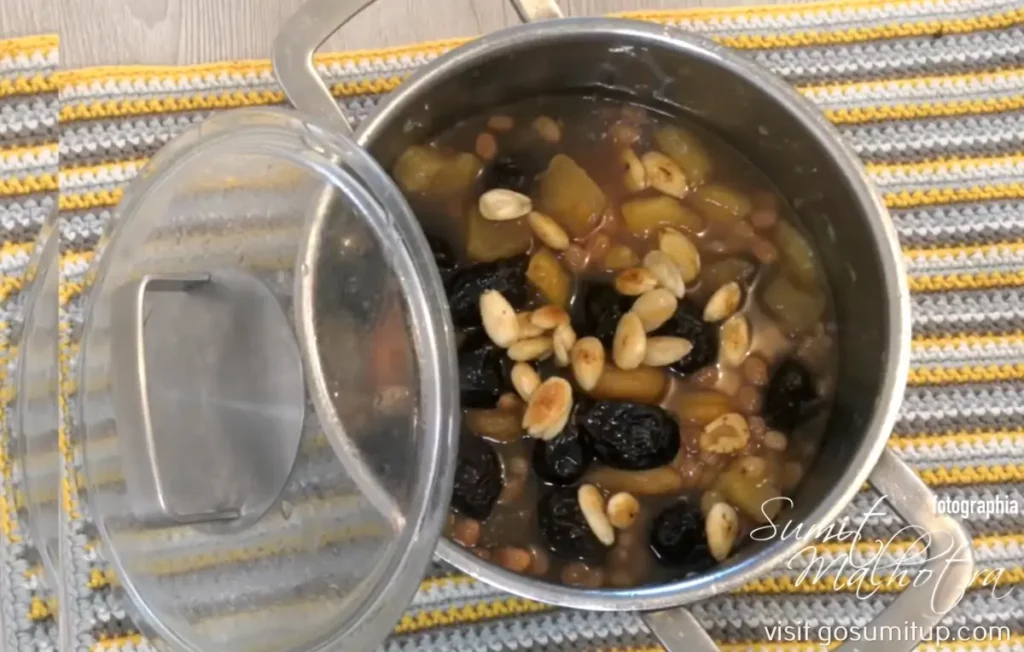
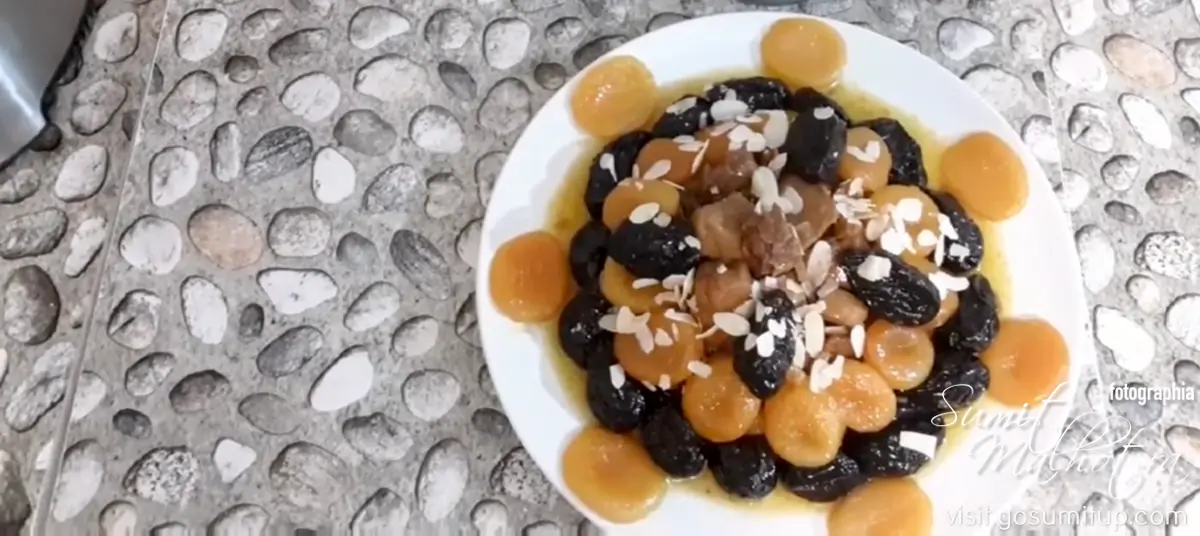
Translating literally to “Sweet Meat,” this dish features tender chunks of lamb braised in a golden, honey-like syrup, studded with prunes, apricots, and toasted almonds, and often scented with orange blossom water.
To the Western palate, or even to neighbouring Mediterranean cultures, the idea of a main course being intensely sweet is a “Culinary Myth” of its own—often mistaken for a dessert or a “failed” savoury dish.
But in Algeria, Lham Lahlou is the most prestigious dish of the Ramadan table.
The myth suggests it was a “Royal Accident” in the kitchens of the Ottoman Beys, but the reality is a story of metabolic science, spiritual symbolism, and the legacy of the Silk Road.
Tajine Lham Lahlou
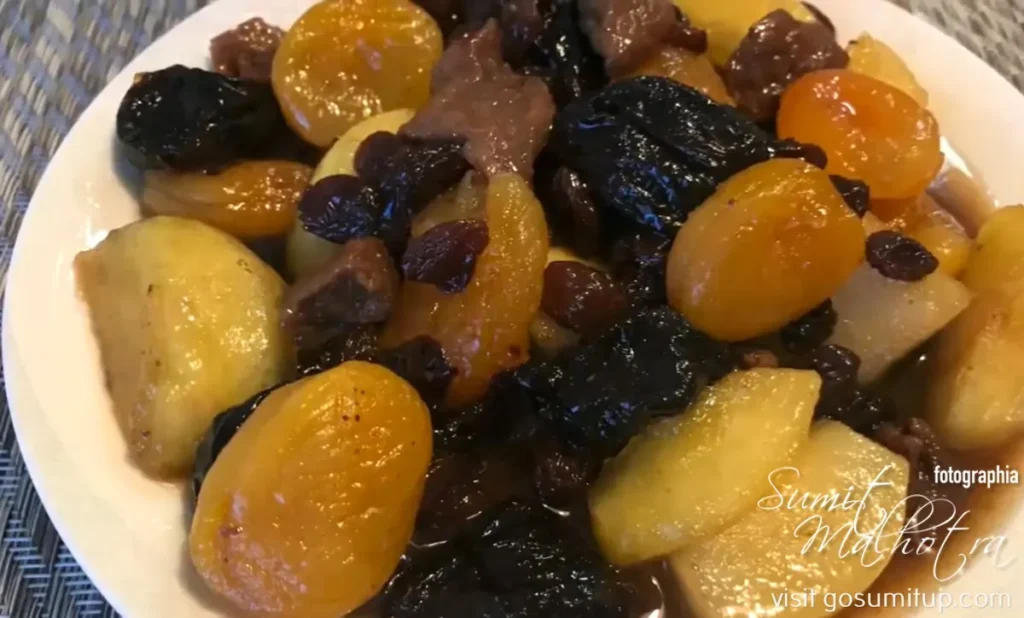
The "Royal Accident" Myth: From Baghdad to Algiers
The case of accidentally knocked a bowl of honey into a savoury lamb stew meant for the Sultan.
A popular folktale in Tlemcen (the “Pearl of the Maghreb”) claims that Lham Lahlou was created when a distracted palace chef accidentally knocked a bowl of honey into a savoury lamb stew meant for the Sultan.
The Sultan supposedly loved the contrast so much that it became a royal staple.
The Reality Check:
Lham Lahlou was no accident. It is a direct descendant of the Persian “Shirin” (Sweet) tradition that travelled through the Islamic Golden Age.
The Baghdad Connection: In the 10th-century Kitab al-Tabikh (the oldest Arabic cookbook), we see recipes for mishmishiya (lamb with apricots).
The Aristocratic Marker: In the medieval world, sugar and dried fruits were incredibly expensive.
Combining them with meat—the ultimate sign of wealth—was a way for the Algerian elite to showcase their status.
The Verdict: This isn’t an accident; it is high-luxury gastronomy that has been refined over a millennium to become a “royal” standard for the common people during holy months.
Tajine Lham Lahlou - Served
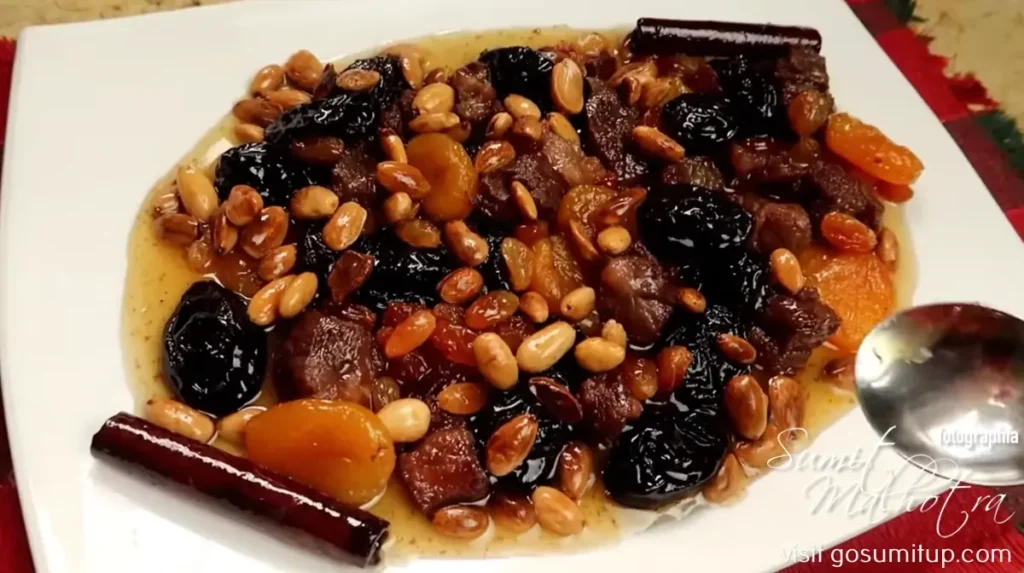
The Ramadan Myth: Is it a Dessert or a Main?
In the Algerian Iftar hierarchy, Lham Lahlou occupies a unique "bridge" position.
One of the biggest misconceptions for travellers is when and how to eat Lham Lahlou.
Because it is sweet, many assume it is a dessert. However, in the Algerian Iftar hierarchy, it occupies a unique “bridge” position.
The Biological “Sumit Up”:
There is a physiological reason why Algerians start their heavy meals with something sweet like Lham Lahlou.
The Glucose Spike: After 15 hours of fasting, the body is in a state of hypoglycemia (low blood sugar).
The “Sweet Meat” Logic: While dates are the traditional way to break the fast, Lham Lahlou provides a sustained energy release.
The natural sugars from the prunes and apricots provide an immediate lift, while the protein from the lamb ensures the “crash” doesn’t happen during evening prayers.
The Digestion Factor: Adding cinnamon and cloves to the syrup isn’t just for flavour; these spices are powerful digestive aids that help the stomach transition back to solid food after a day of rest.
Tajine Lham Lahlou
The Symbolism: "A Sweet Start to a Holy Month"
Lham Lahlou is often called Marka Helwa in some regions. It is a "Good Omen" dish.
In Algeria, Lham Lahlou is almost always the very first meal served on the first night of Ramadan.
There is a deeply held cultural myth that if your first meal of the month is “Lahlou” (Sweet), your entire month—and your relationships—will be “sweet” and free of bitterness.
The Spiritual Ritual: This is why the dish is often called Marka Helwa in some regions. It is a “Good Omen” dish.
The Saffron Glow: The golden color of the sauce (achieved through saffron or turmeric) represents light and prosperity.
The Orange Blossom Scent: The final splash of Mazhar (orange blossom water) is thought to “purify” the palate and the spirit.
The Unbroken Prune: A true master of Lham Lahlou must serve the prunes whole and unbroken.
A broken prune is seen as a sign of a “bruised” month, whereas a plump, shiny prune represents a full and healthy life.
Tajine Lham Lahlou without Meat
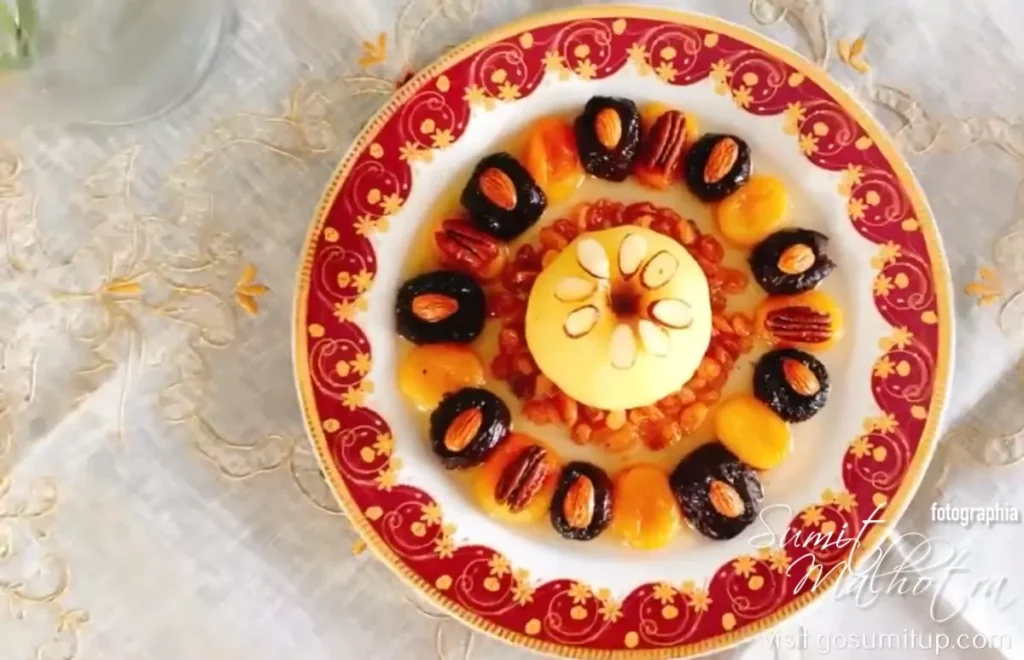
The "Garm and Sard" (Hot and Cold) Balance
Lham Lahlou is a masterpiece of thermal equilibrium.
Applying our signature “Garm and Sard” analysis, we see that Lham Lahlou is a masterpiece of thermal equilibrium.
Lamb (Garm/Hot): Provides the heat and energy needed for the long nights of prayer.
Prunes and Apricots (Sard/Cold/Moist): These are considered “cooling” and “hydrating” elements.
In the dry climate of the Algerian highlands, eating dried fruits rehydrated in syrup helps the body retain moisture, countering the dehydration of the fast.
Tajine Lham Lahlou - Fruits
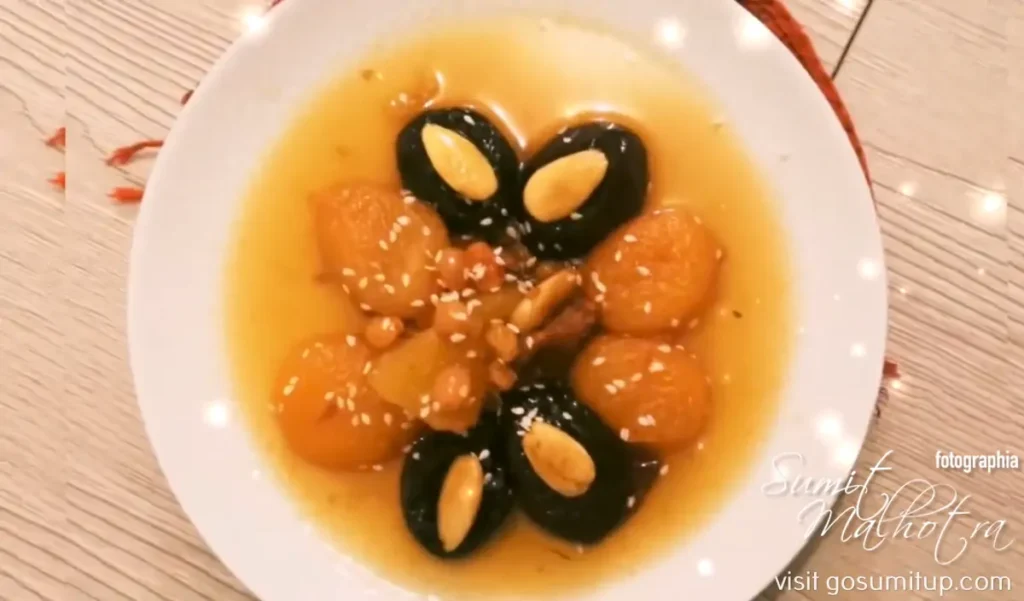
Tajine Lham Lahlou stands out as a sensory paradox
Tajine Lham Lahlou deliberately breaks the "rules" of modern savoury cooking
Tajine Lham Lahlou stands out as a sensory paradox because it deliberately breaks the “rules” of modern savoury cooking, creating a tension between what the eye sees and what the palate experiences.
Here are the four pillars that create this culinary paradox:
1. The Visual vs. Gustatory Conflict
When you look at Lham Lahlou, your brain identifies it as a savoury main course. You see hearty chunks of braised lamb, a rich sauce, and toasted nuts.
In most global cuisines, this visual setup signals salt, garlic, and onions.
The Paradox: Upon the first bite, the palate is hit not with salt, but with an intense, honeyed sweetness.
It feels like eating a dessert that has the “body” of a Sunday roast. This “bait-and-switch” for the senses is the hallmark of the dish.
2. The Texture: The “Velvet” and the “Fibre”
The dish plays with contrasting mouthfeel in a way that is rare in Western cooking:
The Lamb: It is braised until “fork-tender,” meaning it has a fibrous, melting texture.
The Syrup: The sauce is reduced until it reaches a syrupy, velvety consistency that coats the tongue.
The Crunch: The addition of blanched, fried almonds provides a sudden, sharp snap against the softness of the meat and the jam-like quality of the prunes.
3. The Aroma: Floral Meats
Usually, meat dishes smell of roasted fat, browned onions, or earthy spices like cumin. Lham Lahlou is an aromatic outlier.
The Scent: It is dominated by Orange Blossom Water (Mazhar) and Cinnamon.
The Paradox: These are scents we usually associate with bakeries or perfumeries. To smell a floral, “spring garden” aroma coming off a plate of lamb creates a sensory cognitive dissonance that is both confusing and alluring to the uninitiated.
4. The “Garm and Sard” (Hot and Cold) Temperature Paradox
While the dish is served physically hot, it is spiritually and medicinally considered cooling (Sard) in Algerian food philosophy.
The Paradox: Eating a hot, heavy meat dish during the peak of North African heat should, in theory, make you feel lethargic.
However, the rehydrated prunes and the honey base are intended to provide a “cooling” sensation to the internal organs after a long day of fasting (Ramadan), balancing the “heat” of the lamb.
Tajine Lham Lahlou - Ready for Boiling
A "Sumit Up" Culinary Insight
Lham Lahlou is a dish that proves that the best recipes are those that feed our biology and our mythology simultaneously.
Lham Lahlou is the ultimate reminder that taste is not just about the tongue; it is about the intent.
In Algeria, you don’t eat sweet meat because you want “sugar”; you eat it because you are inviting “sweetness” into your soul for the thirty days ahead.
It is a dish that proves that the best recipes are those that feed our biology and our mythology simultaneously.
Tajine Lham Lahlou - Ready
If you are a traveller and or just love to drive, you may find below a list of items that will fortify & thus enrich your travel experience.
I use many of these myself for my trips. They are modestly priced and quite important to keep handy.
- Travel Adapter – https://amzn.to/3A04EJp
- Action Camera – https://amzn.to/4eCSMfF
- Camera Mounts & Accessories – https://amzn.to/4eG4je2
- Dashcam – https://amzn.to/3U2j4Qc
- Neck Rest – https://amzn.to/3Y6ZP98
- Tyre Inflator – https://amzn.to/3U8HpDP
- Storage – https://amzn.to/3XVQFMI
- Car Laptop Charger – https://amzn.to/3XXMVdA
- Vacuum Cleaner Cordless – https://amzn.to/3Yo1hWd
- Air Mattress – https://amzn.to/4015Bvu
- Jack Ratchet Wrench – https://amzn.to/3YkxddO
- Cleaning Cloth Microfibre – https://amzn.to/3NIOFmt
- Rechargeable Solar LED Torch – https://amzn.to/3Yj4h5Y
- Electronics Accessories Organiser – https://amzn.to/3A04XUz
- Pocket Travel Data Transfer Tool – https://amzn.to/3zMTxnc
- Smart Tracker for Keys – https://amzn.to/3BTuIq0
- Camping Cookware Kit – https://amzn.to/3BIy0N3
- Sleeping Bag – https://amzn.to/3U7v2rP
GoSumItUp is a personal blog written and edited personally by me. All opinions expressed are my own, which are honest and have not been influenced by any means.
My reviews are dependent on the visits at the time, and revisits will be reviewed again as they may have a different experience or the same.
I am not a food critic nor do I consider myself as one; this platform allows me to write and review my own personal dining experiences, whether good or bad, delicious or not, all of which are honest and truthful opinions.
Suppose you disagree or agree with me at any point, or do not receive the same experiences as I have. In that case, I do not hold any responsibility as everyone will have their own experiences that they will encounter themselves.
I pay for all meals. However, if any meals or products have been sponsored or compensated or if I was a guest, it will be clearly disclosed at the end of each review.
All images on this blog are my own unless stated otherwise. If you wish to use any of my photography for any purposes, please do not use it without any written permission and give credit and/or link back to the website.
If you would like to send a product or any sponsors/endorsements, it may or may not be published and reviewed on the website.
If you wish to send any products or invitations for any media, press or collaborations, etc., consider if it is something related to the content of the website, and if you see fit, please visit the Contact page for contact details.
Thank You.
Thank you for visiting GoSumItUp! I hope you enjoy the reviews & recipes found at www.gosumitup.com.
This page consists of disclaimers regarding the recipe, its outcome, nutrition, and food handling safety decisions.
The recipes have been cooked and compiled by me for general information only and should not be used to diagnose or treat any medical condition/s.
This information is not intended to diagnose, treat, cure, or prevent any disease as well.
GoSumItUp.com has used all reasonable care in compiling the information but offers no warranty as to its accuracy or its use in any possible form.
Consult a doctor or other health care professional for diagnosis and treatment of any medical condition/s. For more details please refer to our disclosure policy.
If you like this article, you can let us know in the comments below or on social media using #gosumitup and tag @gosumitup on Facebook.
I am always happy to read your feedback, and if you liked the dish or if you made the dish. :)
Better still, take a picture and post it on Instagram and tag it as #gosumitup
Connect directly – You can also connect with me directly on my Instagram, Facebook or Pinterest.
And, keep visiting us for more of such awesomeness. Bookmark gosumitup.com into your web browser now or simply subscribe to our browser notifications.
