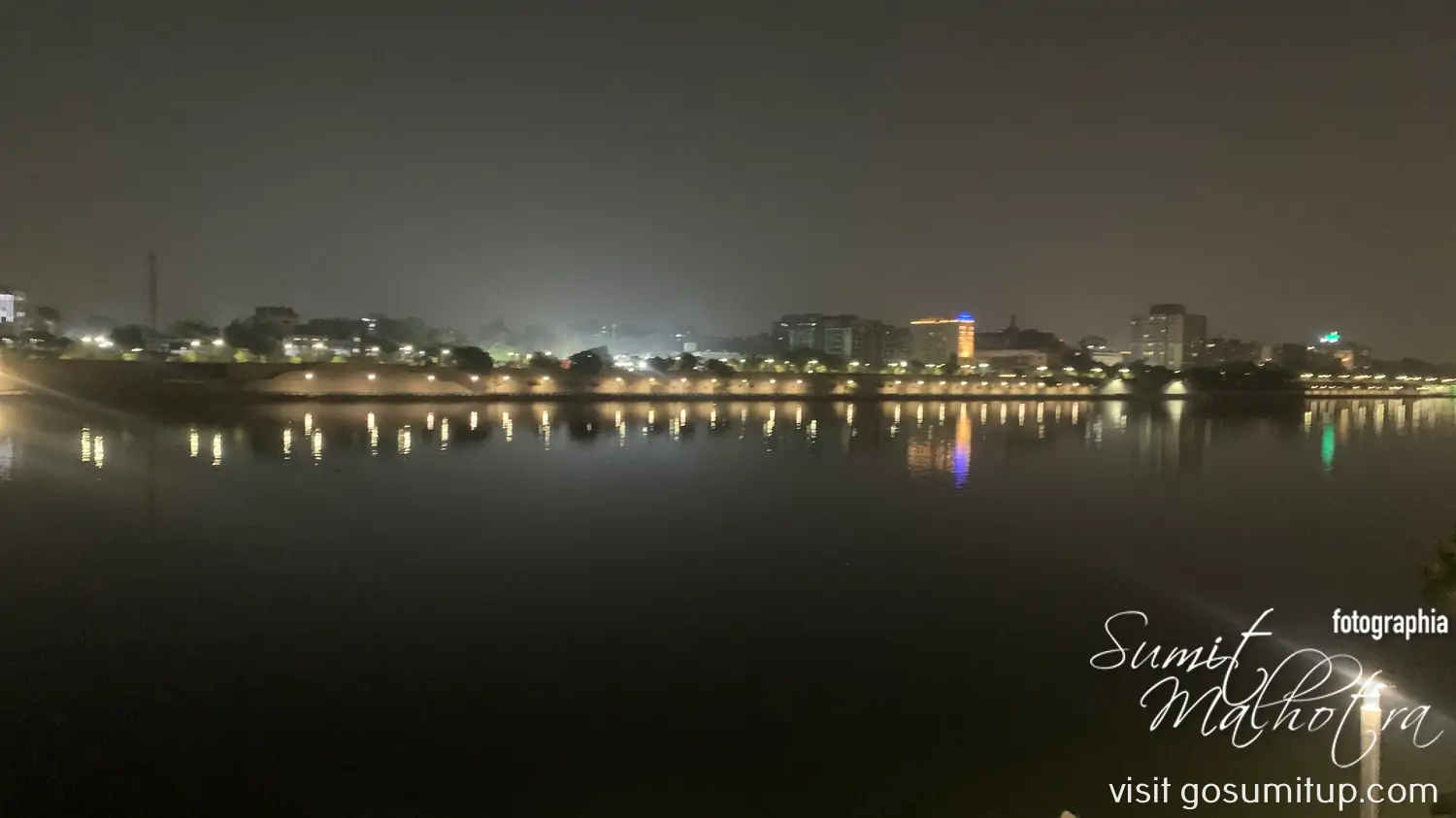
Sabarmati Riverfront: Guide, History & Entertainment
The Sabarmati Riverfront project stands as one of India's most ambitious and transformative urban renewal initiatives.
Sabarmati Riverfront Ahmedabad: History, Facilities, Impact & Complete Guide
Read more about Sabarmati Riverfront, Sabarmati Riverfront Ahmedabad, Ahmedabad tourism, Atal Bridge Ahmedabad, Sabarmati Riverfront Flower Park, urban renewal India, Gujarat travel, Ahmedabad sightseeing, urban waterfront development, public parks India, riverfront promenade, Gujarat architecture, weekend getaways Ahmedabad, eco-tourism Gujarat, city planning India, Akshar River Cruise
Explore the history, objectives, facilities, and urban impact of the Sabarmati Riverfront in Ahmedabad, including Atal Bridge, Flower Park, and tourism highlights.
The Sabarmati Riverfront project stands as one of India’s most ambitious and transformative urban renewal initiatives.
Stretching along the Sabarmati River as it flows through the heart of Ahmedabad, Gujarat, this multi-phase development has fundamentally reshaped the city’s geographic identity, ecological health, and public life.
What was once an ecologically degraded, dry, and neglected riverbed has been engineered into a vibrant socio-cultural corridor and economic artery.
When was the Sabarmati Riverfront Built?
The origination started with a visionary proposal during the early 1960s to reclaim land and regularise the river's flow.
The conceptual roots of the Sabarmati Riverfront project date back decades, beginning with a visionary proposal in the early 1960s to reclaim land and regularise the river’s flow.
However, tangible momentum did not materialise until the late 1990s.
In May 1997, the Ahmedabad Municipal Corporation (AMC) established the Sabarmati Riverfront Development Corporation Limited (SRFDCL) as a wholly owned special-purpose vehicle to execute the plan.
Physical construction commenced in the mid-2000s after extensive legal, environmental, and engineering clearances were resolved.
Phase I of the project broke ground around 2005, focusing on land reclamation, construction of retaining walls, interceptor sewers to stop untreated sewage from flowing into the river, and the creation of lower and upper promenades.
Major milestones, including the opening of major parks, promenade segments, and subsequent pedestrian connectors like the Atal Bridge, rolled out progressively through the 2010s and early 2020s, with continuous expansions and amenity additions remaining ongoing.
Why was the Sabarmati Riverfront Built?
Built to counter challenges of critical convergence of environmental degradation, urban decay, and flood control.
The impetus behind the Sabarmati Riverfront project stemmed from a critical convergence of environmental degradation, urban decay, and flood control challenges:
- Flood Mitigation & River Regulation: Historically, the Sabarmati was a seasonal river prone to heavy monsoon floods that threatened surrounding urban settlements, alternating with long dry spells where the riverbed became a vast expanse of cracked earth, garbage dumps, and unauthorised shanties. The project aimed to confine the river to a stable, permanent channel 275 metres wide between diaphragm walls, eliminating erosion and safeguarding the city against floods.
- Environmental Rehabilitation: Decades of unchecked industrial and municipal discharge had turned the river into an open sewer. Building the riverfront was necessary to construct underground interceptor sewers on both banks to divert wastewater to treatment plants, thereby cleaning up the water body.
- Public Space Deficit: Ahmedabad faced a severe shortage of organised, accessible green open spaces and recreational grounds for its rapidly growing population. Reclaiming the riverbed provided hundreds of acres of prime urban land for public use.
- Urban Renewal and Socio-Economic Integration: For centuries, Ahmedabad had turned its back on the Sabarmati, treating its banks as the city’s backyard. The project sought to reconnect the eastern and western halves of the city, integrating disparate neighbourhoods and catalysing modern urban development.
Does Sabarmati Riverfront Meet All its Objectives?
It has a mixed yet largely successful scorecard, characterised by major triumphs
Evaluating the project against its original goals reveals a mixed yet largely successful scorecard, characterised by major triumphs alongside ongoing operational challenges:
- Flood Control and Water Management: The engineering infrastructure—including low-level retaining walls, slurry walls, and water retention via the Narmada canal feeder pipeline—has successfully stabilised the riverbanks and maintained a constant, aesthetic water level year-round, fully meeting flood mitigation targets.
- Environmental Cleanup: While water quality has improved immensely compared to its pre-project state, maintaining pristine water standards remains a continuous battle. During non-monsoon months, the water is sustained artificially via the Narmada canal, and occasional pollution influxes still require rigorous monitoring.
- Social Equity and Slum Rehabilitation: One of the most scrutinised aspects of the project was the displacement of thousands of informal slum dwellers and dhobis (washermen) who previously occupied the riverbed. While the authorities constructed rehabilitation housing on the city’s outskirts, critics and urban planners have argued that the displacement disrupted informal economies and marginalised vulnerable communities, even as it created world-class spaces for middle and upper-income citizens.
- Financial Self-Sustainability: Uniquely, the project aimed to finance its construction costs primarily through the commercial and residential real estate development of a small fraction (approximately 14%) of the reclaimed land. Land sales have generated significant revenue, though broader macroeconomic cycles have influenced the pace of commercial monetisation.
How Has Sabarmati Riverfront Impacted Local Residents?
It has drastically transformed the daily lives and recreational habits.
The Sabarmati Riverfront has drastically transformed the daily lives and recreational habits of Ahmedabad’s residents:
- Enhanced Quality of Life: Citizens finally have access to kilometres of clean, safe, and vehicle-free promenades for morning walks, jogging, cycling, and family outings. The cooler microclimate near the water provides a much-needed respite from urban heat.
- Community and Cultural Hub: The sprawling lawns, open-air plazas, and dedicated event spaces serve as the primary venue for major city festivals, marathons, cultural fairs, and national celebrations, fostering a unified civic identity.
- Health and Wellness: The accessible pedestrian and cycling infrastructure has visibly encouraged active, outdoor lifestyles across all age groups, from senior citizens practising yoga at dawn to youth utilising sports zones.
How Has Sabarmati Riverfront Impacted Tourism?
The development has firmly placed Ahmedabad on the global tourism map
The development has firmly placed Ahmedabad on the global tourism map, shifting its perception from a purely industrial textile city to a modern, progressive urban destination:
- Landmark Status: The riverfront, reinforced by architectural icons like the pedestrian-only Atal Bridge and the expansive Flower Park, acts as a primary magnet for both domestic and international tourists visiting Gujarat.
- Night-Time Economy and Events: Elaborate architectural lighting along the bridges and promenades, coupled with floating river cruises and food hubs, has stimulated a vibrant evening economy, encouraging tourists to extend their stay in the city.
- Global Recognition: The project has garnered international acclaim, frequently cited in global urban planning forums as a benchmark for successful riverfront revitalisation in the developing world.
What Facilities Are Available at the Sabarmati Riverfront?
The riverfront is equipped with a comprehensive suite of modern public amenities and infrastructure:
- Promenades & Walkways: Multi-level pedestrian and cycling tracks running contiguously along both the eastern and western banks.
- Parks and Gardens: Extensively landscaped public spaces, most notably the Sabarmati Riverfront Flower Park, which hosts seasonal horticultural exhibitions and floral displays.
- Pedestrian Connectors: The iconic Atal Bridge, which connects the banks specifically for walkers and cyclists while offering panoramic views.
- Recreational and Water Activities: Facilities for boating, floating restaurants (Akshar Cruise), and adventure attractions.
- Public Conveniences: Well-maintained parking zones, public restrooms, security surveillance, signage, and refreshments.
Akshar River Cruise - Details, Timing, and Pricing
About Akshar River Cruise - A luxury floating restaurant and sightseeing vessel
The Akshar River Cruise is a luxury floating restaurant and sightseeing vessel operating on the Sabarmati Riverfront in Ahmedabad, Gujarat.
Boarding from the western promenade near Paldi, it offers a scenic dining and leisure experience that combines panoramic views of the city’s illuminated skyline with live entertainment.
- Route & Sightseeing: Typically lasting around 90 minutes, the cruise sails along a picturesque stretch between the Atal Bridge and the Dadhichi Bridge, passing notable landmarks such as the Sardar, Nehru, and Gandhi bridges.
- Dining Experience: The double-decker vessel features a climate-controlled lower dining deck and an open-air upper deck. It serves pure vegetarian multi-cuisine menus—including Gujarati, North Indian, and Jain options—alongside mocktails.
- Entertainment & Slots: Guests are treated to live music on weekends, DJ sets, and occasional cultural performances. Operations run across multiple daily time slots, including breakfast (“Morning Mantra”), lunch, afternoon happy hours, evening dinner cruises, and late-night café sessions.
Here are the ticket prices, daily time slots, and inclusions for the Akshar River Cruise in Ahmedabad:
Daily Time Slots & Ticket Prices for Akshar River Cruise
(Note: Prices listed below exclude applicable GST—typically 5%—unless stated otherwise. Children aged 4 to 7 are charged a reduced child rate.)
- Breakfast (“Morning Mantra”):
- Timing: 7:30 AM – 9:00 AM
- Price: Rs. 499 per person + GST
- Lunch Cruise:
- Timing: 12:00 PM – 1:15 PM (listed as 12:30 PM on select schedules)
- Price: Rs. 1,000 per person + GST
- Afternoon Happy Hours:
- Timing: Multiple 45-minute to 1-hour slots between 2:00 PM and 6:15 PM (specifically 2:00 PM, 3:00 PM, 4:30 PM – 5:15 PM, and 5:30 PM – 6:15 PM)
- Price: Rs. 499 per person + GST
- High Tea (Group Bookings Only):
- Price: Rs. 700 per person (inclusive of GST)
- Dinner Cruises (2 Slots):
- Timing: Slot 1: 7:00 PM – 8:30 PM | Slot 2: 9:00 PM – 10:30 PM
- Price: Rs. 1,600 per person + GST
- Late-Night DJ Party / Riverside Café:
- Timing: 11:00 PM – 2:30 AM
- Price: Rs. 499 per person + GST (Café entry) | Rs. 1,199 per person (Late-night DJ party package)
What’s Included
- The Cruise Ride: A scenic voyage along the Sabarmati River between the Atal Bridge and the Dadhichi Bridge (approximately 75–90 minutes for meal slots, and 45 minutes for happy hour slots).
- Food & Beverages (Slot-Dependent):
- Lunch & Dinner Slots: Access to an unlimited pure-vegetarian multi-cuisine buffet (30+ items featuring Indian, Italian, Oriental, and Jain options) along with welcome drinks and mocktails.
- Happy Hours: A curated selection of light snacks and mocktails.
- Late-Night DJ Party: Unlimited snacks, pizzas, and mocktails.
- Entertainment & Amenities: Live music on weekends, background/DJ music on weekdays, cultural performances during festivals, access to both the air-conditioned lower deck and open-air upper deck, and designated selfie points.
Practical Booking Notes
- Boarding Point: Sabarmati Riverfront Walkway West, near Paldi (Kocharab), Ahmedabad.
- Arrival & ID: Passengers are advised to arrive 30 to 40 minutes prior to departure for security orientation, as there is a 10–15 minute walk from the parking area to the jetty. Carrying a valid government-issued photo ID is mandatory for boarding.
Direct Booking: Tickets can be reserved directly via the official website (aksharrivercruise.com).
Disclaimer
If you like this article, you can let us know in the comments below or on social media using #gosumitup and tag @gosumitup on Facebook.
I am always happy to read your feedback, whether you liked the dish or made it. :)
Better still, take a picture and post it on Instagram and tag it as #gosumitup
Connect directly – You can also connect with me on Instagram, Facebook, or Pinterest.
And, keep visiting us for more of such awesomeness. Do bookmark gosumitup.com into your web browser now or simply subscribe to our browser notifications.
If you are an ardent traveller, you may find below a list of items that will fortify your travel experience. I use many of these myself for all my trips or roadtrips. They are modestly priced and quite important to keep handy for your safety.
- Travel Adapter – https://amzn.to/3A04EJp
- Action Camera – https://amzn.to/4eCSMfF
- Camera Mounts & Accessories – https://amzn.to/4eG4je2
- Dashcam – https://amzn.to/3U2j4Qc
- Neck Rest – https://amzn.to/3Y6ZP98
- Tyre Inflator – https://amzn.to/3U8HpDP
- Storage – https://amzn.to/3XVQFMI
- Car Laptop Charger – https://amzn.to/3XXMVdA
- Vacuum Cleaner Cordless – https://amzn.to/3Yo1hWd
- Air Mattress – https://amzn.to/4015Bvu
- Jack Ratchet Wrench – https://amzn.to/3YkxddO
- Cleaning Cloth Microfibre – https://amzn.to/3NIOFmt
- Rechargeable Solar LED Torch – https://amzn.to/3Yj4h5Y
- Electronics Accessories Organiser – https://amzn.to/3A04XUz
- Pocket Travel Data Transfer Tool – https://amzn.to/3zMTxnc
- Smart Tracker for Keys – https://amzn.to/3BTuIq0
- Camping Cookware Kit – https://amzn.to/3BIy0N3
- Rechargeable Electric Gas Lighter for Stoves – https://amzn.to/4orBsin
- Sleeping Bag – https://amzn.to/3U7v2rP
GoSumItUp is a personal blog written and edited personally by me. All opinions expressed are my own which are honest and have not been influenced by any means.
My reviews are dependent on the visits at the time and revisits will be reviewed again as they may have a different experience or the same.
I am not a food critic nor do I consider myself as one, this platform allows me to write and review my own personal dining experiences, may they be good or bad, delicious or not, all are honest and truthful opinions.
Suppose you disagree or agree with me at any point or do not receive the same experiences as I have. In that case, I do not hold any responsibility as everyone will have their own experiences that they will encounter themselves.
I pay for all meals. However, if any meals or product has been sponsored or compensated or if I was an invited guest, it will be clearly disclosed at the end of each review.
All images on this blog are my own unless stated otherwise. If you wish to use any of my photography for any purposes, please do not use it without any written permission and give credit and/or link back to the website.
If you would like to send a product or any sponsors/endorsements, it may or may not be published and reviewed on the website.
If you wish to send any products or invitations for any media, press or collaborations etc., consider if it is something related to the content of the website and if you see fit, please visit the Contact page for contact details.
Thank You.
Thank you for visiting GoSumItUp! I hope you enjoy the reviews & recipes found at www.gosumitup.com.
This page consists of disclaimers regarding the recipe, its outcome, nutrition, and food handling safety decisions.
The recipes have been cooked and compiled by me for general information only and should not be used to diagnose or treat any medical condition/s.
This information is not intended to diagnose, treat, cure, or prevent any disease as well.
GoSumItUp.com has used all reasonable care in compiling the information but offers no warranty as to its accuracy or its use in any possible form.
Consult a doctor or other health care professional for diagnosis and treatment of any medical condition/s. For more details please refer to our disclosure policy.
The nutritional and health information provided in this article is for educational and informational purposes only and is not intended as medical advice, diagnosis, or treatment.
While herbs have a long history of traditional and clinical use, individual health needs vary.
Always consult with a qualified healthcare professional, registered dietitian, or physician before introducing therapeutic doses of fenugreek into your daily diet, especially if you are pregnant, nursing, taking blood-thinning medications, or managing chronic conditions like diabetes.
