Read about Sheki Piti Soup Science, Azerbaijani Clay Pot Cooking, Piti Gabi Thermodynamics, Traditional Azerbaijani Stew,
Learn about Infrared Heat Radiance, Tail Fat Emulsification, Unglazed Clay Porosity, and Slow Simmer Broth Clarity
Find out more about Azerbaijani Cuisine, Sheki Piti, Clay Pot Cooking, Culinary Science, Food History, Slow Cooking, and Kitchen Myths.
If you ever find yourself wandering through the cobblestone streets of Sheki—a historic Silk Road city nestled against the green slopes of the Caucasus Mountains—there is one culinary ritual you cannot miss.
You must walk into a traditional cellar restaurant and order a serving of Piti.
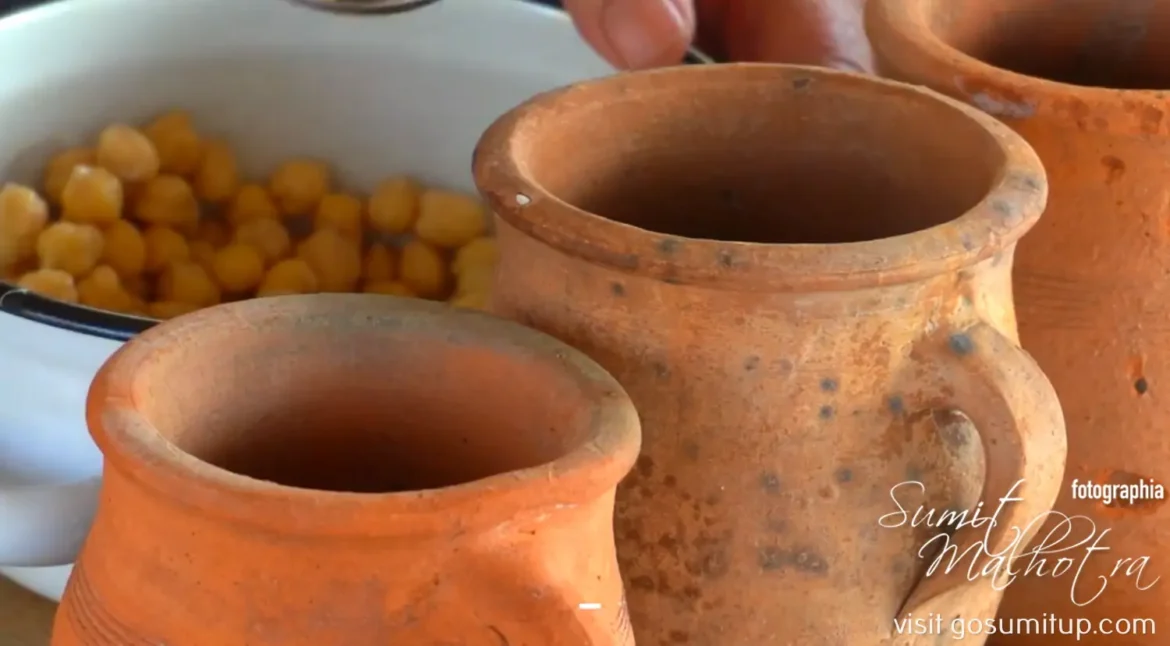
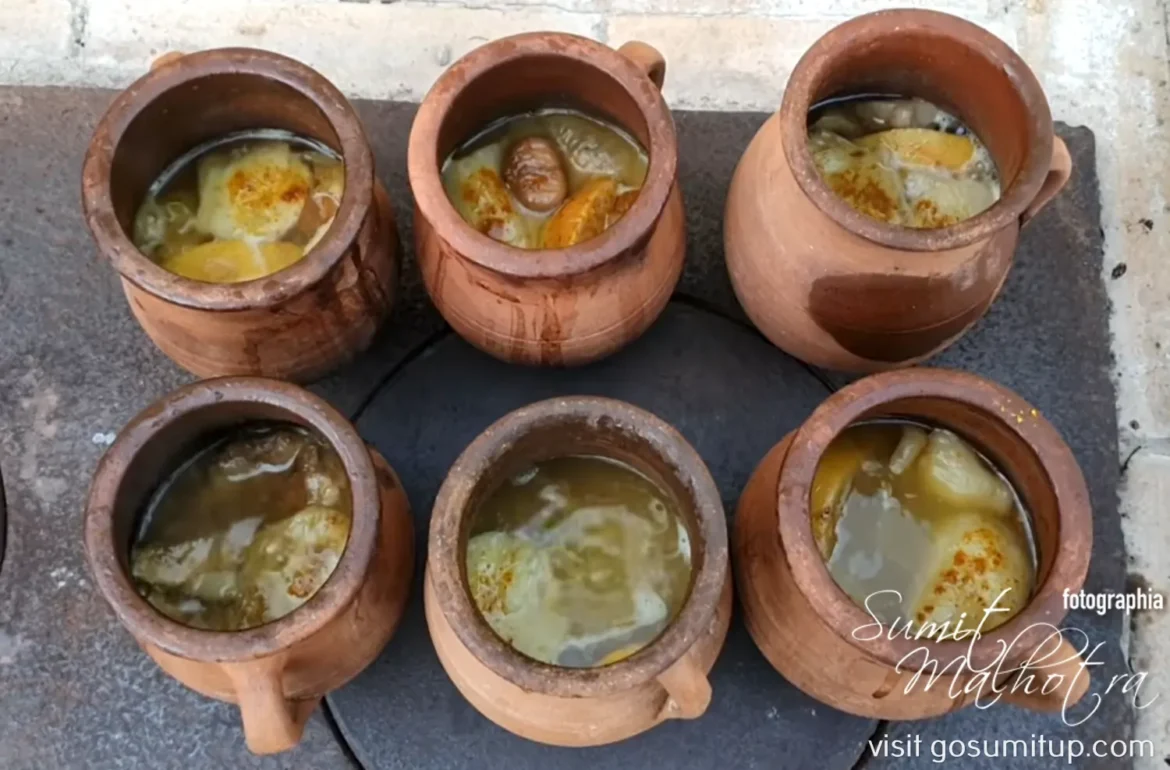
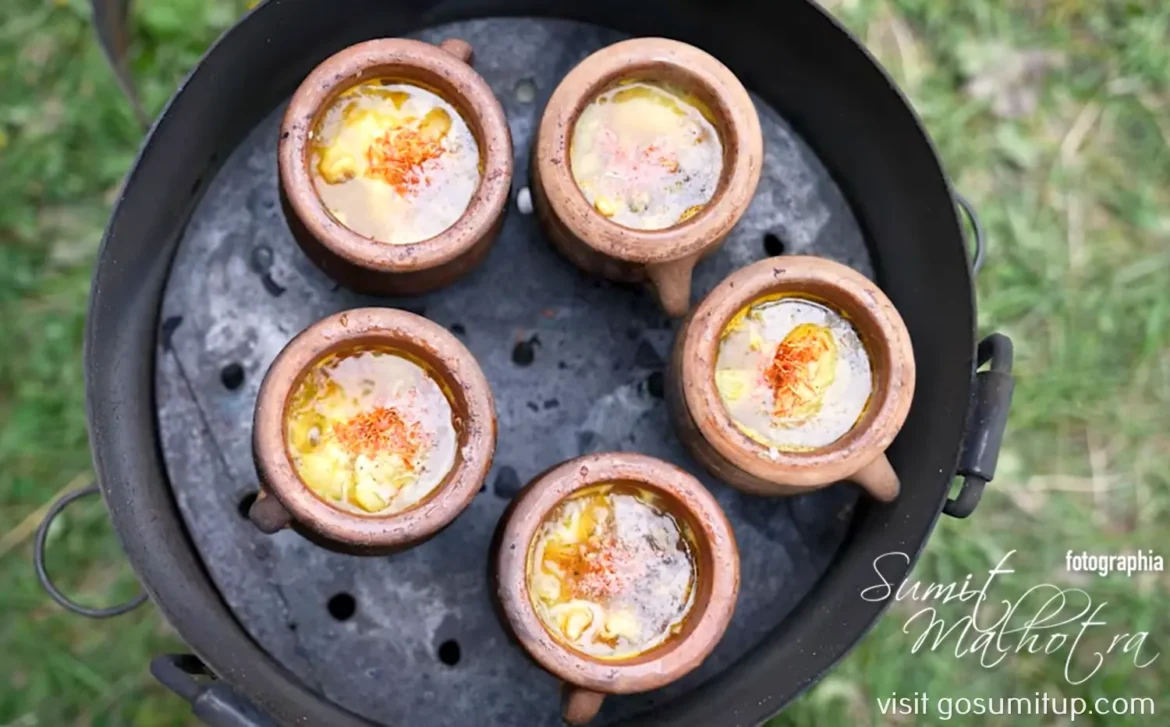
When it arrives, it won’t look like any ordinary stew. It is served in an individual, unglazed earthenware pot called a piti-gabi.
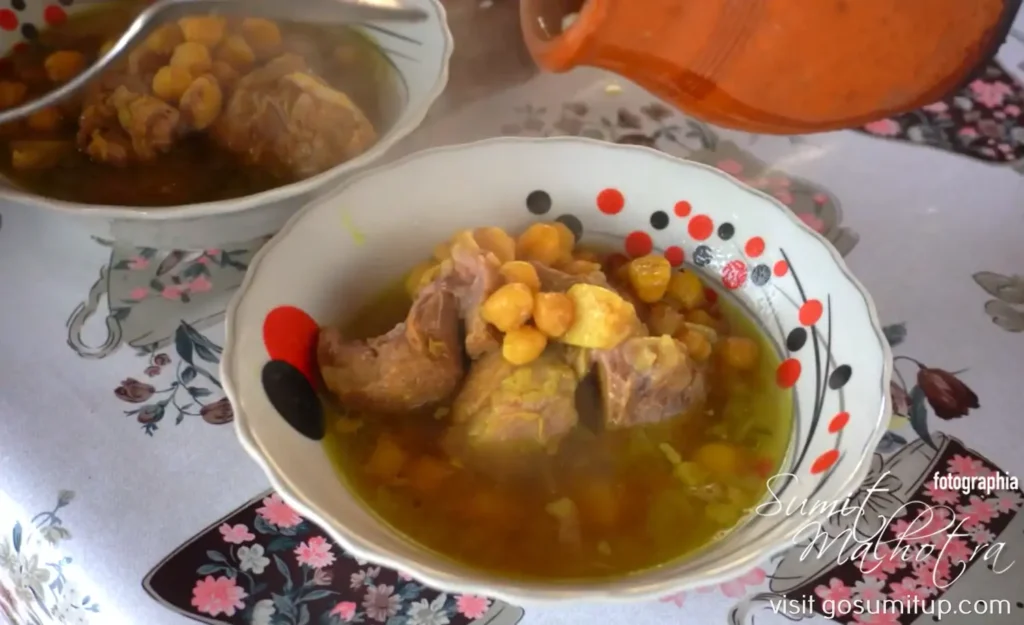
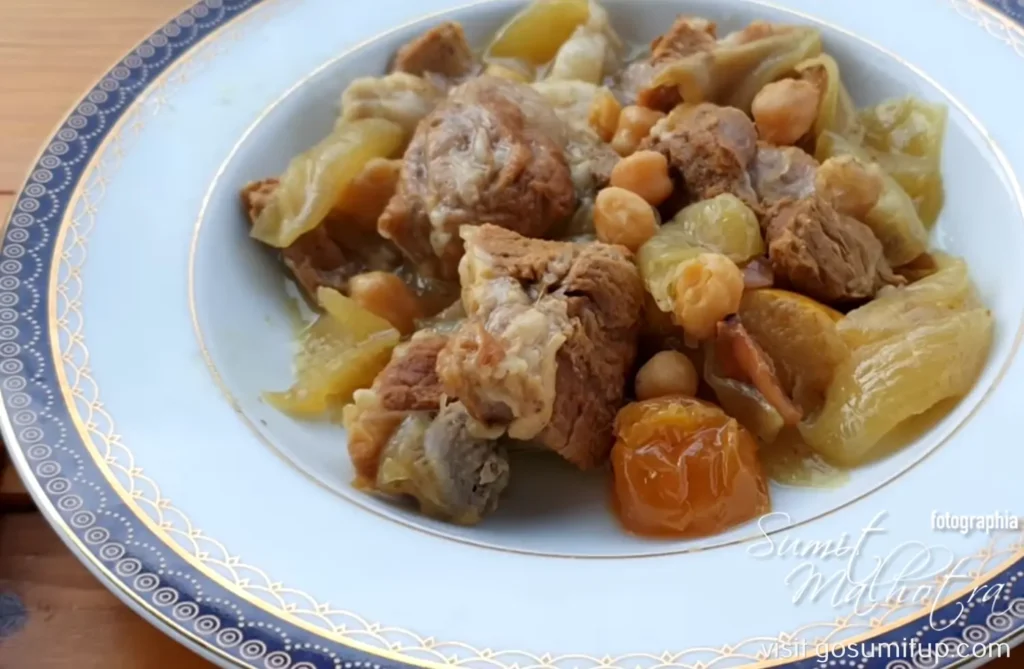
The broth is clear and golden, shimmering with a layer of rich fat, burying tender chunks of lamb, velvety chestnuts, and plump chickpeas.
Sheki Piti Decanted & Served
If you ask the local chefs why they don’t simply cook this legendary dish in a modern, high-capacity stainless steel pot to save time, they will shake their heads in disapproval.
Local folklore fiercely dictates that metal pots “steal” the delicate sweetness of the chestnuts and turn the lamb fat aggressive and greasy.
According to tradition, true Piti can only breathe, develop, and achieve its royal status inside the porous, earthy walls of a clay pot.
While this sounds like a romantic tale spun by local potters to preserve their ancient trade, the reality inside the kitchen reveals something spectacular.
The Sheki Piti clay pot secret isn’t superstition—it is a masterclass in infrared thermodynamics and lipid chemistry.
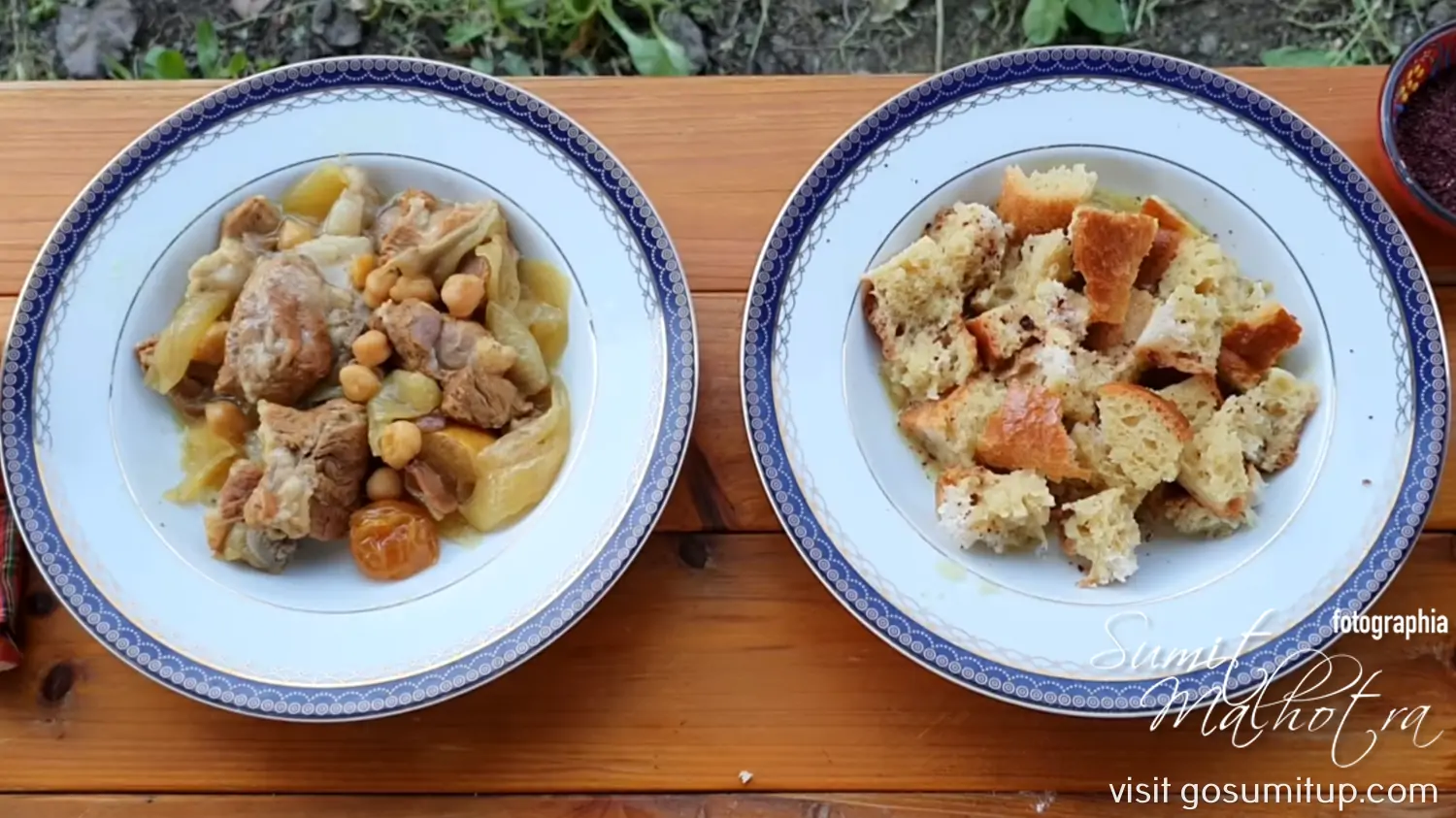
Sheki Piti Plated
The Ritual of the Two-Act Feast
To truly appreciate why the vessel matters, you have to understand the unique way Piti is eaten.
It is a single dish served as a two-course meal, entirely orchestrated tableside by the diner:
Act One: You tear pieces of traditional crusty bread into a deep bowl, sprinkle them with purple sumac, and gently pour the clear, golden fat-infused broth from the clay pot over the bread.
You eat this deeply comforting, rich soup first.
Act Two: You take a heavy wooden pestle and mash the remaining lamb, chickpeas, chestnuts, and tail fat directly inside the clay pot into a thick, savoury paste, eating it as a hearty second course.
Because the fat and broth are celebrated so cleanly in the first act, there is absolutely nowhere for a chef to hide.
If the broth is muddy, heavy, or split, the meal is ruined. This is exactly where the ancient engineering of the unglazed clay pot steps in.
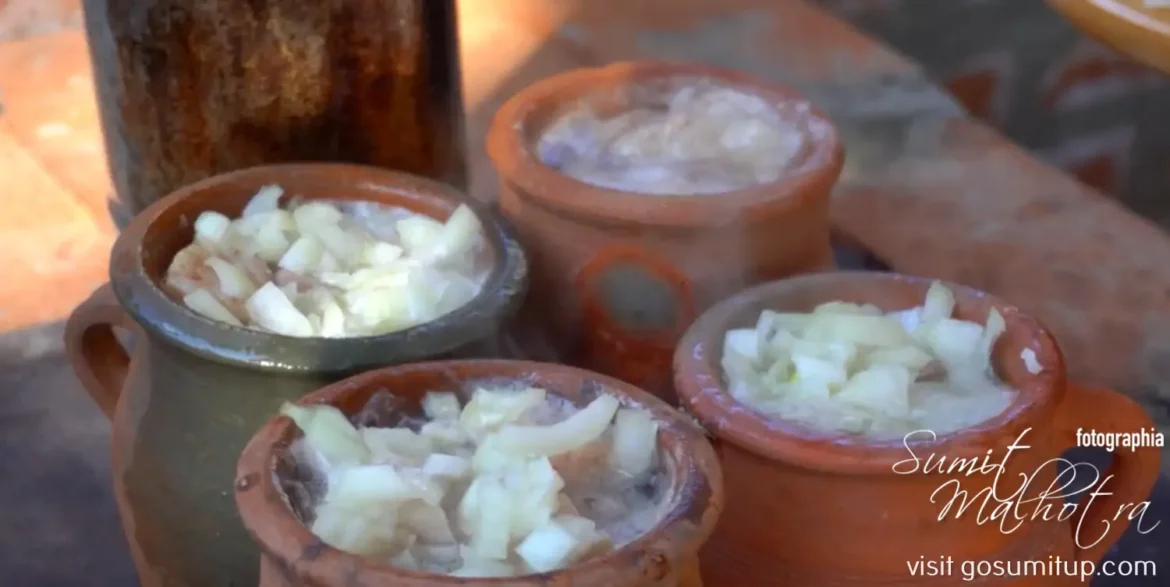
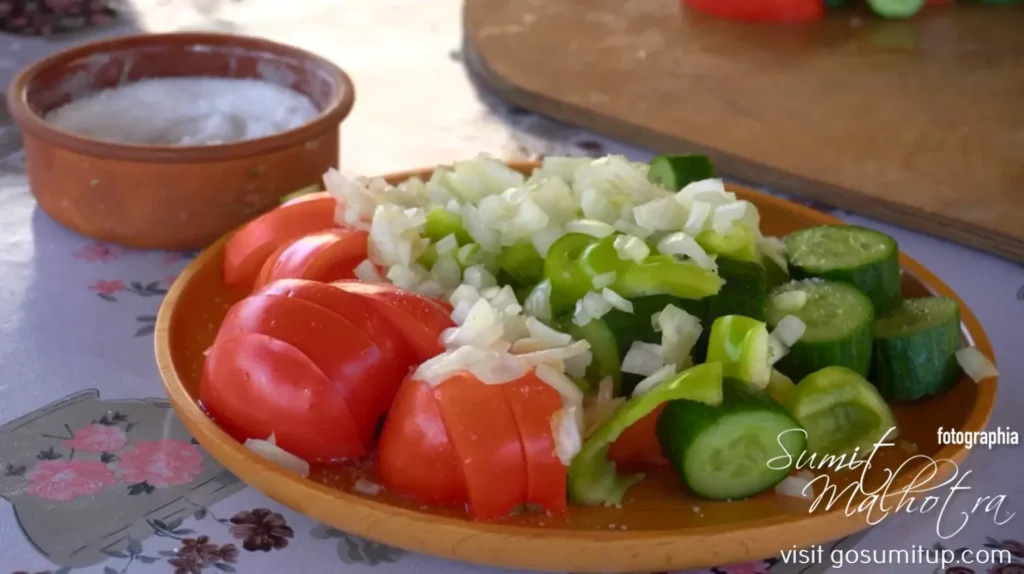
Salad Prepared to Accompany Sheki Piti
Decoding the Physics of the Clay Pot
Cooking Piti in clay versus metal fundamentally changes how heat interacts with the ingredients.
When we strip away the folklore, cooking Piti in clay versus metal fundamentally changes how heat interacts with the ingredients.
1. The Power of Slow Infrared Radiance
Metal is an aggressive heat conductor. When a metal pot sits over a fire, it transfers heat rapidly and unevenly, causing the water inside to enter a violent, rolling boil.
In a rolling boil, the intense mechanical agitation violently breaks apart the lamb’s tail fat (quyruq), forcing the fat droplets to emulsify into the water.
This turns the liquid into a cloudy, opaque, and unpleasantly greasy soup.
Clay, on the other hand, is a terrible conductor of heat but a magnificent heat radiator.
It absorbs the fire’s harsh energy slowly and releases it evenly as gentle, deep-penetrating infrared heat.
Instead of a violent boil, the clay pot maintains a perfectly steady, sub-boiling whisper of a simmer.
The fat melts like velvet, floating cleanly on top as a golden seal rather than emulsifying into a muddy mess, keeping the underlying broth crystal clear.
2. The Porous Flavour Filter
Unlike glazed ceramics or stainless steel, unglazed clay is microscopic and porous. It literally breathes.
As the Piti simmers gently for 8 to 12 hours, this micro-porosity allows an incredibly slow, controlled evaporation of water vapour.
This naturally concentrates the flavours of the lamb juices, saffron, and sweet chestnuts without ever reducing the liquid too quickly.
Furthermore, the rough interior clay walls act as a natural filter, trapping harsh, volatile compounds and excess heavy surface oils.
This smooths out the flavour profile, imparting a faint, earthy minerality that rounds out the sweetness of the local chestnuts.
Piti Dynamics - Clay vs Metal
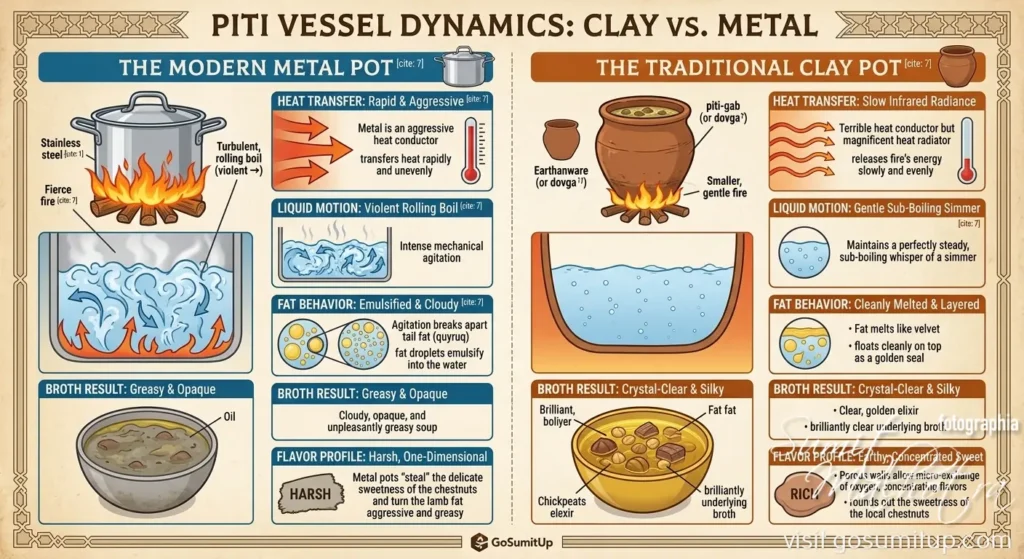
This visual guide above breaks down why the traditional unglazed clay pot is non-negotiable for achieving the clear, golden elixir of authentic Sheki Piti.
The Modern Metal Pot
Heat Transfer: Rapid & Aggressive: Metal is an aggressive heat conductor that transfers heat rapidly and unevenly, shown by large, fast-moving heat arrows and a high thermometer graphic.
Liquid Motion: Violent Rolling Boil: A cross-section of the pot shows turbulent, aggressive water movement with steam, illustrating ‘intense mechanical agitation’.
Fat Behaviour: Emulsified & Cloudy: A diagram of microscopic views in a circle shows large fat droplets being violently smashed into smaller particles, mixing with the water.
This illustration above describes how ‘agitation breaks apart tail fat (quyruq)‘, ‘forcing the fat droplets to emulsify into the water’.
Broth Result: Greasy & Opaque: An illustration of a muddy, greyish bowl of stew with a heavy floating oil layer, labelled: ‘Cloudy, opaque, and unpleasantly greasy soup’.
Flavour Profile: Harsh, One-Dimensional: Illustrated with a flat, jagged taste bar and text stating: ‘Metal pots “steal” the delicate sweetness of the chestnuts and turn the lamb fat aggressive and greasy’.
The Traditional Clay Pot
Heat Transfer: Slow Infrared Radiance: Clay is a terrible heat conductor but a magnificent heat radiator, illustrated with gentle, even, deep-penetrating infrared heat waves.
The text reads: ‘Slow, controlled radiance’ and ‘releases fire’s energy slowly and evenly’.
Liquid Motion: Gentle Sub-Boiling Simmer: A cross-section diagram shows water with only tiny, sparse bubbles and very sparse movement, indicating a ‘perfectly steady, sub-boiling whisper of a simmer’.
Fat Behaviour: Cleanly Melted & Layered: A circular microscopic view shows fat droplets melting cleanly and floating to the top in a distinct, unbroken layer. It illustrates that ‘fat melts like velvet’, ‘floating cleanly on top as a golden seal’.
Broth Result: Crystal-Clear & Silky: A visualisation of a golden, brilliant bowl of stew with individual ingredients clearly visible (chickpeas, chestnuts, meat chunks) and a delicate fat layer.
Text describes it as a ‘clear, golden elixir’ and ‘brilliantly clear underlying broth’.
Flavour Profile: Earthy, Concentrated Sweet: Illustrated with a complex, rounded flavour profile.
The text notes: ‘Porous walls allow micro-exchange of oxygen, concentrating flavours’, and ’rounds out the sweetness of the local chestnuts’.
The visualisation above provides a clear scientific explanation for why Piti cooked in metal vessels loses its signature clarity and delicate flavour balance compared to those cooked in rustic, radiating earthenware.
The Anatomy of a Sheki Piti
Building a authentic Piti is an exercise in precise layering.
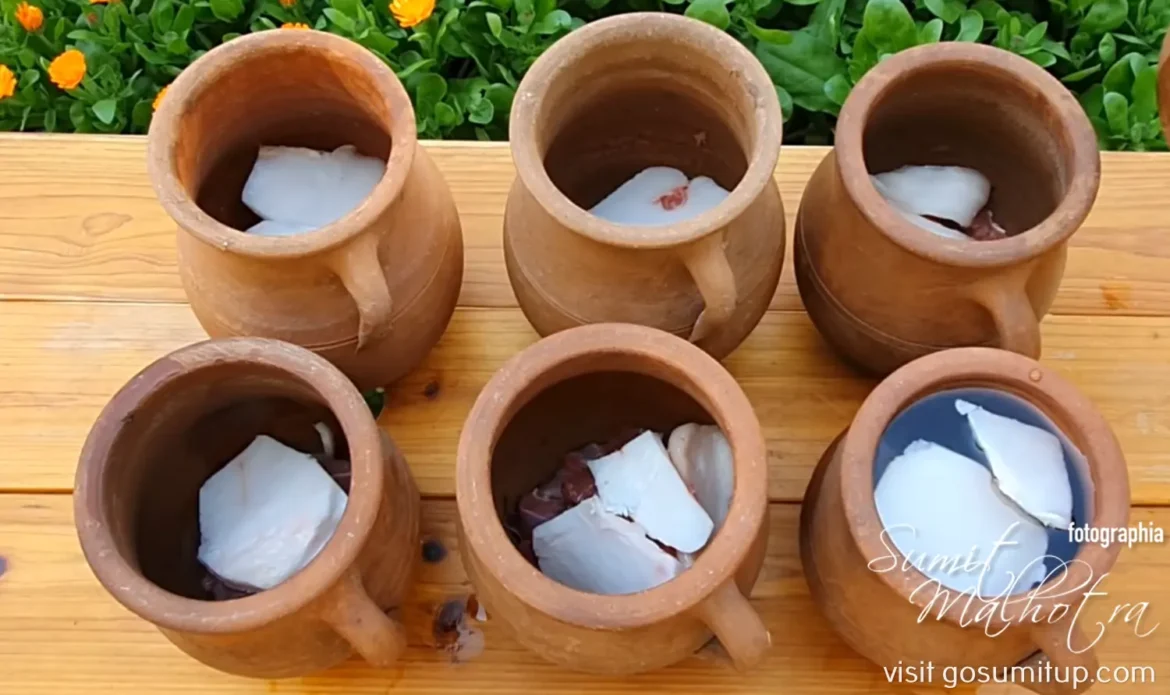
Building an authentic Piti is an exercise in precise layering, ensuring that the ingredients cook evenly over half a day of gentle heat:
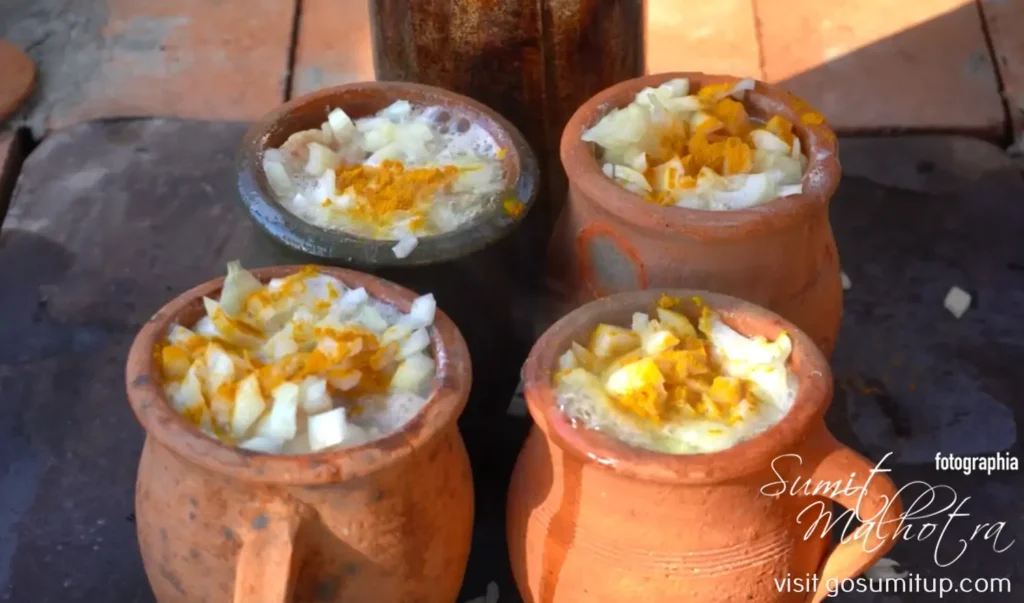
The Anchor: Plump chickpeas, soaked overnight, are placed at the very bottom of the pot to absorb the heaviest heat.
The Sweetness: Yellow local chestnuts and dried sour plums (alcha) follow, providing a complex sweet-and-tart counter-balance to the upcoming rich fats.
The Core: Chunks of bone-in lamb shoulder are packed tightly into the centre.
The Seal: A thick piece of premium lamb tail fat (quyruq) is placed at the very top, acting as a lid that slowly bastes everything beneath it as it melts.
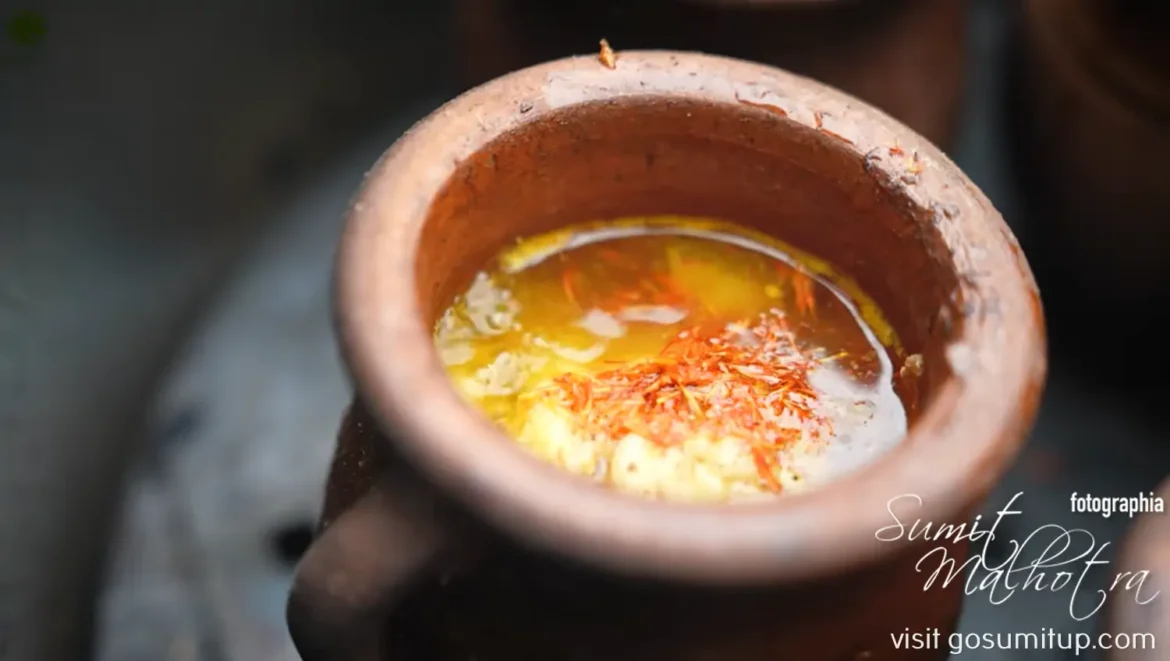
The Finish: A pinch of salt, a few strands of local saffron, and a splash of water fill the pot before it is sent to the embers.
[Bottom: Chickpeas] ──► [Middle: Chestnuts & Plums] ──► [Center: Lamb] ──► [Top: Tail Fat Lid]
Turmeric Added to Sheki Piti
To Sumit Up Culinary Insight
It is an elegant, centuries-old solution to a classic culinary problem.
The Sheki Piti tradition shows us that ancient culinary “rules” are often just sophisticated chemistry dressed in local storytelling.
The old masters insisted on clay pots because they intuitively understood that a metal pot’s aggressive thermal conductivity destroys delicate animal fats.
By relying on the slow, radiating infrared warmth of unglazed clay, they created a perfect, self-basting ecosystem that transforms humble cuts of meat into a clear, golden, dual-course masterpiece.
It’s not magic—it’s just brilliant, slow-cooked thermodynamics.
Making of Sheki Piti (Part 1)
Making of Sheki Piti (Part2)
If you are a traveller and or just love to drive, you may find below a list of items that will fortify & thus enrich your travel experience.
I use many of these myself for my trips. They are modestly priced and quite important to keep handy.
- Travel Adapter – https://amzn.to/3A04EJp
- Action Camera – https://amzn.to/4eCSMfF
- Camera Mounts & Accessories – https://amzn.to/4eG4je2
- Dashcam – https://amzn.to/3U2j4Qc
- Neck Rest – https://amzn.to/3Y6ZP98
- Tyre Inflator – https://amzn.to/3U8HpDP
- Storage – https://amzn.to/3XVQFMI
- Car Laptop Charger – https://amzn.to/3XXMVdA
- Vacuum Cleaner Cordless – https://amzn.to/3Yo1hWd
- Air Mattress – https://amzn.to/4015Bvu
- Jack Ratchet Wrench – https://amzn.to/3YkxddO
- Cleaning Cloth Microfibre – https://amzn.to/3NIOFmt
- Rechargeable Solar LED Torch – https://amzn.to/3Yj4h5Y
- Electronics Accessories Organiser – https://amzn.to/3A04XUz
- Pocket Travel Data Transfer Tool – https://amzn.to/3zMTxnc
- Smart Tracker for Keys – https://amzn.to/3BTuIq0
- Camping Cookware Kit – https://amzn.to/3BIy0N3
- Sleeping Bag – https://amzn.to/3U7v2rP
GoSumItUp is a personal blog written and edited personally by me. All opinions expressed are my own, which are honest and have not been influenced by any means.
My reviews are dependent on the visits at the time, and revisits will be reviewed again as they may have a different experience or the same.
I am not a food critic nor do I consider myself as one; this platform allows me to write and review my own personal dining experiences, whether good or bad, delicious or not, all of which are honest and truthful opinions.
Suppose you disagree or agree with me at any point, or do not receive the same experiences as I have. In that case, I do not hold any responsibility as everyone will have their own experiences that they will encounter themselves.
I pay for all meals. However, if any meals or products have been sponsored or compensated or if I was a guest, it will be clearly disclosed at the end of each review.
All images on this blog are my own unless stated otherwise. If you wish to use any of my photography for any purposes, please do not use it without any written permission and give credit and/or link back to the website.
If you would like to send a product or any sponsors/endorsements, it may or may not be published and reviewed on the website.
If you wish to send any products or invitations for any media, press or collaborations, etc., consider if it is something related to the content of the website, and if you see fit, please visit the Contact page for contact details.
Thank You.
Thank you for visiting GoSumItUp! I hope you enjoy the reviews & recipes found at www.gosumitup.com.
This page consists of disclaimers regarding the recipe, its outcome, nutrition, and food handling safety decisions.
The recipes have been cooked and compiled by me for general information only and should not be used to diagnose or treat any medical condition/s.
This information is not intended to diagnose, treat, cure, or prevent any disease as well.
GoSumItUp.com has used all reasonable care in compiling the information but offers no warranty as to its accuracy or its use in any possible form.
Consult a doctor or other health care professional for diagnosis and treatment of any medical condition/s. For more details please refer to our disclosure policy.
If you like this article, you can let us know in the comments below or on social media using #gosumitup and tag @gosumitup on Facebook.
I am always happy to read your feedback, and if you liked the dish or if you made the dish. :)
Better still, take a picture and post it on Instagram and tag it as #gosumitup
Connect directly – You can also connect with me directly on my Instagram, Facebook or Pinterest.
And, keep visiting us for more of such awesomeness. Bookmark gosumitup.com into your web browser now or simply subscribe to our browser notifications.