True Antiguan Pot Synopsis: Cultural History, Culinary Traditions & Significance
Discover the complete synopsis of the True Antiguan Pot. Explore its cultural meaning, historical relevance, traditional culinary significance, and lasting importance.
Learn more about True Antiguan Pot, Antigua Culinary Heritage, Antiguan Cooking Traditions, Caribbean Food History, Traditional Antiguan Cuisine, National Dishes of Antigua, Clay Pot Cooking Caribbean, Antiguan Cultural Identity, Pepperpot Antigua, Antiguan Heritage Foods, Fungi and Pepperpot, Caribbean Gastronomy, West Indian Heritage, Cultural Identity, Traditional Cookware, Local Food Culture, Antiguan History, Soul Food Archaeology, Island Culinary Arts, Folk Traditions
Introduction to the True Antiguan Pot
The expression “True Antiguan Pot” carries deep cultural weight, serving as a pillar of Caribbean heritage, culinary identity, and communal history.
Rooted in the twin-island nation of Antigua and Barbuda, the True Antiguan Pot is far more than a simple culinary term or a traditional recipe.
It represents a living history of resilience, resourcefulness, local agricultural practices, and ancestral wisdom passed down across generations.
To understand the True Antiguan Pot is to understand the soul of Antigua itself—a legacy born from indigenous roots, shaped by the harsh realities of the plantation era, refined by West African culinary techniques, and preserved today as a powerful symbol of national pride.
What Does True Antiguan Pot Mean?
At its core, the term True Antiguan Pot carries both literal and metaphorical meanings deeply woven into the island’s lifestyle and folklore.
The Literal Meaning: Traditional Clay and Cast-Iron Cookware
Literally, the True Antiguan Pot refers to the traditional heavy cooking vessels used by early Antiguan cooks.
Historically, these included locally crafted earthenware clay pots—influenced by Amerindian (Arawak and Carib) pottery traditions—and later, heavy cast-iron coal pots and Dutch ovens introduced during the colonial period.
These vessels were engineered to retain heat efficiently over open fires or coal burners, allowing tough cuts of meat, root vegetables, native herbs, and legumes to simmer over several hours.
The Metaphorical Meaning: The Melting Pot of Identity
Metaphorically, the True Antiguan Pot represents the ultimate melting pot of island culture.
It describes a philosophy of cooking defined by adaptability, harmony, and togetherness.
A “True Antiguan Pot” implies an authentic assembly of indigenous ingredients—such as the famous Antiguan Black Pineapple, sweet potatoes, eddoes, yam, okra, callaloo, and scotch bonnet peppers—combined with slow-cooked meats or fresh catches from the surrounding Caribbean waters.
It signifies a dish or meal prepared strictly according to traditional, unadulterated methods, free from modern shortcuts or artificial alterations.
When locals refer to a meal as a “True Antiguan Pot,” they are bestowing the highest compliment regarding its authenticity, flavour profile, and emotional resonance.
What is the Relevance of True Antiguan Pot?
The relevance of the True Antiguan Pot spans historical, economic, and socio-cultural dimensions, making it a key element in understanding the Caribbean’s broader socio-historical landscape.
Historical Continuity and Slave-Era Survival
The historical relevance of the True Antiguan Pot is tied to the survival strategies of enslaved West Africans during the 17th, 18th, and 19th centuries.
Deprived of prime cuts, enslaved labourers were forced to make nutritious, flavourful meals using whatever provisions were allocated to them or grown in small provision grounds.
By combining surplus provisions like salted meats (corned beef, salt pork, or salted fish) with wild leafy greens (callaloo, spinach, purslane), okra, and ground provisions, they created hearty, nutrient-dense stews.
The True Antiguan Pot stands as direct physical evidence of how human creativity and culinary ingenuity turned scarcity into abundance.
Modern Agricultural and Ecological Relevance
In contemporary Antigua, the True Antiguan Pot remains highly relevant to agricultural sustainability and local food security.
The philosophy behind the pot emphasises seasonal, locally sourced, and farm-fresh ingredients:
- Ground Provisions: Cassava, sweet potato, eddoe, and yam reduce reliance on imported processed grains.
- Local Produce: Antiguan Black Pineapple, fresh okras, pumpkin, and callaloo support smallholder farmers.
- Sustainable Proteins: Local seafood (conch, lobster, snapper) and locally raised livestock align with sustainable farm-to-table practices.
Tourism and Gastronomic Identity
As Antigua and Barbuda continues to grow as a world-class travel destination, the True Antiguan Pot plays a critical role in cultural tourism.
International travellers increasingly seek authentic gastronomic experiences over generic resort fare.
The True Antiguan Pot serves as a bridge, allowing visitors to experience the island’s genuine history, vibrant flavours, and hospitality through iconic dishes like Antiguan Pepperpot and Fungi.
What is the Significance of True Antiguan Pot?
The significance of the True Antiguan Pot extends beyond nutrition, serving as a cornerstone of national identity, artistic heritage, and social unity.
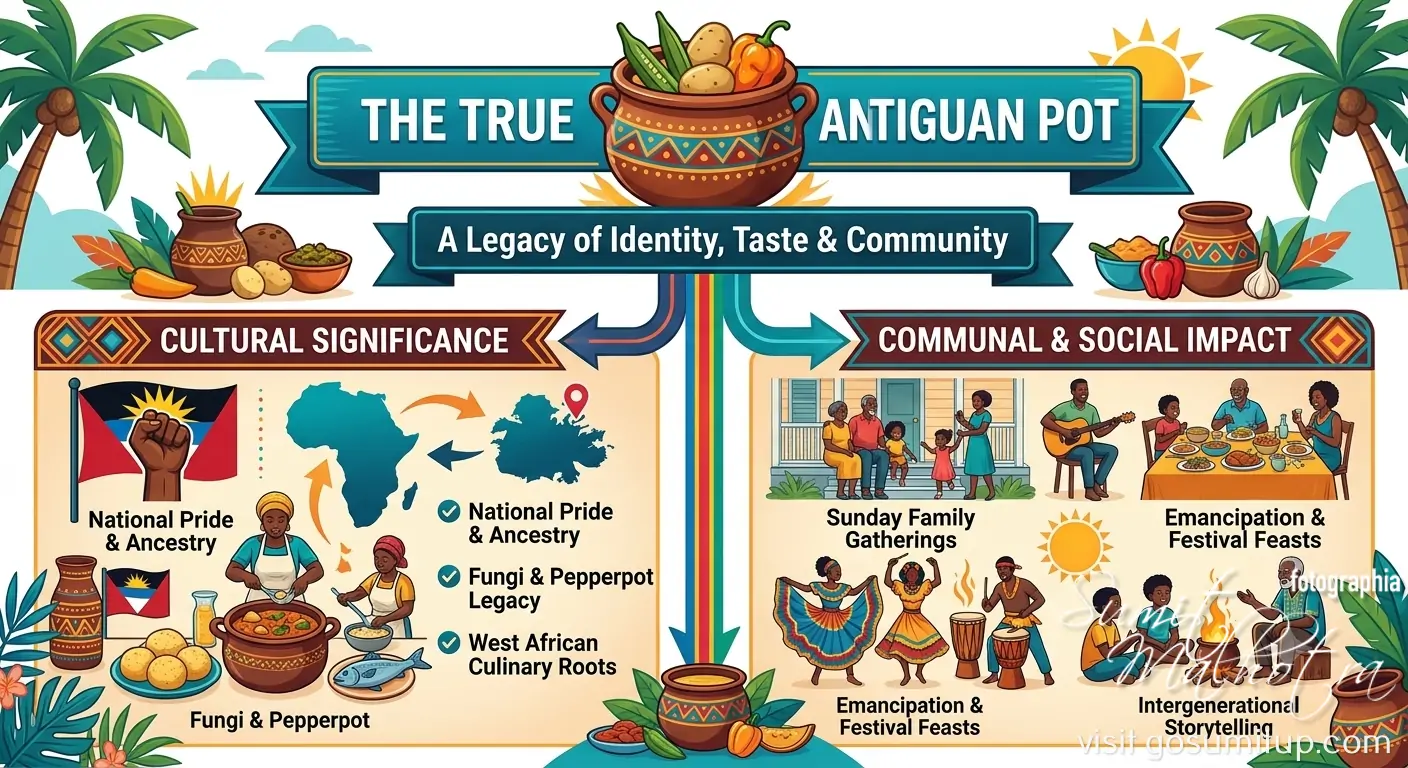
True antiguan pot
Symbol of National Pride and Ancestral Honour
The True Antiguan Pot symbolises national pride and self-reliance. It represents a proud rejection of cultural erasure. The national dish of Antigua—Pepperpot and Fungi—is the highest expression of the True Antiguan Pot.
- Pepperpot: A rich, dark, slow-simmered stew of salted meats, fresh pork or beef, ground provisions, eggplant, squash, okra, and green leafy vegetables.
- Fungi: A smooth, cooked cornmeal paste combined with cooked okras, stirred patiently with a wooden “turn-stick” until reaching the ideal firm consistency.
Together, these components reflect the fusion of African cornmeal preparation traditions (Tuwo or Banku) with Caribbean provisions, standing as a living monument to ancestral endurance.
Social Cohesion and Community Gathering
In West Indian culture, food is the ultimate bonding agent. The True Antiguan Pot is historically communal.
Preparing a traditional pot was rarely an isolated activity; it involved gathering ingredients from neighbourhood gardens, communal butchering, sharing wood for coal pots, and cooking large quantities to feed extended families and neighbours.
Whether during emancipation celebrations, Carnival festivities, Sunday family dinners, or community harvests, the True Antiguan Pot represents unity, generosity, and hospitality.
Storytelling and Oral Traditions
The preparation of a True Antiguan Pot has long been an informal classroom. As elders tended the slow-simmering pot over coal fires, younger generations stood nearby listening to oral histories, proverbs, folklore (such as Anansi stories), and ancestral wisdom.
The pot acted as a hearth around which cultural memory was preserved and transmitted.
What is the Importance of the True Antiguan Pot?
The importance of the True Antiguan Pot can be understood through its ongoing impact on health, cultural preservation, economic empowerment, and national identity.
1. Cultural Preservation Against Globalisation
In an era dominated by global fast-food chains and processed imported goods, the True Antiguan Pot acts as a vital safeguard for regional culinary heritage.
It preserves ancestral recipes, cooking techniques, and agricultural knowledge that might otherwise be lost to modern convenience.
Protecting the integrity of the pot ensures that future generations of Antiguans remain connected to their roots.
2. Nutritional Value and Holistic Wellness
The traditional components of the True Antiguan Pot offer exceptional nutritional benefits:
- Complex Carbohydrates: Ground provisions like yams, sweet potatoes, and cassava provide low-glycemic, fibre-rich energy.
- Micronutrients & Antioxidants: Leafy greens (callaloo), pumpkin, and peppers deliver essential vitamins (A, C, E, K) and vital minerals.
- Clean Proteins: Fresh seafood and lean slow-cooked meats provide muscle-building protein without artificial additives.
The traditional Antiguan diet, centred on the True Antiguan Pot, stands as a model of clean, whole-food nutrition long before modern wellness trends emerged.
3. Economic Empowerment and Food Sovereignty
Promoting the True Antiguan Pot directly supports local food sovereignty. By prioritising indigenous crops and livestock, the island reduces its import bill and keeps wealth circulating within local agricultural and fishing communities.
Encouraging restaurants, street vendors, and resorts to serve authentic “Pot” dishes builds a sustainable local economy.
4. Definition of a Unique Island Brand
On the global stage, small island nations are defined by their unique cultural expressions.
The True Antiguan Pot gives Antigua and Barbuda an undeniable, distinct brand identity. It tells a compelling story of resilience, flavour, art, and community that sets the nation apart from standard tropical destinations.
Conclusion: The Enduring Legacy of the True Antiguan Pot
The True Antiguan Pot is far more than a vessel or a collection of recipes; it is the beating heart of Antiguan culture.
From its humble origins in ancestral clay pots and plantation provision grounds to its place of honour at national celebrations, it embodies the spirit of a resilient, creative, and proud people.
By preserving the methods, honouring the ingredients, and passing down the lore of the True Antiguan Pot, Antigua ensures that its history remains vibrant, its culture protected, and its community nourished for centuries to come.