Read about Shekerbura, Traditional Azerbaijani Shekerbura, Novruz Pastry Baking Secrets, Maggash Tweezer Pattern Ritual, Baking Pastry Cracking Myth, Novruz Shekerbura
Learn about Azerbaijani Shekerbura, Surface Area Thermodynamics, Internal Vapour Pressure Regulation, Micro Expansion Joint Physics, Starch Heat Sink Dough
Know more about Novruz Pastry, Shekerbura, Cooking Science, Baking Physics, Azerbaijani Cuisine, Food Chemistry, Pastry Design
If you step into an Azerbaijani kitchen during the vibrant spring festival of Novruz, you will be greeted by the warm, aromatic embrace of cardamom, toasted nuts, and sweet pastry dough.
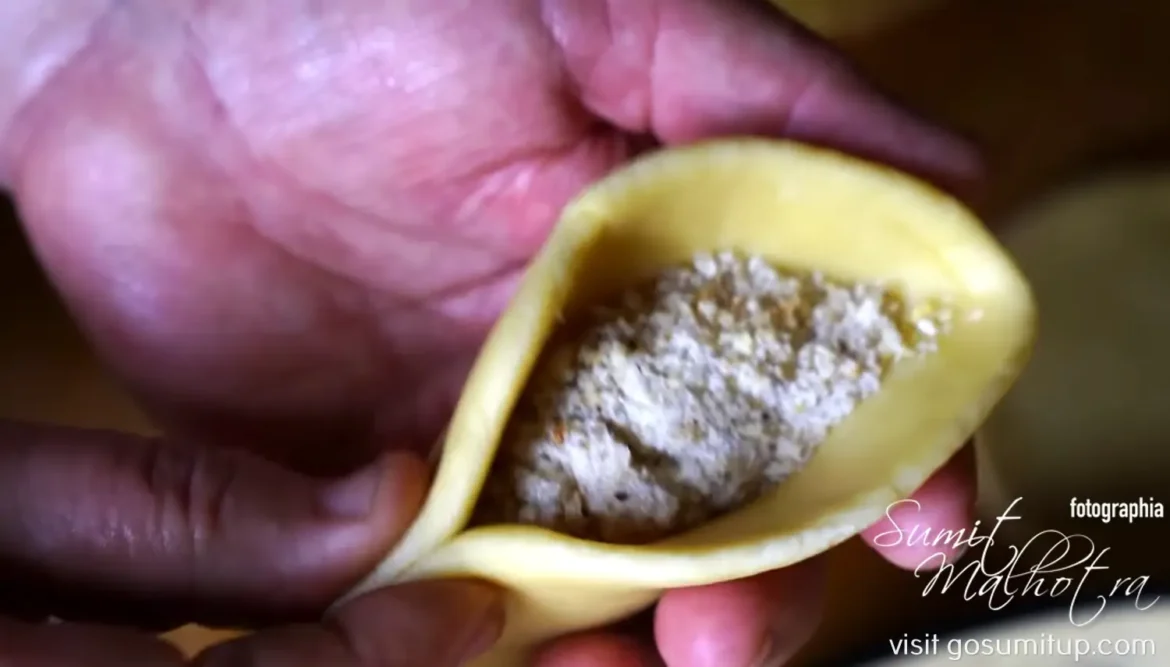
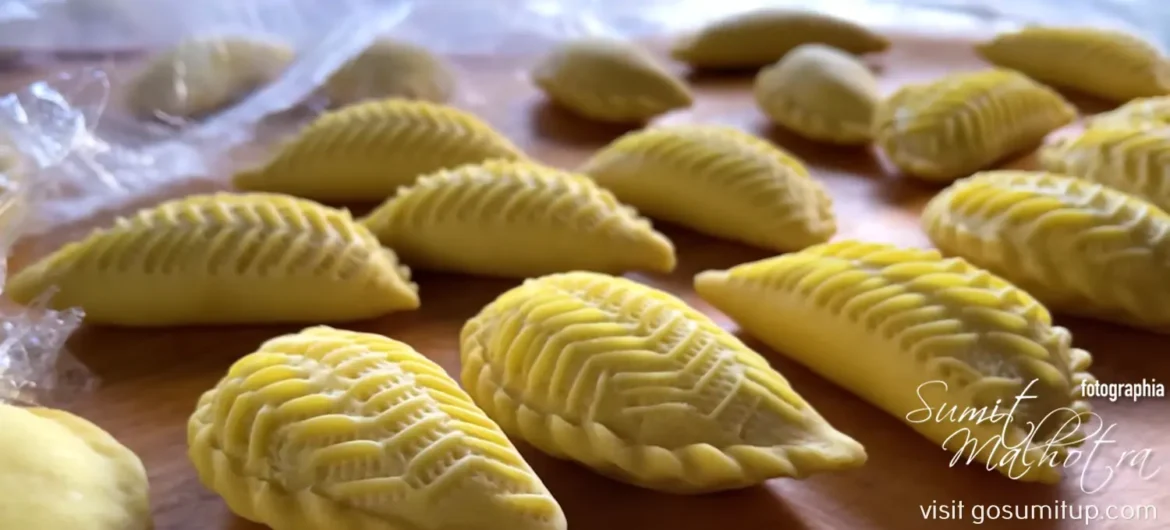
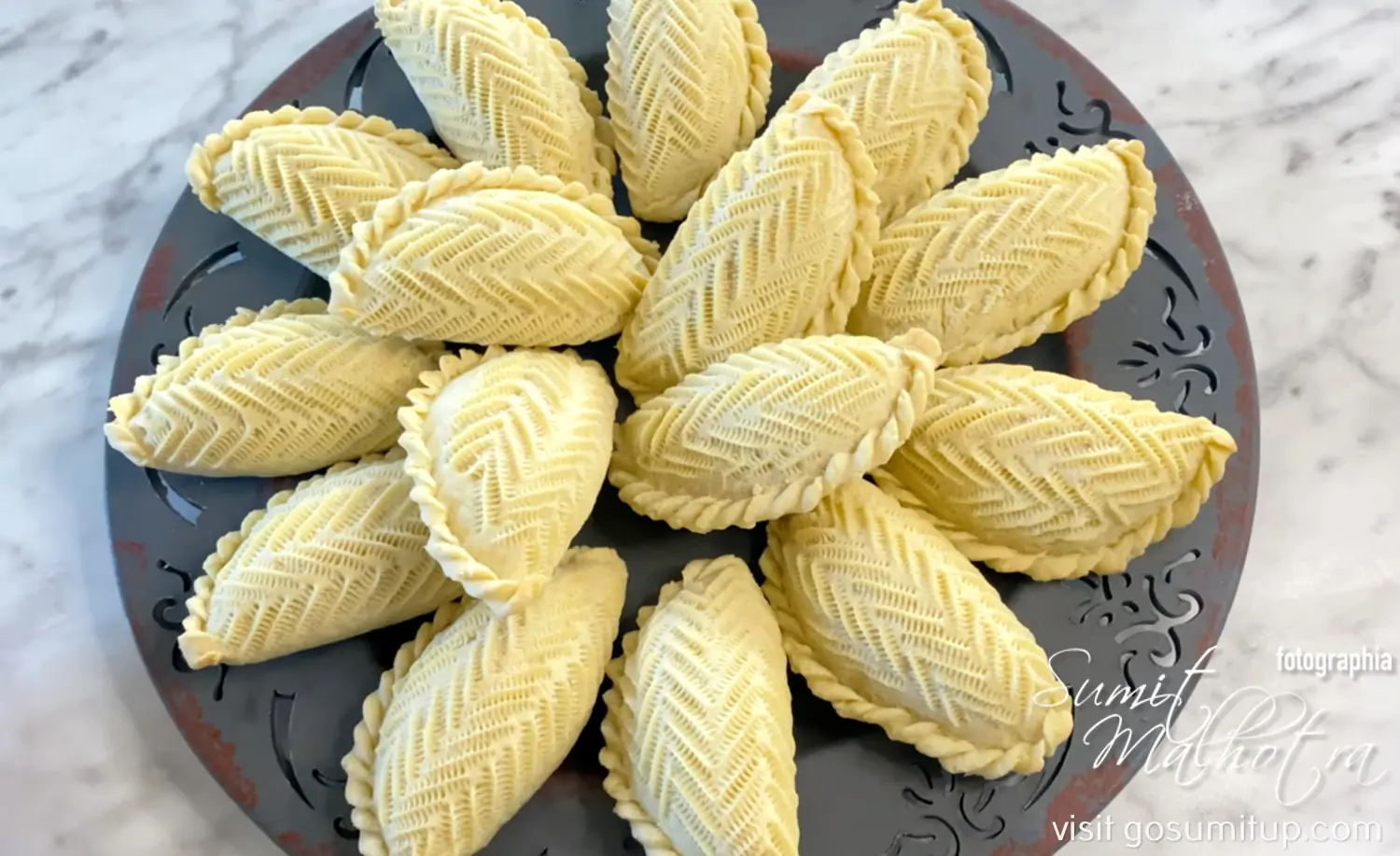
At the center of this culinary celebration sits Shekerbura—an iconic, crescent-shaped pastry filled with a delicate mixture of ground almonds or hazelnuts and sugar, meticulously decorated with an intricate, wave-like pattern.
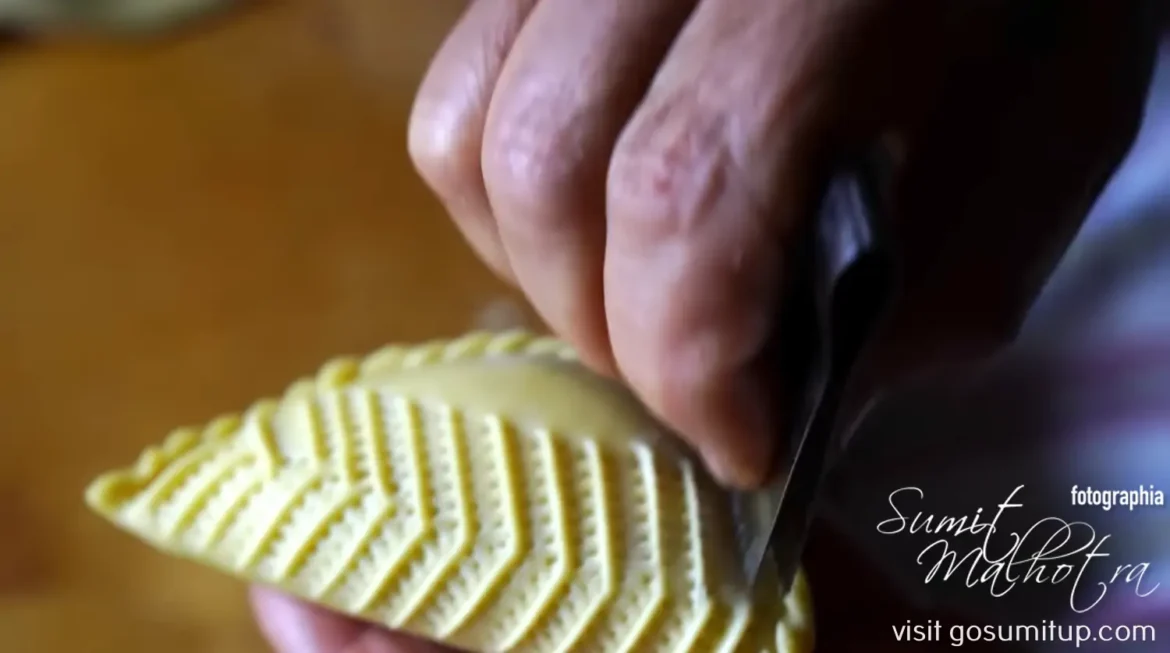
To the untrained eye, these stunning geometric ridges, painstakingly hand-carved using specialised brass tweezers called a maggash, appear to be nothing more than a beautiful homage to the patterns of traditional Azerbaijani carpets or symbols of the half-moon.
Shekerbura is Served
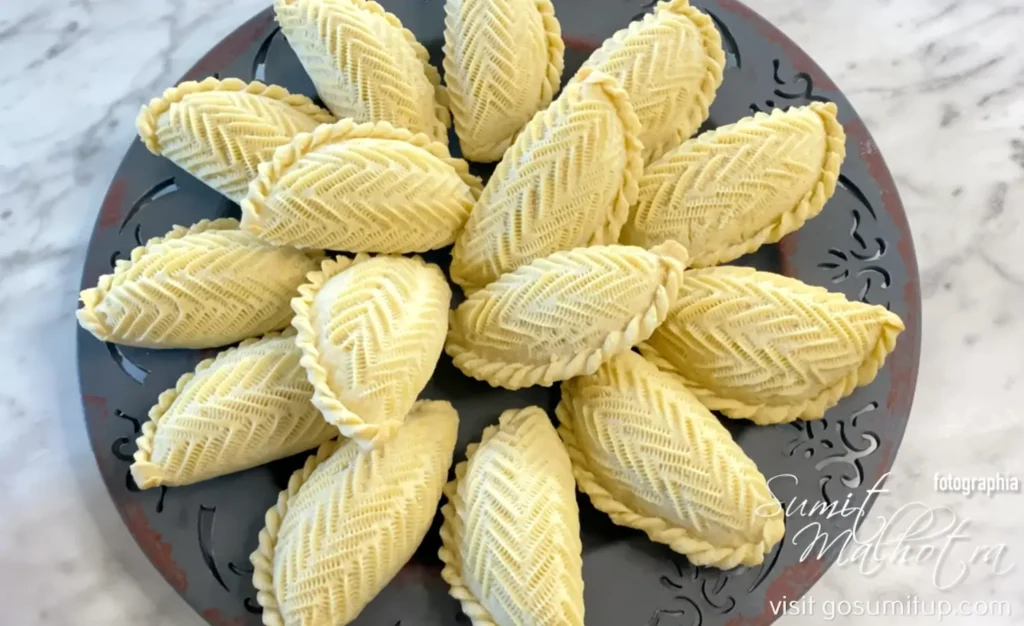
However, village elders and seasoned pastry masters harbour a strict, unyielding law regarding this craft: the patterns must be deep, sharp, and cut into a precise matrix of parallel lines (maggash izi).
If an amateur baker attempts to streamline the process by leaving the pastry smooth or makes shallow, lazy marks, the elders will immediately intervene.
They warn that a smooth shell will cause the sweet filling to “suffocate, sweat, and panic,” forcing the entire pastry to fracture violently in the oven and bleed its precious sugars onto the baking sheet.
While this advice sounds like rigid artistic perfectionism passed down through generations, the old masters are actually enforcing an elegant principle of surface-area thermodynamics and internal vapour pressure regulation.
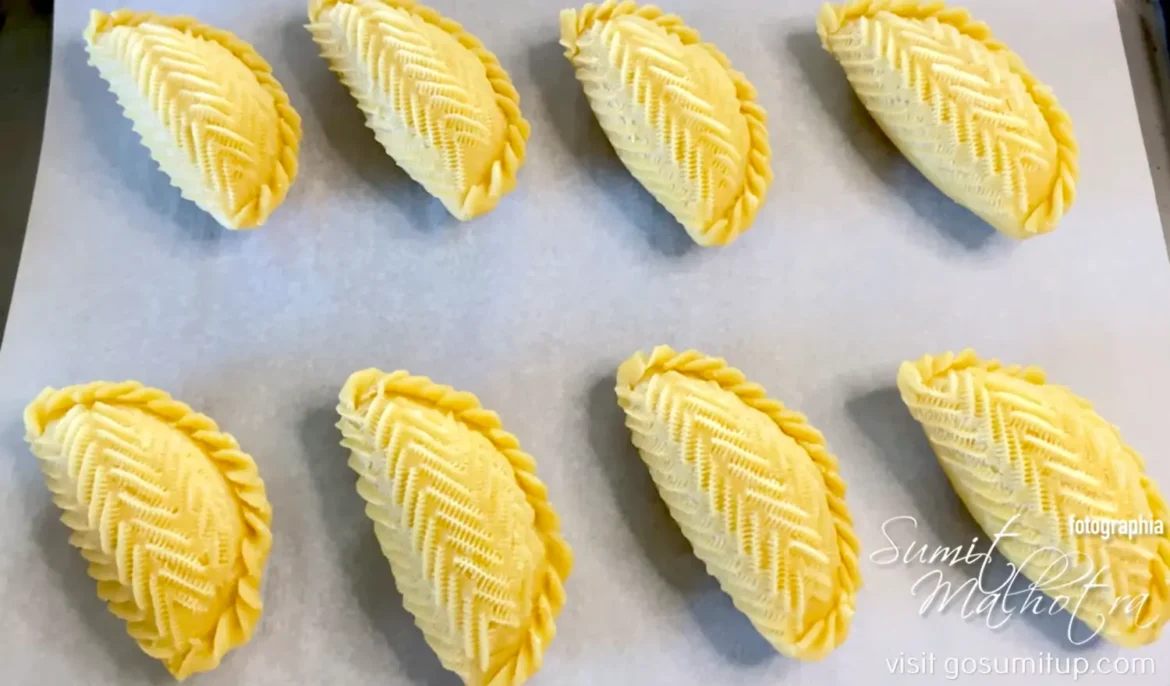
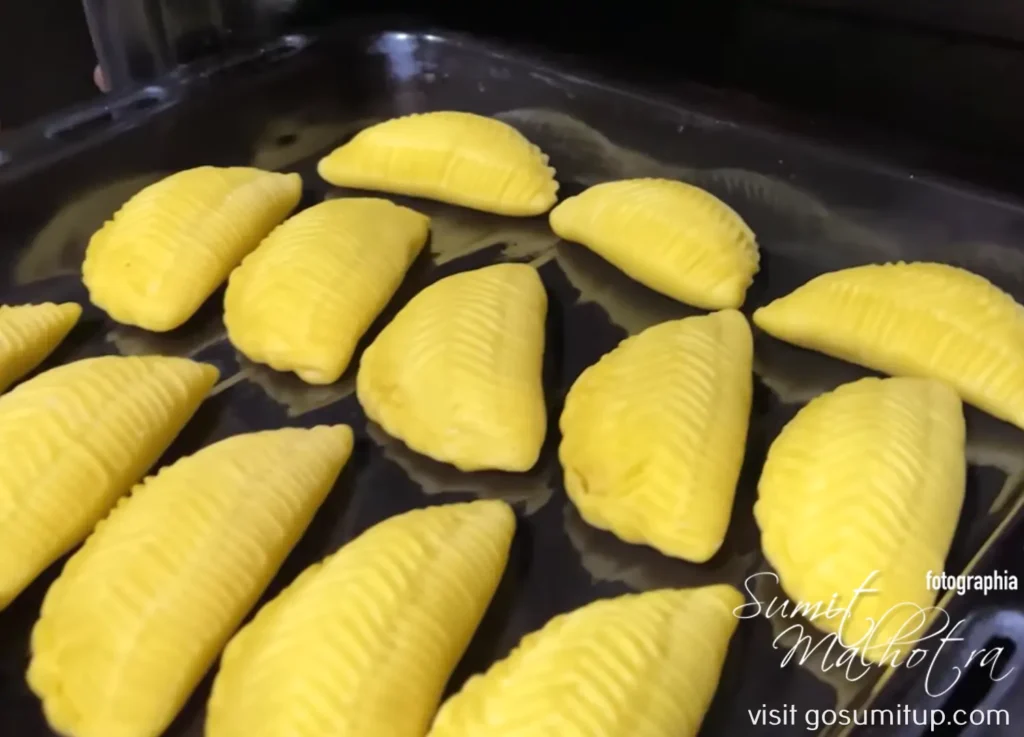
Traditional Shekerbura Ready to be Baked
The Physics of the Maggash Matrix
When the pastry enters a hot oven, the moisture trapped within the raw, ground nut filling and sugar rapidly heats up, transforming into steam.
A baking Shekerbura is essentially a miniature thermodynamic pressure vessel. Understanding why a smooth pastry fails requires examining how heat and moisture interact within the dough shell.
1. The Ridge Matrix as Micro-Expansion Joints
When the pastry enters a hot oven, the moisture trapped within the raw, ground nut filling and sugar rapidly heats up, transforming into steam.
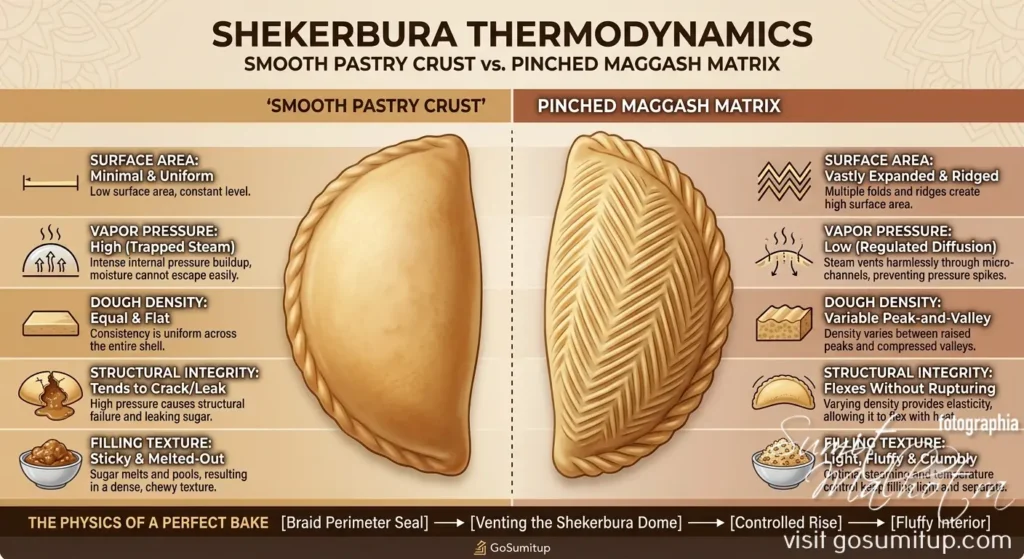
In a completely smooth, un-pinched Shekerbura, this expanding water vapour has nowhere to go. It traps itself against the flat ceiling of the dough crust, generating intense internal pressure.
As the volume of steam expands, it pushes aggressively against the weakest structural points of the pastry – typically the sealed outer crescent seam.
The result is a catastrophic structural failure: the pastry warps, cracks open, and lets the melting sugar filling bubble over and caramelise into a burnt, sticky mess on the baking sheet.
The intricate ridges pinched by the maggash act as an ingenious array of micro-expansion joints.
By creating a series of alternating peaks and valleys across the surface, the baker vastly increases the total surface area of the upper crust.
This added surface area gives the dough structural elasticity, allowing the pastry shell to flex and expand safely under the rising steam pressure without rupturing its vital perimeter seal.
2. The Starch Heat Sink and Steam Diffusion
Deeply pinching the dough with metal tweezers alters the localised density of the pastry shell.
The thin valleys created by the teeth of the maggash dry out and set almost instantly in the oven’s heat, creating a rigid, cross-braced structural skeleton over the dome.
Meanwhile, the raised peaks of the ridges are thicker and retain their moisture longer, remaining pliable during the crucial first few minutes of baking.
This deliberate variation in dough thickness acts as a thermodynamic heat sink:
The peaks pull heat away from the core, slowing down the melting rate of the inner sugar so the nut oils have time to emulsify.
The micro-pores within the pinched valleys allow microscopic amounts of steam to diffuse harmlessly through the dough barrier.
This perfect equilibrium prevents the sugar from overheating, sweating, and liquefying prematurely, ensuring the interior remains light, crumbly, and profoundly aromatic.
The Shekerbura Thermodynamics
Anatomy of a Perfect Novruz Bake
The seasoned metal acts as a surface catalyst, breaking down the fat molecules into volatile aromatic compounds known as ketones and aldehydes.
Achieving the legendary melt-in-your-mouth texture of a true Shekerbura relies on executing these physical boundaries across the pastry dome:
The Symmetrical Fold: The crescent edge is tightly braided into a rope pattern (burgu), establishing a reinforced foundation wall that locks the filling in place.
The Tweezer Compression: The maggash pinches deep into the outer starch layers, shifting the dough’s density and carving out the micro-venting network.
The Thermal Set: The pastry is baked at a modest temperature (160 to 170 °C) to ensure the decorative peaks set into a crisp, pale gold finish without browning, keeping the internal aromatic cardamom oils perfectly intact.
[Braid Perimeter Seal] ──► [Deep Maggash Pinching] ──► [Micro-Venting Activation] ──► [Low-Heat Crisp Set]
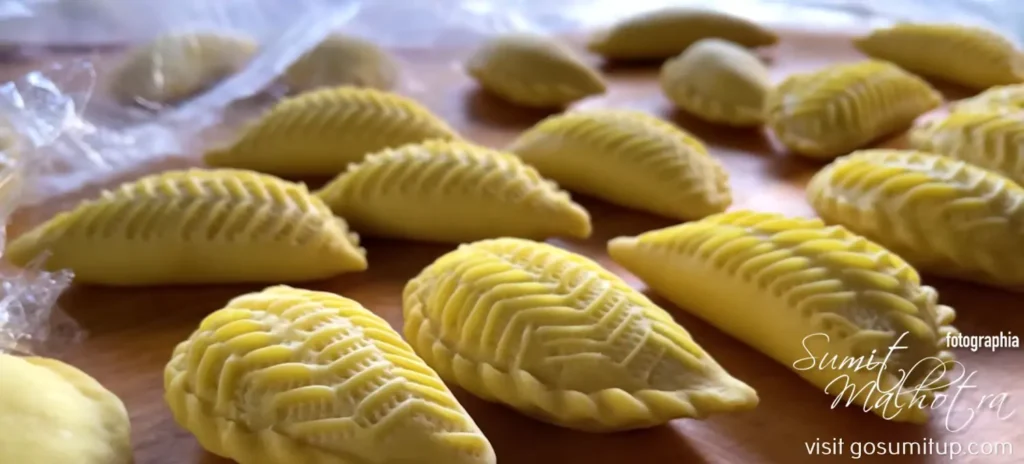
Traditional Shekerbura Going into the Preheated Oven
The Myth: The Artistic Spirit and the Tough Dough
The Crystallization Paradox of Traditional Shekerbura (The Seven-Line Pattern Myth).
The Legend: Shekerbura is an iconic Novruz pastry packed with sweet ground almonds, hazelnuts, and cardamom, famous for its intricate, hand-pinched geometric patterns made with a specialised tweezer called a maggash.
Traditional bakers fiercely maintain that the pattern isn’t just for decoration; it must have a precise depth and a minimum of seven parallel curved lines (maggash izi).
If a young baker leaves the pastry smooth or makes shallow, uneven pinches, the elders warn that the filling will “suffocate and sweat,” causing the entire pastry to fracture and leak its sugars into the oven.
The Culinary Science: This isn’t an artistic test of a baker’s patience; it is an ingenious application of surface-area thermodynamics and internal vapour pressure regulation.
The Maggash as a Micro-Venting Matrix: As Shekerbura bakes, the moisture inside the nut and sugar filling turns to steam.
If the pastry shell is left smooth and uniform, this trapped steam expands against the ceiling of the dough, creating high-pressure pockets that cause the delicate pastry to warp, crack, or burst open at the seams, leaking caramelised sugars.
The intricate ridges created by the maggash act as strategic micro-expansion joints. They increase the surface area of the top crust, allowing the dough to flex safely under steam pressure without rupturing the structural seal.
The Physics of the Starch Heat Sink: Deeply pinched ridges alter the local thickness of the dough.
The thin valleys between the peaks cook and dry out incredibly fast, setting a rigid structural frame.
Meanwhile, the raised peaks retain just enough moisture to stay pliable during the first few minutes of baking.
This calculated variation in dough density forces the internal vapour to distribute perfectly evenly across the pastry ceiling, locking in the essential oils of the cardamom and preventing the sugars from overheating and sweating out.
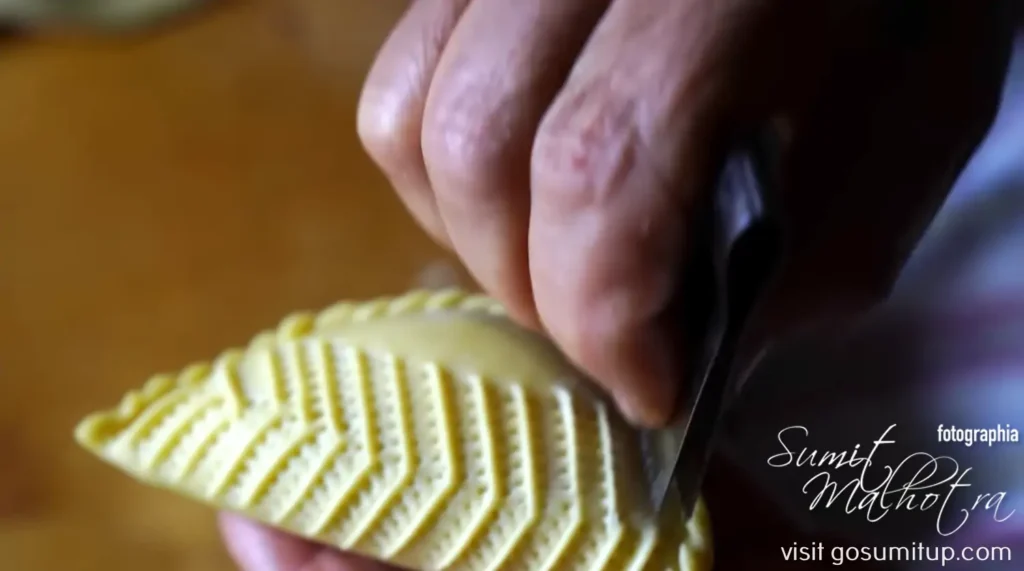
Pinching of Shekerbura with a Maggash
To Sumit up Culinary Insight
The legendary Shekerbura pattern is far more than a striking visual celebration.
The legendary Shekerbura pattern is far more than a striking visual celebration of Azerbaijani heritage; it is a brilliant example of intuitive materials engineering.
Traditional bakers figured out that changing the geometry of a surface could completely control the behaviour of heat and steam inside a closed space.
By manipulating the surface area with a simple pair of tweezers, they tamed internal steam pressure, turned fragile dough into a self-supporting dome, and guaranteed that every single bite delivers the flawless, crumbly texture that has defined Novruz feasts for centuries.
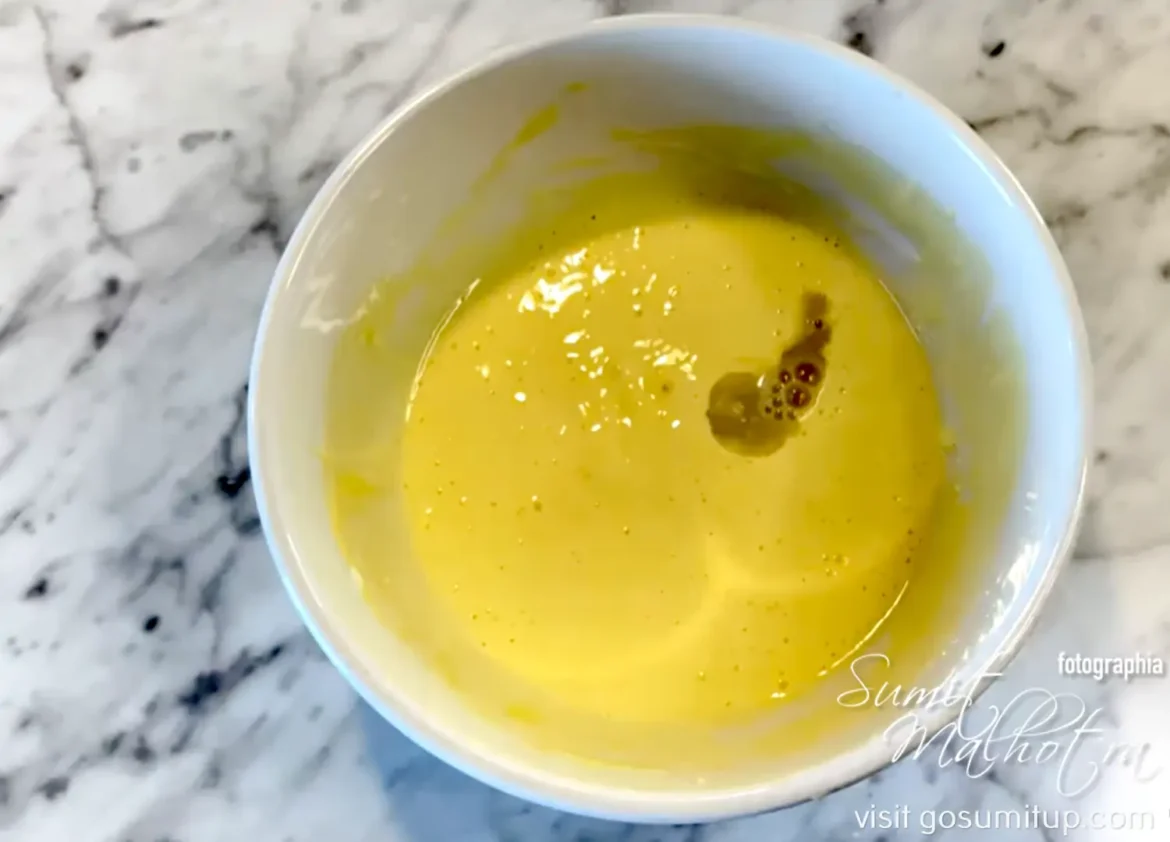
Making of Shekerbura (Part 1)
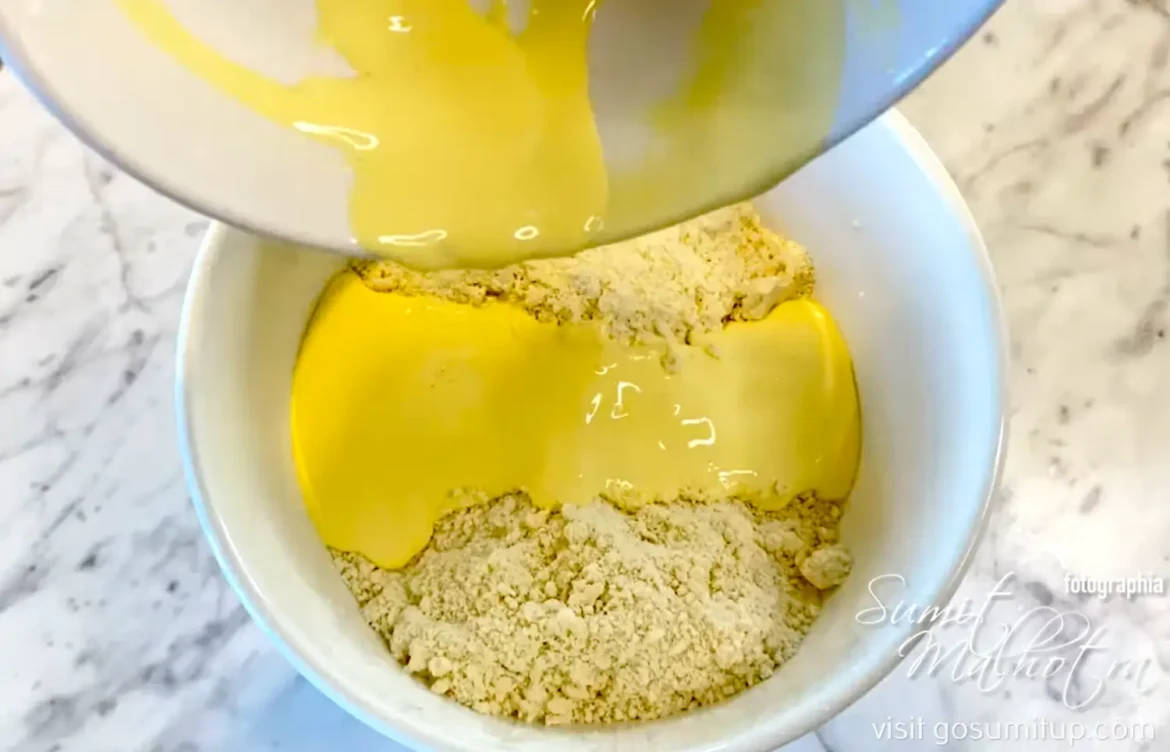
Making of Shekerbura (Part 2)
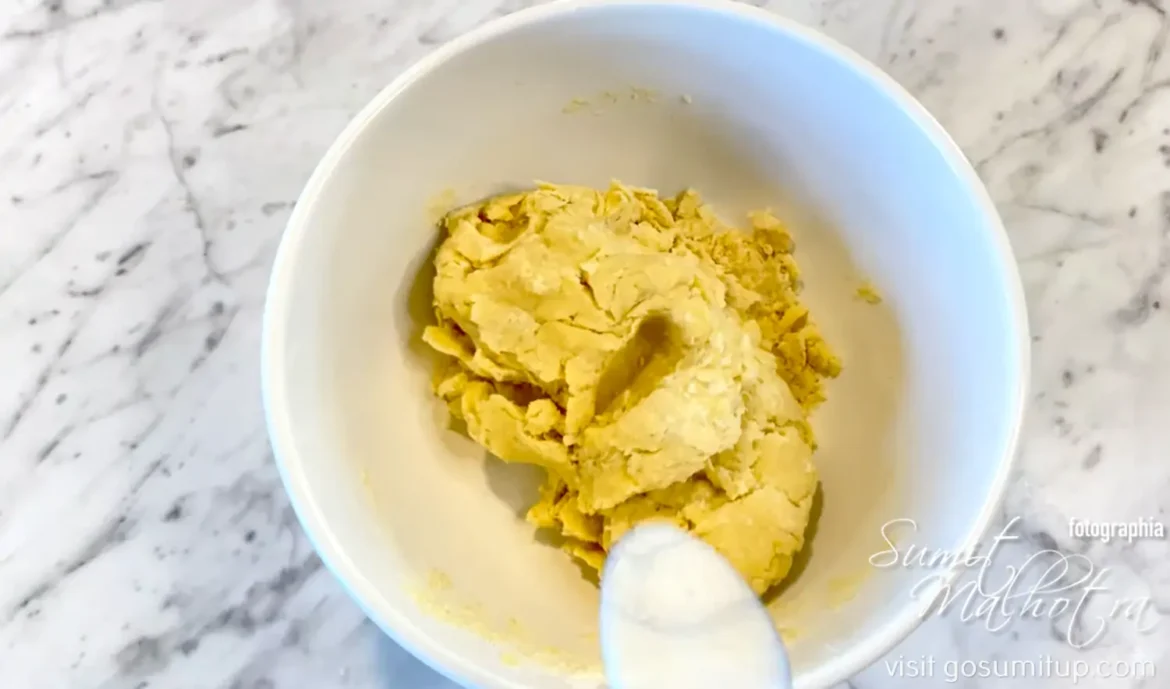
Making of Shekerbura (Part 3)
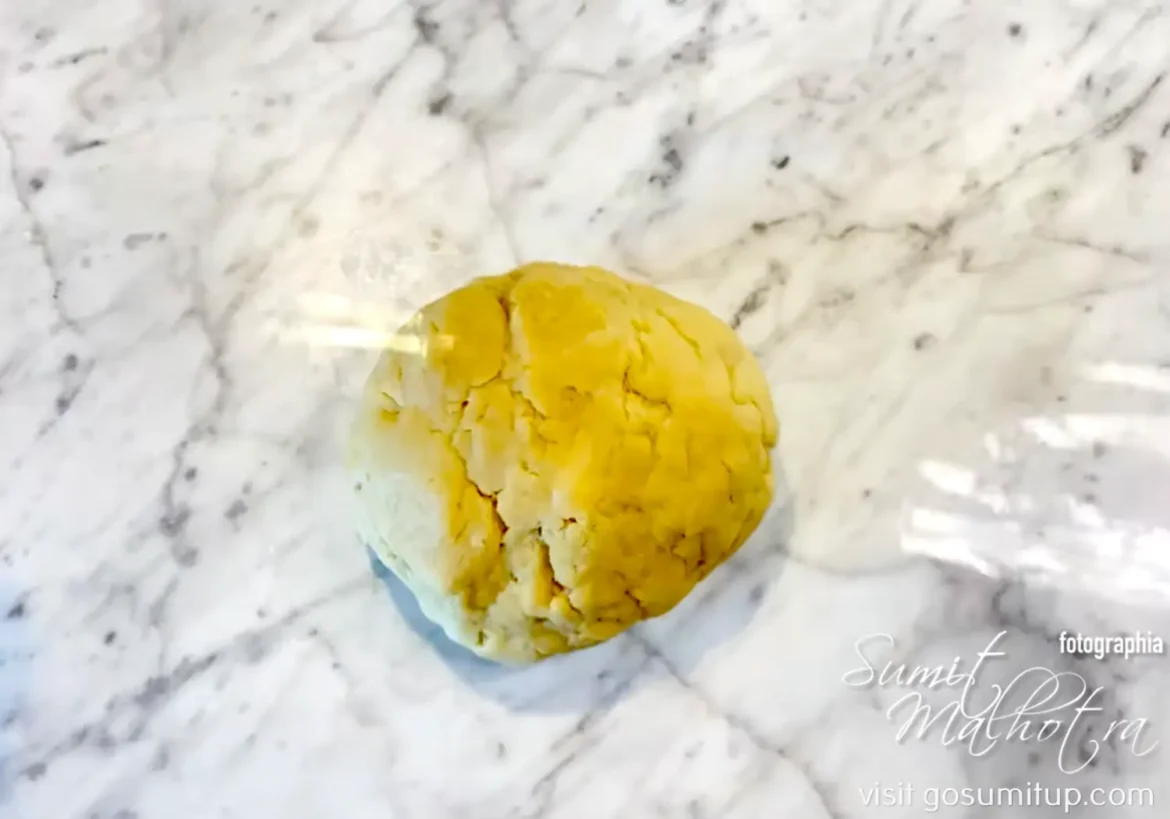
Making of Shekerbura (Part 4)
If you are a traveller and or just love to drive, you may find below a list of items that will fortify & thus enrich your travel experience.
I use many of these myself for my trips. They are modestly priced and quite important to keep handy.
- Travel Adapter – https://amzn.to/3A04EJp
- Action Camera – https://amzn.to/4eCSMfF
- Camera Mounts & Accessories – https://amzn.to/4eG4je2
- Dashcam – https://amzn.to/3U2j4Qc
- Neck Rest – https://amzn.to/3Y6ZP98
- Tyre Inflator – https://amzn.to/3U8HpDP
- Storage – https://amzn.to/3XVQFMI
- Car Laptop Charger – https://amzn.to/3XXMVdA
- Vacuum Cleaner Cordless – https://amzn.to/3Yo1hWd
- Air Mattress – https://amzn.to/4015Bvu
- Jack Ratchet Wrench – https://amzn.to/3YkxddO
- Cleaning Cloth Microfibre – https://amzn.to/3NIOFmt
- Rechargeable Solar LED Torch – https://amzn.to/3Yj4h5Y
- Electronics Accessories Organiser – https://amzn.to/3A04XUz
- Pocket Travel Data Transfer Tool – https://amzn.to/3zMTxnc
- Smart Tracker for Keys – https://amzn.to/3BTuIq0
- Camping Cookware Kit – https://amzn.to/3BIy0N3
- Sleeping Bag – https://amzn.to/3U7v2rP
GoSumItUp is a personal blog written and edited personally by me. All opinions expressed are my own, which are honest and have not been influenced by any means.
My reviews are dependent on the visits at the time, and revisits will be reviewed again as they may have a different experience or the same.
I am not a food critic nor do I consider myself as one; this platform allows me to write and review my own personal dining experiences, whether good or bad, delicious or not, all of which are honest and truthful opinions.
Suppose you disagree or agree with me at any point, or do not receive the same experiences as I have. In that case, I do not hold any responsibility as everyone will have their own experiences that they will encounter themselves.
I pay for all meals. However, if any meals or products have been sponsored or compensated or if I was a guest, it will be clearly disclosed at the end of each review.
All images on this blog are my own unless stated otherwise. If you wish to use any of my photography for any purposes, please do not use it without any written permission and give credit and/or link back to the website.
If you would like to send a product or any sponsors/endorsements, it may or may not be published and reviewed on the website.
If you wish to send any products or invitations for any media, press or collaborations, etc., consider if it is something related to the content of the website, and if you see fit, please visit the Contact page for contact details.
Thank You.
Thank you for visiting GoSumItUp! I hope you enjoy the reviews & recipes found at www.gosumitup.com.
This page consists of disclaimers regarding the recipe, its outcome, nutrition, and food handling safety decisions.
The recipes have been cooked and compiled by me for general information only and should not be used to diagnose or treat any medical condition/s.
This information is not intended to diagnose, treat, cure, or prevent any disease as well.
GoSumItUp.com has used all reasonable care in compiling the information but offers no warranty as to its accuracy or its use in any possible form.
Consult a doctor or other health care professional for diagnosis and treatment of any medical condition/s. For more details please refer to our disclosure policy.
If you like this article, you can let us know in the comments below or on social media using #gosumitup and tag @gosumitup on Facebook.
I am always happy to read your feedback, and if you liked the dish or if you made the dish. :)
Better still, take a picture and post it on Instagram and tag it as #gosumitup
Connect directly – You can also connect with me directly on my Instagram, Facebook or Pinterest.
And, keep visiting us for more of such awesomeness. Bookmark gosumitup.com into your web browser now or simply subscribe to our browser notifications.