Chiang Mai Day 4: A Curated Itinerary for Leisurely Exploration & Local Flavors
When designing an extended journey through Northern Thailand, structural pacing is everything.
Many travellers fall into the trap of over-scheduling, exhausting themselves with back-to-back excursions to historic wats, elephant sanctuaries, and long-distance mountain treks.
By the time day four arrives, temple fatigue and sensory overload often set in.
A well-optimised Chiang Mai Day 4 itinerary should intentionally break away from rigid tour groups.
It provides a masterclass in slow travel, transitioning seamlessly from a quiet morning in the lush mountain valleys to an immersive, self-guided exploration of Chiang Mai’s culinary night markets.
However, for me, the villa was quite comfortable; however, connectivity was a persistent issue.
The Wi-Fi at the villa was quite dodgy, and despite numerous complaints, it simply failed to work seamlessly.
Issue 1: The hotel management was unable to do anything to fix the WiFi.
Issue 2: I had ordered firewood for a small bonfire, only to be told by Ms Bird that it would cost 500 Baht.
This was not mentioned at all by Aht, the assistant, the previous night when the request was given for the same.
Stepping out onto a private resort balcony in the hills surrounding Chiang Mai offers an immediate lesson in micro-climatology. Unlike the dense, heat-retaining concrete grid of Bangkok, the elevated topography of the north traps a cooler, mist-laden air mass during the early morning hours. To maximize this environmental benefit, avoid rushing to a communal hotel buffet line. Instead, prioritize a slow, self-cooked or privately ordered in-house breakfast within your villa or bungalow.
1. The Morning Micro-Climate: In-Villa Seclusion & Culinary Base-Building
Stepping out onto a private resort balcony in the hills surrounding Chiang Mai offers an immediate lesson in micro-climatology.
Unlike the dense, heat-retaining concrete grid of Bangkok, the elevated topography of the north traps a cooler, mist-laden air mass during the early morning hours.
To maximise this environmental benefit, avoid rushing to a communal hotel buffet line.
Instead, prioritise a slow, self-cooked or privately ordered in-house breakfast within your villa or bungalow. This is what I did.
To prepare your body for a high-mileage walking day, your breakfast should focus on clean proteins, healthy fats, and targeted heat:
The Protein Core: Whisk fresh local eggs into a high-heat pan, creating a fluffy matrix capable of encapsulating leftover ingredients from previous dinners—such as crisp bell peppers, wild scallions, and hints of Thai bird’s eye chilli.
The Seared Accent: Accompany the eggs with perfectly crisp, high-quality bacon strips or local herbal pork sausage elements.
Subjecting these cured proteins to intense direct heat initiates dry-surface searing, rendering out excess lipids while concentrating the savoury, umami-rich amino acids.
The Botanical Freshness: Balance the heavy lipids with local, perfectly ripe tropical fruits. Plump wedges of local papaya and native bananas provide clean enzymes and slow-burning carbohydrates that won’t trigger a mid-day glycemic crash.
My Day 4 in Chiang Mai started with a self-cooked in-house breakfast.
I made omelettes stuffed with some leftover Stir-Fried Chicken & Cashew Nuts from the previous evening.
The omelettes were quite filling and left me happily stuffed & satisfied.
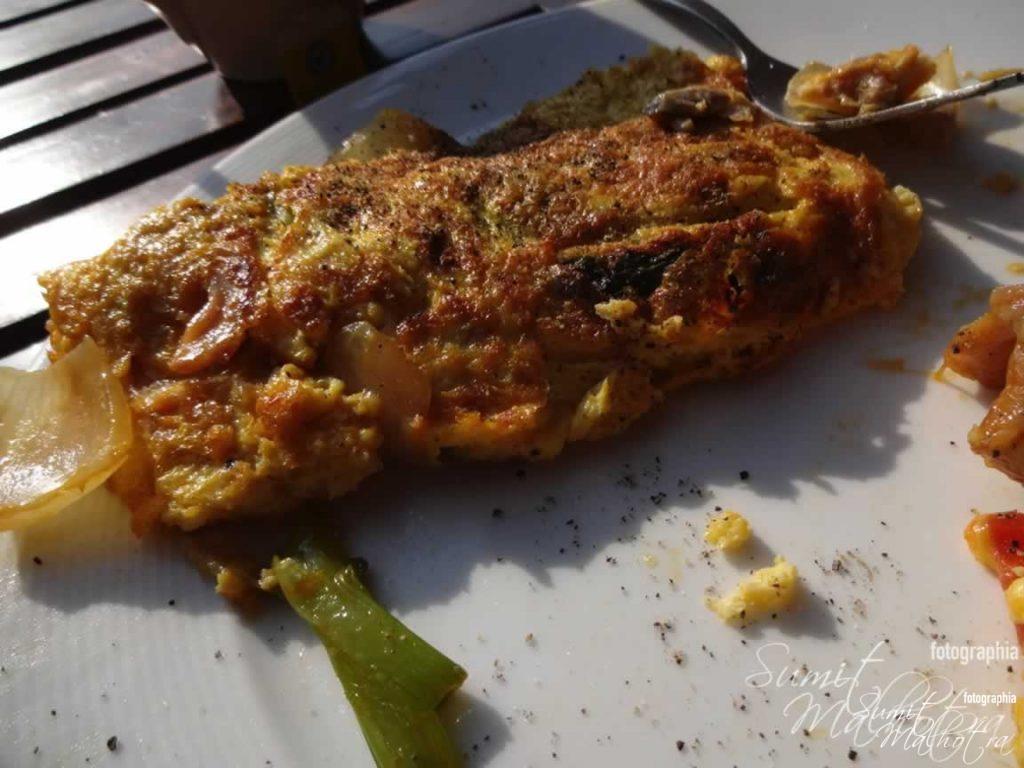
Stir-fried chicken & cashew nuts omelette
The winding mountain roads are lined with independent nurseries, steep fruit orchards, and open-air cafes.
2. Navigating the Foothills: Botanical Anomalies and Roadside Coffee Culture
The Poinsettia Phenomenon
One of the most striking visual features along the northern Thai highways is the abundance of blooming poinsettias (Euphorbia pulcherrima).
In Western countries, these vibrant red plants are heavily domesticated, forced into seasonal growth inside temperature-regulated greenhouses for winter holidays.
In the unique cooler microclimates of Northern Thailand’s hills, these plants grow wildly and aggressively outdoors.
Their brilliant crimson bracts flourish under the intense tropical sun, serving as a striking natural contrast against the deep emerald green of the surrounding jungle canopy.
Roadside Hospitality & The Communication Matrix
Stopping at a rustic highway cafe or an open-air garden terrace is a fantastic way to experience authentic Northern Thai hospitality, though it can sometimes test your communicative agility:
Clear Articulation: Away from the main tourist strips, English proficiency varies. State your requests clearly, using simple sentence structures and universally understood visual gestures.
Utilising Technology: Keep a local translation app or visual menu references open on your device to seamlessly bridge any communication gaps.
The Local Refreshment Choice: If you need a mid-day break, skip the standard imported commercial options.
Instead, order a thoroughly chilled local Thai lager, such as Singha or Chang. Enjoyed on a shaded wooden terrace, it offers a crisp, refreshing antidote to the rising midday heat.
The winding mountain roads are lined with independent nurseries, steep fruit orchards, and open-air cafes.
3. Entering the City: Transit Mechanics & Central Base Setup
By mid-afternoon, the quiet environment of the hills gives way to the energetic buzz of Chiang Mai’s city center.
Successfully navigating this transition requires a solid understanding of local transportation logistics.
I left for the Chiang Mai Moat Market via the free coach but landed at a local one just outside the moat.
The moat in Chiang Mai is one of the city’s most iconic and historic defining features.
Built in 1296 by King Mangrai, the founder of the Lanna Kingdom, the moat forms a perfect 1.6-kilometre square that protects the historic Old City.
Originally built alongside brick walls to defend against Burmese invasions, it has now evolved into a scenic, tree-lined waterway surrounded by busy ring roads (Mani Noppharat, Bumrung Buri, Chang Lor, Kotchasarn, and Arak roads).
This market is quite comparable to New Delhi’s Karol Bagh or Sarojini Nagar. It found it to be crowded with electricity cables hanging loose.
I did find some curios and trinkets that I happily bought as gifts for family.
Transport Economics
While many high-end resorts offer scheduled shuttle services into the city, these can often limit your schedule and flexibility.
If you opt for an independent, on-demand private taxi or a registered regional driver, expect a flat-rate transfer fee of approximately 600 Thai Baht from the outer hill districts into the historic Old City grid.
Establishing an Urban Base
For the evening segment of your itinerary, checking into a centrally located boutique city hotel is highly efficient.
This provides a secure location to drop off your daypacks, refresh after your road travel, and switch into comfortable, high-traction walking footwear optimised for navigating uneven night market pavement.
The winding mountain roads are lined with independent nurseries, steep fruit orchards, and open-air cafes.
4. The Night Market Immersive Walk: Culinary Physics & Street Culture
As evening approaches, Chiang Mai’s street corners transform into vibrant culinary hubs.
The night markets are not just places to shop; they function as active open-air kitchens where vendors use high-heat cooking techniques passed down through generations.
The Auditory & Visual Atmosphere
Navigating a Chiang Mai night market is a multi-sensory experience. The pathways are filled with rows of hand-carved teakwood items, intricate silver jewelry, and vibrant local textiles.
As you walk through the stalls, you’ll often hear the beautiful sounds of traditional Thai stringed instruments, like the phin or sueng, played live by talented visually impaired street musicians. Their melodies add a wonderful, authentic layer to the bustling market energy.
The Street Food Evaluation: Mango Sticky Rice (Khao Niew Mamuang)
While the market offers an array of savoury options, the standout culinary highlight of the evening is a classic Thai dessert: Mango Sticky Rice.
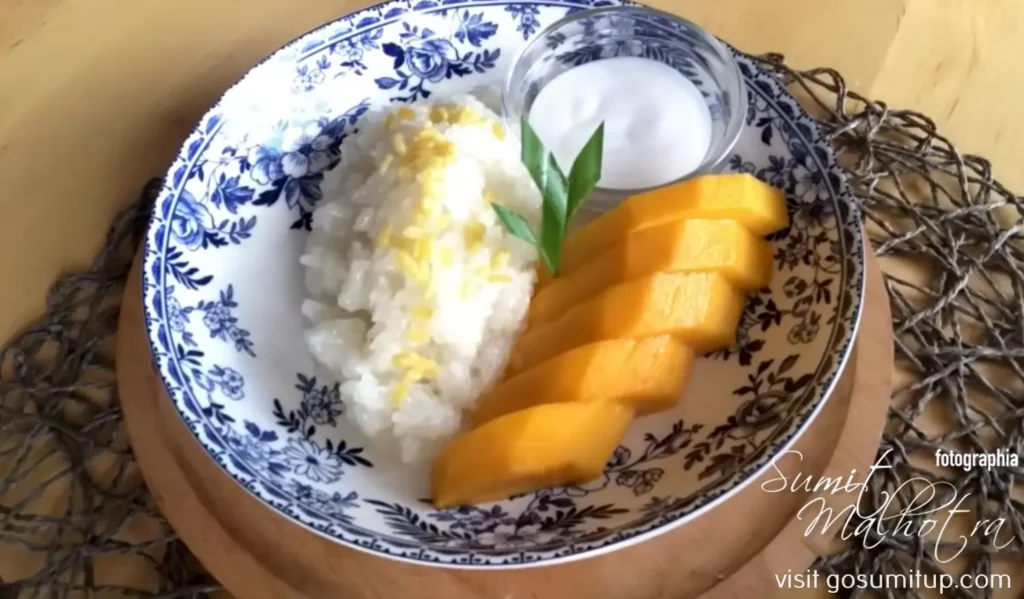
Thai mango & sticky rice
This iconic dish showcases a brilliant balance of flavour and texture, driven by simple food chemistry.
1. The Starch Matrix
The foundation of the dish lies in high-amylopectin glutinous rice.
Unlike standard long-grain rice, sticky rice is steamed rather than boiled, which keeps its structure intact.
This process creates a dense, chewy starch matrix that is perfectly primed to absorb rich liquids without turning mushy.
2. The Lipid & Salt Counterpoint
While the rice is still warm, the vendor folds in a rich emulsion of coconut milk sweetened with native palm sugar.
A crucial addition here is a precise measure of fine sea salt.
The sodium doesn’t just add a savoury note; it acts as a flavour enhancer, cutting through the heavy fats of the coconut milk and heightening the natural sweetness of the rice.
3. The Sugar Profiles
The dish is completed with fresh slices of perfectly ripe mango, typically the coveted Nam Dok Mai variety.
This fruit offers a smooth, fibre-free texture and a bright sweetness balanced by a hint of natural acidity.
Paired with the rich, salted rice matrix, it creates a wonderful interplay of warm and cool, savoury and sweet elements.
The winding mountain roads are lined with independent nurseries, steep fruit orchards, and open-air cafes.
5. Daret's Restaurant, Airport Central Plaza Mall & The Dairy Queen
If you are mapping out your evening walk or adjusting your transit drop-off location near the Old City walls, Daret’s House & Restaurant serves as a highly reliable geographic anchor.
It was past lunchtime by now, and my hunger pangs were at their peak. I deposited myself at Daret’s for lunch.
Daret’s, I must say, makes some excellent food. Review of Daret’s House & Restaurant is here.
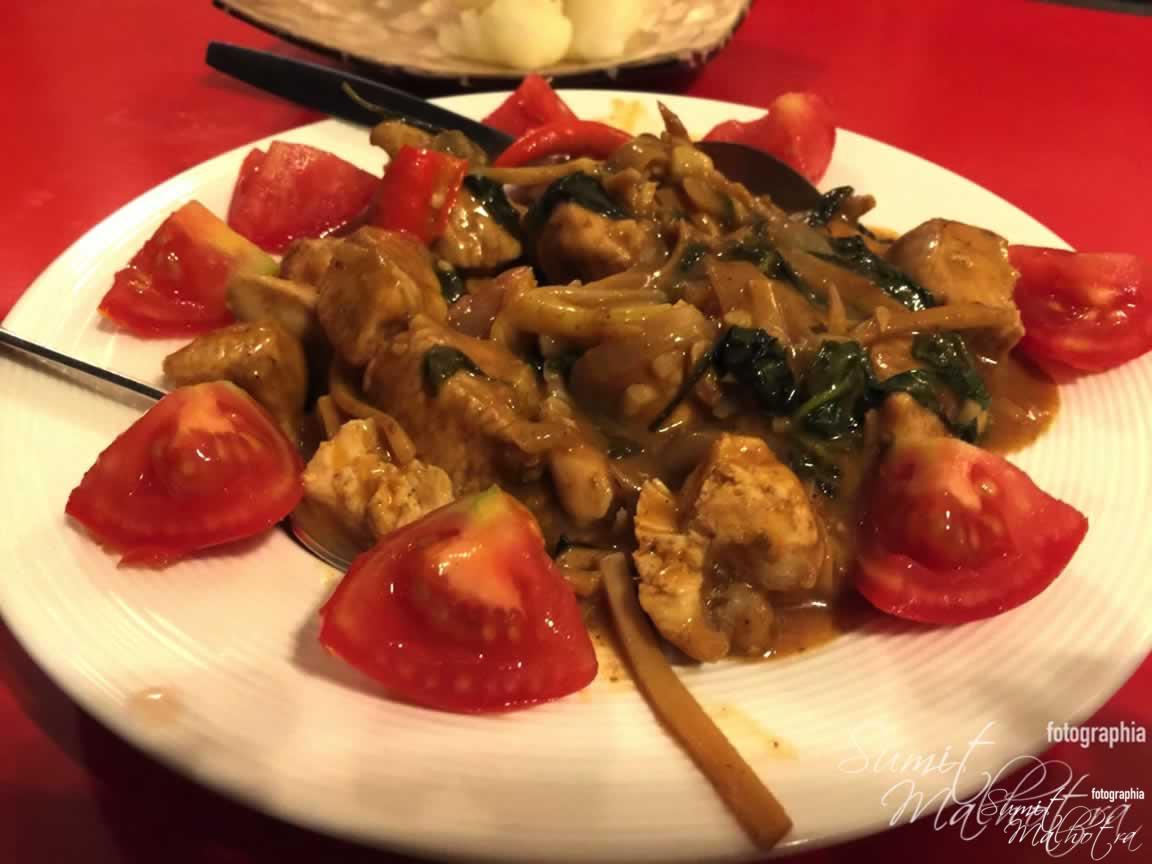
Their menu contains both Thai & International cuisines. I ordered a Whole Fried Fish and Chicken in Thai Red Curry for my lunch. Both the dishes were delectable.
The portion of rice, as usual in Thailand, was small. Hence, I ordered two @ 15 Baht each. The curry was easily good for two people.
As I wandered around Chiang Mai, the evening market was still being set up. As I explored the market, I found it was really good for shopping.
Though you should bargain hard to get a good price. Having said that, bargaining may or may not work.
Airport Central Plaza Mall – Chiang Mai Day 4
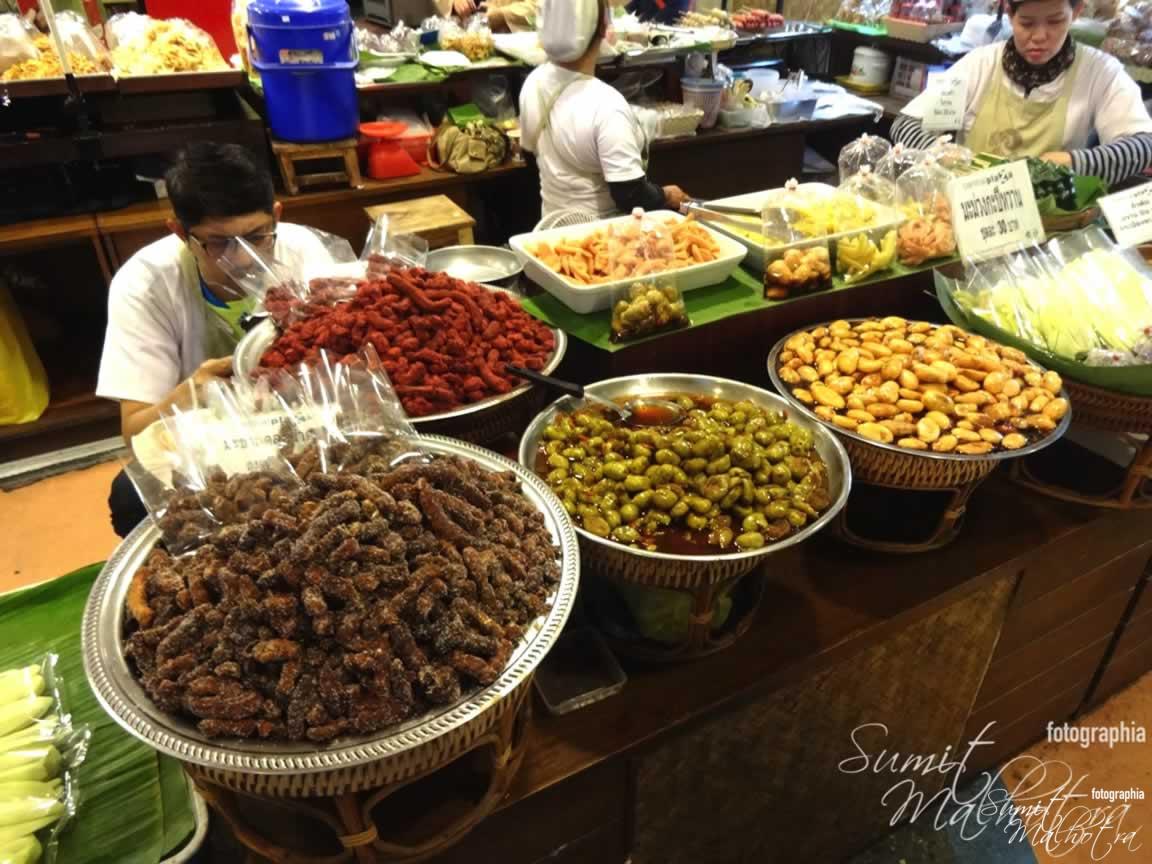
Exhibits of food
After shopping, I took a red cab to the Airport Central Plaza Mall, which wasn’t far off.
The mall stores, especially the branded ones, are quite spacious and are exhaustively stocked.
The mall is great for shopping. I shopped for dinner and breakfast at the Airport Central Plaza Mall. The supermarket out there is huge, and it takes time to find even a regular-use item, such as bread.
They mostly import their butter, and that makes it a bit expensive (upwards of 200 Baht for 200 gm).
However, to a foodie’s delight, they have a vast array of food. Almost all kinds of meat, vegetables & fruits are easily available.
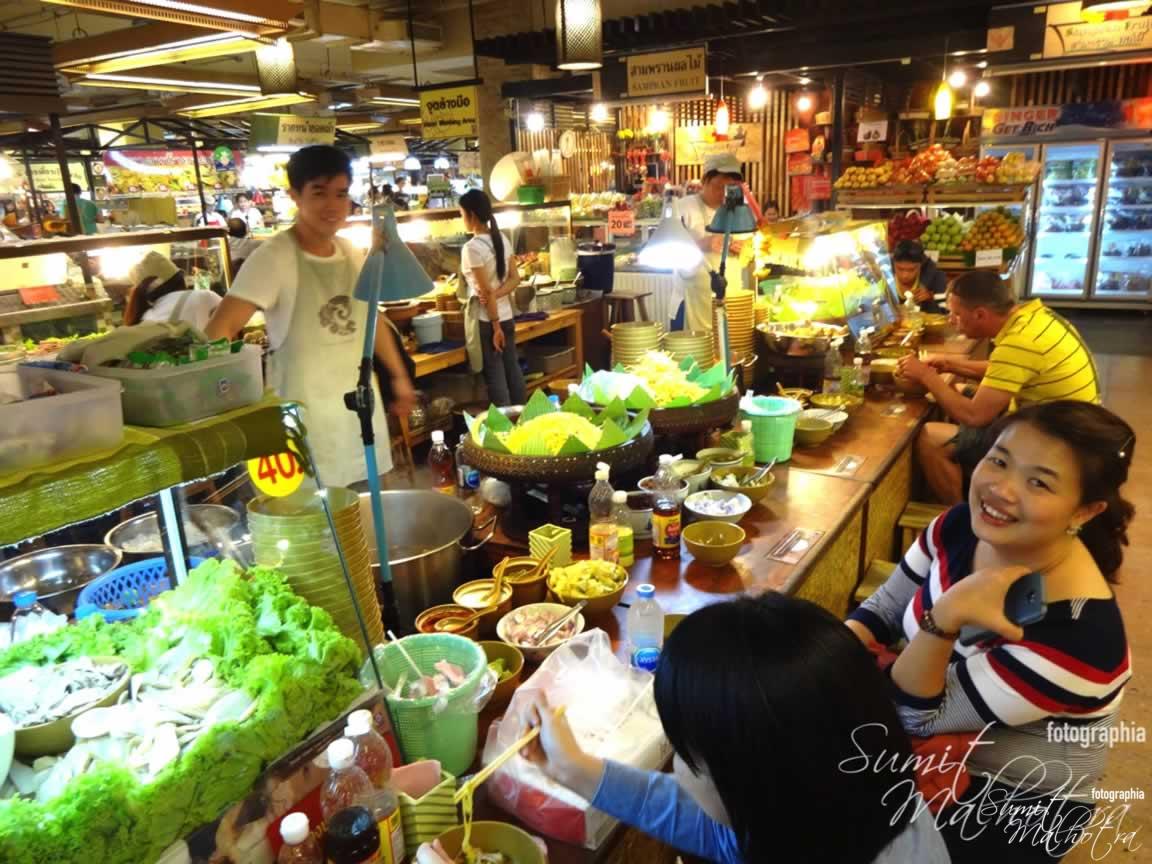
Supermarket at airport central plaza mall
To stock myself, I picked up eggs, chicken, basil, Thai ginger, garlic pods, Massaman Curry Paste, Whole wheat bread and butter.
Planning further, I also picked up an array of fresh fruit – including melons, guava, green mango and red pear.
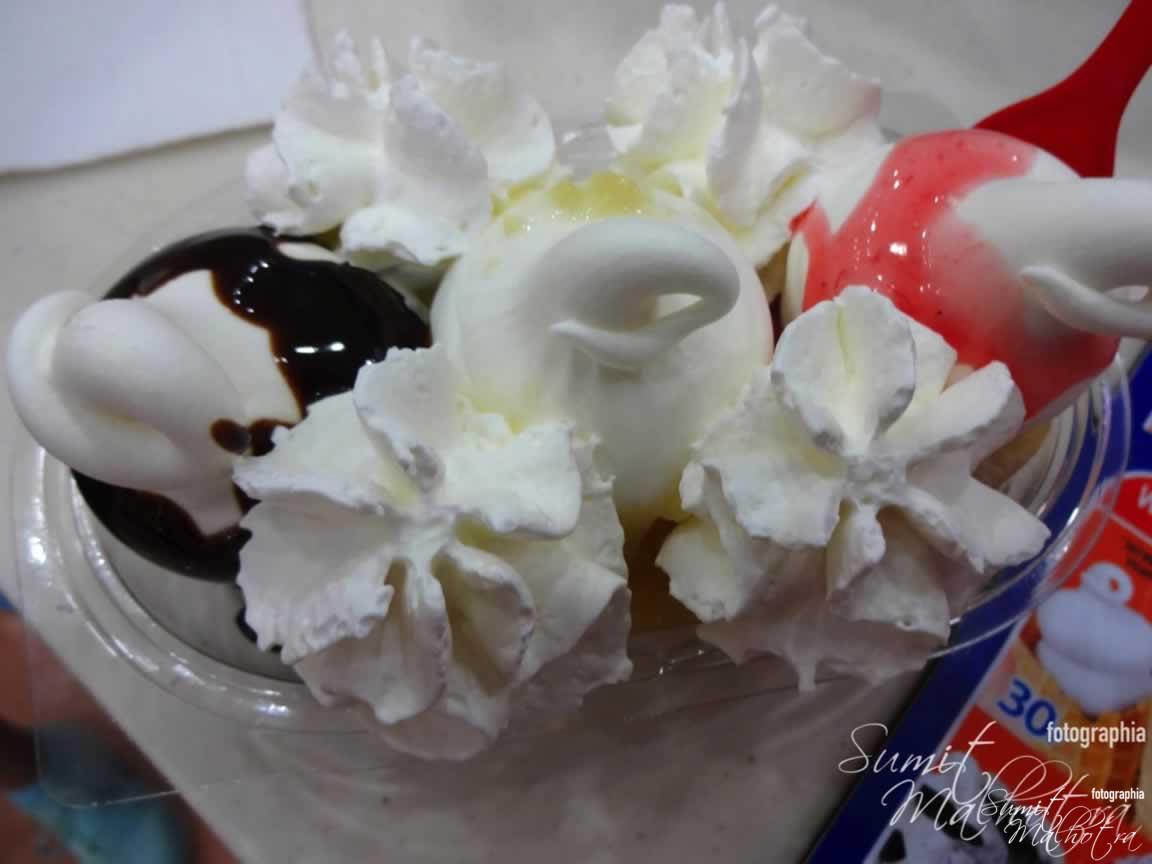
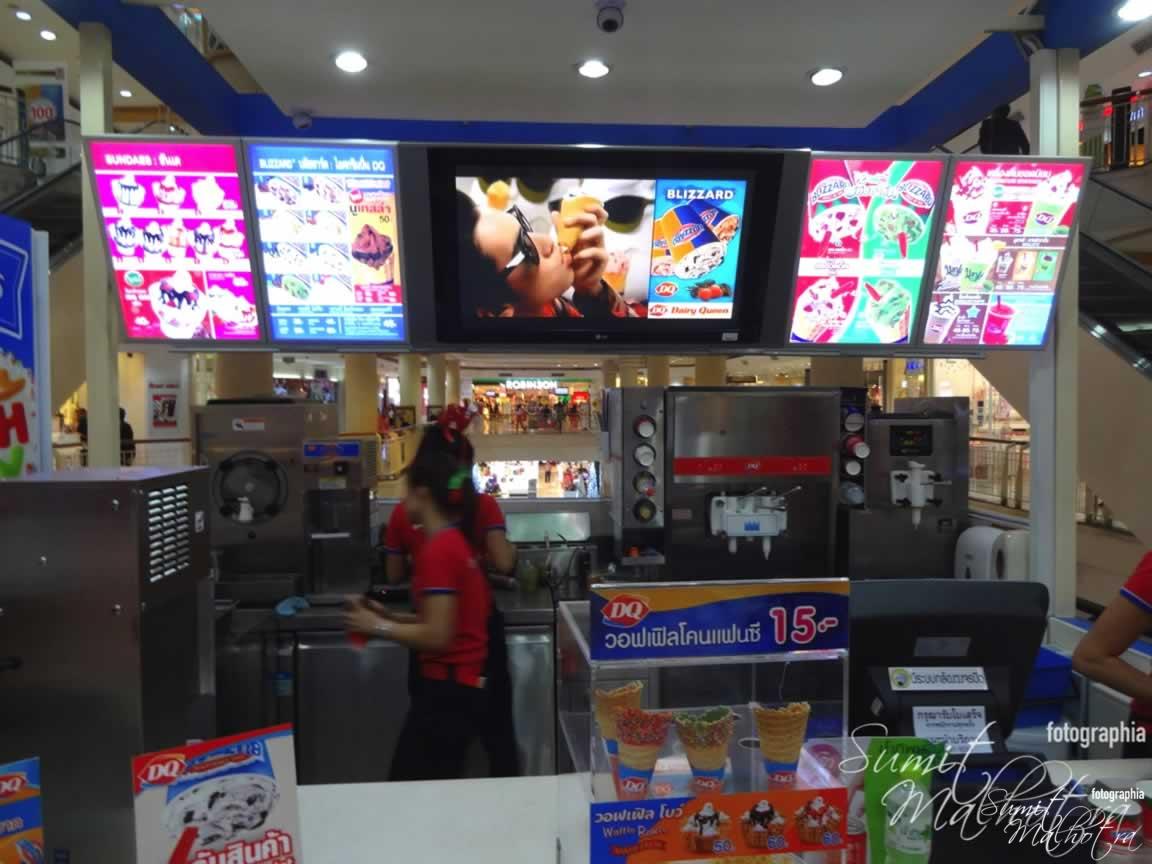
I ducked into the Dairy Queen, which is quite a famous Ice Cream boutique and ordered an ice cream sundae.
The sundae was excellent, and they served huge portions. It was a great day in Chiang Mai.
Practical Reference for Independent Travelers
|
Itinerary Phase |
Key Operational Focus |
Financial / Metric Baseline |
|
Morning Fueling |
Custom protein and lipid base build. |
Minimal cost; utilizes in-villa assets. |
|
Foothill Exploration |
Botanical observation and cafe rest stops. |
80–120 Baht per local beverage. |
|
Urban Transit |
Mountain-to-city private vehicle transfer. |
~600 Baht flat rate. |
|
Night Market Walk |
Street food exploration and cultural navigation. |
50–100 Baht per fresh street food dish. |
A flawlessly structured Chiang Mai Day 4 itinerary balances natural serenity with vibrant street culture.
True travel luxury isn’t about rushing through a checklist of sights; it’s about slowing down to appreciate the details—from wild poinsettias in the mountain foothills to the incredible flavour balance of a perfect plate of Mango Sticky Rice.
A magnificent mix of relaxation and local immersion!
Day 4 Chiang Mai (Part 1)
Disclaimer
If you like this article, you can let us know in the comments below or on social media using #gosumitup and tag @gosumitup on Facebook.
I am always happy to read your feedback, whether you liked the dish or made it. :)
Better still, take a picture and post it on Instagram and tag it as #gosumitup
Connect directly – You can also connect with me on Instagram, Facebook, or Pinterest.
And, keep visiting us for more of such awesomeness. Do bookmark gosumitup.com into your web browser now or simply subscribe to our browser notifications.
If you are an ardent traveller, you may find below a list of items that will fortify your travel experience. I use many of these myself for all my trips or roadtrips. They are modestly priced and quite important to keep handy for your safety.
- Travel Adapter – https://amzn.to/3A04EJp
- Action Camera – https://amzn.to/4eCSMfF
- Camera Mounts & Accessories – https://amzn.to/4eG4je2
- Dashcam – https://amzn.to/3U2j4Qc
- Neck Rest – https://amzn.to/3Y6ZP98
- Tyre Inflator – https://amzn.to/3U8HpDP
- Storage – https://amzn.to/3XVQFMI
- Car Laptop Charger – https://amzn.to/3XXMVdA
- Vacuum Cleaner Cordless – https://amzn.to/3Yo1hWd
- Air Mattress – https://amzn.to/4015Bvu
- Jack Ratchet Wrench – https://amzn.to/3YkxddO
- Cleaning Cloth Microfibre – https://amzn.to/3NIOFmt
- Rechargeable Solar LED Torch – https://amzn.to/3Yj4h5Y
- Electronics Accessories Organiser – https://amzn.to/3A04XUz
- Pocket Travel Data Transfer Tool – https://amzn.to/3zMTxnc
- Smart Tracker for Keys – https://amzn.to/3BTuIq0
- Camping Cookware Kit – https://amzn.to/3BIy0N3
- Rechargeable Electric Gas Lighter for Stoves – https://amzn.to/4orBsin
- Sleeping Bag – https://amzn.to/3U7v2rP
GoSumItUp is a personal blog written and edited personally by me. All opinions expressed are my own which are honest and have not been influenced by any means.
My reviews are dependent on the visits at the time and revisits will be reviewed again as they may have a different experience or the same.
I am not a food critic nor do I consider myself as one, this platform allows me to write and review my own personal dining experiences, may they be good or bad, delicious or not, all are honest and truthful opinions.
Suppose you disagree or agree with me at any point or do not receive the same experiences as I have. In that case, I do not hold any responsibility as everyone will have their own experiences that they will encounter themselves.
I pay for all meals. However, if any meals or product has been sponsored or compensated or if I was an invited guest, it will be clearly disclosed at the end of each review.
All images on this blog are my own unless stated otherwise. If you wish to use any of my photography for any purposes, please do not use it without any written permission and give credit and/or link back to the website.
If you would like to send a product or any sponsors/endorsements, it may or may not be published and reviewed on the website.
If you wish to send any products or invitations for any media, press or collaborations etc., consider if it is something related to the content of the website and if you see fit, please visit the Contact page for contact details.
Thank You.
Thank you for visiting GoSumItUp! I hope you enjoy the reviews & recipes found at www.gosumitup.com.
This page consists of disclaimers regarding the recipe, its outcome, nutrition, and food handling safety decisions.
The recipes have been cooked and compiled by me for general information only and should not be used to diagnose or treat any medical condition/s.
This information is not intended to diagnose, treat, cure, or prevent any disease as well.
GoSumItUp.com has used all reasonable care in compiling the information but offers no warranty as to its accuracy or its use in any possible form.
Consult a doctor or other health care professional for diagnosis and treatment of any medical condition/s. For more details please refer to our disclosure policy.
The nutritional and health information provided in this article is for educational and informational purposes only and is not intended as medical advice, diagnosis, or treatment.
While fenugreek (Trigonella foenum-graecum) has a long history of traditional and clinical use, individual health needs vary.
Always consult with a qualified healthcare professional, registered dietitian, or physician before introducing therapeutic doses of fenugreek into your daily diet, especially if you are pregnant, nursing, taking blood-thinning medications, or managing chronic conditions like diabetes.