Traditional Bahamian Food Guide: Authentic Flavours, History & Recipes
Discover the ultimate guide to traditional Bahamian food. Explore iconic island dishes, cultural significance, seafood history, and authentic culinary heritage.
Traditional Bahamian Food, Bahamian Cuisine, Authentic Bahamian Dishes, Bahamas Food Culture, Conch Fritters, Bahamian Rock Lobster, Peas And Rice, Guava Duff, Bahamian Seafood Heritage, Island Comfort Food, Caribbean Cooking, Nassau Culinary, Out Island Eats, Seafood Recipes, Tropical Desserts, Johnnycake, Firecrab, Souse, Rum Cake, Island Spices, Bahamas
What Does Traditional Bahamian Food Mean?
Traditional Bahamian food is a vibrant culinary tradition defined by rich tropical spices, abundant seafood, and a fusion of West African, European, and indigenous Caribbean influences.
At its core, Bahamian cuisine reflects a lifestyle shaped by the surrounding Atlantic Ocean and local island agriculture.
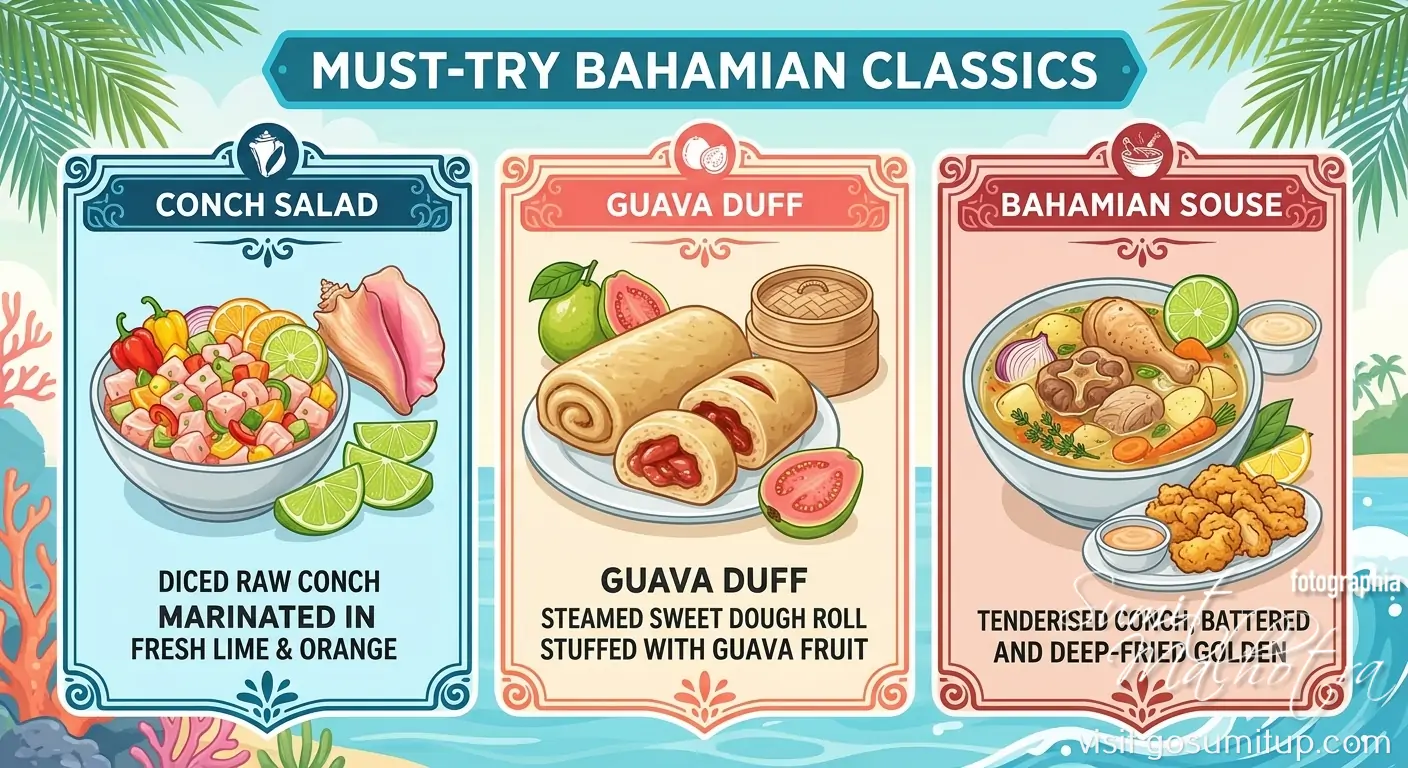
Must-try bahamian classics
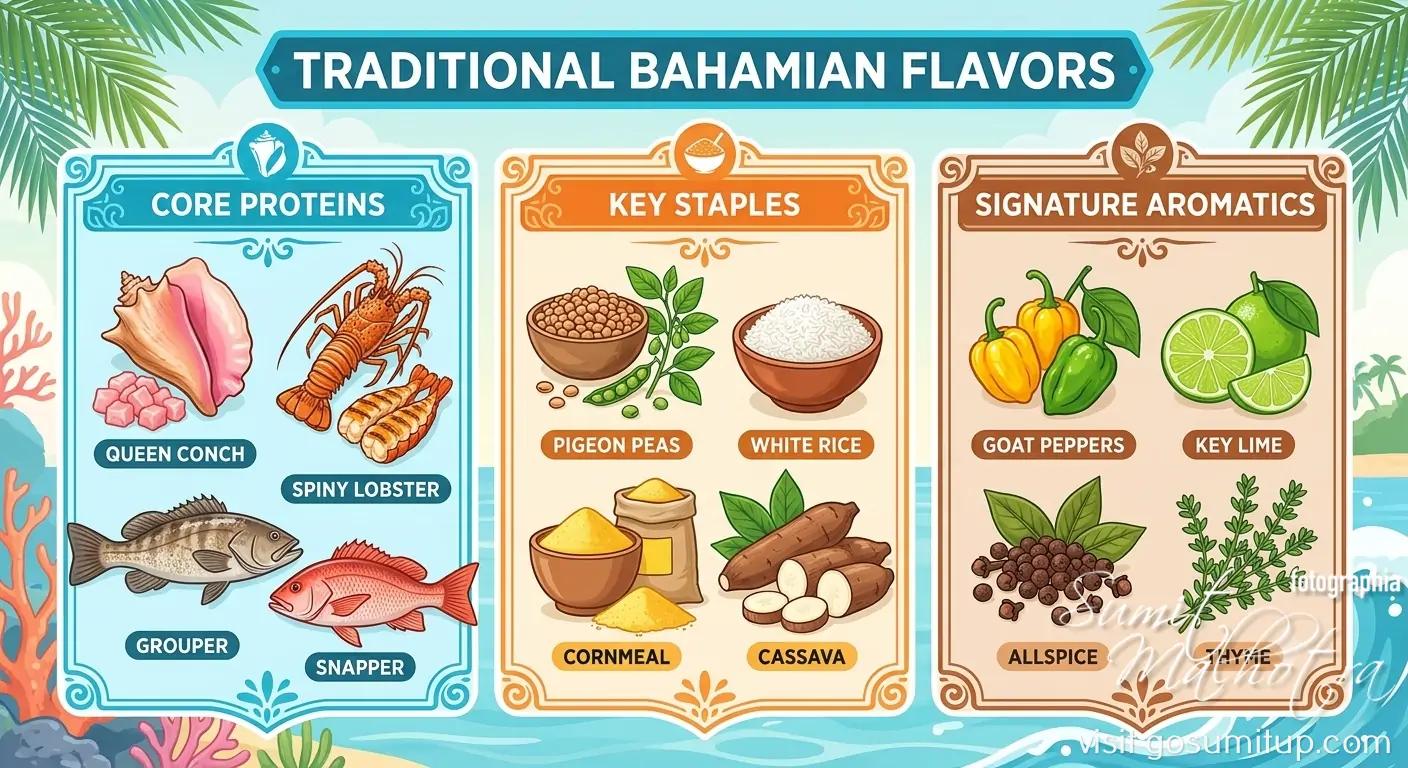
Traditional bahamian flavors
Core Ingredients of the Islands
The cornerstone of Bahamian cooking is Queen Conch (pronounced “konk”), a large marine mollusc with sweet, firm meat.
It is served in numerous styles: raw in citrus-marinated salads, battered and deep-fried as fritters, or simmered in rich tomato-based chowders.
Beyond conch, the waters around the 700+ islands supply:
- Bahamian Rock Lobster (Crawfish): Typically steamed, grilled, or baked with savoury spices.
- Grouper and Red Snapper: Pan-fried, boiled, or baked with lime, peppers, and onions.
- Root Crops and Grains: Pigeon peas, sweet potatoes, cassava, and cornmeal form the base of daily meals.
Historical Fusion and Culinary Influences
The evolution of Bahamian food mirrors the archipelago’s history. West African traditions introduced cooking techniques such as slow-simmering stews and the heavy use of legumes and hot peppers.
English colonial influences contributed baked goods like Johnnycake and savoury pies, while the American Loyalist migrations of the late 18th century reinforced southern-style comfort cooking.
What Is the Relevance of Traditional Bahamian Food?
Traditional Bahamian food plays a vital role in contemporary island life, acting as a bridge between historical survival strategies and modern cultural pride.
Sustaining Local Economies and Fisheries
Agriculture on coral islands can be challenging, making the ocean the primary source of protein for centuries.
Today, local fishermen, shellers, and farmers rely directly on the demand for traditional staples. Seafood shacks—most notably at Arawak Cay (The Fish Fry) in Nassau—drive local commerce, creating sustainable economic opportunities for families across New Providence and the Out Islands.
Preserving Island Identity in a Modern World
As global trade and imported convenience foods spread across the Caribbean, maintaining traditional foodways ensures the preservation of distinct Bahamian heritage.
- Sunday Dinners: Families gather for traditional spreads featuring baked macaroni and cheese, fried fish, and pigeon peas with rice.
- Community Fish Fries: Weekly gatherings where locals gather to share fried snapper, cracked conch, and cold Bahamian beers like Kalik or Sands.
What Is the Significance of Traditional Bahamian Food?
The significance of Bahamian cuisine lies in its ability to tell the story of resilience, community, and cultural adaptation across centuries.
Cultural Traditions and Celebration Feasts
Food is central to every major milestone and holiday in the Bahamas. During Junkanoo—the vibrant street carnival held on Boxing Day and New Year’s Day—street stalls line the parade routes selling piping hot bowls of Bahamian Souse (a clear, peppery broth made with chicken, sheep tongue, or pig’s feet, seasoned with lime juice and goat pepper) alongside warm slabs of Johnnycake.
Must-try bahamian classics
African and Caribbean Heritage Connections
Many iconic dishes retain deep ancestral ties to West Africa:
- Peas and Rice: A direct descendant of African rice and legume preparations, cooked down with salt pork, tomato paste, thyme, and fresh goat pepper.
- Boiled Fish and Freetown Porridge: Remnants of early plantation-era cooking methods where simple, fresh ingredients were transformed using native aromatics.
- Guava Duff: A labour-intensive dessert where fresh guava fruit is folded into sweet dough, wrapped in cloth, steamed for hours, and drizzled with a rich rum or brandy butter sauce.
What Is the Importance of Traditional Bahamian Food?
Understanding the importance of Bahamian cuisine requires examining its nutritional grounding, environmental sustainability, and role in global tourism.
Nutrition, Sustainability, and Tourism Impact
Historically, traditional Bahamian food relied on wild-caught marine life, fresh citrus, and home-grown root crops, offering a nutrient-dense diet rich in lean proteins, healthy omega-3 fatty acids, and essential vitamins.
In modern tourism, authentic food has become a primary attraction. Travellers search out authentic culinary experiences over standard resort dining. Eco-tourism initiatives now focus on:
- Sustainable Conch Harvesting: Enforcing size limits and closed seasons to protect queen conch populations.
- Farm-to-Table Initiatives: Encouraging local farming on islands like Eleuthera and Andros to supply restaurants with organic native produce.
Passing Down Culinary Legacy to Future Generations
Food serves as an oral and tactile history lesson in the Bahamas. Recipes for signature dishes are rarely written in cookbooks; instead, they are passed down through generations by sight, taste, and memory.
Teaching younger generations how to properly tenderise conch, balance goat pepper heat with fresh lime juice, or knead perfect Johnnycake dough ensures that the cultural soul of the Bahamas remains vibrant and distinct.
Conclusion: Experiencing the True Spirit of the Bahamas
Traditional Bahamian food is far more than simple sustenance—it is a celebration of island resourcefulness, coastal bounty, and rich history. Whether enjoying a fresh bowl of conch salad served right at the dock or savoring a warm slice of Guava Duff on a Sunday afternoon, every bite connects you to the warm, resilient spirit of the Bahamian people.