Kulcha Dhaba: Heritage, Culmination, and Culinary Science of Punjab’s Stuffed Flatbreads
Explore the ultimate guide to Kulcha Dhaba. Discover its historical origin, authentic Punjabi preparation techniques, cultural significance, and modern popularity.
Learn more about Kulcha Dhaba, Authentic Amritsari Kulcha, Punjabi Dhaba Culture, Tandoori Kulcha Recipe, Street Food of Punjab, North Indian Culinary Heritage, Traditional Tandoor Cooking, Stuffed Flatbreads of India, Amritsar, Chole Kulcha, Clay Oven Cooking, Desi Ghee, Dhabas of Punjab, Indian Bread, Maida Flatbread, Punjabi Cuisine, Roadside Eateries, Street Food India
What Does Kulcha Dhaba Mean?
The phrase Kulcha Dhaba combines two iconic terms from the culinary landscape of Northern India, specifically the state of Punjab.
To understand its complete meaning, the phrase must be broken down into its core linguistic and cultural roots:
- Kulcha (कुलचा): A traditional North Indian flatbread made primarily from refined wheat flour (maida). Unlike a standard roti or naan, an authentic kulcha is leavened slightly using a fermented starter dough (khameer), curd, or baking soda/powder. It is typically stuffed with a spiced filling—most commonly mashed potatoes (aloo), paneer, onions (pyaz), or a mixture thereof—and slapped against the glowing clay walls of a cylindrical pit oven known as a tandoor. Once baked to a golden crisp, it is crushed between open palms to crack the outer shell and drenched in melted butter or desi ghee.
- Dhaba (ढाबा): Traditionally, a dhaba refers to a rustic, roadside eatery located along North Indian highways (particularly the Grand Trunk Road). Historically established to serve long-haul truck drivers (truckwalas) and weary travellers, dhabas are celebrated for serving fresh, piping-hot, heavy, and budget-friendly traditional food in an unpretentious environment.
Therefore, a Kulcha Dhaba literally translates to an eatery dedicated to the craft of making and serving authentic, tandoor-baked stuffed kulchas.
While it originated as a humble roadside establishment, today the term signifies any food outlet—from a street stall in Amritsar to an artisanal restaurant—that specialises in serving traditional kulchas paired with spicy chickpea curry (amritsari chole), tangy tamarind-onion chutney (imli pyaz ki chutney), and fresh churned butter.
What is the Relevance of Kulcha Dhaba?
The relevance of a Kulcha Dhaba in contemporary gastronomy stretches far beyond simple sustenance; it acts as an anchor for regional identity, culinary preservation, and socio-economic dynamics.
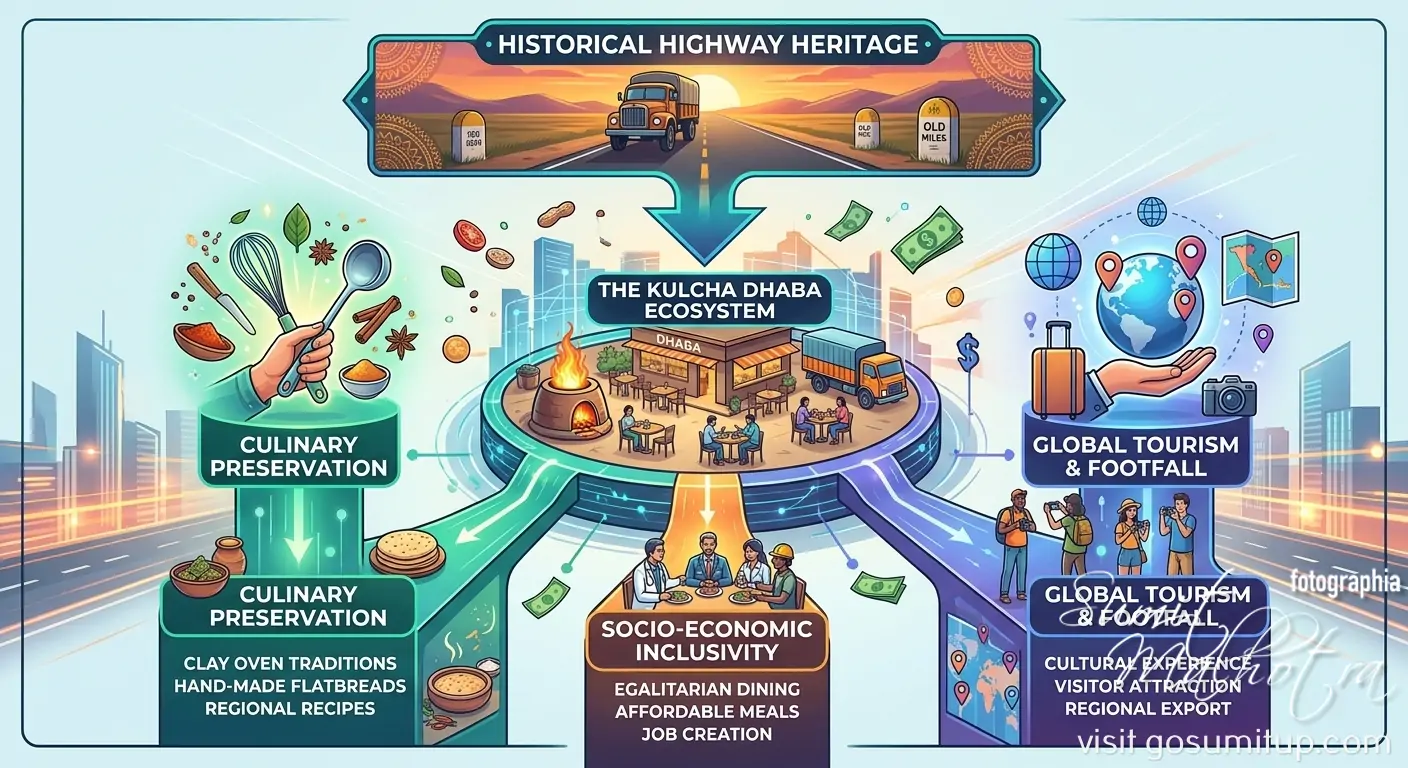
Historical highway heritage – kulcha dhaba
1. Preserving Traditional Tandoor Gastronomy
In an era dominated by automated kitchens, commercial ovens, and fast-food chains, the Kulcha Dhaba maintains the ancient art of live wood and charcoal fire cooking.
The heat dynamics of a traditional subterranean clay tandoor—reaching temperatures upward of 400°C (750°F)—cannot be replicated by modern electric baking appliances.
The kulcha depends on this intense radiative heat to achieve its distinct character: a blistered, smoky, crispy crust hiding soft, steaming, flavour-packed internal layers.
2. Socio-Economic Inclusivity
The Kulcha Dhaba remains one of the most egalitarian dining venues in India. Historically situated on charpoys (khats) along highways, these eateries welcome patrons from every stratum of society.
A wealthy corporate executive in an SUV and a daily-wage labourer sit side-by-side on plastic stools or wooden benches to enjoy the exact same meal.
It provides high-calorie, nutrient-dense, and deeply satisfying food at an accessible price point, making culinary luxury available to all.
3. Tourism and Regional Pride
The city of Amritsar has become synonymous with the Amritsari Kulcha, turning Kulcha Dhabas into primary tourist destinations.
Travellers, food bloggers, and international chefs travel to culinary hubs specifically to witness the theatre of a Kulcha Dhaba: the rhythmic slapping of dough, the skilled extraction of blistering breads using long iron rods, and the satisfying sound of the kulcha being crushed by hand to release steam and showcase its flaky layers.
What is the Significance of Kulcha Dhaba?
The significance of the Kulcha Dhaba lies in its historical lineage, its cultural symbolism in Punjab, and its mastery over textures and flavour balancing.
1. Historical Evolution: From Royal Palaces to Street Counters
The roots of the kulcha trace back to the Mughal and Nizami courts.
Legend holds that during the reign of the Mughal Emperor Shah Jahan, royal chefs introduced stuffed, leavened flatbreads that were light yet rich.
The Nizam of Hyderabad even chose the symbol of a kulcha on his official state flag after a Sufi saint predicted his lineage would rule for generations after he consumed seven kulchas.
However, as the bread migrated to the fertile plains of Punjab, it underwent a populist transformation.
The Punjabi agricultural lifestyle demanded robust, hearty meals.
The refined royal bread evolved into a thicker, heavily stuffed, layered pastry-like flatbread baked in charcoal tandoors, giving birth to the modern Kulcha Dhaba culture.
2. The Perfect Flavour and Texture Synergy
The culinary significance of a Kulcha Dhaba is rooted in its balance of contrasting textures and flavour profiles.
The tandoori kulcha (smoky, flaky, crispy) acts as the perfect vessel for Amritsari chole (tender, slow-cooked, earthy chickpea curry).
This is balanced further by imli pyaz chutney (sour, crunchy, sharp) and rich fresh butter.
The combination creates a complete gastronomic profile: heat from the spices, tartness from anardana, richness from melted fat, and crunch from raw onions.
3. Symbol of Punjabi Hospitality (Mehman Nawazi)
A Kulcha Dhaba embodies the spirit of Punjabi warmth. Portions are generous, butter is added without restraint, and refills of curry and chutney are frequently offered with enthusiasm.
It represents a culture where feeding someone with open-handed abundance is seen as an act of love and respect.
What is the Importance of Kulcha Dhaba?
Understanding the importance of the Kulcha Dhaba requires looking at its impact on local economies, nutrition, technique, and global Indian diaspora culture.
1. Economic Engine for Local Ecosystems
A Kulcha Dhaba supports a broad network of local micro-industries:
- Dairy Farmers: Massive quantities of fresh butter, ghee, curd, and paneer are sourced daily.
- Spice Traders: Spices like cumin, coriander, anardana, and cloves are consumed in high volumes.
- Potters & Tandoor Makers: Traditional clay tandoors must be crafted, seasoned, and periodically replaced by skilled artisans.
2. Nutritional Role for Agrarian Workers
Historically, Northern India’s agrarian workforce and long-haul transportation drivers required dense caloric intake to sustain hard physical labour.
A single stuffed kulcha meal provided long-lasting energy through complex carbohydrates, plant-based proteins, and necessary fats, while digestives like ajwain and ginger aided digestion of the heavy bread.
3. Safeguarding Artisanal Craftsmanship
Unlike modern commercial kitchens, cooking at a Kulcha Dhaba is an intuitive art form passed down through generations of ustads (master chefs):
- Achieving dozens of flaky layers (laccha) requires precise dough manipulation.
- Managing the tandoor temperature relies purely on radiative heat feeling rather than digital thermometers.
4. Cultural Export and Diaspora Connection
As the Punjabi diaspora expanded globally to Canada, the UK, and the US, the Kulcha Dhaba model travelled with them.
Today, authentic Kulcha Dhabas in cities globally serve as vital cultural spaces where immigrants reconnect with the sounds, aromas, and tastes of their homeland.
Conclusion: Preserving a Living Culinary Tradition
The Kulcha Dhaba is much more than a fast-food spot; it is a living museum of Indian street food culture.
It represents centuries of culinary refinement, where simple ingredients—wheat flour, potatoes, chickpeas, spices, and butter—are elevated through heat, skill, and tradition.
Standing as a proud symbol of North India’s culinary heritage, it offers a dining experience that satisfies both the appetite and the soul.