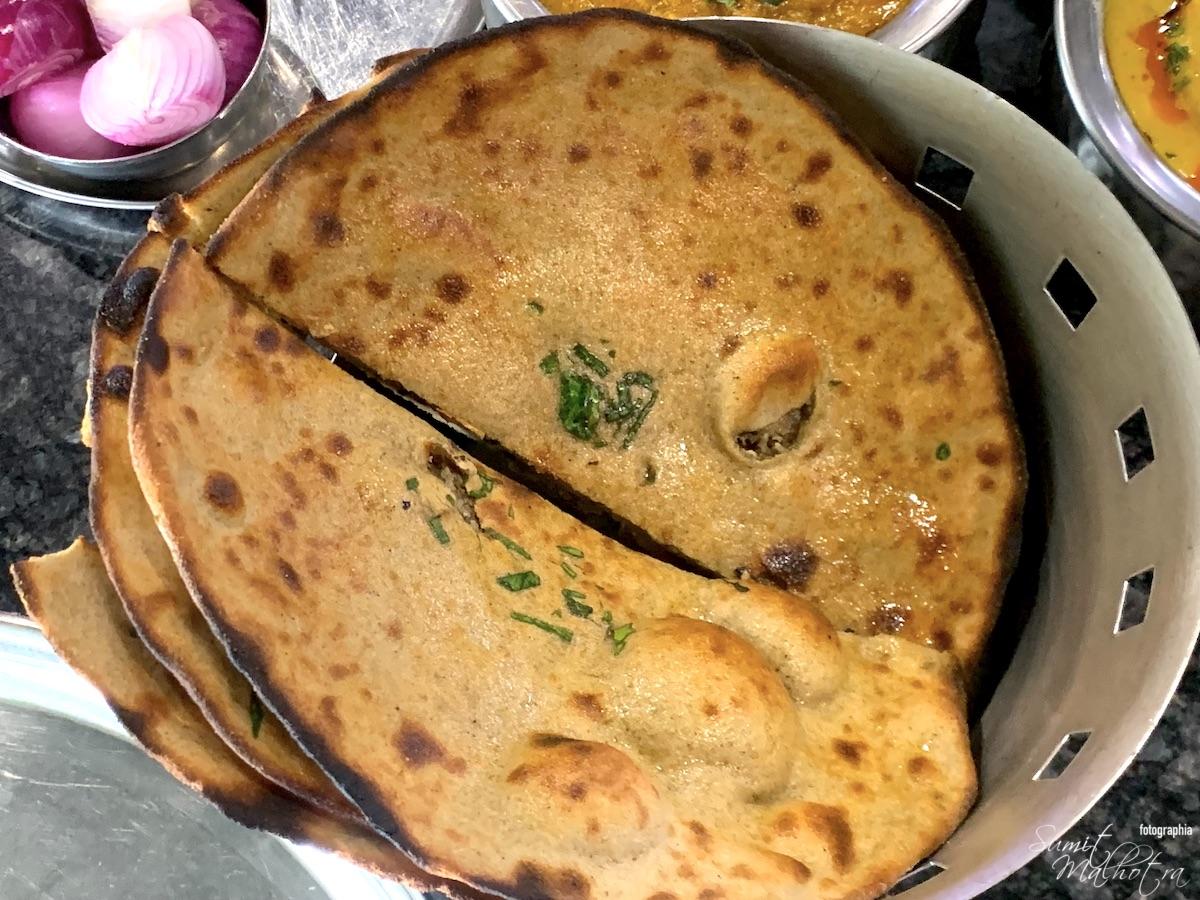
Haryanvi Cuisine - Food from the State of Haryana
Haryana is also known as the "Land of Rotis" and the “Abode of God”.
Haryanvi Cuisine: Haryanvi cuisine is like the people of Haryana – simple, earthy and attached to their lands. The simpler the culture or civilisation, so is the cuisine which is uncomplicated and essentially implies sustenance.
Haryana is one of the wealthiest state of India as it is a rich cattle wealth & agriculture state. That makes the cuisine of Haryana simple and fresh with goodness of nature.
Haryanvi cuisine is celebrated for its earthy simplicity, rustic textures, and deep attachment to agricultural roots.
Often overshadowed by its flashier regional neighbors, the traditional food of Haryana stands strong as a wholesome, farm-to-table system that prioritizes nourishment and pure ingredients over heavy, complex commercial spice mixtures.
Read more about famous dishes of haryana vegetarian, famous sweet dishes of haryana or traditional haryanvi desserts, traditional indian cooking utensils equipment, north indian dining etiquette and customs, land of rotis, haryanvi dishes.
Block Title
Evolution of Haryanvi Food Culture and History
The history of traditional food of Haryana reflects its geography and the demanding routines of its agrarian workforce.
Until 1966, Haryana shared political boundaries with Punjab, and it remains physically bordered by Rajasthan, Himachal Pradesh, Uttar Pradesh, and Delhi.
This unique positioning allowed cross-border culinary exchanges while keeping its core identity completely intact.
Why Haryana is Known as the “Land of Rotis”?
Unlike parts of Eastern and Southern India that rely heavily on rice, Haryana is globally recognized across the culinary landscape as the “Land of Rotis.”
The local climate and highly fertile plains yield abundant wheat, barley, and millets.
Because the historical lifestyle demanded hours of rigorous manual labor in the fields, dense, slow-burning carbohydrate flatbreads became the foundation of daily sustenance.
The Influence of Dairy and Cattle Wealth
Deriving its name from the Sanskrit words Hari (Lord Vishnu) and Ayana (home), Haryana is often spiritually termed the “Abode of God.”
Culturally, it is a land where cattle wealth represents actual financial security. Home to the world-renowned Murrah buffalo and robust Haryana cow breeds, dairy is the absolute lifeblood of Haryanvi cuisine.
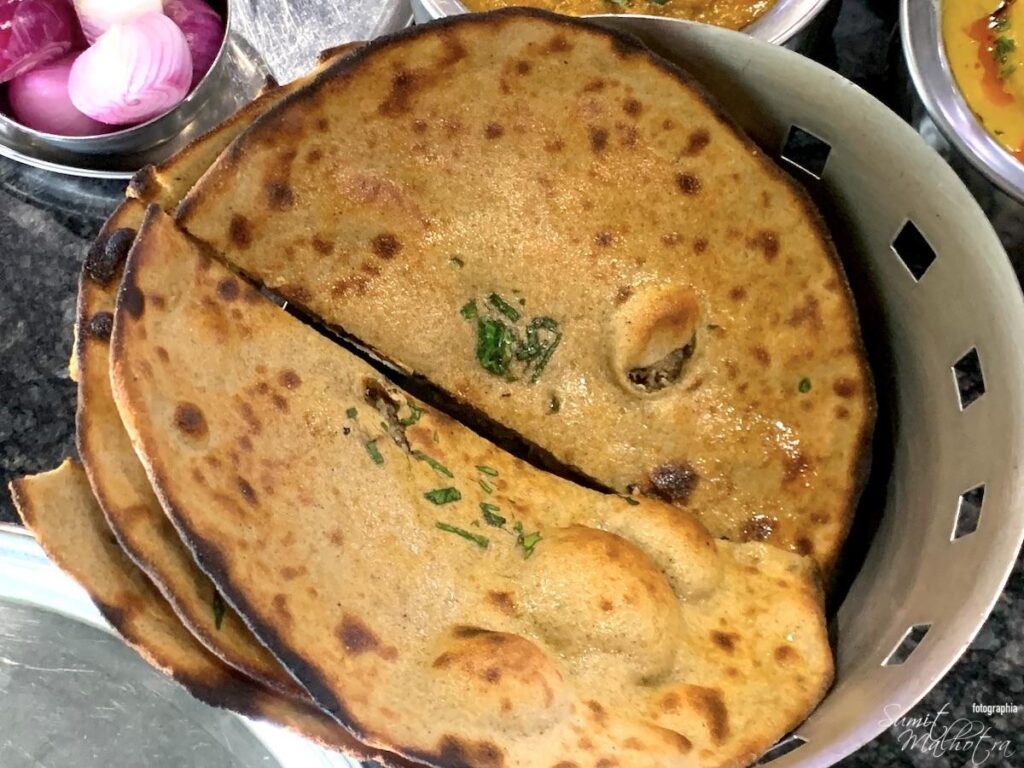
Evolution of Haryanvi Cuisine - The Food from Haryana
Haryanvi cuisine has evolved by being strongly influenced by the Mughals.
The defining element of a Haryanvi kitchen is Nooni Ghee (also called Tindi Ghee), a fresh, unsalted white butter churned daily in households. Rather than utilizing heavy store-bought oils, local cooks use this creamy fat liberally to naturally enhance the texture and nutrition of simple local dishes.
It is also called the “Abode of God” being derived from the Sanskrit words Hari (“the Hindu God Vishnu”) and Ayana (“home”).
Haryanvi locals have a range of famous delectable delights in their cuisine from Haryana. The dairy of Haryana is also very famous and forms an integral part of Haryana cuisine. Haryana is home to the famous Murrah buffalo and the Haryana cow.
No wonder there is an abundance of milk and milk products in Haryanvi cuisine. People make white, unsalted butter and ghee at home and use these liberally in their daily diet. This homemade fresh butter is called nooni or tindi ghee and is churned daily in most homes.
People in Haryana prefer a wholesome diet to complement their laborious daily schedule. So, the emphasis is on eating food that is wholesome & nutritious, fresh and prepared with little or no fuss at all.
You will not find people opting excessively for restaurant food, especially in the smaller towns, as homemade meals are most cherished, using ingredients grown mostly in their own land.
Traditional Flatbreads of Haryana
Bajra Roti (Pearl Millet Flatbread): A winter staple engineered to combat the intense dry cold of North India.
The millet dough is hand-patted and baked on a heavy pan, often laced with a tiny touch of sesame seeds and served under melting mounds of Nooni Ghee.
Besan Masala Roti: A rich, savory flatbread made by blending nutritious gram flour (besan) with whole wheat flour, ghee, chopped green chillies, carom seeds (ajwain), and dry mango powder (amchur).
It functions as a complete standalone meal when paired with cold curd.
Gochini Atta Roti: A traditional composite flatbread baked from a healthy mix of wheat and chickpea flour, offering a dense nutritional profile to power daily farm labor.
One thing is for sure that the Haryanvi are essentially vegetarian.
Haryana was a part of Punjab till 1966 and it shares its borders with several states of North India like Rajasthan, Delhi, Uttar Pradesh, Punjab, and Himachal Pradesh.
So, Haryanvi food has had an influence and similarities with different culinary regions. Some of the dishes are even shared amongst these common borders.
Haryanvi Sabzi and Main Course Dishes
The Flatbreads of Haryana are Served with:
Rajma Chawal: Rajma Chawal is a dish quite popular in both Punjab and Haryana. This delicious red kidney bean curry is eaten with simple steamed or jeera rice. Its important to realise here that, Rajma made in Punjabi style are heavier and spicier than the Haryanvi style.
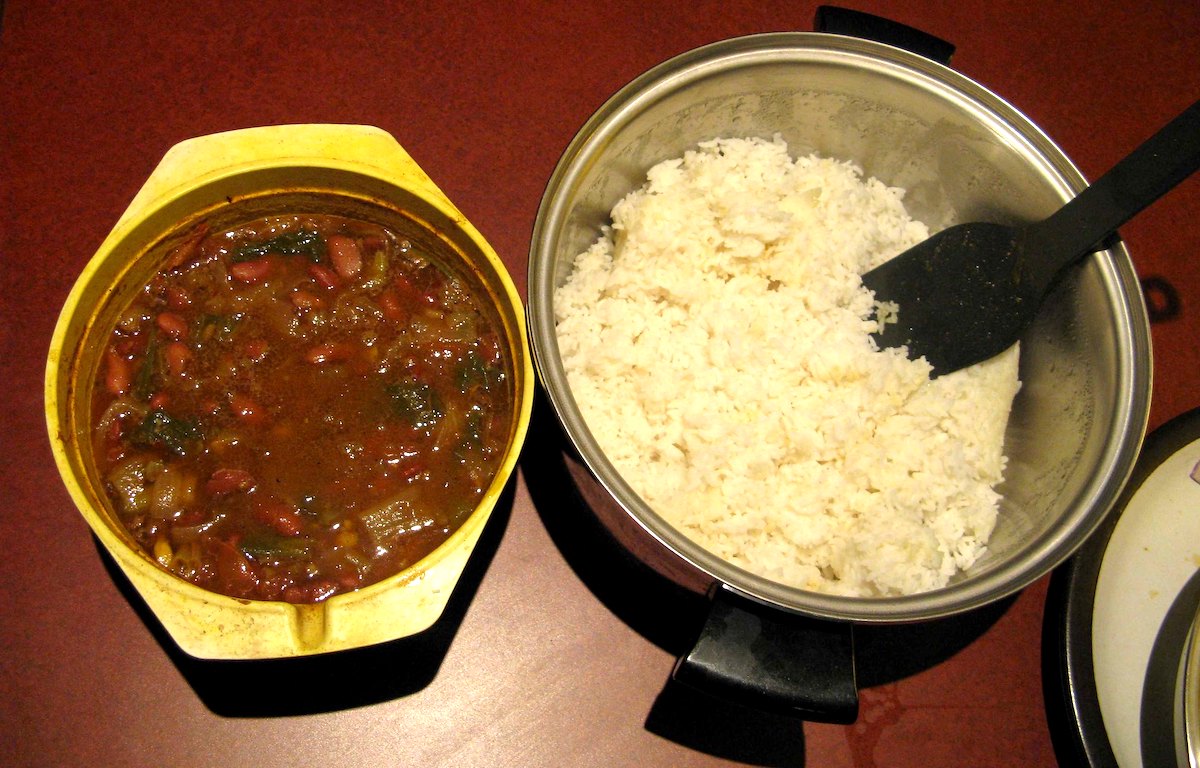
Rajma chawal | haryanvi cuisine | punjabi cuisine
Kadhi Pakora: A smooth, comforting curry made from sour buttermilk thickened with gram flour.
While shared with other states, the Haryanvi variant features a noticeably thicker base and uses subtle tempers of whole spices rather than heavy garlic or red chili oils.

Kadhi pakoda | haryanvi cuisine | punjabi cuisine | rajasthani cuisine
Tamatar Ki Chutney: It is a spicy and tangy sauce of ripe tomatoes prepared with lots of spices and some sugar or jaggery. With Haryanvi style breads, it tastes delicious. Again, multiple versions are available in Haryanvi, Punjabi and Rajasthani & Uttar Pradesh Cuisines.

Tomato chutney or tamatar ki chutney | haryanvi cuisine | punjabi cuisine | rajasthani cuisine
Mixed Dal – Mixed Dal is a protein-rich recipe in which various lentils (chana, toor, masoor and moong dal) are cooked with spices and ghee. It is usually served with steamed or jeera rice in both Haryana & Punjabi. Rajasthani cuisine have a similar dal called Dal Panchmel or Panchratan Dal made with toor dal, moong dal, channa dal, masoor dal and black urad dal.

Mixed dal | haryanvi cuisine | punjabi cuisine | rajasthani cuisine
Sarson Ka Saag – Haryana locals cook sarson ka saag and bajre ki roti in a simple way. In terms of taste, it is a bit dissimilar from the way Punjabis make it as they use dollops of ghee, tomatoes and garlic. However, in Haryana too, it may be paired with Ghee or Butter and Bajre ki roti or Makki ki roti. It finds its place all over varied North Indian cuisines.
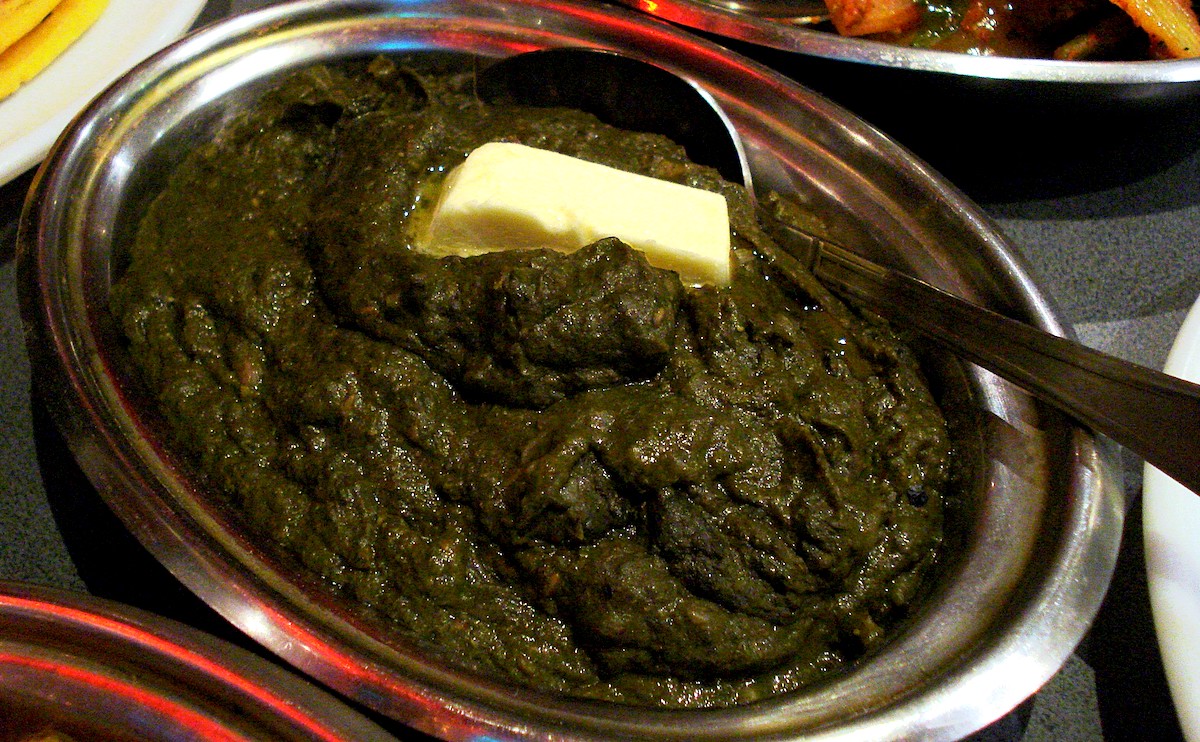
Sarson ka saag with butter | haryanvi cuisine | punjabi cuisine
Besan Aloo Ka Paratha or Roti – It’s prepared with the mixture of besan (gram flour), mashed potatoes, onions, ginger garlic paste, garam masala and coriander leaves to garnish it. Besan Aloo Paratha or Roti is served with butter on it and is not only healthy but delicious too. Another similar paratha or roti is made with bajra & mashed potatoes in Haryana as well as that too is quite popular with the locals.
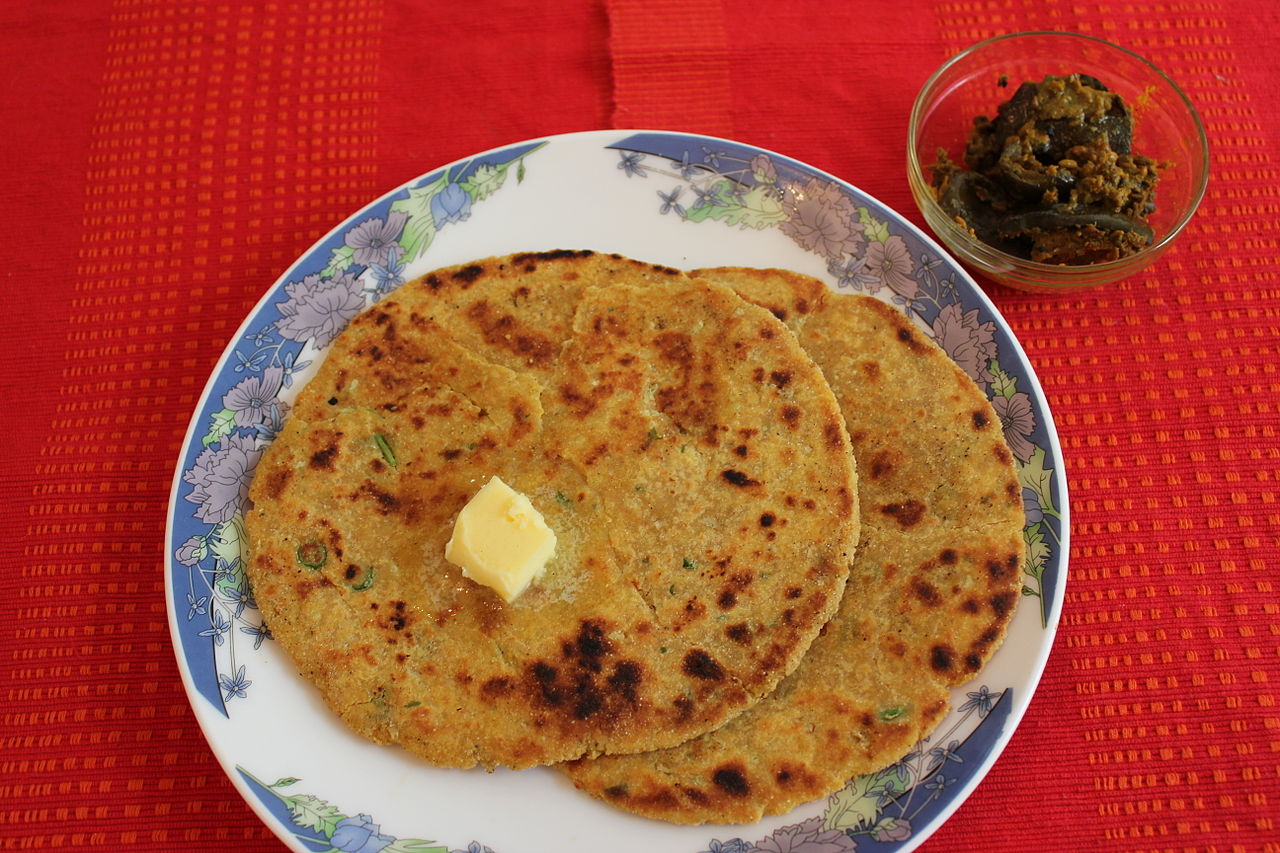
Besan aloo ka paratha | haryanvi cuisine
Gajar Methi Ki Sabzi: Gajar Methi ki Sabzi is prepared with chopped carrots and methi, cumin seeds, oil, red chilli and turmeric powder. This dish is loaded with essential minerals, carrots are enriched with antioxidants and is a winter favourite.
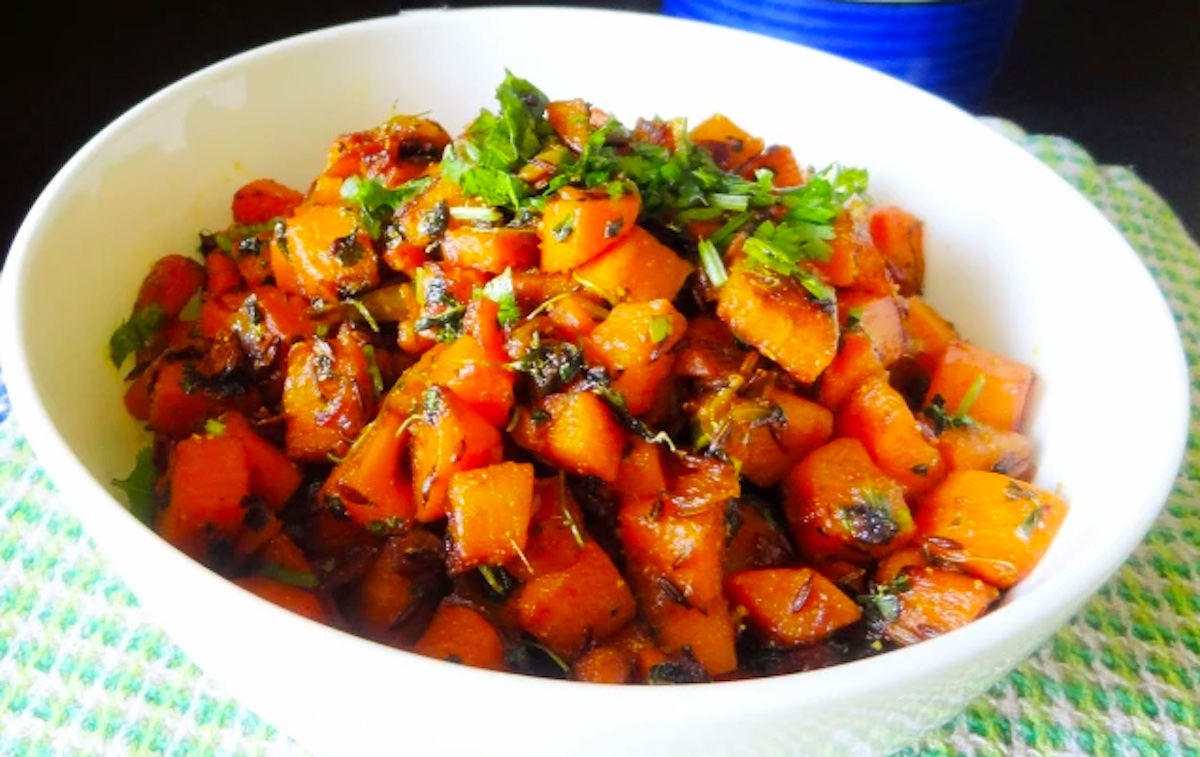
Gajar methi ki sabzi | haryanvi cuisine
Baingan Ka Bharta: Baingan ka bharta is prepared by mincing grilled eggplant and cooking it with tomato, onion, herbs and spices. Grilling the eggplant over charcoal or direct fire infuses the dish with a smoky flavour. It is a favourite with Haryanvi and Punjabi folks.
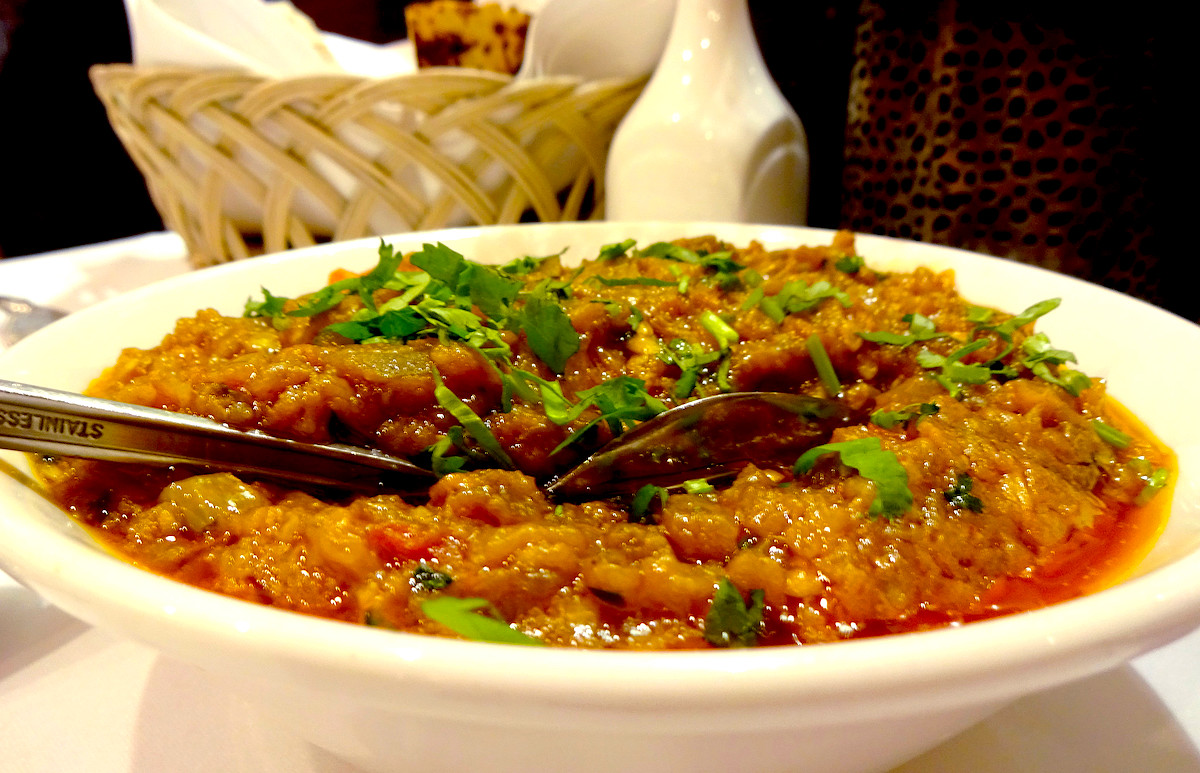
Baingan ka bharta | haryanvi cuisine | punjabi cuisine
Hara Dhania Cholia – Hara Dhania Cholia is an authentic and unique Haryanvi Dish. It is prepared from fresh green chickpeas or hara chana. It is made into a curry with onions, tomatoes, coriander & local spices. The Punjabi version usually has potatoes added to the curry.
Singri ki sabzi: Singri ki Sabzi or Ker Sangri is a traditional Haryanvi & Rajasthani dish made with dried ker berry and sangri beans. An assortment of five vegetables — ker, sangri, babul fali (kumatiya), gunda (gum-berry) and amchur, it is often made into a spicy dry vegetable. It is favoured for its benefits for curing cough and cold, diarrhoea and improving immunity.
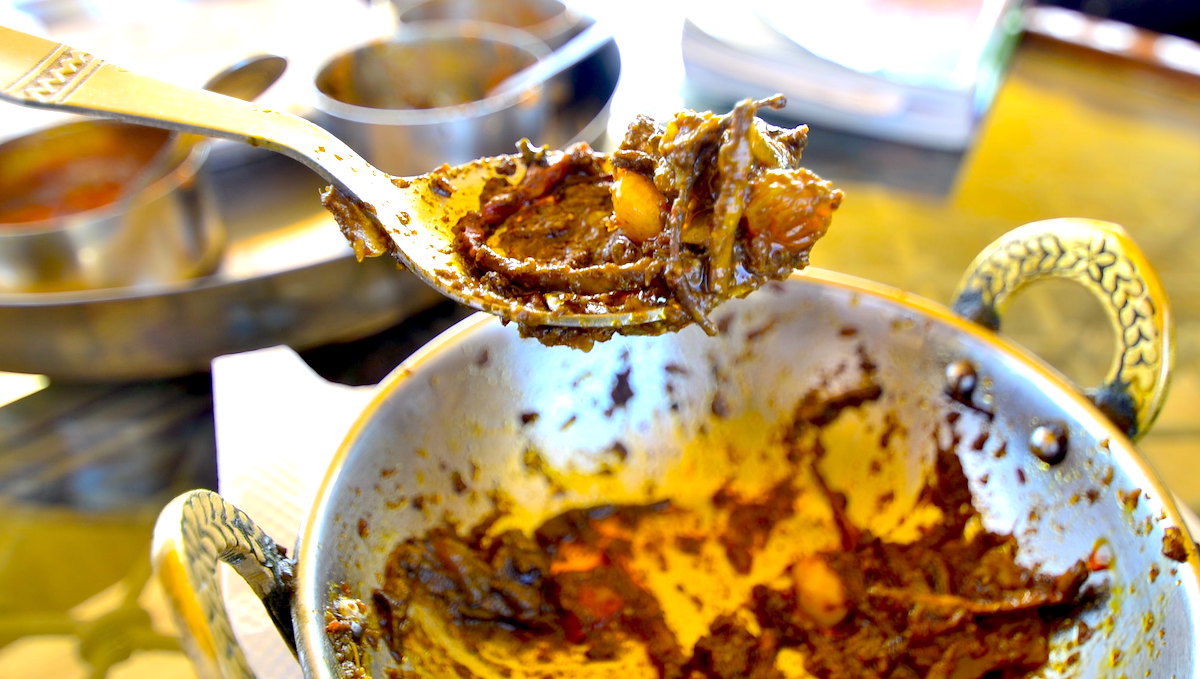
Singri ki sabzi | ker sangri | haryanvi cuisine | rajasthani cuisine
Kachri ki Sabzi: Kachri is a commonly found vegetable in Haryana. It is a wild variety of cucumber that looks like a brown yellow small melon. It is also used to make pickles and chutneys and as a tenderiser in dry meat preparations. Kachri has a sour taste, hence it is a significant source of vitamin C. It also acts as a coolant for body in hot climate.
Teet Ka Achar: Teet or Tenti is Ker berry. It is also known as “dela” in Punjabi. It has numerous benefits for the human body. It balances the acid and controls the blood pressure in our bodies. This pickle can be made with the berry alone or also mixed with other vegetables.
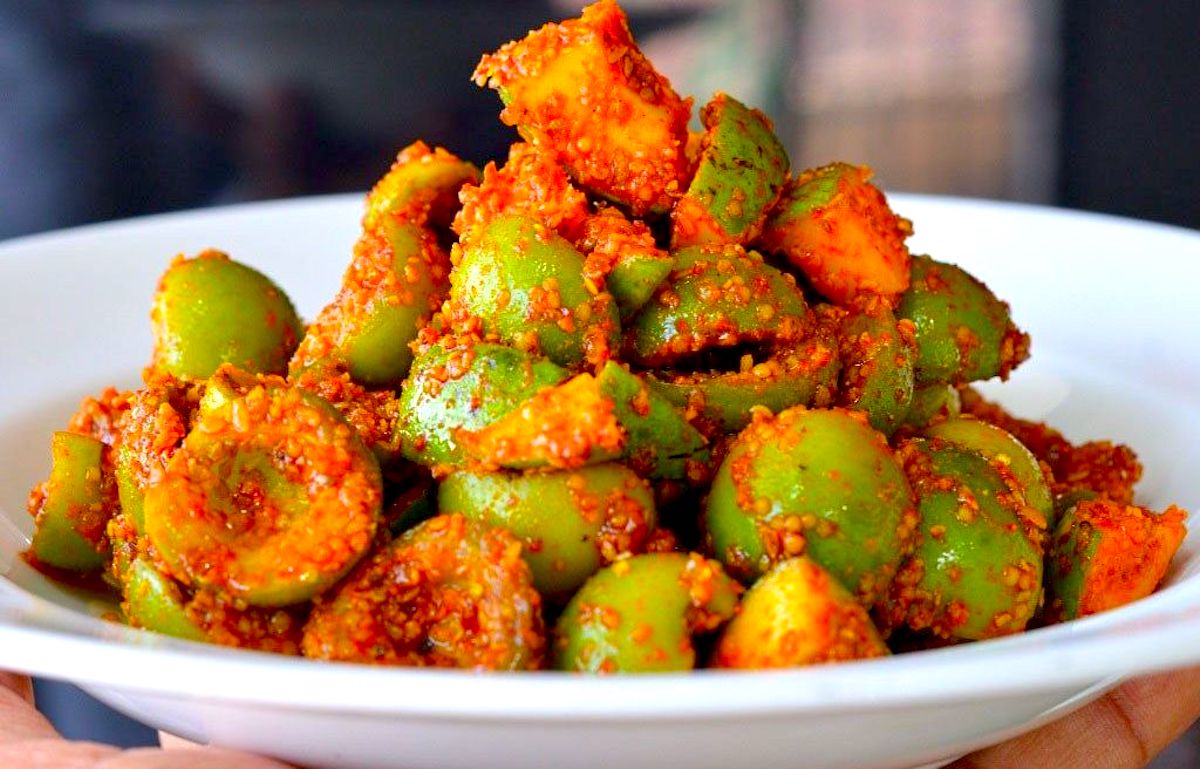
Teet ka achar | haryanvi cuisine
Some other finger licking food of Haryana include Kheer, Churma, Malpua, Bathua Raita & Roti, Bhura Roti Ghee etc.
Desserts of Haryana | Unique & Common Haryanvi Sweet Dishes
Delectable desserts from Haryanvi cuisine that locals love & share.
Alsi (black seed) Ke Laddu or Alsi Ki Pinni – Haryanvis also excel in making alsi (black seed) ke laddu which are made for pregnant women to ease labour pain. Alsi is warm and given to women when they are approaching pregnancy. It is very healthy and good for joints as well. These laddu are prepared with Alsi (Black or Lin Seed), whole wheat flour, ghee, sugar, nuts and cardamom powder and are unique to Haryana.

Alsi ke laddu | haryanvi cuisine
Meethe Chawal – This sweetened rice preparation is cooked with Basmati rice, raisins, cardamom, saffron, sugar and ghee and results in this mouth-watering delicious dessert. This dessert is also shared with Punjab and it is very simple to prepare, easy to cook and delicious in every bite.

Meethe chawal | haryanvi cuisine | punjabi cuisine
Ghewar or Ghevar: Ghewar or Ghevar is a disc-shaped dessert with a honeycomb texture & is made from ghee, whole wheat flour (or refined flour) and then soaked in sugar syrup. It is served with garnishing of mawa, rabri, malai, dry fruits, kewra and also silver vark. It is traditionally associated with the month of Shravan and the Teej and Raksha Bandhan festivals. It is a much loved favourite of Haryanvi & Rajasthani cuisines.

Ghewar or ghevar | rajasthani cuisine | haryanvi cuisine
What are the cooking methods for Haryanvi Food?
Traditional and modern methods are both employed for cooking Haryanvi cuisine.
Traditional Cooking Methods and Kitchen Equipment: The unmatched smoky depth of authentic Haryanvi dishes lies entirely within heritage preparation techniques that rely on open-flame dynamics and slow stone grinding.
Chulha – The traditional name of the stove in the Haryanvi language is chulha. Traditional houses also have ovens (wadda chulha or band chulha) that are made from bricks, stones, and in many cases clay.
Angithi – Angithi is a traditional brazier used for space-heating and cooking in North India. It usually generate heat from burning coal and, when in use, have glowing coal or charcoal pieces but few or no flames.
Bhatti – A masonry oven is known as a Bhatti. Outdoor cooking and grilling have many different types of Bhatti.
Tandoor – The tandoor is traditionally made of clay and is a bell-shaped oven, set into the earth and fired with wood or charcoal reaching high temperatures.
Okhal aur Moosal or Hamam Dasta and Sil Batta – Spices would be ground/ crushed with the traditional mortar and pestle (Okhal aur Moosal or Hamam Dasta) and grinding stones (Sil batta).
Handi, Degchi, Patila, Karchi, Kadai, Tawa – For cooking & serving, these iron, brass and copper utensils, believed to be beneficial for health, are still used in the North India for both ritual and utilitarian purposes.
Modern equipment – This includes pressure cooker & griddle.

Dining & Eating Etiquette for Haryana
Haryanvi households follows a similar or slightly varied dining etiquette as other states in North India.
Though certain dining etiquette varies regionally, there are many practices that are common throughout North India.
Family dining is an established norm in most Haryanvi families.
Bringing and sending fresh fruits, sweets and food items as gifts to family members is a common practice in North India, particularly during the spring season.
Food items are distributed among neighbours as well on special occasions and as a sign to show hospitality.
Invitation for meals – Invitation to a meal or tea is generally distributed few days beforehand & denying or not turning up for the invitation for no major reason is considered a breach of etiquette.
- The invited guest or elder person is given special respect and attention.
- The invited guest are requested to start the meal & it is considered rude if the host starts eating without taking into account the attendance of all guests.
- Table setting is done before the arrival of the guests.
- Family members or any occupants within one home make sure to eat together during the dinner.
- Hand washing prior to and after the dinner, lunch or brunch at any household of north India is a norm.
- It is considered rude to start eating food without asking others to participate in a meal.
- Use right hand for food intake and left hand for drinking water or drinks.
- Chewing food with one’s mouth open and burping in front of others is considered rude.
- The bread is eaten with the hands. Rice and desserts are eaten with spoons. Soup spoons are used for consuming soup and forks are used for eating noodles.
- Politely ask for the dish to be passed on instead of grabbing it from far across the table.
- DO NOT pass on your JHOOTA (food that has been in contact with your mouth) even to your family members in front of an Indian host.
Difference Between Haryanvi and Punjabi Food
Because the two states were politically intertwined until the late 20th century, many travelers assume their food profiles are identical. However, clear culinary distinctions separate them:
Spicing Profiles: Punjabi cuisine relies heavily on rich, cooked onion-tomato gravies, complex garam masalas, cashew pastes, and heavy garlic. Haryanvi food uses minimal spices, relying instead on green chilies, cumin, and the unmasked flavors of fresh vegetables.
Cooking Fat Realities: While Punjab uses heavy commercial cream and processed restaurant butter, Haryana focuses entirely on raw, home-churned Nooni Ghee and fresh buttermilk (Chaach), leading to a menu that is significantly lighter and easier on the stomach.

Frequently Asked Questions About Haryanvi Cuisine (FAQ)
Because the two states were politically intertwined until the late 20th century, many travelers assume their food profiles are identical. However, clear culinary distinctions separate them:
Is Haryanvi food highly spicy?
No. Traditional Haryanvi food is highly comforting and mild.
It avoids excessive red chili powders and intense garam masalas, relying on green chilies, cumin, and fresh ginger to let the quality of the agricultural produce shine.
What is the most famous staple food of Haryana?
The daily staple revolves entirely around Bajra Roti or wheat flatbreads paired with fresh home-churned white butter (Nooni Ghee), a side of thick Kadhi Pakora, or local chutneys like Kachri ki Chutney, always washed down with a large glass of fresh buttermilk.
Is the cuisine of Haryana mostly vegetarian?
Yes. Due to historical agrarian lifestyles and cultural traditions, the vast majority of local households follow a strict vegetarian diet.
The focus is centered heavily on seasonal crops, pulses, and extensive dairy farming.
If you like this article, you can let us know in the comments below or on social media using #gosumitup and tag @gosumitup on Facebook.
I am always happy to read your feedback and if you liked the dish or if you made the dish. :)
Better still, take a picture and post it on Instagram and tag it as #gosumitup
Connect direct – You can also connect with me directly on my Instagram and Facebook or on Pinterest.
And, keep visiting us for more of such awesomeness. Do bookmark gosumitup.com into your web browser now or simply subscribe to our browser notifications.
Thank you for visiting GoSumItUp! I hope you enjoy the reviews & recipes found at www.gosumitup.com.
This page consists of disclaimers regarding the recipe, its outcome, nutrition, and food handling safety decisions.
The recipes have been cooked and compiled by me for general information only and should not be used to diagnose or treat any medical condition/s.
This information is not intended to diagnose, treat, cure, or prevent any disease as well.
GoSumItUp.com has used all reasonable care in compiling the information but offers no warranty as to its accuracy or its use in any possible form.
Consult a doctor or other health care professional for diagnosis and treatment of any medical condition/s. For more details please refer to our disclosure policy.
GoSumItUp is a personal blog written and edited personally by me. All opinions expressed are my own which are honest and have not been influenced by any means.
My reviews are dependent on the visits at the time and revisits will be reviewed again as they may have a different experience or the same.
I am not a food critic nor do I consider myself as one, this platform allows me to write and review my own personal dining experiences, may they be good or bad, delicious or not, all are honest and truthful opinions.
Suppose you disagree or agree with me at any point or do not receive the same experiences as I have. In that case, I do not hold any responsibility as everyone will have their own experiences that they will encounter themselves.
I pay for all meals. However, if any meals or product has been sponsored or compensated or if I was an invited guest, it will be clearly disclosed at the end of each review.
All images on this blog are my own unless stated otherwise. If you wish to use any of my photography for any purposes, please do not use it without any written permission and give credit and/or link back to the website.
If you would like to send a product or any sponsors/endorsements, it may or may not be published and reviewed on the website.
If you wish to send any products or invitations for any media, press or collaborations etc., consider if it is something related to the content of the website and if you see fit, please visit the Contact page for contact details.
Thank You.
